A serious bonsai is expensive because nothing that makes it one can be produced faster or in bulk: the years it has already lived, the hand of a trained grower returning to it every season, and a documented history that only grows one owner and one artist at a time. None of that is manufacturing cost in the ordinary sense. It is accumulated time, made visible in a single pot.
Time is the one input money cannot buy
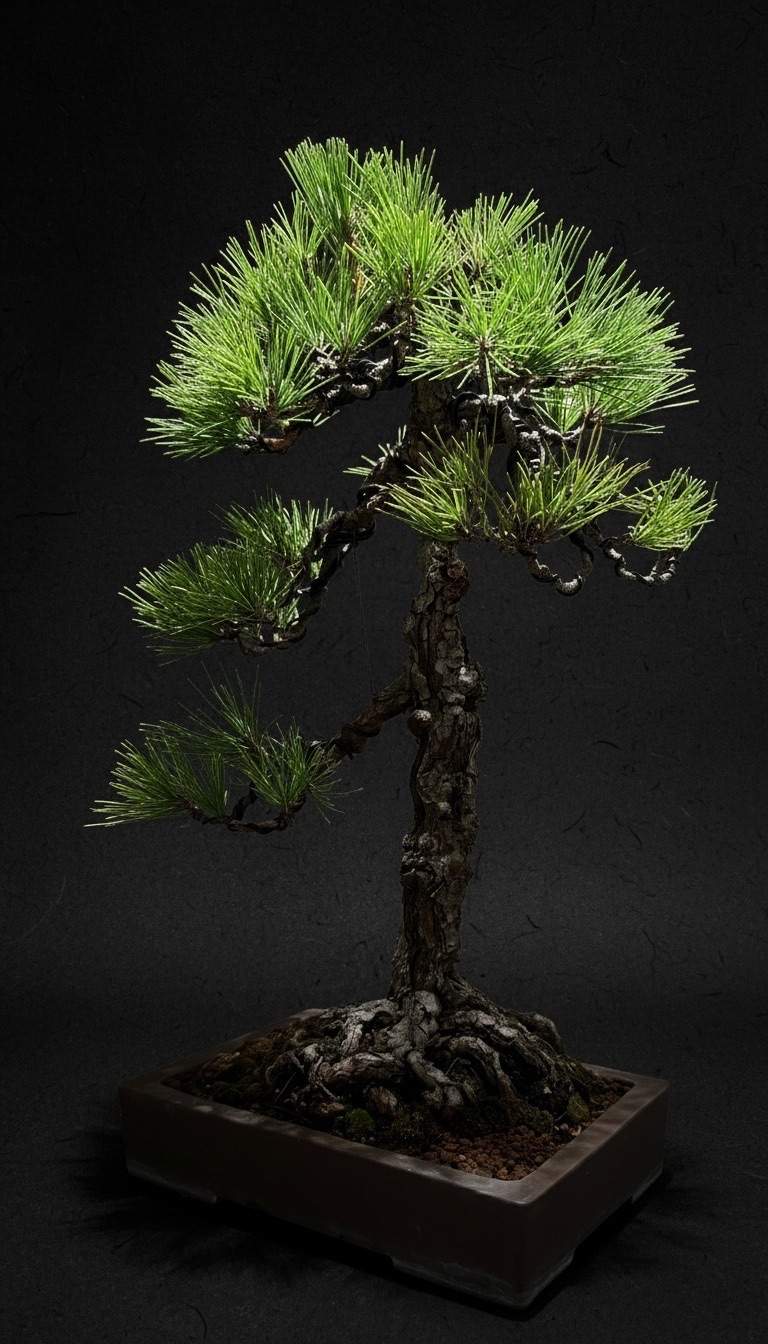
A young tree can be watered, fed, and wired with skill, and none of it makes the trunk older than it is. Bark takes on the cracked, weathered texture bonsai growers call kobokukan (古木感, "the feel of an aged tree") only after decades of exposure — there is no accelerant for it. Age is the one quality no amount of skill can substitute for: a ten-year-old trunk and a hundred-year-old trunk can be pruned by the same hands, on the same day, and the gap between them does not close. Naming a high figure for an old tree is, in large part, pricing the fact that the years already happened — and nobody can go back and add them to a younger one.
A trained hand returns to the tree every year
A bonsai is not shaped once and left. Across a single year it moves through dormancy, a spring push of new growth, a period of fruiting or flowering for some species, and a slow return to rest — and at each stage a grower intervenes differently: structural pruning in late winter, wiring timed to when new shoots are pliable but not yet brittle, a repotting cycle that runs from one year for fast-growing material to several for an established pine. Skip a season and the tree does not simply wait — its shape drifts, sometimes in ways that take years to correct. The price of an old bonsai is, in part, the price of that unbroken attention: a decade-old tree has absorbed roughly ten of those annual cycles, each requiring a trained hand, not just water.
Record and rank, not the plant itself, build the number
Two trees of the same species and similar size can be priced very differently once a nursery weighs their keireki (経歴, "a documented record of who has grown and kept a tree") and kaku (格, "standing," judged from trunk, bark, and the years of handling behind it). A bonsai's value is read from that record far more than from its silhouette alone — a tree with a traceable line of artists and owners is priced differently from an identical-looking tree with no paper trail. We go into how a nursery actually arrives at a specific number, tree by tree, in how bonsai prices are set; in short, there is no published price list, only a trained eye weighing age, rank, record, and authorship together.
What separates a cheap bonsai from an expensive one
Most bonsai sold at garden centers and home-improvement stores — informally nicknamed mallsai — are inexpensive because almost none of the above has happened to them yet: young, mass-propagated stock with little individual training behind the shape it left the nursery in. That does not make them a bad place to start, a question we cover separately; it simply means the price reflects a plant, not yet a bonsai with years, hands, and a record behind it. The gap between a $30 nursery tree and a six-figure exhibition pine is not a markup — it is the visible difference between a tree at the beginning of that process and one decades or centuries into it.
A pine reported to have sold for around $1.3 million at an international bonsai gathering in Takamatsu is often cited as evidence that bonsai prices can run extraordinarily high — and the report is real, but it describes one buyer and one seller agreeing on one tree, on one day. It is not a market rate, and it says nothing about what any other centuries-old pine should be expected to fetch. None of this makes a bonsai a financial instrument or a vehicle for returns; a tree's price reflects what one grower's years of work and one appraiser's trained eye judged it to be worth at a single moment, not a rate that is expected to climb.
What this comes back to
Strip away the number, and what is actually being paid for is a set of ordinary, repeated acts: a grower checking a tree's water before dawn, choosing which branch to cut this month rather than next, keeping a note of who trained it and when. Azukari is built around making that same work visible — a tree continues its training in Japan under an artist's care, and its seasonal record travels to whoever has been entrusted with it, wherever they live. The price of a bonsai is really the price of that attention, paid one season at a time, long before anyone asks what the tree is worth.
References
- Bonsai Empire — "Bonsai Prices" — on the factors nurseries weigh in pricing a bonsai, including age, trunk taper, and refinement.
- Bonsai Empire — "The Most Expensive Bonsai Tree" — reporting a centuries-old pine sold for around $1.3 million at the International Bonsai Convention in Takamatsu, Japan.
- Bonsai Empire — "Bonsai Maintenance Calendar" — on the tree's yearly cycle of dormancy, growth, and fruiting, and the different pruning and care interventions each stage requires.
- Bonsai Empire — "From 'Mallsai' to Bonsai" — on mass-produced, low-cost bonsai sold at general retailers and their role as many growers' first tree.
- BonsaiQ — "盆栽は本当に高いのか!?盆栽の値段の決め方" — on Japanese nurseries pricing most trees by asking price (iine) rather than a fixed list, set individually by the tree's owner.