A bonsai owner in Kyoto can walk out to the bench most mornings, check the soil with a finger, and see for themselves whether last week's wiring is holding. A bonsai owner in Melbourne or Munich cannot. That gap used to mean something close to a choice: keep a tree only if you can stand beside it, or give up the idea of owning a fine one at all.
Owning a bonsai from afar does not mean owning it in the dark. It means the owner's part of the relationship moves from the hands to the eyes — from doing the work to following it, season by season, through what the artist sends back.
What the owner actually sees
The daily labor a bonsai asks for is real and cannot be done remotely: watering that shifts by the day depending on sun, species, pot size, and soil, wire checked before it bites into new growth, a repotting timed to the one narrow week a species tolerates it best. None of that changes because an owner lives on another continent. What changes is who does it, and how the owner keeps up with what was done.
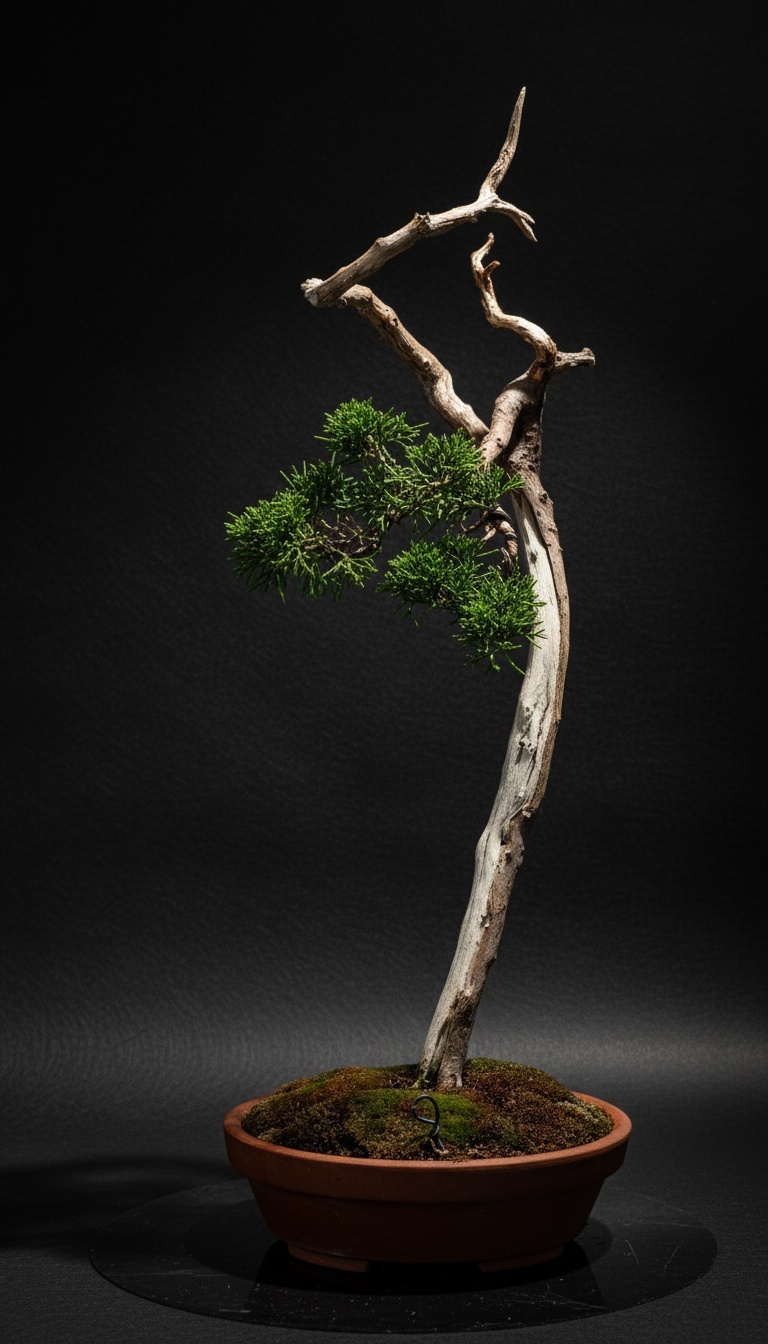
In practice, that means a rhythm of seasonal photographs and short written notes — the tree after spring pruning, the new shoots opening in April, the trunk once autumn strips the leaves and the branch structure stands bare. A careful set of images taken from the same angle across a year says more about a tree's health and direction than a single glossy photograph ever could, because it shows change, not just condition. Paired with a note on what was cut, wired, or held back, and why, the owner is not guessing at the tree's year. They are reading it.
The craftsman's hands, the owner's eyes
This is not a diminished version of ownership so much as a different division of it. The artist in Japan supplies the hands: the calluses, the timing that comes only from having repotted hundreds of trees, the judgment about whether a branch is ready to be shortened this year or should wait another. The owner supplies something else — attention, and the decisions that are still theirs to make about the tree's direction over years, not this week's watering can.
We have written before about what it means to place a tree's daily care in someone else's hands without giving the tree up; see Entrusting a Tree for the fuller shape of that idea. What is specific to ownership from a distance is simply that the owner's information about the tree arrives entirely through what is sent to them — which is exactly why what gets sent, and how carefully, matters as much as the pruning itself.
Distance is not new to how bonsai are followed
There is reason to think that following a living thing through images, rather than in person, does not automatically produce a thinner relationship. Researchers at Kansas State University studying visitors to a live brown-bear webcam at Katmai National Park found that most online viewers reported being able to identify individual bears on screen, and that measures of "conservation caring" among these webcam viewers were comparable to scores recorded among people who had watched the same bears in person. Separate research on what psychologists now call cyber-mediated animal attachment — bonds formed through video rather than physical presence — has found that people who regularly watch animals this way report measurably less loneliness, an effect tied specifically to the emotional connection formed with the animal, not simply to the entertainment value of the clip.
None of this claims that a photograph is the same as standing in front of a tree. It suggests something narrower and more useful: that a real bond can be built and sustained through attentive, repeated remote viewing, if what is being shown is honest and specific rather than generic. A bonsai owner following seasonal images of one particular tree, rather than bonsai in general, is closer to the bearcam viewer who has a favorite bear than to someone scrolling past stock photography.
What the record adds
Photographs show a tree's present. They do not, on their own, explain why a branch was shortened or a wire came off early. That is the job of the written record kept alongside the images — the same kind of account, built season by season, that gives an old meiboku (銘木, "a celebrated tree with a documented history") its standing, and the same instinct we describe at length in The Record as Inheritance. For an owner who is never physically present, the record is not a supplement to the relationship. It is a large part of how the relationship is carried at all — a written account of decisions the owner was consulted on, or at least kept informed of, that turns a set of pretty seasonal photos into an actual history the owner can say they were part of.
A tree that stays where it grew
Owning from a distance is also, for many trees, simply the more honest option. A number of species leave Japan only with difficulty, if at all, once import rules and phytosanitary requirements on both ends are accounted for — a subject we cover in full in A Tree You Cannot Ship and Trees Cannot Cross Borders. A tree that stays in the climate, soil, and daily rhythm it has always known is also, quite apart from any paperwork, usually the tree that is easiest to keep healthy. Remote ownership is not always a compromise made because a border is in the way. Often it is simply the arrangement that suits the tree best, with the owner's presence rearranged around that fact rather than against it.
A new way of owning
None of this asks an owner to feel less connected to a tree than someone who waters it themselves. It asks them to locate that connection somewhere else: in a photograph taken from the same angle each season, in a note about a decision they were part of, in a shape they have watched change one year at a time without ever having held the shears.
Azukari is built around exactly this arrangement. The tree is tended by an artist in Japan, in the soil and climate it already knows, and the owner's part is carried in seasonal photographs and a written record rather than in daily hands-on work. It is not a lesser form of ownership. It is simply one built for how far apart a tree and the person who loves it can now live.
References
- Bonsai Empire — "Watering Bonsai; how to water your trees" — on how bonsai watering needs vary by species, pot size, soil, and sun exposure, and why daily, individual assessment rather than a fixed schedule is part of the practice.
- Frontiers in Sustainable Tourism — "Is one the loneliest number? Impact of tourists' ability to identify individual bears on conservation outcomes" — on the Katmai National Park bearcam study, in which most online viewers reported identifying individual bears and recorded conservation-caring scores comparable to in-person visitors.
- Animals (MDPI) — "Animal Video Lovers Always Have Company: The Role of Cyber-Mediated Animal Attachment in Loneliness" — on emotional bonds formed with animals through digital video rather than physical presence, and their measured association with reduced loneliness.
- Japan Plant Protection Station (MAFF) — "English Export Guide" — on the inspection and phytosanitary certificate process required to export live plants from Japan, and on destination-country import restrictions that can limit which trees can travel at all.