It happens more often than the bonsai world likes to admit. A collector finds the tree — the right species, the right age, the right silhouette — sitting on a bench in a Japanese nursery. Then someone explains what it would actually take to bring it home: months or years of quarantine, a country that may not accept the species at all, a bare-rooted plant arriving in a box after everything that made it beautiful has been stripped away for inspection. For a wide range of trees, especially conifers, the honest answer is that the tree is not going anywhere.
A bonsai does not have to leave Japan to become yours.
The Wall Does Not Move
The barrier here is not a matter of money, patience, or the right connections. It is regulatory, and it exists on both ends of the shipment. Before a bonsai can leave Japan, it must pass inspection at a Plant Protection Station and be issued a phytosanitary certificate confirming it carries no regulated pests — a process the Ministry of Agriculture, Forestry and Fisheries administers for every living plant leaving the country, bonsai included. What happens after that depends on the receiving country, and for a country like the United States it can mean a tree stripped of all its soil, plus a postentry quarantine period commonly running around two years for higher-risk plant material. Some species, notably certain pines, are restricted enough in practice that exporters and buyers alike treat them as effectively non-exportable. We have written elsewhere about the mechanics of this wall in detail — see "Trees Cannot Cross Borders" — and the short version is that it is not going away. It exists to keep pests out of receiving countries, which is a legitimate purpose, and no amount of goodwill on either side changes the paperwork.
Anyone who wants a mature tree still standing in a Japanese nursery has to accept that fact before they decide anything else.
A Different Question
Once the export wall is accepted rather than fought, the useful question changes. It is no longer "how do I get this tree to my home country." It becomes: can I have a real relationship with a tree that never leaves Japan?
This is a less foreign idea in Japan than it might first sound. Ownership and daily care have long been treated as two separate roles that different people can hold — a custom sometimes called azukari (預かり, "entrusting"), in which one person retains ownership of a tree while someone else, usually a professional, keeps it and tends it day to day. We have written about this custom at length in "The Culture of Entrusting." The same logic that lets a Japanese collector entrust a tree to a nursery across the country applies just as well across an ocean. Distance changes the frequency of a visit. It does not change who the tree belongs to, and it does not require the tree to move at all. What changes hands, in this arrangement, is not an object shipped in a box but a tree's continuing care, documented and shared with its owner over time — a point we go into further in "Entrusting a Tree."
Why the Tree Is Better Where It Is
There is also a case to be made that a tree which never ships is simply better off. Two facts point in the same direction.
First, moving a bonsai across a border is hard on the tree itself, not only on the paperwork. Bare-rooting is the more severe cousin of ordinary repotting, which is already understood as a controlled stress: a bonsai temporarily loses fine roots and, with them, some of its ability to take up water, and needs a full season or more to recover fully even under ideal aftercare. A tree stripped of all soil, boxed, inspected, and held through a quarantine period abroad is going through a version of that stress with far less control over timing, humidity, or handling along the way.
Second, a tree's species usually got where it is by growing in a particular climate for a very long time. Black pine, white pine, and satsuki azalea are shaped, in part, by the seasonal rhythm of the region that produced them, and matching species to climate is treated as one of the more basic rules of long-term bonsai health. A tree that has spent decades responding to Japan's winters, its rainy season, its particular light, does not automatically thrive after being relocated to a garden with a different rhythm — even before accounting for the stress of the move itself. Leaving a tree with the climate and the artist who already understand it is not sentiment. It is simply the more conservative choice for the tree.
What Ownership Looks Like Instead
None of this means giving up on owning a fine bonsai grown in Japan. It means owning it differently.
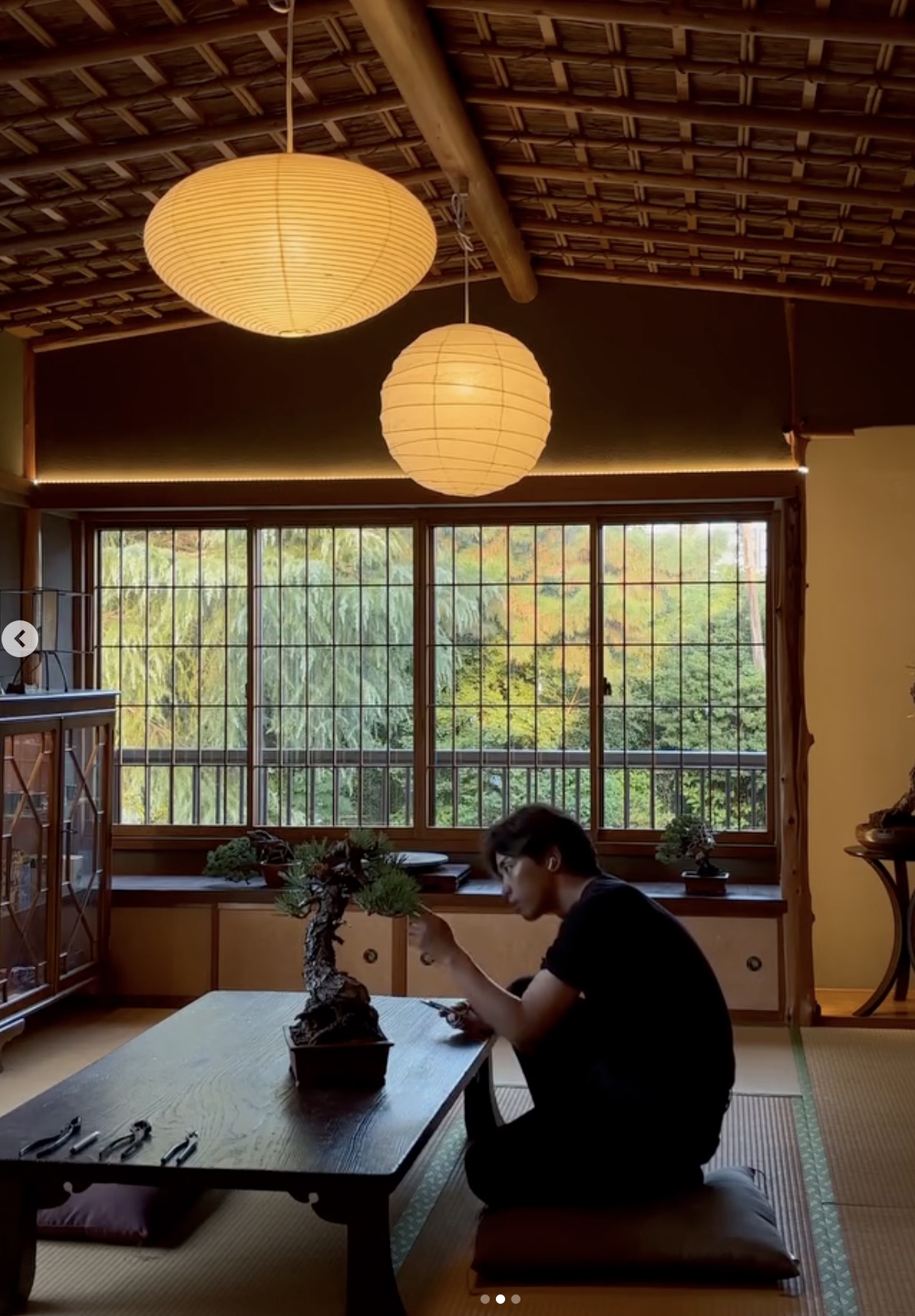
Under this arrangement, the tree stays exactly where it has always been — in a Japanese nursery, under a working artist's hands, through the pruning, wiring, and repotting that keep it developing. Its owner does not lose the tree by leaving it there; they gain a channel into its ongoing life instead, through seasonal photographs, notes on the work done, and a record that accumulates the longer the arrangement continues. Nothing about that requires a shipping container. We wrote about exactly this option — buying a bonsai and simply choosing to leave it in Japan — in "Keep the Tree in Japan."
Azukari grew directly out of this problem. It exists for the collector who has already accepted that the tree they want cannot legally cross a border, or should not, and who would rather build a real relationship with that tree over years than settle for a smaller one they could carry home. The tree keeps growing in Japan, under continuing professional care, and its owner joins that story through the record kept along the way.
Closing
A bonsai's relationship to the person who owns it has never depended on where it physically sits. Japanese nurseries have entrusted trees to other hands for generations, long before anyone thought to ask whether a tree could be shipped at all. The quarantine wall is a modern obstacle, but the answer to it is an old idea: a tree can belong to someone without ever leaving the ground it was raised in. For a tree that genuinely cannot ship, that is not a compromise. It may be the arrangement that suits the tree best.
References
- Japan Plant Protection Station (MAFF) — "English Export Guide" — on the inspection and phytosanitary certificate required before any living plant, bonsai included, can leave Japan.
- USDA APHIS — "Postentry Quarantine" — official description of postentry quarantine for imported plants, noting the quarantine period "is generally two years" for higher-risk taxa.
- Bonsai Empire — "Repotting Bonsai" — on repotting as a controlled stress that causes temporary root loss and requires a recovery period.
- Bonsai Empire — "Bonsai for Specific Climates" — on matching tree species to the climate that suits their natural growing needs.