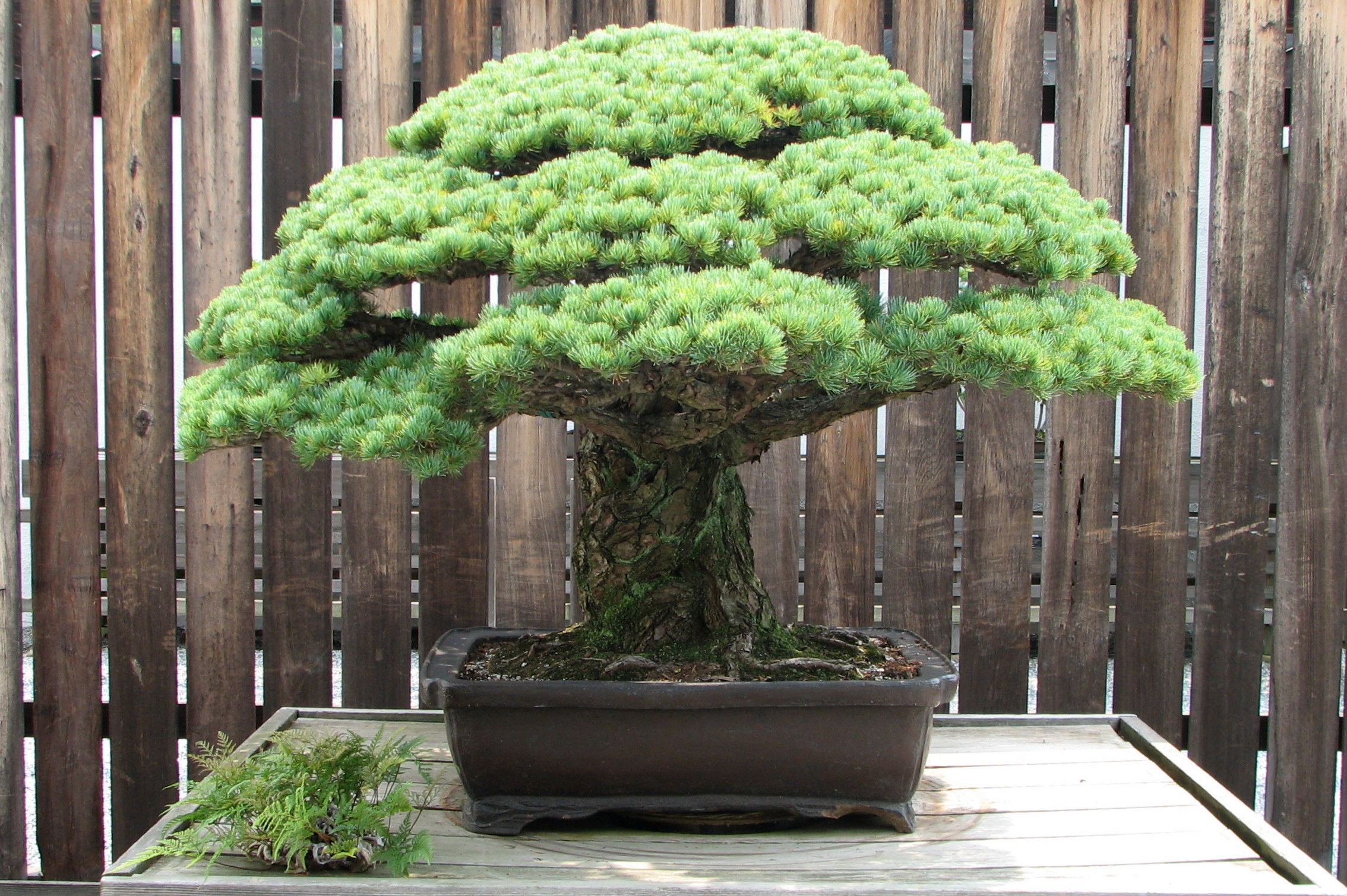
Photo by Ragesoss, CC BY-SA 3.0, via Wikimedia Commons — Source

A painting, a ceramic bowl, a piece of lacquerware — any of these can be crated and flown to a new owner within days. A bonsai cannot. It is a rooted, living plant, and every government that receives plants treats them first as a possible carrier of pests and disease, and only after that as an object of beauty.
A bonsai still growing in Japan cannot simply be shipped to wherever its owner lives. It can cross a border only after inspection, certification, and in many cases years of quarantine cultivation — and for some trees, it should not cross at all.
A Wall Built for Pests, Not for People
Moving a living tree out of Japan begins with shokubutsu boeki (植物防疫, "plant protection and quarantine"), the inspection regime run by Japan's Plant Protection Station under the Ministry of Agriculture, Forestry and Fisheries. Before a bonsai leaves the country, it must be inspected and issued a phytosanitary certificate confirming it is free of regulated pests — the same basic requirement applied to any plant for planting, anywhere in the world.
That certificate only gets the tree to the border. What happens next depends entirely on the receiving country, and the rules vary widely: some nations require the soil to be stripped away entirely, some restrict which genera may enter at all, some demand a quarantine period after arrival, and a few simply prohibit certain plant material outright. These rules are also revised periodically as pest risks change, so a route that was open one year can close the next. A bonsai bound for one country may travel under entirely different conditions than the same tree bound for another.
Sometimes, Years Before It Ships
In the United States, the clearest illustration of how far this can go is the rule written specifically for bonsai. Under APHIS, the plant-health arm of the U.S. Department of Agriculture, an "artificially dwarfed plant" — its own regulatory term for bonsai and penjing (盆景, the Chinese tradition from which bonsai historically descended) — older than two years cannot simply be potted and boxed. All growing media, including the soil, must be stripped away before shipment, so the tree arrives bare-rooted. Before that shipment can happen at all, the tree must first have spent at least two years growing in a screened or greenhouse nursery in its country of origin that is registered with, and was inspected by, that country's government within the previous twelve months. Depending on the species, a further quarantine period — commonly around two years — can then be required once the tree is on U.S. soil, under APHIS's postentry quarantine program for higher-risk plant material.
Add it up, and a bonsai judged higher-risk can spend several years moving through screenhouses and quarantine stations on both sides of the ocean before its owner ever sees it growing freely.
Even trees of considerable historical weight are not exempt. In 1976, Japan presented 53 bonsai to the United States to mark the American bicentennial, among them a Japanese white pine said to have been in training since 1625 — later revealed to have survived the atomic bombing of Hiroshima, sheltered behind a garden wall on the property of bonsai master Masaru Yamaki, who donated it. Trees carrying a documented history this deep are close to what we have elsewhere called meiboku (銘木, "a celebrated tree with a bestowed name"), the subject of our piece on Japan's historic bonsai. Yet the gifted trees still passed through USDA quarantine inspection on arrival before they could be planted at the National Arboretum. A tree with that kind of diplomatic and horticultural standing was not waved through. If it had to clear the same process as any other import, there is little reason to expect an ordinary purchase to move any faster.
If You Cannot Take It Home, Entrust It
Faced with a process that can take years, depend on species, and end in refusal regardless of how much an owner is willing to pay or wait, most people who want a fine bonsai still growing in Japan are left with a real choice. One option is to attempt the export itself — worthwhile for some trees, impractical or simply closed for others. The other is to leave the tree exactly where its climate, its artist, and its decades of training already are, and hold a different kind of stake in it: not the plant on a shelf, but its ongoing record of care.
Japanese has a plain word for this second arrangement: azukeru (預ける, "to leave something in another's keeping"), placing something in someone else's hands and trusting it will be kept well. We explore what that means in practice, tree by tree, in Entrusting a Tree. The idea is older than any quarantine regulation — Japanese bonsai culture has long separated who owns a tree from who tends it day to day, even for trees that have never left Japan, as we describe in The Culture of Entrusting.
Why Azukari Exists
The quarantine wall is not a technicality that will loosen with better paperwork. It reflects a structural fact: a bonsai is a living organism, tied to soil and climate, and the countries it might travel to are protecting their own agriculture, not obstructing collectors. For a tree with decades of training behind it, that wall is often close to permanent.
Azukari was built inside that reality rather than around it. The tree stays in Japan, under an artist's daily care, in the climate and soil it has always grown in — so none of these export requirements ever come into play, because the tree never has to leave. What travels instead is the record: the seasonal account of what was done, by whom, and when, carried forward under the owner's name. It is not a workaround for a border that cannot be crossed. It is a way of owning a tree that was never going to cross it in the first place.
References
- USDA APHIS — "Plants with Special Requirements and Prohibited Plants" — on the bare-root and two-year registered-nursery requirements for importing artificially dwarfed plants (bonsai/penjing) into the United States.
- USDA APHIS — "Postentry Quarantine" — official description of postentry quarantine, noting the quarantine period "is generally two years" for high-risk plant taxa.
- Japan Plant Protection Station (MAFF) — "English Export Guide" — on the inspection and phytosanitary certificate required to export living plants from Japan.
- Smithsonian Magazine — "The Bonsai Tree That Survived the Bombing of Hiroshima" — on the 53 bonsai gifted by Japan for the 1976 U.S. Bicentennial and the Yamaki Pine's USDA quarantine inspection on arrival.
- National Bonsai Foundation — "Yamaki Pine" — on Masaru Yamaki's 1976 donation of the pine as part of Japan's Bicentennial gift to the United States.