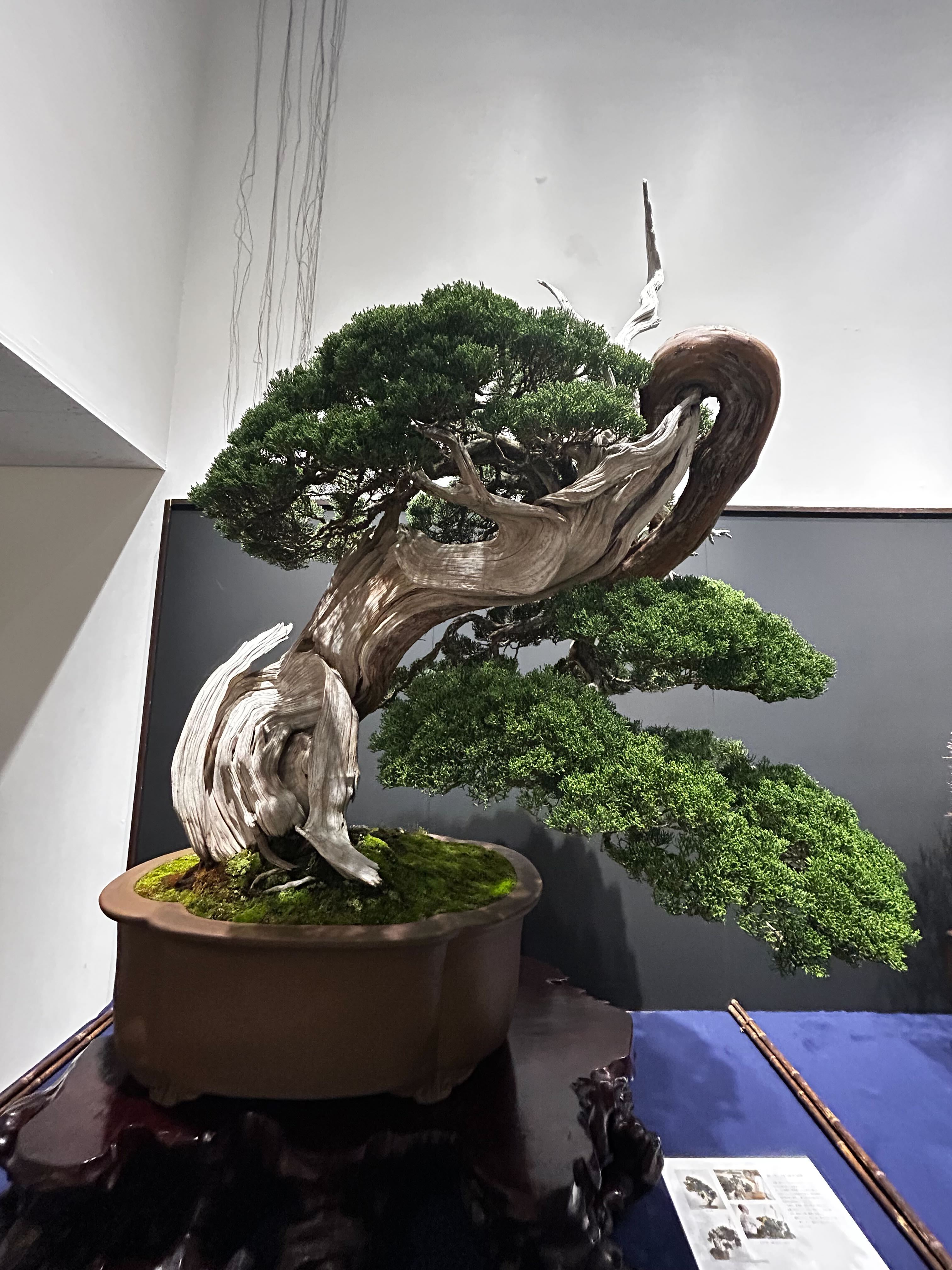
At Mansei-en, one of the historic gardens of Omiya Bonsai Village on the northern edge of Tokyo, staff ask most visitors not to photograph what grows there. The reason has nothing to do with protecting the art. Most of the trees are private property. They are watered, wired, and shaded daily by the garden's own hands, and they still belong to owners who are rarely the ones holding the shears.
To entrust a tree is not to give it up. It means placing its daily care in someone else's hands while its future, and the choices that shape it, remain yours.
A Tree's Needs Outrun Where Its Owner Lives
Bonsai is unforgiving about time in a way few possessions are. Watering needs shift by the day — a tree in full sun dries faster than the same tree in shade, and species, pot size, and soil mix all change the speed, so daily checking is part of the practice, not an occasional chore. In the height of summer that can mean watering more than once a day. We've written elsewhere about how central this daily attentiveness is to keeping one.
That is only the first kind of distance. A bonsai raised and shaped in Japan cannot simply travel to wherever its owner happens to live. Moving a living tree across a border means an export inspection and a phytosanitary certificate on the Japanese side, and on the receiving side, rules set by that country's own authorities — rules that often include quarantine conditions and, for some plant material, an outright ban, and that can change without much notice. We look at this in full in Trees Cannot Cross Borders. Even an owner with the skill and the daily hours to spare cannot always keep a tree where they live. The tree's needs and the owner's life are simply in two different places, and no amount of devotion closes that gap by itself.
Trust Attaches to a Person, Not a Service
Separating who owns a bonsai from who tends it, the way Mansei-en's owners do, is not a new idea invented to solve this distance. It is old, and what makes it work is not a service in the abstract. It is trust placed in a specific, known artist — the way a meiboku (銘木, "a celebrated tree with a documented history") carries forward the name of the person who shaped a particular stretch of its life, as we described in our piece on Japan's historic bonsai. An owner who entrusts a tree is not leaving it in anonymous hands. They are choosing a person whose judgment about when to wire, when to hold back, and when to repot, they are willing to stand behind.
To Entrust Is Not to Give Up
The distinction matters, because entrusting a tree is easy to mistake for something closer to selling it, or losing track of it. It is neither.
What stays with the owner, even when the shears never pass through their hands, are the decisions that actually shape a tree's future: whether to keep training it toward the form it has now, when to let a branch run further, whose hands to trust with it next. What also stays is the record — an account of what was done, by whom, and when, the same kind of keireki (経歴, "a tree's traceable record of care") that gives a meiboku its standing. An owner who is never present for the watering can still be the person whose name is written into that record, season after season.
This is close to an older idea we return to in The Culture of Entrusting: that ownership and daily labor were never quite the same thing, even for trees that never leave Japan. A tree's history has always been made of more hands than its owner's alone.
If you are weighing whether to entrust a tree at all, this is the question that actually matters — not whether you would rather do the daily work yourself, but whose judgment about that tree you are willing to stand behind when you are not the one holding the shears.
Azukeru Already Names What This Requires
Japanese has a plain word for this arrangement: azukeru (預ける, "to leave something in another's keeping"), the act of placing something in someone else's hands, trusting it will be returned in good order — or in better order than when it was given. It describes a coat left at a door, a child left with a relative, house keys left with a neighbor while the owners travel: for a time, someone else's responsibility to keep well.
Applied to a living tree with a life measured in decades, the same word describes something quietly durable. An owner who cannot water a tree in July, prune it in March, or protect it from a hard frost in January has not stepped outside its story. They have simply chosen where, in that story, their part is written — in the decisions and the record, rather than in the hours of hands-on work.
One of the trees under Azukari's care right now is a princess persimmon (rouyagaki, 老爺柿) — an old, fruiting tree that has never left Japan and is tended daily in an artist's own garden. What reaches its owner each season is not the shears. It is the fruit setting, the winter pruning, the tree doing what it has always done, now witnessed on behalf of someone who lives somewhere else entirely. Azukari's owners hold the two things this piece has been about all along — the choices still theirs to make, and the record of a tree kept well — while an artist in Japan keeps holding the shears.
References
- Bonsai Empire — "Watering Bonsai; how to water your trees" — on how watering needs vary by sun exposure, species, pot size, and soil, and why daily checking is part of bonsai care.
- Bonsai Empire — "Omiya Bonsai Village" — on Mansei-en restricting photography because most of the trees on the grounds are privately owned.
- Japan Plant Protection Station (MAFF) — "English Export Guide" — on the inspection and phytosanitary certificate process required to export live plants from Japan, and on destination-country import restrictions.
- Omiya Bonsai Village — Wikipedia — on the village's 1925 founding by bonsai gardeners displaced by the 1923 Great Kanto earthquake.