In Meiji 44 — 1911 on the Western calendar — the Tokyo prefectural government paid the Oyamada family for a white pine and handed it to Tokyo Metropolitan Engei High School, not to be admired but to be taught from. The tree was not new even then. It had already been growing inside Edo Castle before the shogunate ended, moved outside the castle walls around the time of the Meiji Restoration. More than a century after that purchase, students at the school are still the ones watering and pruning it.
Trees with a documented past like this one are called meiboku (銘木, "a celebrated tree"). A meiboku usually carries a mei (銘, "a bestowed name") drawn from its own history — a name given the way a distinguished sword or tea bowl might receive one, marking a work with a traceable past rather than an anonymous object.
A meiboku is a single tree that records generations of care.
Time and hands decide it, not the species
Trees called meiboku in the bonsai world tend to share a few things. Age, first. A traceable record of whose hands shaped it — its keireki (経歴, "a tree's record of care and custody") — rather than any single artist's biography. And a form that has grown more refined the longer it has been tended.
A meiboku is not a rare species. It comes from the same ordinary species found throughout bonsai — goyomatsu (五葉松, "Japanese white pine"), shimpaku juniper, red pine. What sets it apart is time, and the number of hands involved. No single artist completes a meiboku within one career; generation after generation of artists each shape it a little further, refining its form by careful degrees. That accumulation, more than age alone, is what makes a tree a meiboku.
Three documented trees carry the pattern forward
Japan still holds a number of meiboku with a traceable history. Below are three, each confirmed against a primary source.
The white pine "Higurashi" is about 450 years old
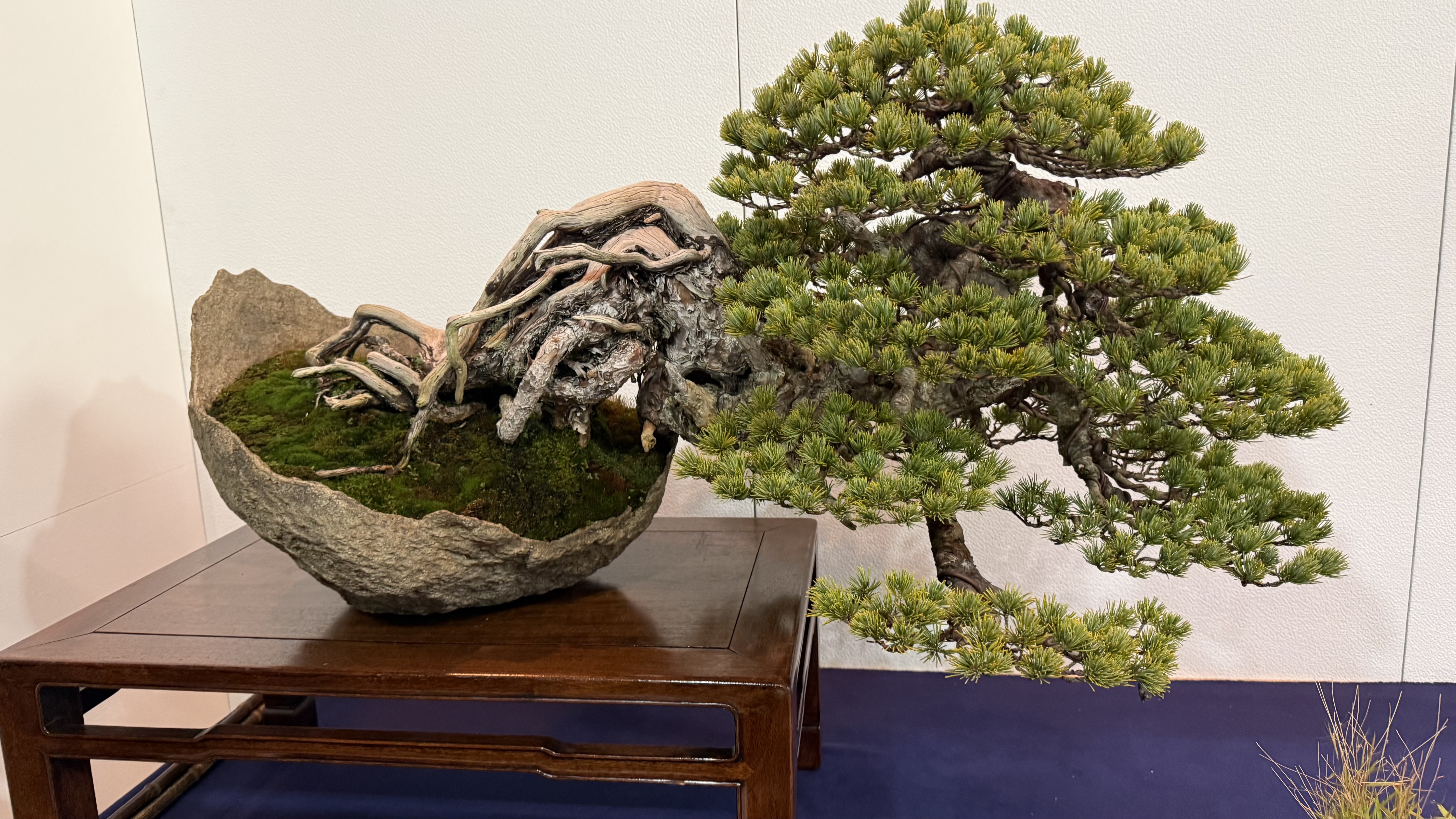
Held by the Omiya Bonsai Art Museum in Saitama, this goyomatsu is said to be around 450 years old. Its name, meaning "a day's end," reflects the sense that one could look at it all day without tiring of it. It was found in Shikoku in the early Showa period and cared for by Chutaro Nakano, a renowned bonsai figure from Niigata. Collected from the wild and potted only after a long span of preparation, it is said to have kept the ruggedness of a mountain-collected tree while being refined, under the care of later masters, into its present, dignified form. The museum lists it among the centerpieces of its collection.
The white pine "Sandai Shogun" moved from a shogun's castle to the emperor's garden
This goyomatsu is said to have been cherished by Tokugawa Iemitsu, the third Tokugawa shogun, and its estimated age is around 550 years. It was grown inside Edo Castle and moved outside the castle grounds around the time of the Meiji Restoration. Today it is cared for at Daido Garden, the cultivation grounds inside the Imperial Palace managed by the Imperial Household Agency, alongside roughly 500 other bonsai with an average age near a century. Iemitsu is remembered as a shogun with a deep devotion to bonsai, and the tree's continued presence at Daido Garden is one of the few physical traces that devotion left behind.
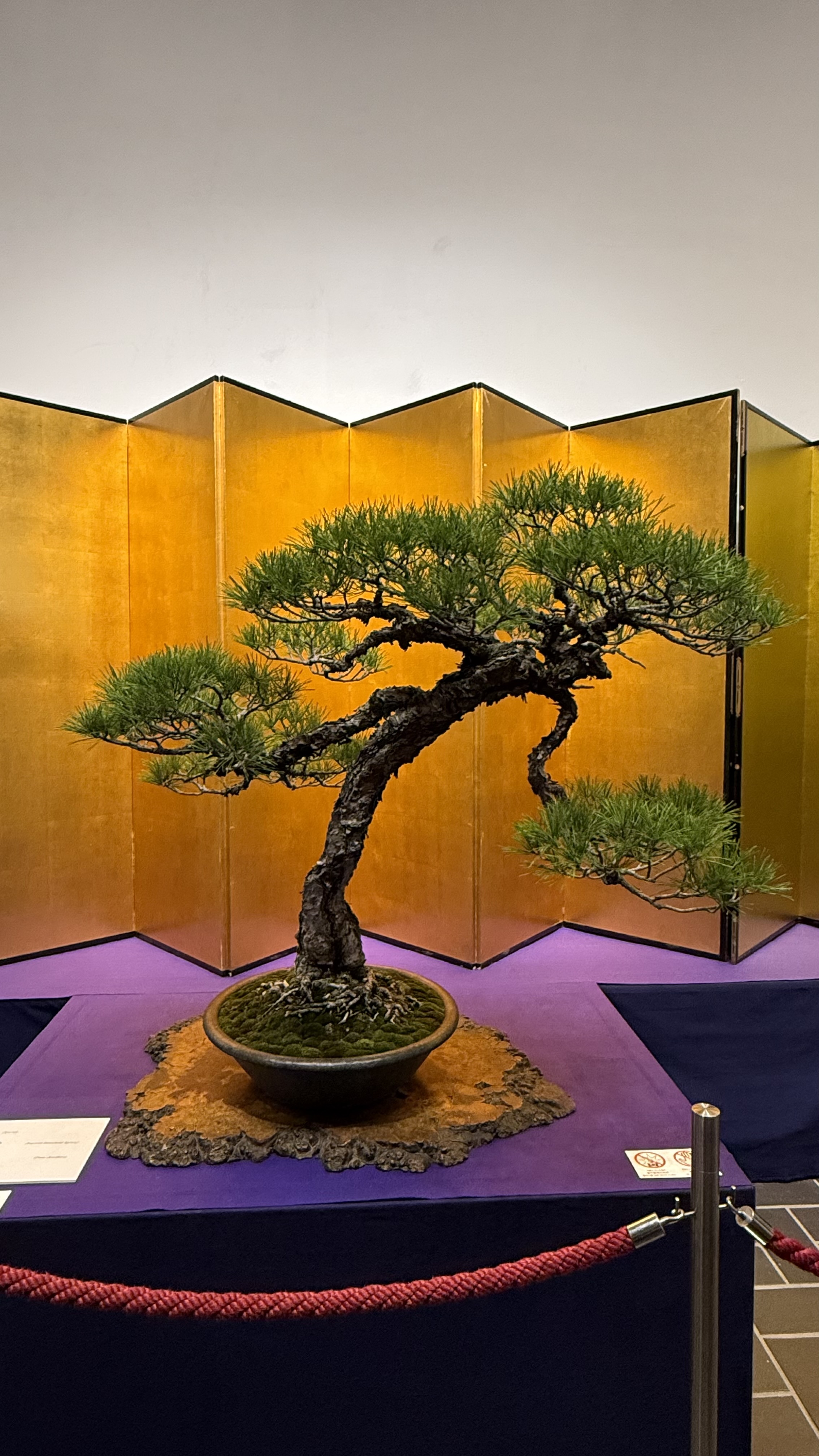
A pine connected to the Imperial Palace. At Daido Garden, the white pine "Sandai Shogun" is one of many bonsai that have been handed down and tended across generations.
A pine bought for a classroom in 1911 is still tended by students today
The white pine at Tokyo Metropolitan Engei High School — the same tree from the opening of this piece — is also said to be connected to Tokugawa Iemitsu. According to the school's own records, it was grown inside Edo Castle, moved outside the castle by the time of the Meiji Restoration, and purchased from the Oyamada family in Meiji 44 (1911) so it could serve as teaching material, its care entrusted to the school from that point on. In March 1999, it was registered as a "precious bonsai" by the Nippon Bonsai Association.
Two institutions now hold trees connected to the same shogun: the Imperial Household Agency, custodian of the grounds inside the emperor's palace, and a public high school, where the tree is handled by teenagers learning to prune. Both count as keireki — a documented line of custody — in equal standing.
Old nurseries measure custody in three or four generations
At Japan's oldest bonsai nurseries, it is not unusual to find trees handed down across three or four generations. As written in an earlier piece, "Bonsai Is Never Finished," a bonsai is never something one artist's career can complete.
A meiboku is not something a single owner or a single artist built from nothing. It is found in the mountains, shaped by a first artist, passed to a next owner, then shaped again by a next artist. Through that repetition, the tree gains dignity a little at a time. Trace the record of "Higurashi" or "Sandai Shogun" and more than one hand is always involved.
Artists build for the generation after them
A bonsai artist does not aim to finish a tree within their own career. A tree's lifespan usually outlasts the artist who tends it, which is exactly why an artist does not treat the current form as final, but works to leave the tree in a state the next generation can still shape further. How far to let a branch grow this year, which one to keep — these decisions are made with a future the artist will never see in mind.
A meiboku did not arrive at its present form by accident. It is the result of generation after generation of artists setting aside the ambition to finish the tree themselves, and building instead for the generation to come.
An owner holds one stretch of the record, not the whole of it
A meiboku does have an owner. But that owner does not hold the tree's entire history — only a single stretch of a much longer timeline.
"Higurashi" is spoken of alongside the name Chutaro Nakano, but people cared for it before him and after him too. "Sandai Shogun" carries the name of Tokugawa Iemitsu, yet countless hands tended it during its long passage from Edo Castle to the Imperial Palace's Daido Garden.
The owner of a meiboku is a person entrusted with one stretch of that tree's history.
This sense of being entrusted is an old idea within Japanese bonsai culture. Ownership here is less about holding a thing exclusively, and closer to accepting the responsibility of passing it on. A meiboku is still alive today because owners and artists, generation after generation, have shared this same sense of stewardship. The measure worth applying to any old bonsai, in a museum or otherwise, is not just its age but how many hands its keireki actually records.
Today's saplings are tomorrow's meiboku
A meiboku is not made by one owner's decision to keep a tree well. It is made by enough owners, one after another, deciding to pass it on.
Azukari is built around that same handoff. The tree keeps growing in Japan under an artist's care, and its owner joins one stretch of that timeline through seasonal records rather than a single transaction. Among the trees being tended today, under this structure, some may one day carry a name of their own.
For more, see "Why Does a Bonsai Have a Name?," "The Last Generation of Japanese Masterpiece Bonsai," and our report from the 100th Kokufu Bonsai Exhibition.
References
- Omiya Bonsai Art Museum — Collection — museum collection listing including the goyomatsu "Higurashi."
- Tokyo Metropolitan Engei High School — "The School's Educational Assets" — school record of the Tokugawa Iemitsu-linked white pine, its 1911 (Meiji 44) purchase from the Oyamada family, and its 1999 registration as a precious bonsai.
- Imperial Household Agency — preparing spring decorations at Daido Garden — official Imperial Household Agency page describing the Daido Garden bonsai grounds inside the Imperial Palace.
- Tokyo Shimbun Digital — "Bonsai of the Imperial Court" — reporting on Daido Garden's roughly 500 bonsai and the 550-year-old white pine cherished by Tokugawa Iemitsu.