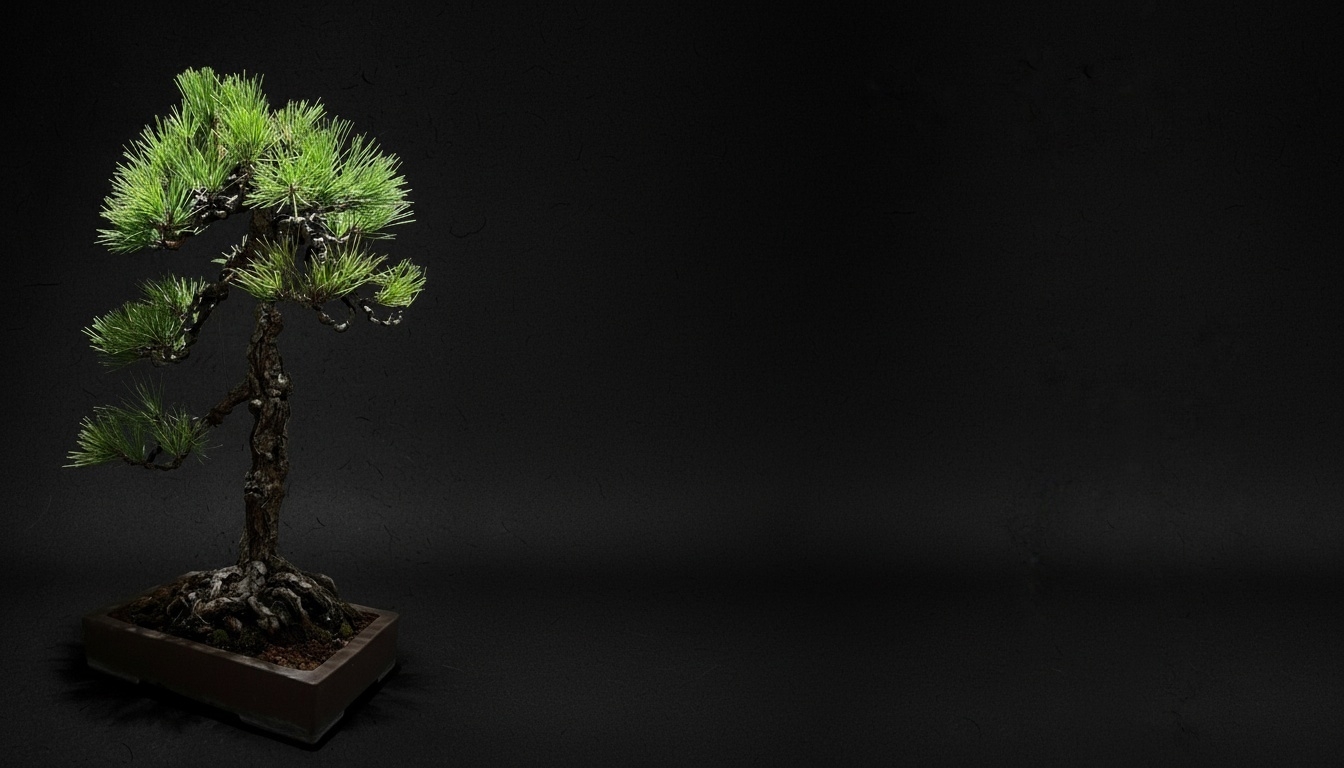
On the night of May 8, 2024, thieves broke into Gashou-en, a nursery in Kumamoto Prefecture, in southern Japan, that had spent nearly fifty years raising award-winning trees, and left with 33 of them. Some had taken decades to shape. "I'm really angry, and I'm also really sad," the nursery's manager, Yusei Sasaki, told the South China Morning Post afterward. "We have worked hard to raise these trees, and it takes a long time for them to be perfect. They are works of art." It was not an isolated case. Japanese growers reported around a dozen thefts in 2019, then 20 incidents in three months at the turn of 2020, and by May 2024 a trade association of growers was tracking 25 thefts in the previous three months — one of them alone worth an estimated $190,000 — with stolen trees suspected of moving through China, Vietnam, and elsewhere in Southeast Asia before reaching buyers further afield.
Bonsai theft in Japan is rising for the same reason apprenticeship is shrinking: overseas demand for finished masterpiece trees has outrun the number of people qualified to grow the next generation of them.
The two facts are usually reported separately — one as a crime story, the other as a footnote about a graying craft. Put side by side, they describe a single supply problem. Overseas buyers want trees that already look like the ones taken from Gashou-en: decades old, fully styled, ready to display. Growing one from nothing takes as long as it always has. So does training someone who can.
A String of Thefts Traces Where the Trees Are Going
Some estimates put the global trade in bonsai in the multi-billion-dollar range, though the figures vary widely by what is being counted and are hard to verify independently. Easier to track is where the stolen trees are headed. Japanese nurseries and investigators believe organized groups are stealing specific trees to order, moving them out of the country, and reselling them to collectors who may not ask too many questions about where a decades-old pine came from. Growers have responded by tightening security around gardens that were, until recently, largely open.
None of this makes the surviving trees more valuable in any sense a buyer should rely on. It makes them harder to insure, harder to secure, and, for the people who grow them, more exhausting to keep. A market that has to guard its inventory like a museum is not a healthy market. It is a scarce one.
Apprenticeship Still Runs on the Same Clock It Always Did
None of this can be fixed by growing trees faster, because a masterpiece bonsai is not really the thing being trained — the person shaping it is. The bonsai artist Masahiko Kimura began his apprenticeship at age 15 at Toju-en, one of Omiya Bonsai Village's oldest gardens, under master Motosuke Hamano. It lasted eleven years before he was considered ready to work independently. That clock has not sped up. Valentin Brose, a German bonsai artist, arrived at Kunio Kobayashi's Shunkaen Bonsai Museum in Tokyo for a three-month introductory course, then asked to stay on as a formal apprentice. He trained under Kobayashi for three years, some days working eighteen hours to make the most of his limited time in Japan, before returning to Germany to teach and lead tours of his own. What his teacher gave him, as Brose recalls it, was the ability to read a tree's individuality — because a bonsai explains nothing in words, so learning to see one takes years of simply looking.
Brose's case cuts against the easy version of the succession story: people from outside Japan are still willing to give three years and eighteen-hour days to this. The bottleneck is not desire. It is that only a handful of masters are positioned to take on students at all, and each can train only so many people across a working life.
A Hundred-Year-Old Village Is Betting Its Second Century on Fewer Hands
Omiya Bonsai Village took shape in 1925, after the 1923 Great Kanto earthquake made it impractical for Tokyo's bonsai growers to keep working in the city and sent them looking for open land, clean water, and air nearby. By 1930, around 30 gardens were operating there, Toju-en — where Kimura would later apprentice — among them. Today the village lists six.
That is not simply a story of decline. The village reached its hundredth year in 2025, and Saitama City marked it with a year of exhibitions and events. A hundred years surviving an earthquake, a world war, and a changing economy is a real achievement. But the arithmetic behind it — thirty gardens narrowing to six — is also the clearest picture available of how few working masters are left to train whoever comes next.
What Azukari Changes, and What It Does Not
In Japan, a practice close to azukari (預かり, "entrusting, or holding something in trust") has long existed between tree owners and artisans: the owner supplies the tree and a say in its direction, the artisan supplies the daily hours and the craft, and the two stay in contact about where it is headed. Azukari is built on that same arrangement. It does not solve the shortage of masters described above — no ownership structure can train someone faster than the craft allows. What it does is keep a tree connected to one of the working artisans who remain, rather than letting it disappear into a private collection where no one outside the household ever sees it worked on again. A tree under this kind of arrangement stays in Japan, in a garden an owner can name, tended by someone whose daily attention to it — the watering, the wiring, the seasonal styling — is visible to that owner across whatever distance separates them. The display side of that same relationship, choosing the pot, the stand, the angle a tree is shown at, is its own discipline in Japan, called keido (景道, "the way of display").
The Question Worth Asking Isn't the Tree's Age
Every masterpiece bonsai for sale comes with a number attached to its age — eighty years, a hundred, sometimes more. That number is the wrong thing to check first. What matters is whether there is a named artisan still tending it, someone whose garden a buyer could, in principle, visit, and whose work on that particular tree continues after the sale closes. A tree with no such person attached to it, however old, is a tree whose care effectively ends the day it changes hands — and given how few gardens are left to train the next Kimura or the next Brose, that is the harder thing to replace.
The gardens narrowed from thirty to six. The trees are still there. What is scarce is not the wood. It is the hands still willing, and able, to keep training the next pair.
References
- South China Morning Post — "Bonsai burglars: Japan sees surge in tiny tree thefts, prompting 'angry' growers to boost security" — theft statistics from 2019 through the May 2024 Gashou-en theft, and Yusei Sasaki's account.
- Semafor — "Japan's bonsai trees are being targeted for theft and trafficking" — recent theft frequency and suspected trafficking routes through China, Vietnam, and Southeast Asia.
- Japan Guide — Omiya Bonsai Village — the village's 1925 founding after the 1923 Great Kanto earthquake.
- Omiya Bonsai Art Museum — About the Omiya Bonsai Village — the village's peak of about 30 gardens in 1930 and its six gardens today.
- Omiya Bonsai Village — Gardens — the six gardens currently operating in the village, including Toju-en.
- Government of Japan, We Are Tomodachi — "Enchanted by the Bonsai Universe" — Valentin Brose's apprenticeship under Kunio Kobayashi at Shunkaen Bonsai Museum.
- Wikipedia — Masahiko Kimura (bonsai artist) — Kimura's eleven-year apprenticeship at Toju-en under Motosuke Hamano.