On February 14, 2026, the doors of the Tokyo Metropolitan Art Museum in Ueno opened on the second half of the 100th Kokufu Bonsai Exhibition. Among the visitors filing past a wild shimpaku juniper estimated at roughly 3,000 years old, something like six or seven in ten had flown in from outside Japan. A ¥1,000 ticket bought entry to more than 150 historic masterworks, trees whose custody had passed through the hands of collectors, artists, and in a few cases the Imperial Household, for decades or centuries before this room.
None of those numbers is really what the 100th Kokufu was measuring. A bonsai's worth is set by one question that has nothing to do with attendance or trunk age: whose hands does this tree go to next, and are they ready for it. The philosophy that treats ownership as a loan, the split between the name printed in the program and the hands actually doing the work, the specific trees on the floor this year — all of it is that same question, asked in a different register.
Bonsai Is Not Horticulture, Because the Material Never Stops Changing
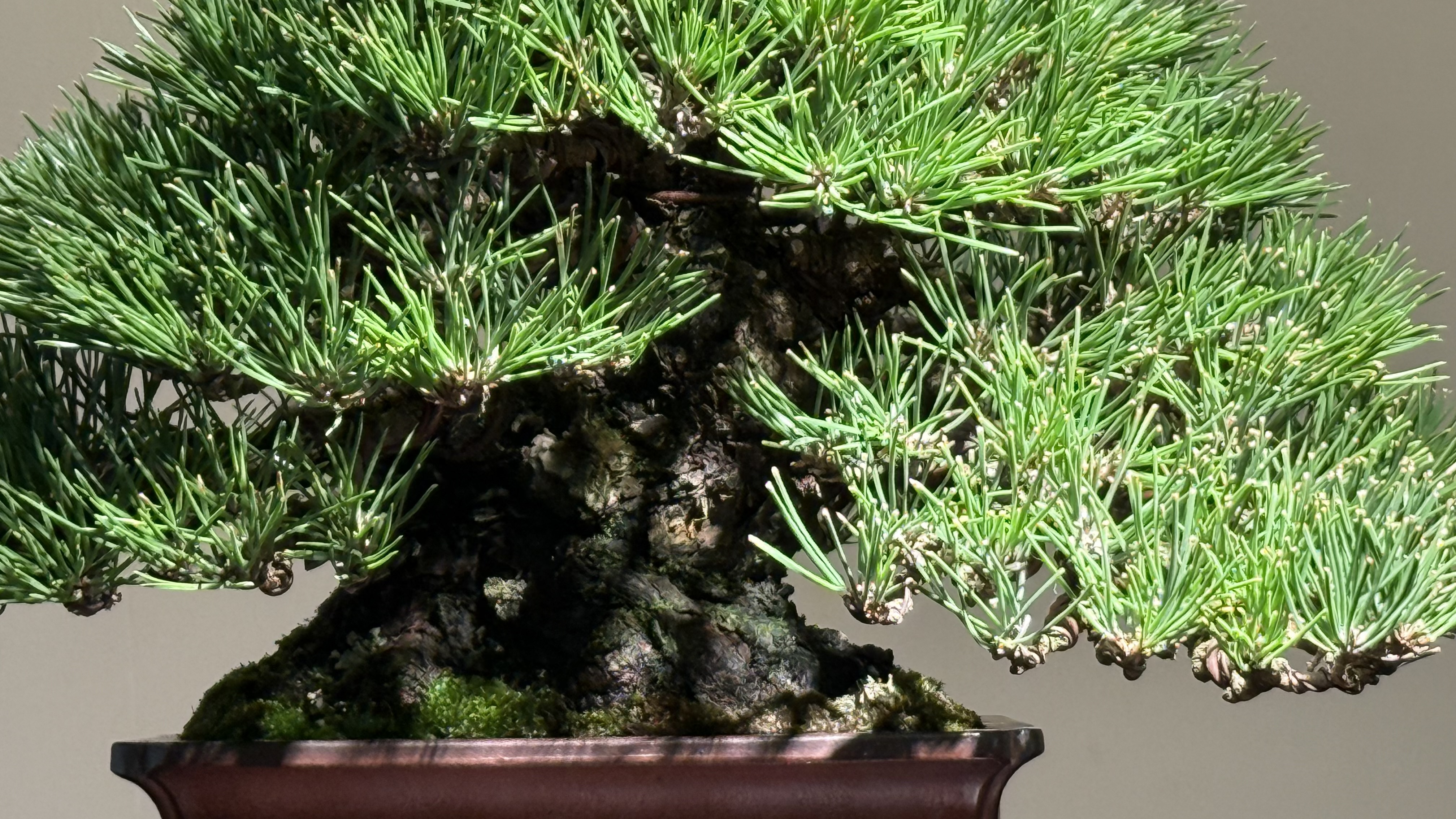
As "green interior" trends have expanded, small bonsai increasingly appear on the same shelves as ordinary houseplants at IKEA and Amazon. Karen Harkaway, president of the American Bonsai Society, has noted that some people see bonsai as a houseplant category, while others see it as fine art. That split exists globally; this article is about the latter. Where decorative plants are chosen for how little care they demand, top-tier bonsai are singular works that can command prices from several hundred thousand to tens of millions of yen and be handed down across generations.
Most art starts with inert material — canvas, marble, bronze — and freezes the moment the artist steps back. Bonsai reverses that. The material is alive. The work is never finished. Multiple caretakers across generations become co-authors of the same piece. And unlike any other art form, bonsai can die; staying alive is itself part of what the work is worth.
Kunio Kobayashi, founder of Shunkaen Bonsai Museum, dates his own entry into bonsai to a single tree. At an exhibition he stood before a 600-year-old Japanese white pine called "Oku no Kyosho," its trunk hollowed and bone-white with age, kept alive by a single strip of living bark. He describes the moment as a shock that struck him "to the core," and forty-four years later still argues that bonsai, as a living art, is permanently unfinished. A Rembrandt painted in 1642 will look essentially the same in 2642 behind UV glass. A bonsai collected from a Japanese mountain in 642 and tended for 1,400 years could be more complex and more valuable in 2642 than it is today, for the plain reason that it is still alive. Time itself is the medium — the one art form where that is literally true.
In Bonsai, Owning a Tree Means Owing It to Whoever Comes Next
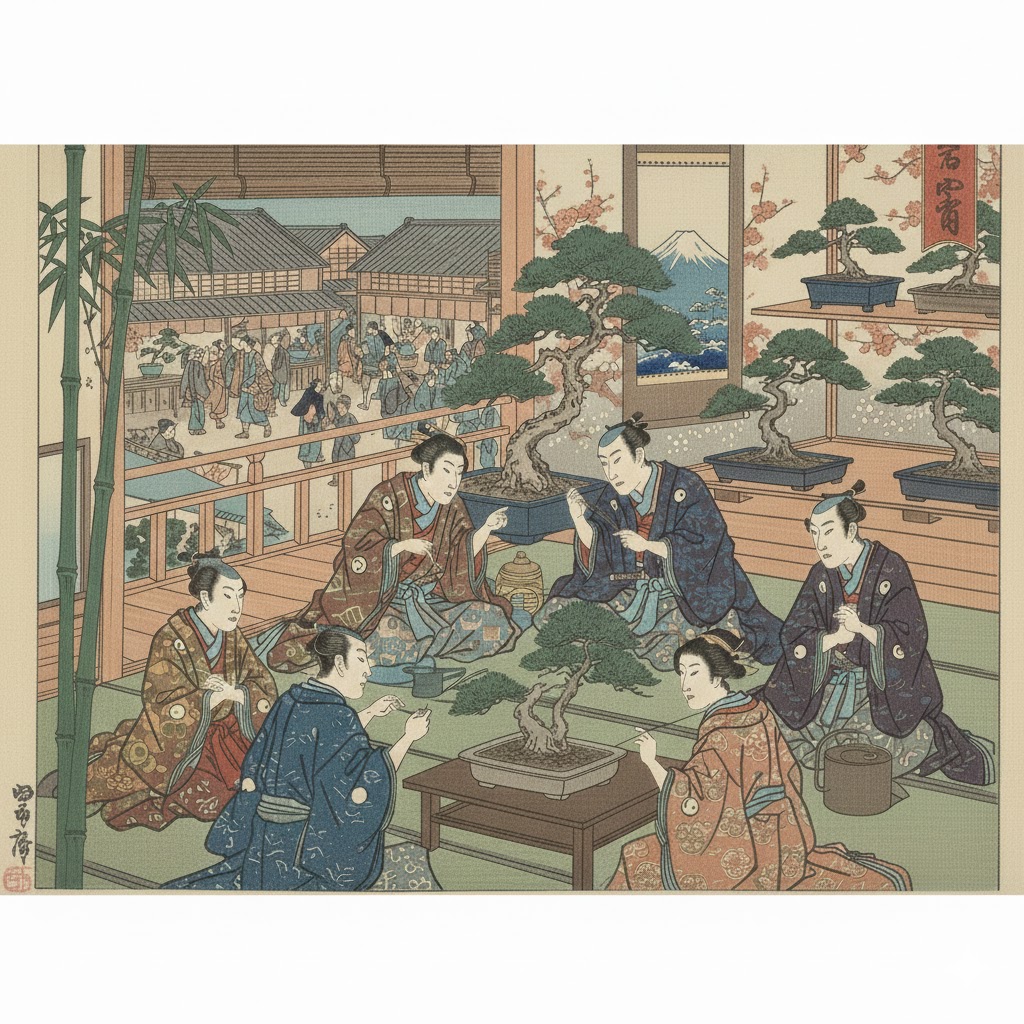
Japanese bonsai professionals do not describe the great trees they tend as things they own. The word is azukari — receiving something on trust. The years they get with a tree are a small fraction of its life, and their job is to leave it in better shape than they found it before handing it forward.
The instinct is not unique to bonsai; it runs through the vocabulary Japanese culture uses for tea utensils passed down, swords transmitted, Noh masks inherited. Bonsai carries a sharper version of the same urgency, because what is being held in trust is alive. One poorly managed season can undo decades of accumulated work, so the duty of azukari sits inside something as small as a single day's watering.
Kobayashi has compared training a disciple to training a tree, reducing both to three words: individuality, harmony, dignity. Every tree has its own character; the work is to draw that out, correct its weaknesses without erasing them, and move the whole toward something dignified — a process that rarely finishes inside one artist's career. It passes from teacher to student, and the technique itself travels down the same chain as the trees. A tree whose chain of custody has never broken earns a name: meiboku, a famous tree. Exhibitions are simply where those unbroken chains get put on a stage.
The Program Lists an Owner's Name; the Skill Belongs to Someone Else
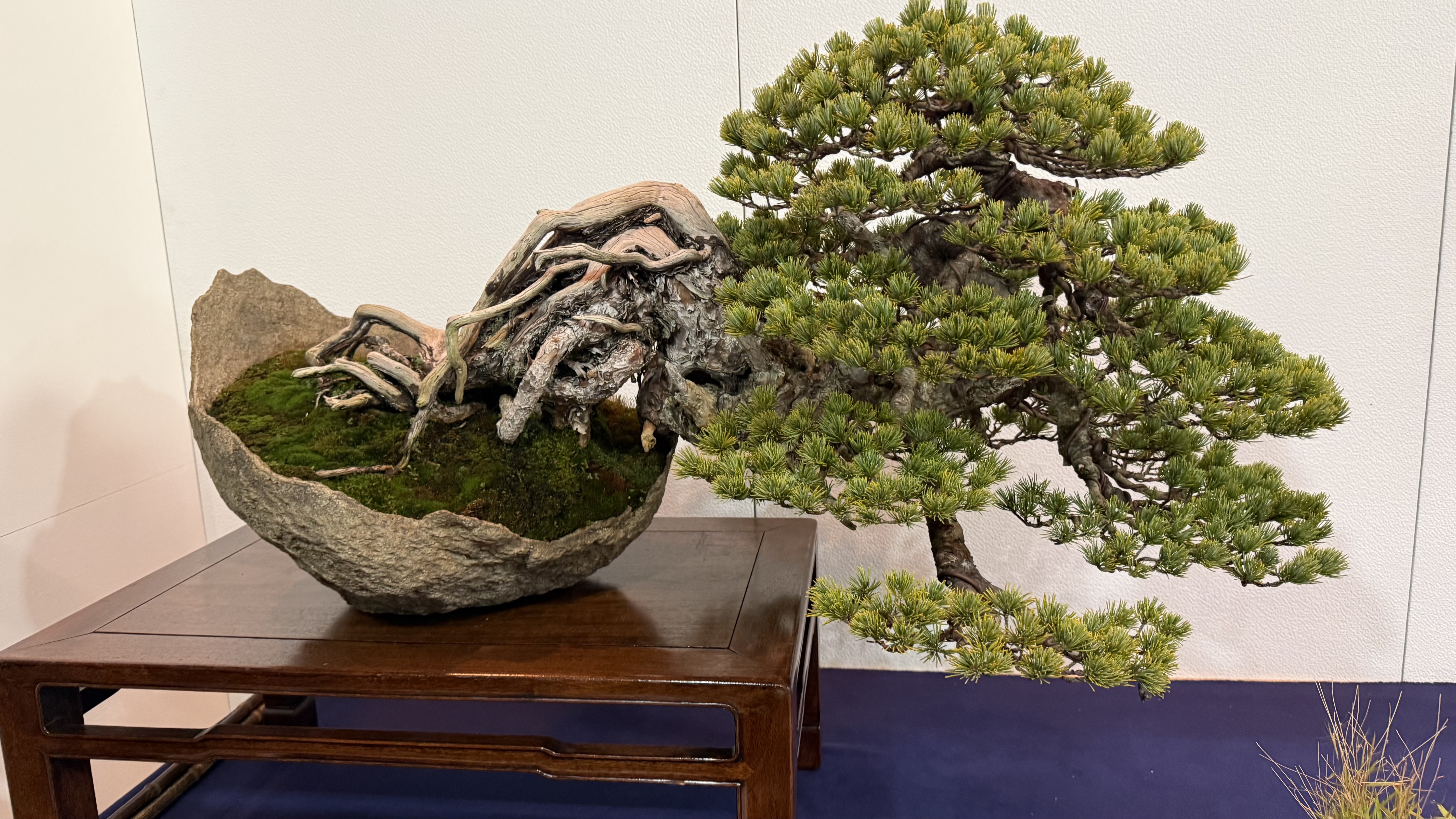
At Kokufu's level, entries are shown under the owner's name. The artist who does the daily, highly skilled work of keeping the tree in form is often invisible to the public standing in front of it. The owner receives the honor and the historical record. The artist builds reputation through technique, which is what earns the next commission and the standing to take on students of their own. The tree, meanwhile, keeps deepening through both of their efforts.
It resembles the gallery-and-artist relationship in fine art, or the chateau-owner-and-winemaker split in wine, with one difference that changes everything: the work is alive. A painting does not evolve once the artist puts down the brush. A bonsai does — under whoever takes it over next, it keeps growing, keeps being refined. A great bonsai does not have a single author. It has a dynasty of them.
For a young artist, an exhibition is where that structure gets tested. Bring an owner's tree to its finest state, enter it, take the judgment. Recognition there is what earns the next owner's call and the next, harder tree. Kobayashi himself entered the bonsai world at 28 — late, by the field's standards — and built a career on exhibition results from there. The stage where that reputation gets made just turned 100.
Kokufu Began in 1934 as a Deliberate Bid to Call Bonsai "Japanese Art"
The first Kokufu was held in March 1934 at the Tokyo Prefectural Art Museum, the same building now known as the Tokyo Metropolitan Art Museum. It was organized by the Kokufu Bonsai-kai, whose founding chairman was Count Yorinaga Matsudaira, later President of the House of Peers. The name Kokufu — the customs and culture unique to a nation — was chosen on purpose, to frame bonsai as a Japanese art form rather than a private hobby.
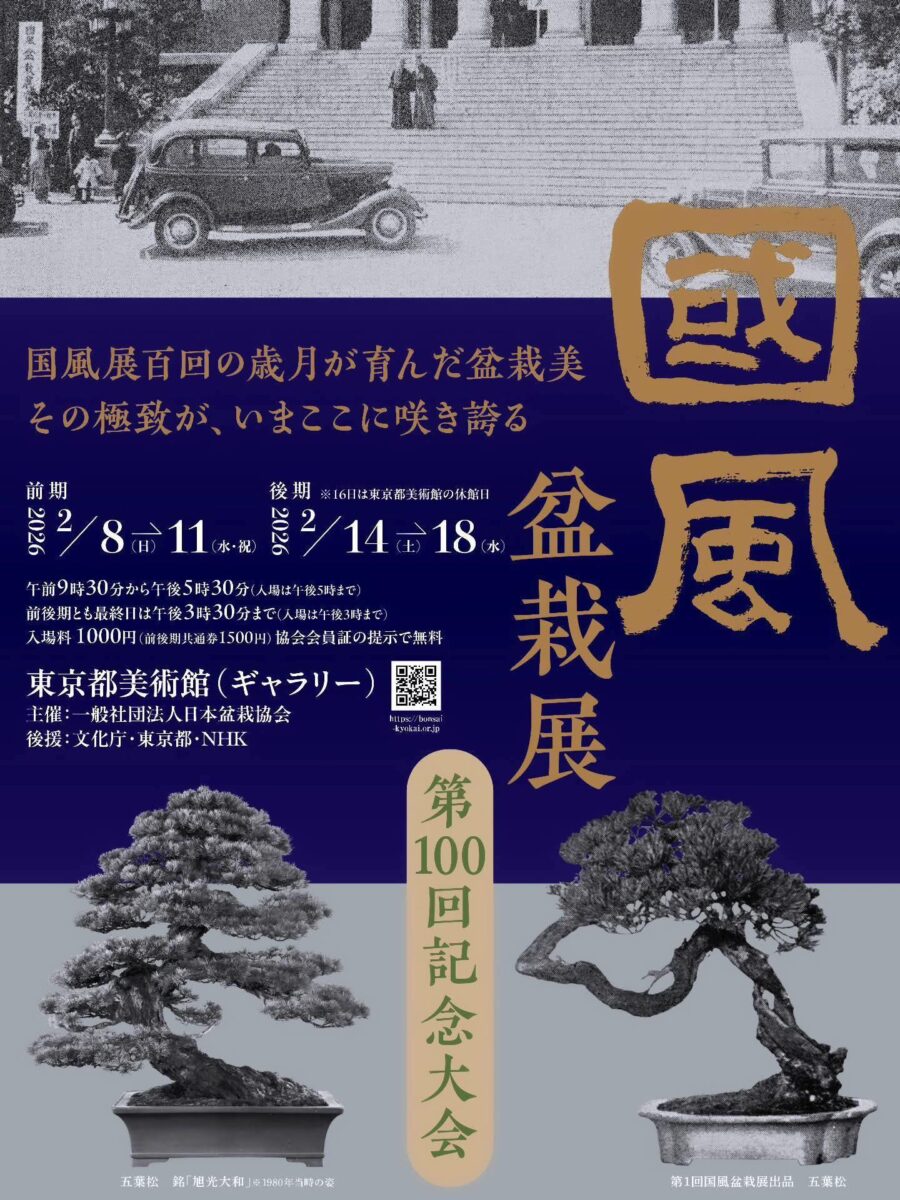
On the advice of sculptor Fumio Asakura, who argued that bonsai is about enjoying the seasons and that spring and autumn showings were the natural fit, the exhibition ran twice a year before the war. Three wartime years interrupted it. When it resumed at the same Ueno museum in 1947, the exhibition is said to have taken on a symbolic weight beyond bonsai itself — a public sign that ordinary life, and the patience bonsai requires, had returned. In 1965 the Nippon Bonsai Association was established on the foundation the Kokufu Bonsai-kai had laid, with former Prime Minister Shigeru Yoshida as its first chairman, and it has run the exhibition ever since as Japan's oldest and highest-level bonsai showing.
Getting to a Hundred Editions Took Longer Than Reaching a Hundred Years of Bonsai
The 92 years behind this milestone are the record of bonsai's change in status: from a pastime enjoyed by a narrow circle at tea gatherings and restaurant display events in the late Meiji era, to an art shown in a public museum. Bonsai editor Norio Kobayashi is generally credited with pushing what amounted to a bonsai art movement, and with Asakura's backing behind the scenes, that push is what landed bonsai a museum-level stage in the first place — the point at which its public identity shifted from hobby to art. For the 100th edition specifically, the Association marked the milestone with a commemorative ceremony, demonstrations, special displays of historic trees, screenings of commemorative film, and performances of traditional Japanese arts, well beyond a normal year's program.
Kokufu Splits Into Two Shows Because No Single Week Can Hold Its Best Trees
Kokufu runs in a first half and a second half. For the 100th edition, the first half ran February 8–11 and the second February 14–18, with the 12th and 13th given over entirely to swapping out the display — different trees for each half, meaning a visitor who wants to see everything has to come twice.
Among longtime attendees there is a standing belief that the famous trees appear in the second half: past Kokufu Prize winners and pieces their owners have chosen to show specifically for the 100th milestone tend to land there, and the second half draws the sharper attention because of it. This report is from the second half, and the venue matched the reputation — a denser concentration of historic masterworks than an ordinary year. General admission was ¥1,000, a combined first-and-second-half ticket ¥1,500, and entry was free for high school students and younger, and for Nippon Bonsai Association members. There were no advance tickets; everything was sold at the door.
More Than Six in Ten Visitors at the 100th Kokufu Came From Outside Japan
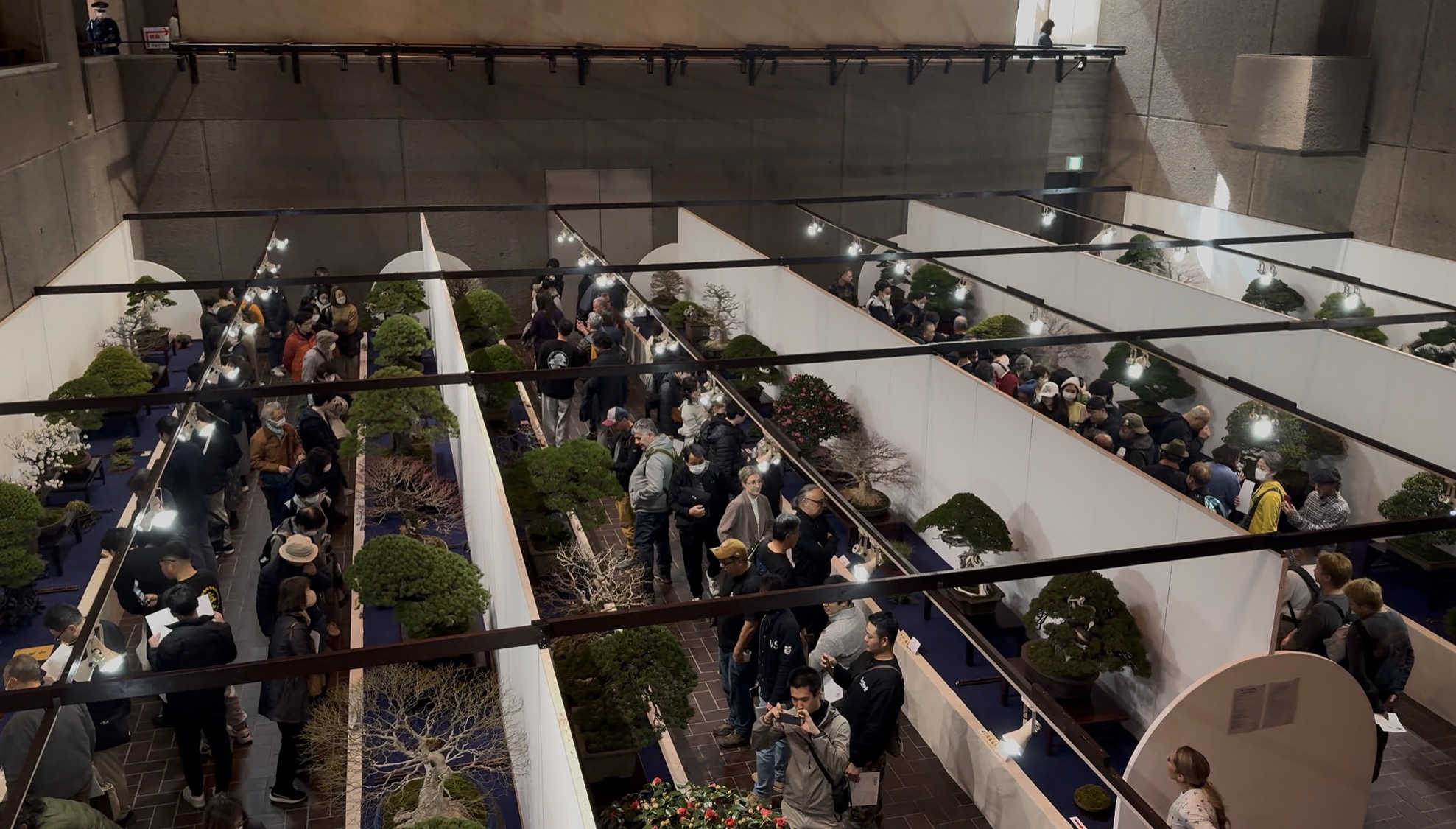
The first surprise inside the Tokyo Metropolitan Art Museum was the crowd itself. The languages carrying across the room were English, French, Spanish, Chinese — European and Asian visitors especially — and by feel, somewhere between 60 and 70 percent of the people in the building had traveled from outside Japan to be there. That lines up with Shunkaen Bonsai Museum's own numbers, where roughly 80 percent of visitors are foreign nationals. Bonsai has stopped being, if it ever was only, an old man's hobby confined to Japan.
Japanese visitors were unmistakably present too — older enthusiasts stopping in front of a tree with a grandchild in hand, younger visitors with phones out rather than notebooks. Between the two crowds, the 100th Kokufu made the point plainly: interest in bonsai now spans generations and borders at once.
Fans Fly In Every Year, Tour the Country, and Still Cannot Take a Tree Home
Many of the overseas visitors gathering in Ueno for Kokufu are not there for the exhibition alone. Most build what they call a "Bonsai Japan Tour" around it — Kokufu as the opening stop on an itinerary that runs through nurseries and artists' gardens across the country, from Omiya Bonsai Village to growing regions as far off as Shikoku and Kyushu. Alone or in small groups, they talk directly with artists, look at trees on the bench at close range, and take in something no photograph delivers.
Then they hit a hard limit. Phytosanitary rules require any bonsai destined for export to spend a minimum of three years under managed care in a designated export-ready nursery, so a tree fallen in love with at Kokufu cannot simply go home in a suitcase. Most of the meiboku on display are not for sale in the first place — the azukari duty described earlier means a historically important tree is something its keeper received on trust from a predecessor, not something to release on their own watch. The shimpaku "Hokusai," reworked decades ago by Saburo Kato, is still carefully managed today by Shinji Suzuki. It is a cultural property moving hand to hand across generations, not merchandise.
So the visitor who flies in once a year, tours the country, and stands holding their breath in front of a masterpiece is left with a relationship that stops at looking. That gap says two things about bonsai at once: how rare it is as a living cultural heritage, and how much room there is for a different kind of ownership to exist alongside it.
Three Trees at the 100th Kokufu Show What an Unbroken Chain Looks Like
Across both halves, more than 150 historic masterworks filled the museum. Three carried the clearest evidence of a chain of custody that had never broken.
Shimpaku "Hokusai": Three Thousand Years, Three Sets of Hands
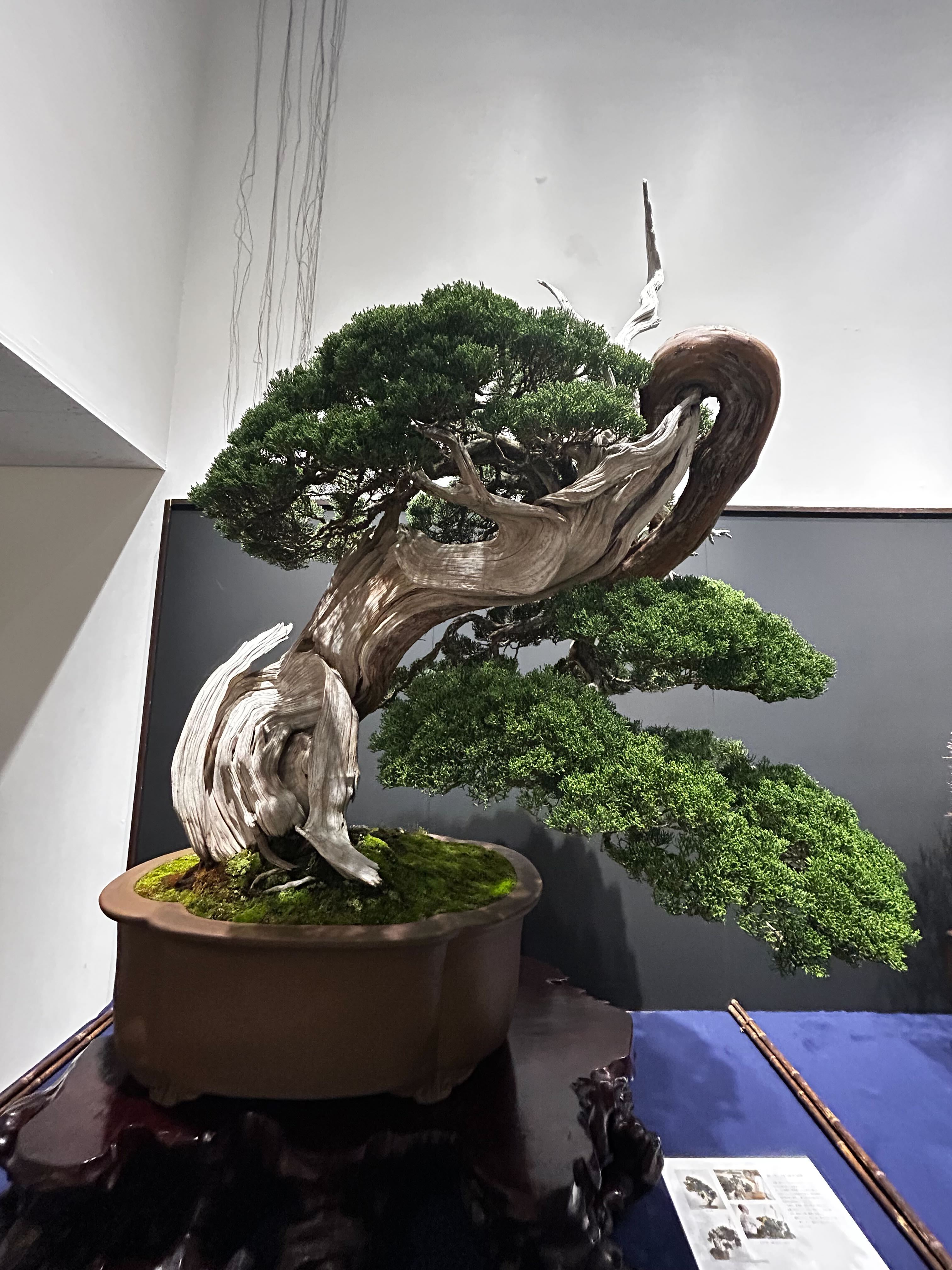
Shown as a special commemorative piece for the 100th edition, this shimpaku belongs to Shinji Suzuki of Nagano Prefecture. It was collected wild from Mt. Myojo in Niigata and is estimated at roughly 3,000 years old. About forty years ago, Saburo Kato — founder of Omiya Bonsai Village and a former president of both the Nippon Bonsai Association and the World Bonsai Friendship Federation — reset its front and carried out the major rework that gave it its current, powerful form.
Three thousand years invites disbelief, and the tree's own biology is the explanation: wild shimpaku growing on the cliff faces of the Japanese Alps and Niigata's mountains develop under conditions harsh enough that their growth rings run narrower than a sheet of paper, the trunk turning bone-white over millennia around a single living strip of bark. It is the same image Kobayashi describes seeing in Oku no Kyosho — a form that has stopped being simply bonsai and become something closer to a natural sculpture built out of geological time.
The chain is visible in plain sight here: from the mountain where it was found, to Kato, to Suzuki, a 3,000-year life passed hand to hand like a relay baton to reach the stage of the 100th Kokufu. The open question is who takes the baton next, and how.
The Imperial Red Pine: A Loan the Public Rarely Sees
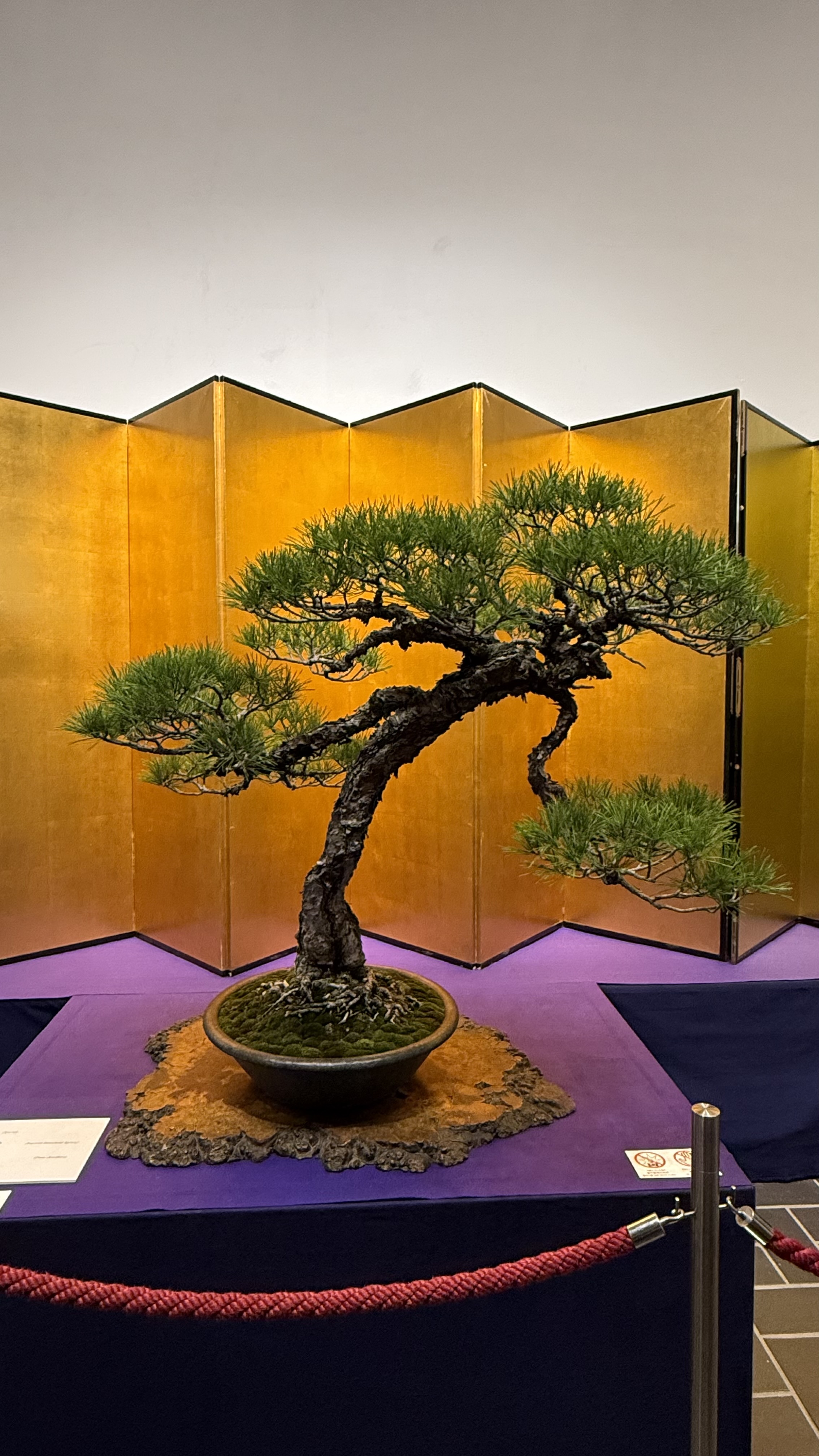
Kokufu regularly includes a special entry from the Imperial Household Agency — bonsai kept at the Imperial Palace. Where the black pine is called the "male pine," the red pine is the "female pine," known for finer, softer needles and a reddish cast to its trunk and new growth.
The Imperial family's connection to bonsai runs deep, often traced back to Emperor Meiji's well-documented fondness for it, which helped fix bonsai's early image as a pursuit for the political and financial elite. At the 98th Kokufu, Their Majesties the Emperor and Empress and Princess Aiko attended and were recorded by the Imperial Household Agency examining the works closely. At the 100th, it was reported that they visited again and viewed bonsai grown by enthusiasts from Japan and abroad — a milestone edition making the standing of bonsai as Japanese tradition visible in a way an ordinary year does not.
Source (NHK News): The Imperial Family viewed the bonsai exhibition cultivated by enthusiasts
The Imperial Palace keeps a range of bonsai — Japanese white pine, black pine, red pine, needle juniper, maple among them — displayed across several of its reception rooms, and public appearances by any of them are rare enough that a black pine shown for the first time in 37 years once became the talk of an entire edition. What the Imperial red pine's appearance at the 100th actually felt like is something only the people standing in front of it that day can say.
Tosho "Ascending Dragon": Judged Twice, Doubted Neither Time
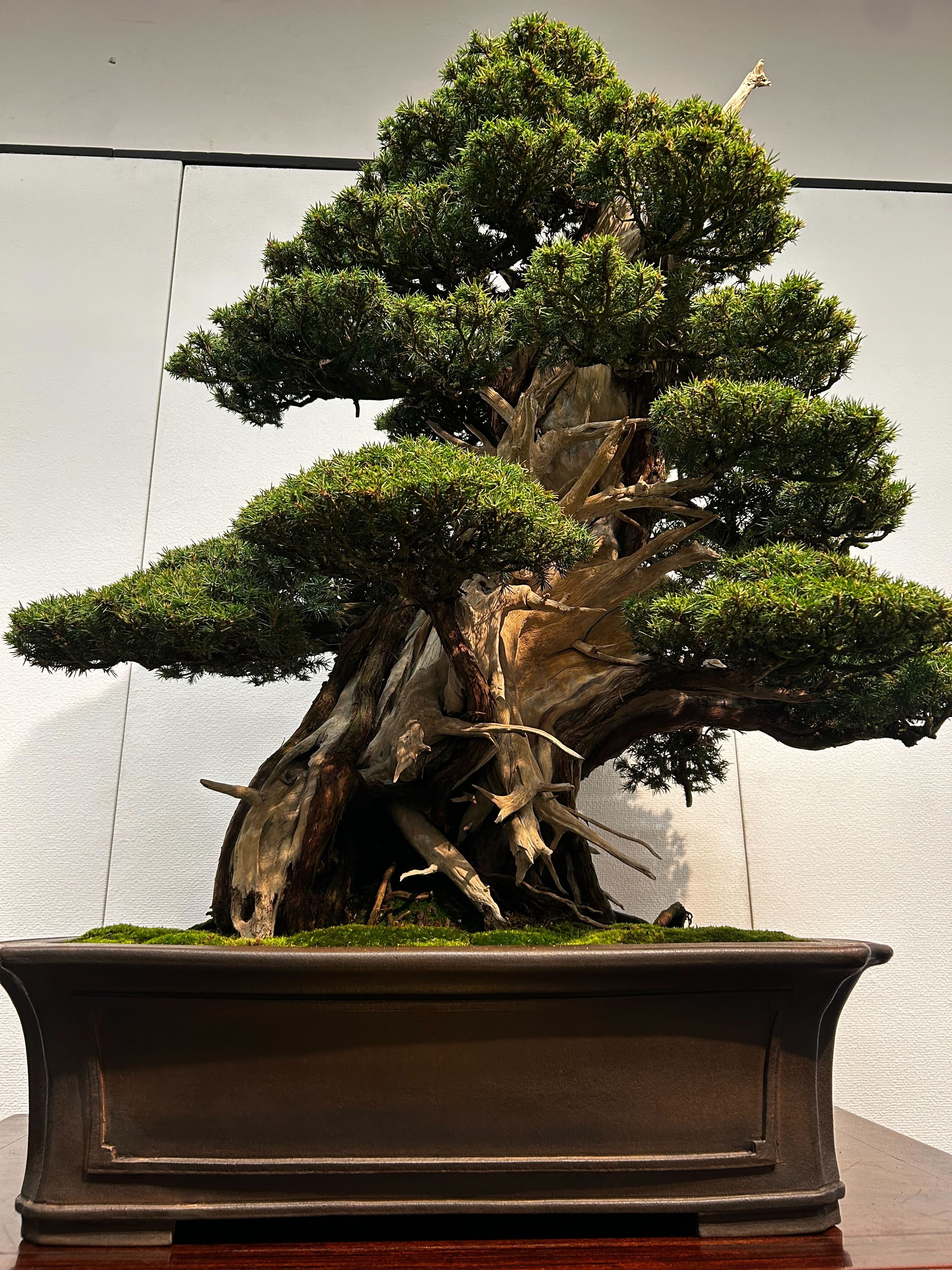
The tosho, or needle juniper, entered by Zenkyo Okushu of Aichi Prefecture has taken prizes at both Kokufu and the Taikan exhibition. Needle juniper stands alongside shimpaku as one of the two leading pine-and-cypress species, and this specimen's hard trunk and needles reaching skyward have earned it the nickname "Ascending Dragon." Winning recognition on two of the field's highest stages, under two different panels of judges, is what separates a tree of lasting quality from a one-season novelty.
One overseas attendee put the whole display into words better than a statistic could:
"About 150 historic trees were on display, including a 3,000-year-old pine, a tree gifted by the Emperor, and the magnificent 'Ascending Dragon' juniper — truly the finest gathering of bonsai I have ever witnessed. I was deeply moved."
Nothing in that sentence is exaggerated. Every tree on the floor at Kokufu carries decades, centuries, in a few cases millennia, of accumulated time behind it — a density no other bonsai exhibition in the world currently matches.
Kokufu's Companion Exhibition, Suiseki, Completes a Display Bonsai Alone Cannot
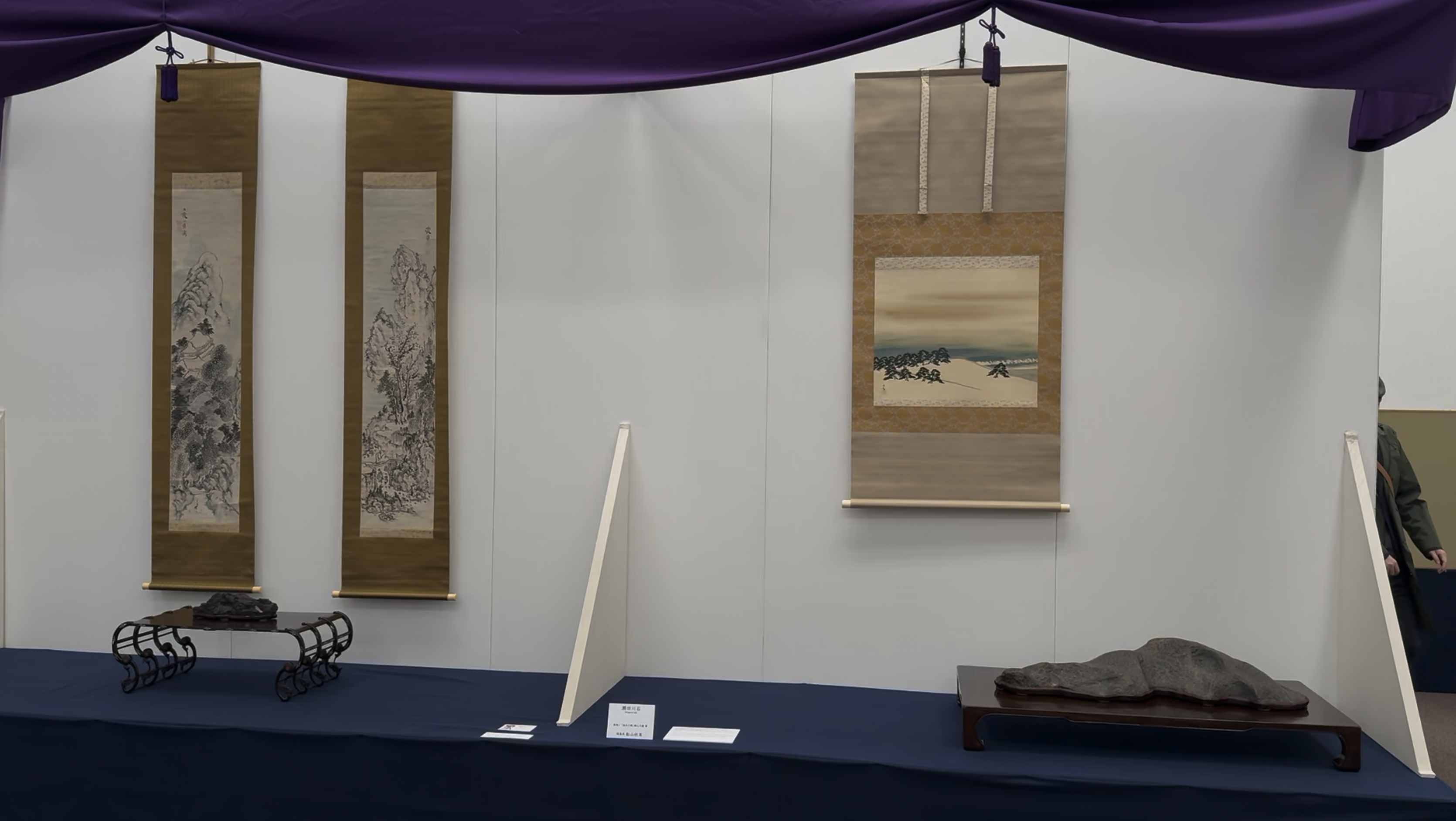
Less widely known is that a suiseki exhibition runs alongside Kokufu at the same time. Suiseki are naturally formed stones in which the viewer reads a mountain landscape or an animal's form, set on a carved wooden stand or in a shallow water tray and appreciated as their own distinctly Japanese art.
Bonsai and suiseki have long been shown as a pair. Arranging a tree, a hanging scroll, and a stone together in a tokonoma alcove to evoke a season — what's called sekikazari, seat display — is treated as the discipline that completes how a bonsai is viewed, rather than an accessory to it. It is exactly this world that Kobayashi, as third-generation headmaster of keido, the way of bonsai display, works to pass on: tree, scroll, and stone arranged to suggest a landscape, with the viewer's task being to read the host's unstated intention, a silent exchange with something of Zen dialogue's depth to it.
The suiseki show draws a smaller crowd than the bonsai exhibition beside it, but skipping it means missing the context that sekikazari supplies — bonsai as part of an integrated aesthetic system rather than a stand-alone object. Anyone able to attend Kokufu is better served going the extra step to the suiseki exhibition too; details are available at the official site, suisekiten2026.jp.
How Big the Bonsai Market Is Depends Entirely on Who's Counting
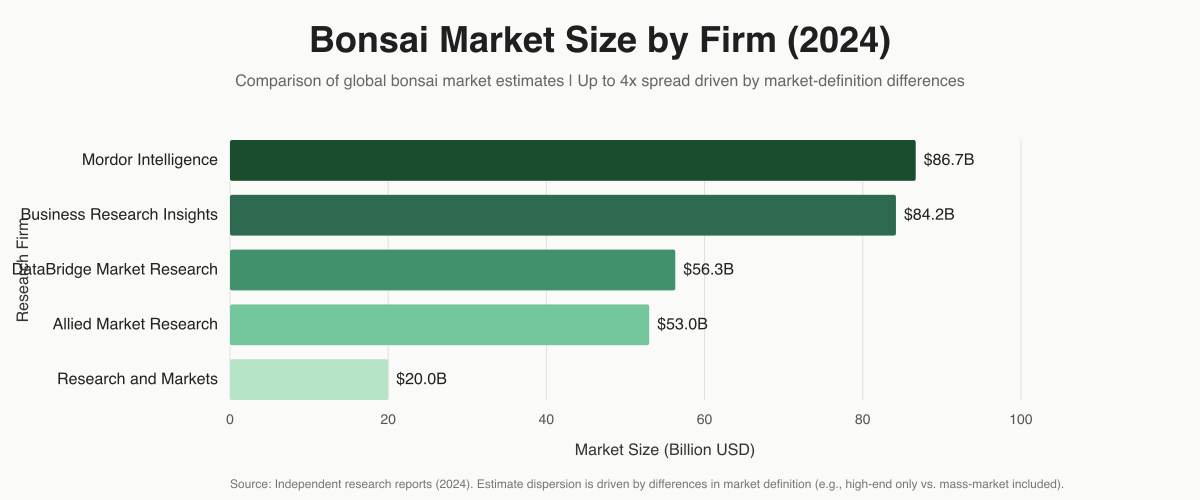
The scale of the bonsai world resists a clean number. One estimate puts the broad category — everything from mass-market interior pieces to fine art — at roughly USD 8.4 billion in 2024, while Bloomberg's 2025 framing of "over one trillion yen" tends to get used specifically for the high end of the market. The two are not measuring the same thing, but neither leaves much room to doubt that interest is accelerating worldwide.
The regard for individual masterpieces runs at least as high. At the 2012 Takamatsu World Bonsai Convention, a Japanese white pine reportedly older than 800 years changed hands for a figure that drew international attention, and comparable masterpiece shimpaku have long been discussed in similar terms. None of these were open sales — they were quiet transfers inside a small circle of artists and collectors. Unlike wine or contemporary art, bonsai has never had an open, transparent channel through which the wider world could encounter its finest trees. The value is real. It has simply stayed locked inside a small circle in Japan, which is exactly why a way of opening it — without moving the trees or their care out of the artists' hands — matters now.
The Chain That Produced This Year's Masterworks Is the Thing Now Breaking
The 100th edition is a milestone worth celebrating, but the exhibition's own history makes the field's structural problem hard to miss. Most of what filled the floor this year was raised with care by enthusiasts 50 or 100 years ago and passed down to the present generation — and the people doing that passing are disappearing fast. Bonsai craftspeople are aging, successors are scarce, and it is increasingly common for a great tree to leave Japan without proper care, or be picked up cheaply by a dealer who does not understand what it is worth.
As practitioners with the skill and judgment of a Saburo Kato — the man who reworked the shimpaku "Hokusai" — become rarer, the open question is who carries a 3,000-year life through the next hundred. Kobayashi has acknowledged as much directly, pointing to Japan's falling birth rate and shrinking population as reasons the bonsai world cannot keep operating the way it has, and calling for both a new generation of successors and deeper exchange with practitioners abroad.
Overseas enthusiasts, as noted, cannot take a great tree home on the spot. Domestic successors are running short. Both pressures point toward the same outcome — masterworks scattering rather than staying whole — unless something keeps a tree in Japan under real care while letting people well beyond Japan build an actual relationship with it. Azukari, extended from a private duty into a working system — professional care on the ground in Japan paired with ownership that reaches whoever is standing in for the next generation, wherever they live — is one attempt at exactly that. It is not a sentimental proposition. It is a practical answer to a heritage-preservation problem that is already underway.
A tree's age is a fact about its past. Whether its custody chain still has a next link is a bet on its future — and that second question, not the first, is the one worth watching as Kokufu heads into its next hundred years. The 3,000-year shimpaku moving from Kato to Suzuki, the Imperial pines that leave the Palace only rarely, the tosho that has now proven itself twice: none of them are safe because of what they are. They are safe only as long as someone is next in line to receive them.
References
- Nippon Bonsai Association — event announcements — the association's own page for the Kokufu Bonsai Exhibition, organizer of record since 1965.
- Imperial Household Agency — Their Majesties' visits and activities — the Agency's record of Imperial visits to the bonsai exhibition, including the 98th edition.
- NHK News — the Imperial family viewed the bonsai exhibition — report on Their Majesties' and Princess Aiko's visit to the 100th Kokufu.
- Imperial Household Agency — bonsai kept at the Imperial Palace — the Agency's page describing the species and display rooms for Palace-kept bonsai.
- Shikoku Shimbun — the Imperial family and bonsai — regional newspaper coverage of the Imperial family's long association with bonsai.
- Bloomberg — bonsai market coverage (2025) — source for the "over one trillion yen" framing of the high-end bonsai market.
- Japan Association of Museums — 100th Kokufu Bonsai Exhibition listing — exhibition listing confirming dates and venue at the Tokyo Metropolitan Art Museum.
- Japan Science and Technology Agency — cultural exchange portal — background context on international exchange around Japanese traditional arts.
- Suiseki Exhibition 2026 — official site — official information for the suiseki exhibition held alongside Kokufu.
日本語版を読む / Read the Japanese version
参考文献 / Sources
- https://bonsai-kyokai.or.jp/event.html
- https://www.kunaicho.go.jp/about/gokomu/odemashi/activity/bonsaiten.html
- https://news.web.nhk/newsweb/na/na-k10015054571000
- https://www.kunaicho.go.jp/about/shisetsu/kokyo/bonsai-ph.html
- https://bonsai.shikoku-np.co.jp/imperial/ja/
- https://www.bloomberg.co.jp/news/articles/2025-03-14/ST1DYRT0AFB400
- https://www.museum.or.jp/event/92756
- https://spc.jst.go.jp/experiences/exchange/exchange_index.html
- https://suisekiten2026.jp