Some bonsai have names.
Such a name is called a mei. It is not a label for record-keeping. It is a name given to the story a tree has carried — centuries of survival, and a passing from hand to hand across generations.
Today, I want to show you a tree that does not have one yet.
A Tree Without a Name
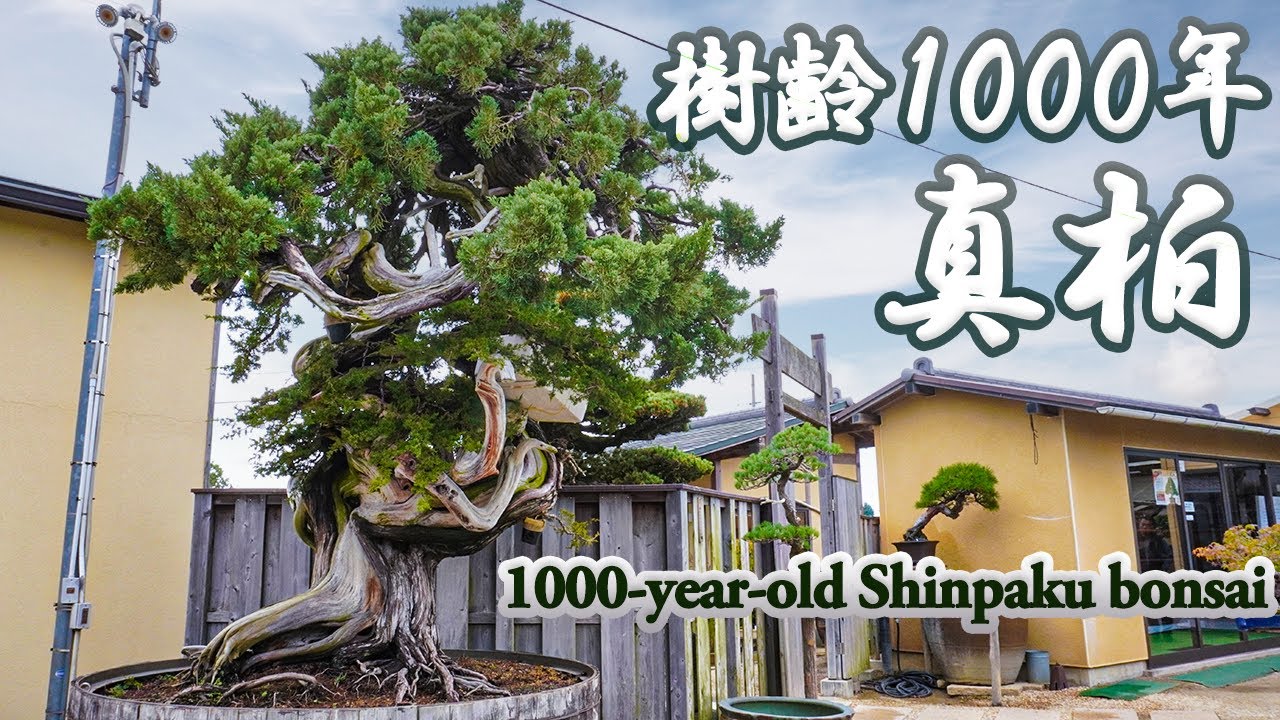
This is a giant Shinpaku (Japanese juniper) from Fukushima, in northern Japan — one of the centerpieces of the Funayama collection. It began on the rocky cliffs of the Sanriku coast, carved by wind and sea spray, and is said to have lived for a thousand years. Now it is being brought toward its next form by the hands of the master Masahiko Kimura, widely regarded as one of the most famous bonsai artists in the world.
To move it toward its ideal shape, branches of Itoigawa juniper — a juniper prized from Itoigawa in Niigata — are grafted on. Roots are worked, soil is replaced. A tree this large can only be touched a few branches at a time. It is painstaking work, and it is still going on.
And even so, this tree still has no name.
What Name Would Suit It?
What name would suit a tree that carries a story like this?
A thousand years standing against the waves — hearing that, perhaps simply Wave. A tree that rides the rough seas and carries good fortune — perhaps Fortune. Myself, I would want to call it the great wave that brings fortune: in English, Lucky Wave; as a mei, perhaps Onami (Great Wave).
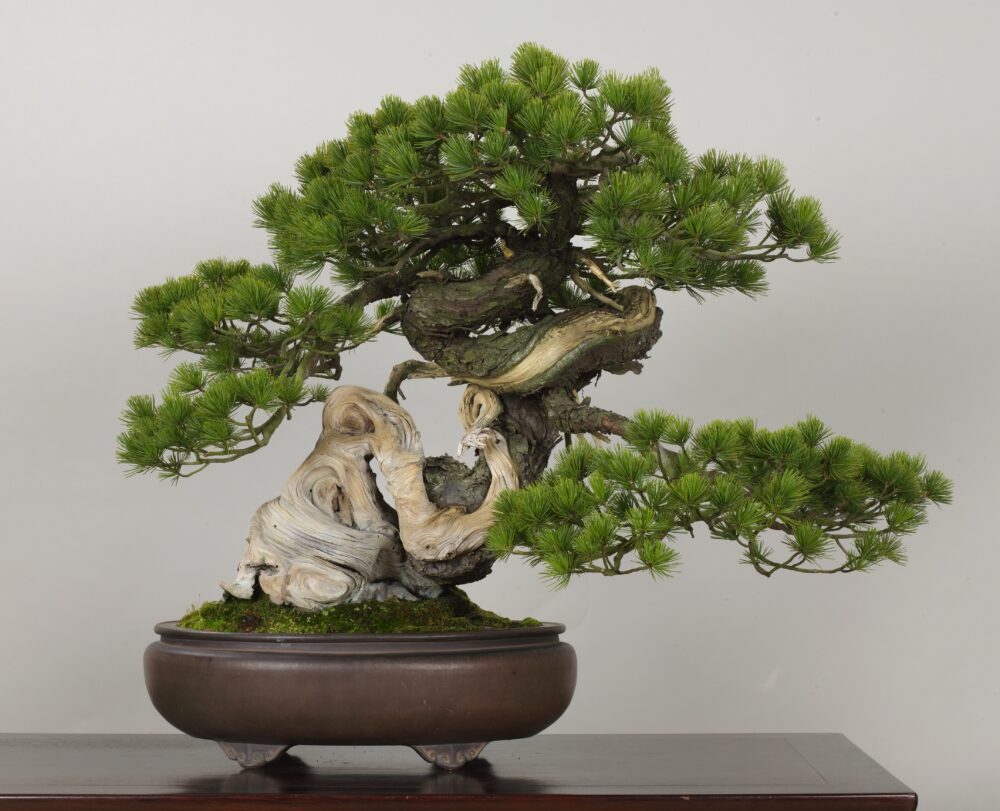
This is how a bonsai's mei is born. There is a celebrated white pine named Uzushio — Whirlpool — and that name, too, came from the shape of the tree. The tree's story becomes its name.
Hokusai — Witness to Three Thousand Years
Let me tell you about one of the very summits among named trees: a Shinpaku called Hokusai. Collected wild from the mountains of Niigata, its age is estimated at around three thousand years. This year it was shown at the 100th Kokufu Bonsai Exhibition — Japan's most prestigious bonsai show, held every February at the Tokyo Metropolitan Art Museum — as a special commemorative exhibit.
Three thousand years: most people doubt it can be true. Wild Shinpaku grow on the cliffs of the Japan Alps and the mountains of Niigata, in the harshest conditions, almost impossibly slowly. Their growth rings are no wider than a sheet of paper. Over the millennia the core of the trunk turns white as bone, while a thin strip of surviving bark keeps the life going. It is something beyond what we usually call bonsai — closer to a sculpture made by nature itself, the embodiment of geological time.
This tree, too, has been passed from hand to hand. From the collector in the mountains to Saburo Kato — a towering figure in modern bonsai, later head of the Nippon Bonsai Association and the founder of the Omiya Bonsai Village, the historic heart of Japanese bonsai just north of Tokyo. About forty years ago, Kato changed its front, carried out a major restyling, and brought it to the powerful form it holds today. And from Kato, to its present owner, Mr. Shinji Suzuki, a leading contemporary master based in Nagano. Three thousand years, handed on like a baton in a relay, until it reached the stage of the 100th Kokufu.
The mei Hokusai folds that whole story into a single word. And a question remains: over the next hundred years, who will carry this tree onward, and how?
Who Gives the Name?
A name is usually given by the tree's owner.
But sometimes a person meets a tree that is still nameless, feels I want to give this tree a name, and becomes its owner in the same breath. In earlier times, even statesmen and members of the imperial family sought out famous trees, kept them close, and cherished them.
To name a tree is also to take on the resolve of carrying it.
So I would like to ask you
A tree our artist, Kazuki Saeki, is working on right now is still without a name. What name would you give this bonsai?