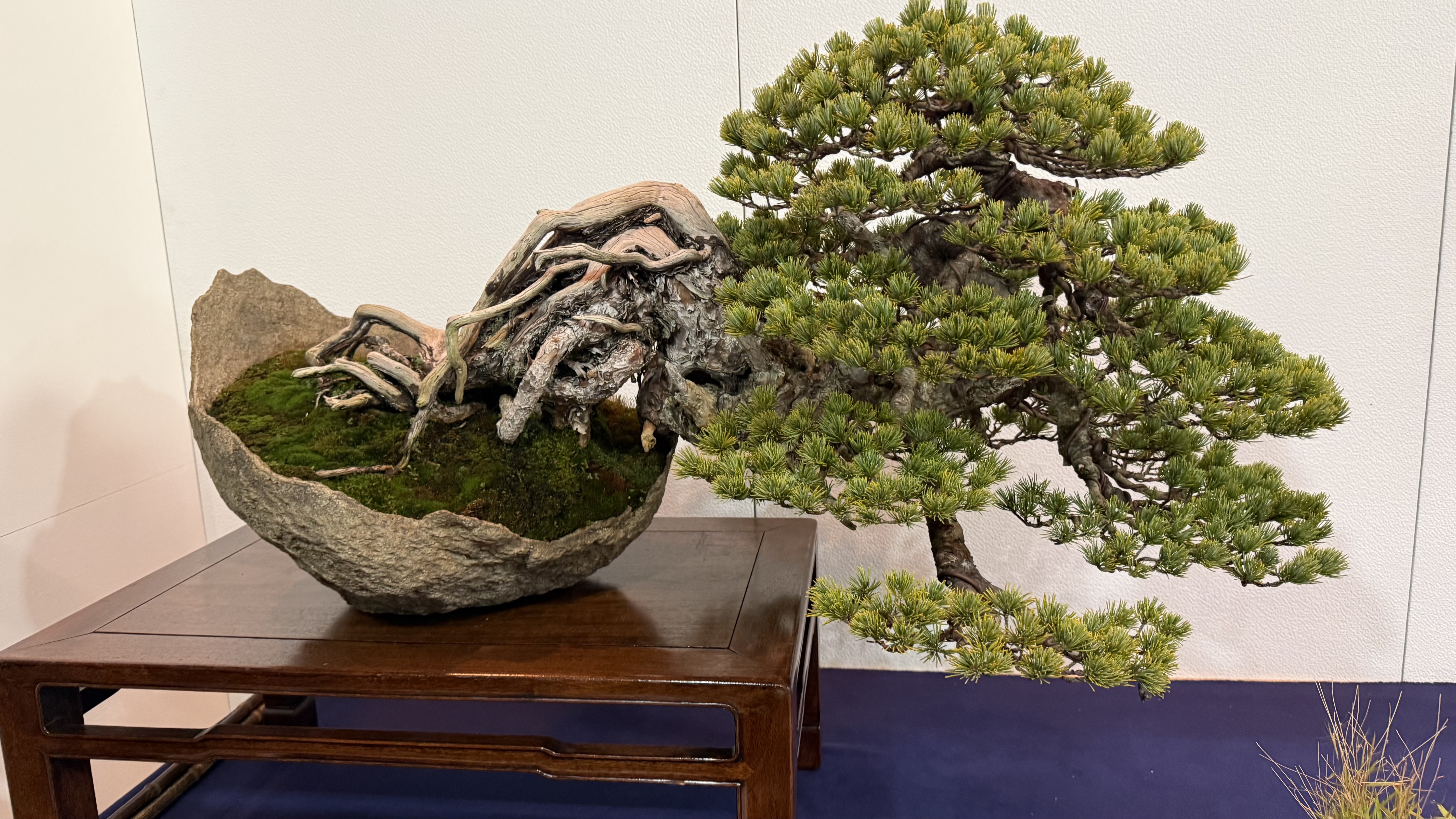
A cascade-style Japanese white pine (goyomatsu). A shape this deliberate is the visible record of years of unremarkable, daily watering.
Three years. That is the span attached to mizuyari sannen (水やり三年, "three years for watering"), an old saying among bonsai growers in Japan about how long it takes to learn the single most repeated task in the collection: tipping water onto the soil until it runs through.
A watering schedule only works for as long as someone is paying attention to when it stops being true.
Pruning happens a few times a year. Wiring, only occasionally. Repotting, once every few years, if that. Watering happens daily, without exception, in every season a tree is alive — which is exactly why growers single it out as the task that takes the longest to learn properly, even though the motion itself, tipping water from a can, is something a child manages in an afternoon.
Water follows the soil's surface, day by day
The working rule is simple to state: when the surface of the soil turns dry, water until it runs clear through the drainage holes at the base of the pot. A light pass that only darkens the surface does not reach far enough to matter, because water is doing more than hydrating the plant. As it moves down through the soil, it displaces the stale air trapped between particles and draws fresh air in behind it around the roots, and it is this exchange — not the moisture alone — that keeps roots healthy.
How often a given tree needs water shifts by season, and the numbers hold only loosely. In summer, with growth active and temperatures high, many trees ask for water once or twice a day, in the cooler hours of morning or evening; in winter, as growth slows nearly to a stop, the same tree may go several days between waterings, with spring and autumn somewhere between the two. A grower who fixes a schedule — every second day, regardless of conditions — eventually loses a tree to it. The true frequency depends on species, on whether the tree lives outdoors or indoors, on the pot's size and material, on how freely air moves around it, and on that day's heat and humidity. Reading the soil surface itself, each day, is the only thing that accounts for all of it at once.
Timing carries a smaller version of the same logic. In summer, watering before the heat builds or after it has passed keeps the water in the soil from reaching a temperature roots resist; in winter, watering during the milder part of the day spares the roots a sudden chill. Neither rule is absolute. Both come from the same refusal to ask more of the tree than the day allows.
Reading a tree's needs is what takes three years to learn
Properly done, watering is a form of sustained observation carried out under the name of a chore. A grower reads the color and dryness of the soil, the fullness and sheen of the leaves, the subtle give of a branch. They register the weather and humidity of the day, hold in mind the season and what stage of growth the tree is passing through, and only then decide how much water this one pot needs today — not in general, but today. The same tree needs strikingly different amounts of water at the height of summer and in the depth of winter, and on any given morning, different trees in the same collection dry at different rates for reasons not always obvious. Learning to tell these differences apart, reliably, is what the three years are said to buy. Some growers push the claim further and say it takes a lifetime; either way, the saying has been carried from one generation to the next for long enough that no one can point to where it began.
The daily watering is where a change gets noticed first
A slight change in leaf color since yesterday. A shift in how new shoots are extending, faster on one side than the other. Soil drying more quickly than it did the week before. These signals are almost always caught during watering, because watering is the one moment already set aside for looking closely. Pruning and wiring happen only a few times a year, and repotting perhaps once every few years, but watering happens daily — which is exactly why it is usually watering time when a change in a tree is first noticed, for better or for worse.
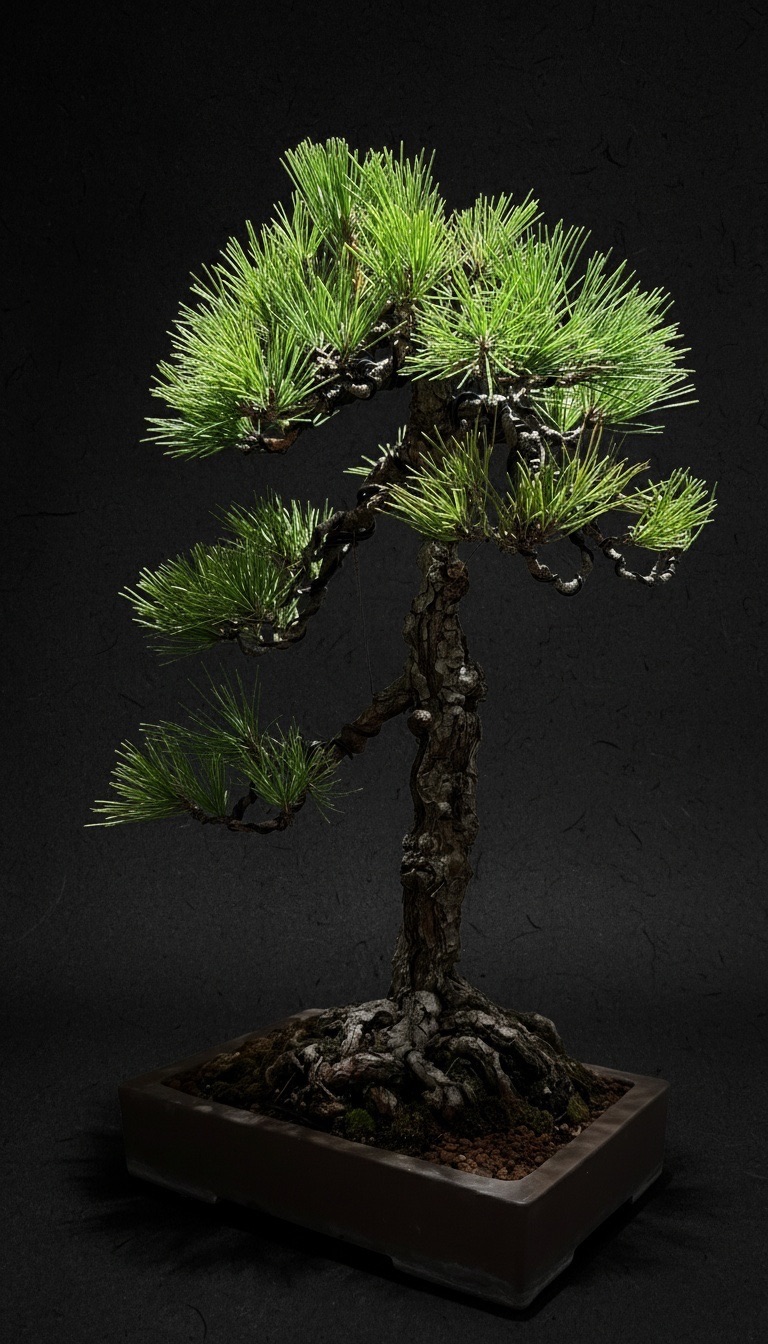
A black pine in a ceramic pot. Nothing about a healthy tree like this announces itself outside of the daily watering.
An absence still has to be answered somehow
Travel, and the ordinary demands of work and family, raise a real question for anyone who keeps bonsai: what becomes of the tree while no one is there to water it. For short absences, one traditional response is a technique called koshimizu (腰水), literally "hip water" or bottom watering: the pot is set in a shallow tray of water so the roots draw moisture upward as needed. In hot weather this calls for care, since standing water can warm quickly and harm the roots it was meant to protect, so the tray is kept shaded — and most growers do not consider the method suitable for regular or extended use. Beyond a few days, the more honest answer is having someone else water the tree.
That is why Japan has long kept a parallel tradition running alongside private ownership: entrusting a tree to someone else's daily care, known as azukari (預かり). Rather than one owner holding a fine tree entirely alone, an artist or a specialist takes on the daily watering. Handing over that responsibility, in full or for a season, has long been available to owners unwilling to weigh a tree's welfare against their own travel plans.
What travels to Azukari is the daily reading
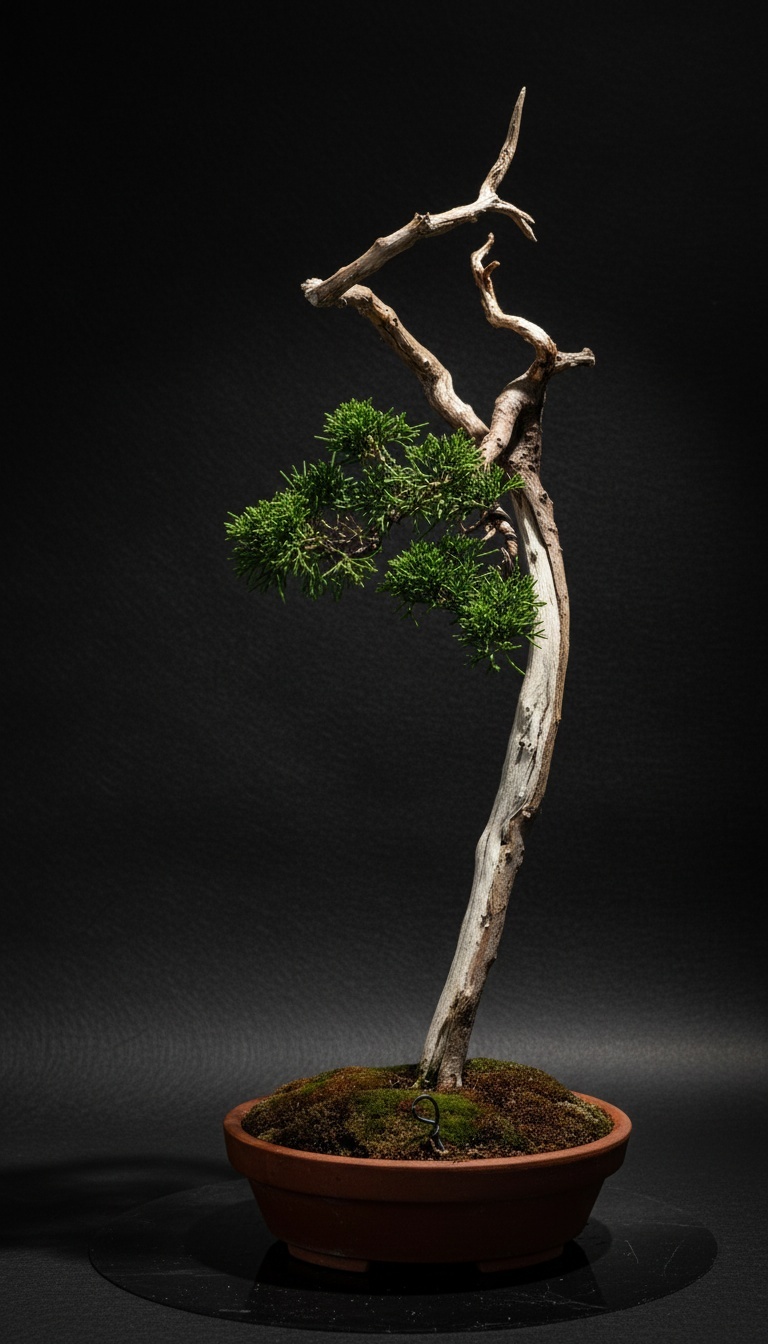
A shimpaku juniper in a ceramic pot, kept on the same daily rhythm as the pine above it.
Handing a tree to Azukari keeps the daily watering with an artist in Japan, in place of a timer or a neighbor's occasional visit. A timer adds water on a schedule. What it cannot supply is the reading behind that schedule — the soil checked, the leaf color noted, a shoot's uneven growth caught the day it happens rather than weeks later in a photograph. That reading is what an owner receives back, delivered as a seasonal record. The water is the easy part. The three years are the part that has to keep happening somewhere.
Watering is the narrowest entry into that practice, not the only one. What Is Bonsai sets out the wider practice it belongs to, How to Look at a Bonsai covers the reading itself, and Bonsai and Longevity follows what that reading adds up to over decades.