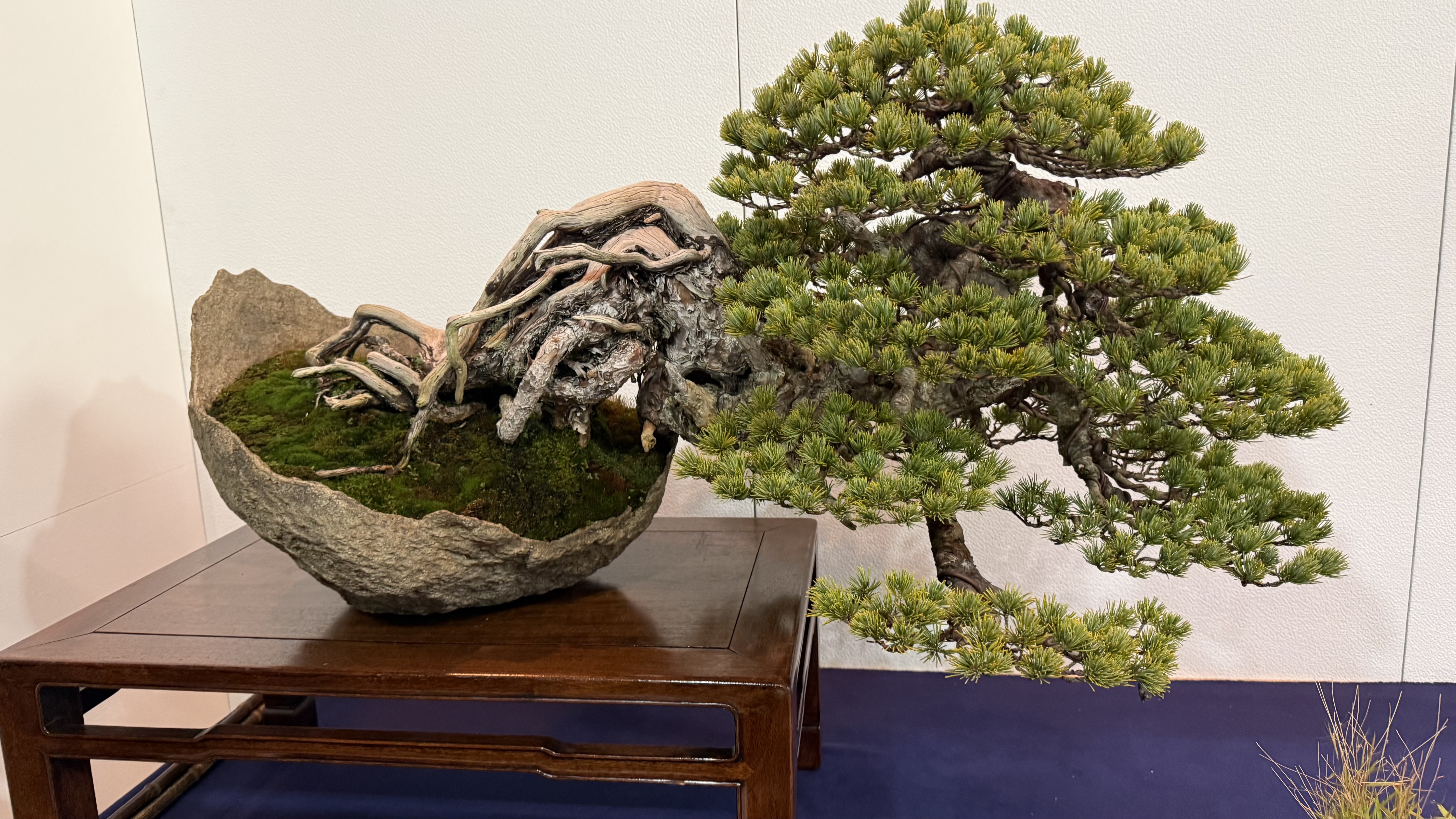
A white pine at the Omiya Bonsai Art Museum, in Saitama, is estimated at roughly 450 years old. A Japanese white pine now at the U.S. National Arboretum, outside Washington, has been in training since 1625 — tended in Japan by five generations of one family before it ever left the country. Neither tree is an anomaly within the art form. Bonsai measured in centuries, rather than decades, are not rare.
A potted tree looks like it should be the more fragile of the two — root space limited by a container, moved and repositioned entirely at a person's judgment. On reasoning alone, it should not outlast the buildings around it. It regularly does.
Daily care is the reason, repeated by someone who keeps watching.
What a tree needs changes every day, so no fixed routine works
Water. Sun. Wind. Soil. Roots. Branches. None of these checks is unusual on its own. What separates a tree that reaches a hundred years from one that does not is whether they are made, without a gap, every day.
A hot day asks to be read one way. A cold day asks to be read another. Spring is for repotting and new growth, summer for pinching candles and watering, autumn for pruning and wiring, winter for watching and watering only a little. In Japan this year-round rhythm of attention is called teire (手入れ) — a word that covers watering, pruning, and wiring, but also simply looking, the entire daily practice rather than any single task inside it.
Too much water hurts the roots; too little dries the leaves. Too much sun scorches them; too little leaves the branches weak. The right amount changes with the tree, the season, and the weather on that particular day, which is why a routine copied from a book only gets a keeper partway there. Someone has to look at the actual tree and judge, then act on the judgment. Repeating that question — what does this tree need today — is what lets a bonsai's life run into decades rather than years; care given only on special occasions cannot substitute for it.
Skip the watching and the decline shows within days, not years
An old house decays once no one tends it. So do old tools, and old clothes. What keeps any of them going is someone who looks, repairs, cleans, and keeps using them.
A bonsai is no exception, and less forgiving than most. The leaves turn a slightly different color than usual. A branch reaches in a direction it hadn't before. The soil dries differently than it did last week. A machine does not register any of this; a person standing in front of the tree every day does, and what gets noticed is what gets answered by tomorrow's care.
It is tempting to assume a house or a tool, once built, only has to hold its shape. Beams draw in moisture, metal fittings rust, wooden handles dry out and crack — decline a house can hide behind its own walls for years. A bonsai hides nothing. Skip the water for a few days and it shows in the color of the leaves within that same week. Skip a year of pruning and the branch structure comes apart by the following spring. That is what makes the watching legible: the tree reports back almost immediately on whether it happened.
A tree can outlive any single caretaker, so it has to be handed on
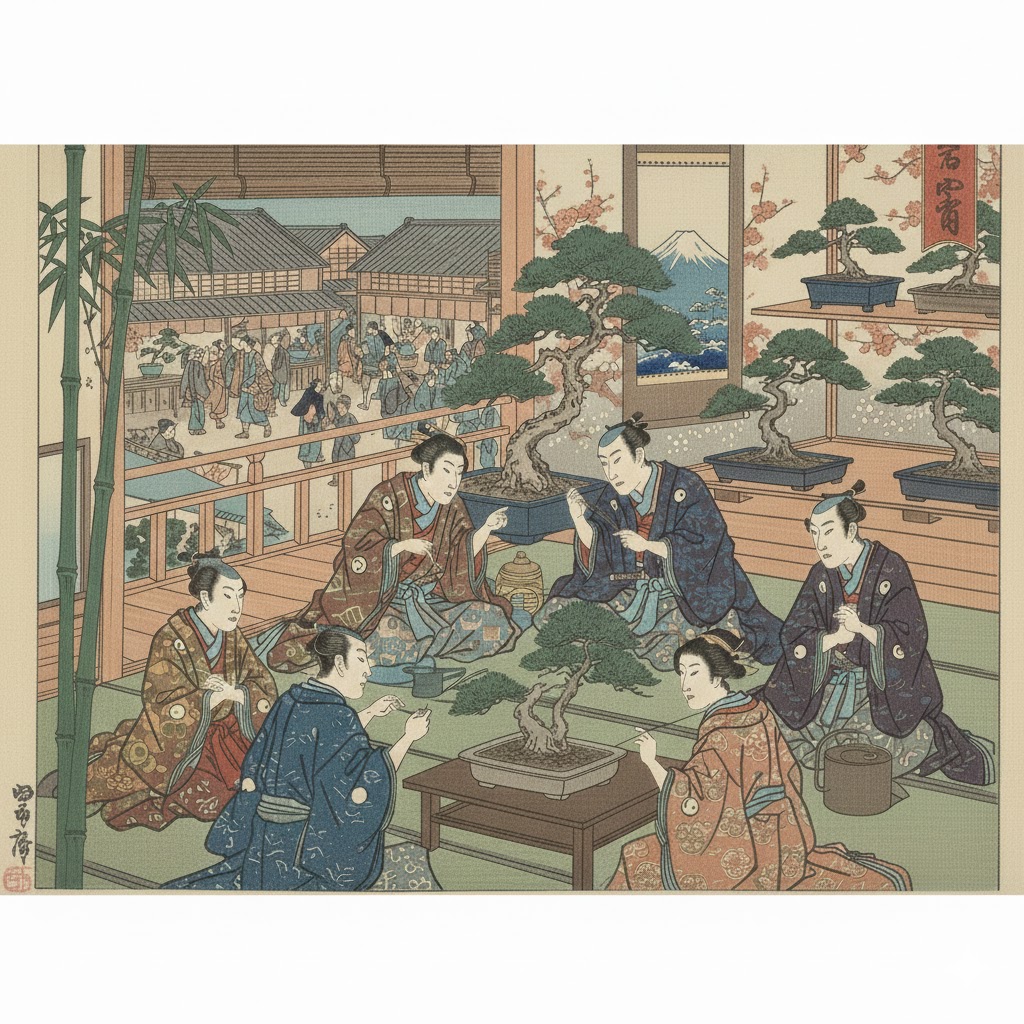
Japan has bonsai nurseries with histories running decades, some centuries, and many hold trees that have already passed through three or four generations of caretakers. The pine now at the U.S. National Arboretum is a documented case: raised by the Yamaki family of Hiroshima across five generations, it survived the 1945 bombing of the city sheltered behind a garden wall, and was given to the American people in 1976 — its full wartime history unknown on that side until two of Yamaki's grandsons visited in 2001 and found it still alive.
No person can stand in front of a tree for as long as the tree is capable of living. So the tree moves: from teacher to student, from parent to child, from the artist working today to the one who will work tomorrow.
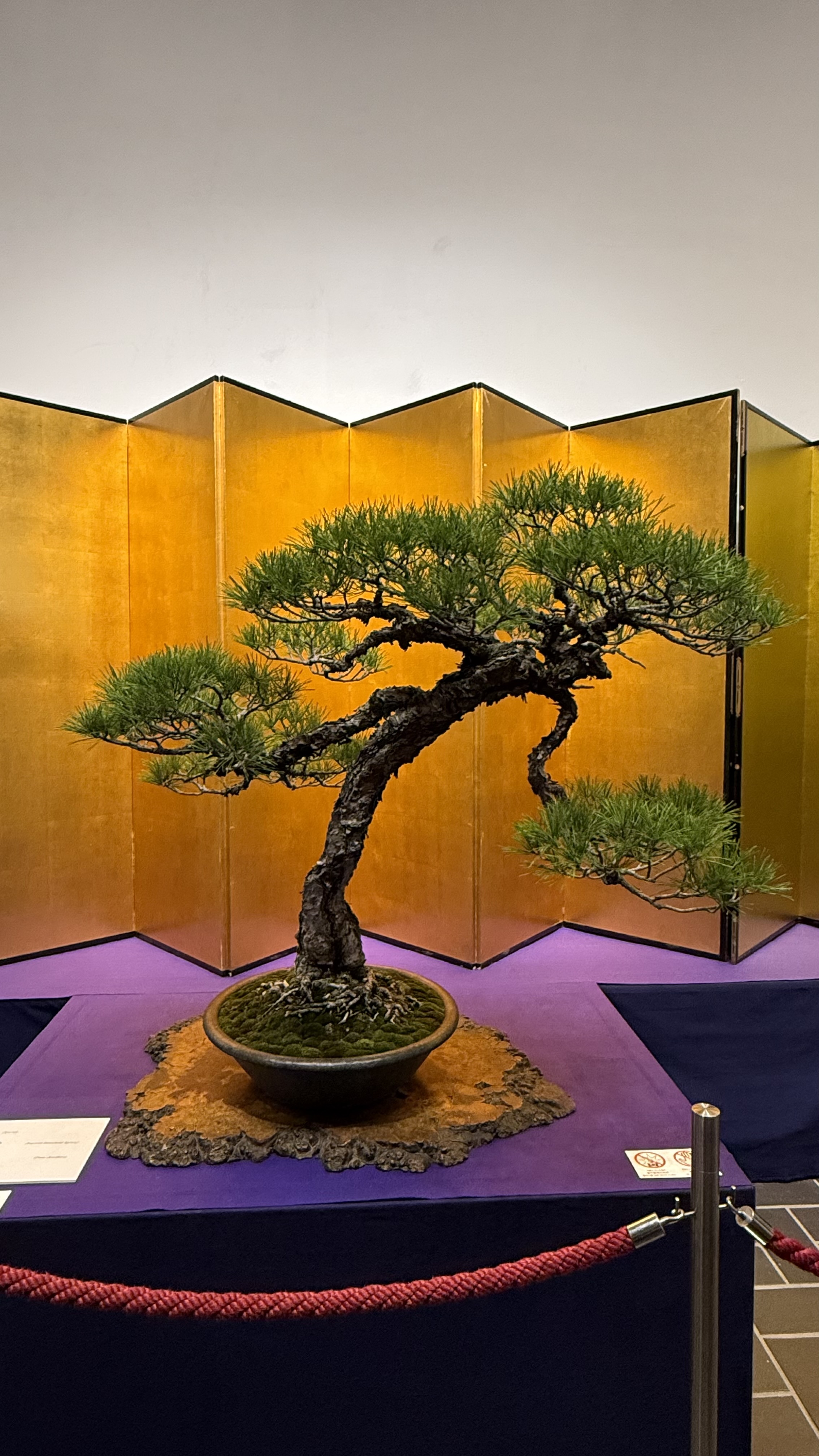
This is also why so many named bonsai turn out to be trees shaped by several caretakers rather than one. The Omiya pine, for instance, carries a name given by a later owner, the oil merchant Chutaro Nakano — bestowed long after the tree itself had already lived for centuries under other hands. We wrote more about bonsai with names here; a name, in most cases, marks how much time a tree had already carried before it reached the person who named it.
Handing on a tree means passing down judgment, not just its condition
What reaches the next caretaker is more than a healthy plant: a record of how the tree was raised, which branch was meant to extend, which angle mattered, what shape it was being grown toward. Sometimes that record arrives as mochikomi (持ち込み) — a tree brought in already carrying years, even generations, of someone else's training, rather than started from a young seedling. Technique travels with the tree, but so does a way of seeing it, built up by everyone who has stood in front of it and made a call.
This is also why a bonsai resists being called a finished object. What bonsai actually is stays closer to an ongoing act than a completed shape — bonsai is never finished for the same reason a branch shaped this year will move again by next year. Even a display like the one at Meiji Jingu shows visitors only a single moment; behind that moment sits decades of accumulated care, not a moment's work.
Judge a tree's age by who kept watching, not by the tree alone
Set two bonsai side by side, and the older one usually got that way through a chain of people who never let the watching lapse for long, each one handing the question forward before running out of years to ask it themselves.
Under Azukari, that handing-forward is what an owner is actually buying into: an artist in Japan who keeps asking the tree what it needs today, and a record, sent back season by season, of what that attention found. A bonsai's age is not really the tree's own achievement. It is a measure of how long, and how carefully, it was watched.