In the middle of Tokyo, inside a Shinto shrine, there is a bonsai exhibition: the Meiji Jingu Bonsai & Suiseki Exhibition. I recently walked through it. I want to walk you through what I saw, because almost everything about this place echoes how we think about Azukari.
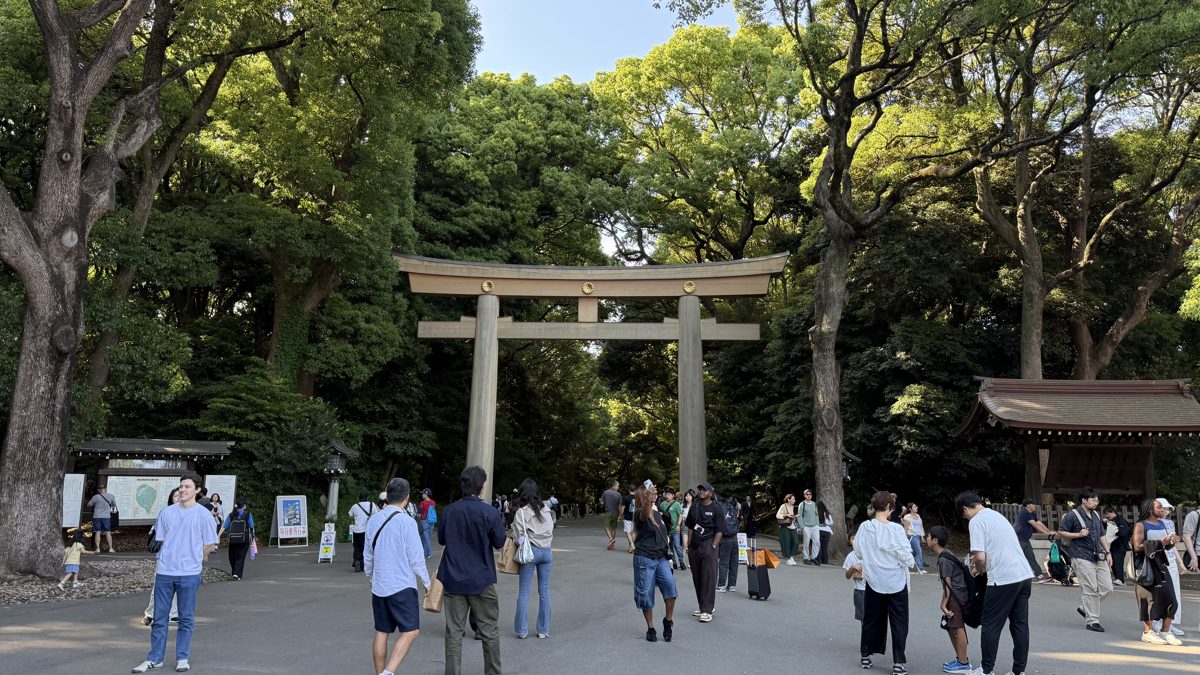
A forest planted by hand
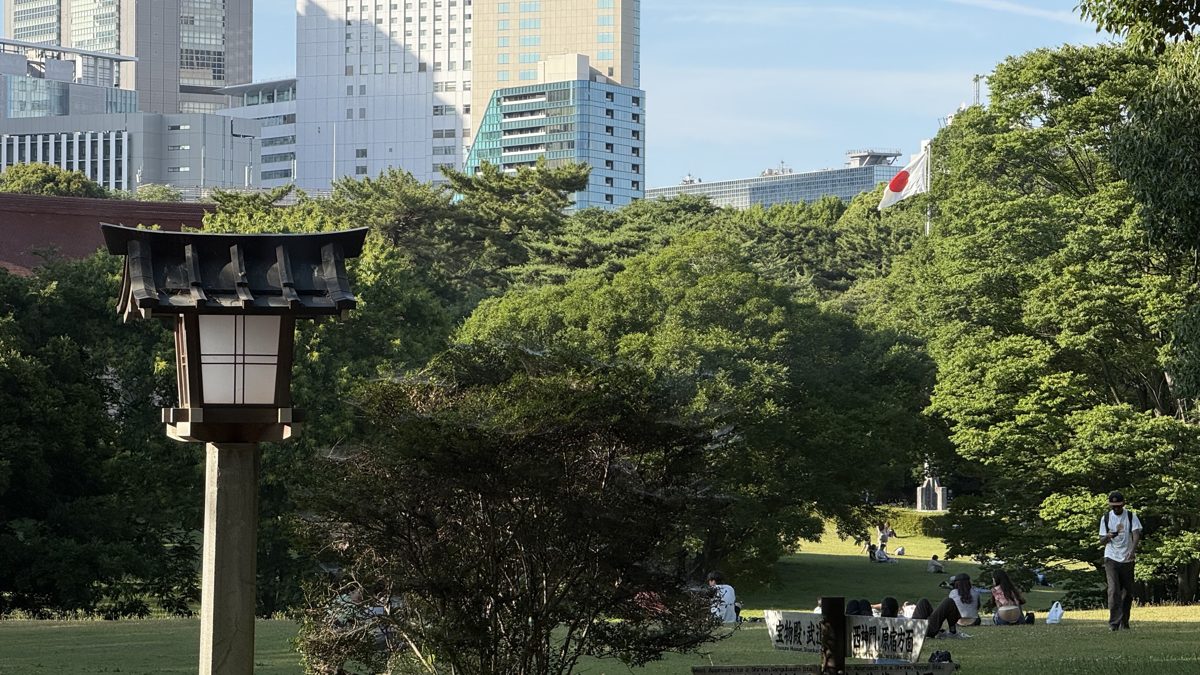
Meiji Jingu is dedicated to Emperor Meiji and Empress Shoken, and was enshrined in 1920, eight years after the emperor's death. The forest around it feels ancient. It is not. It is entirely man-made.
A century ago, this was bare farmland. Around 100,000 trees, of more than 350 species, were donated from every part of Japan, and a cumulative 110,000 young volunteers planted them by hand across roughly 70 hectares.
The foresters who designed it (Honda Seiroku, Hongo Takanori, Uehara Keiji) did not plan a garden to be trimmed forever. They planned a forest that would renew itself from its own fallen seeds, an "eternal forest" meant to outlive everyone who planted it. A hundred years on, it has become exactly that. The lesson held my attention: build the thing so it survives the people who made it.
Honored by name
In Japan, shrines and gardens have long been built and kept alive by offerings from supporters. At Meiji Jingu you can see this with your own eyes, in two great walls of barrels near the approach.
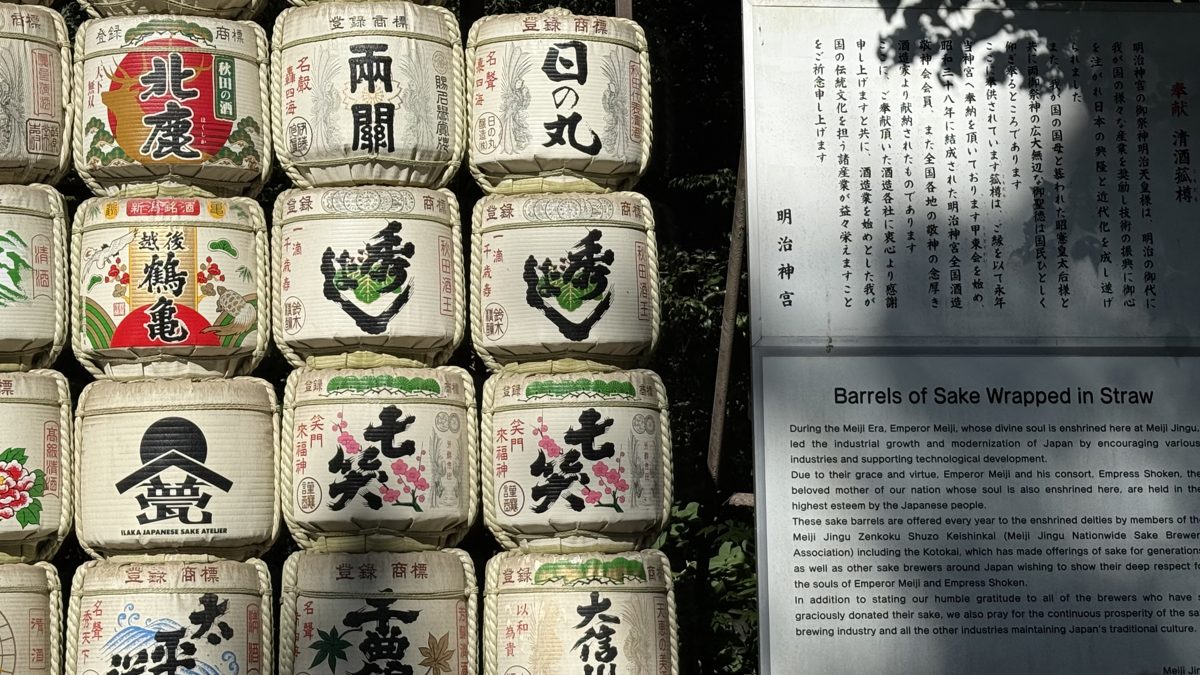
One wall is sake: straw-wrapped barrels offered every year by brewers from across the country, honoring an emperor who pushed Japan's crafts and industry forward. Facing them is a wall of French Burgundy wine barrels, offered since 2006, because Emperor Meiji embraced Western culture and was fond of wine. Each barrel carries the name of the house that gave it.
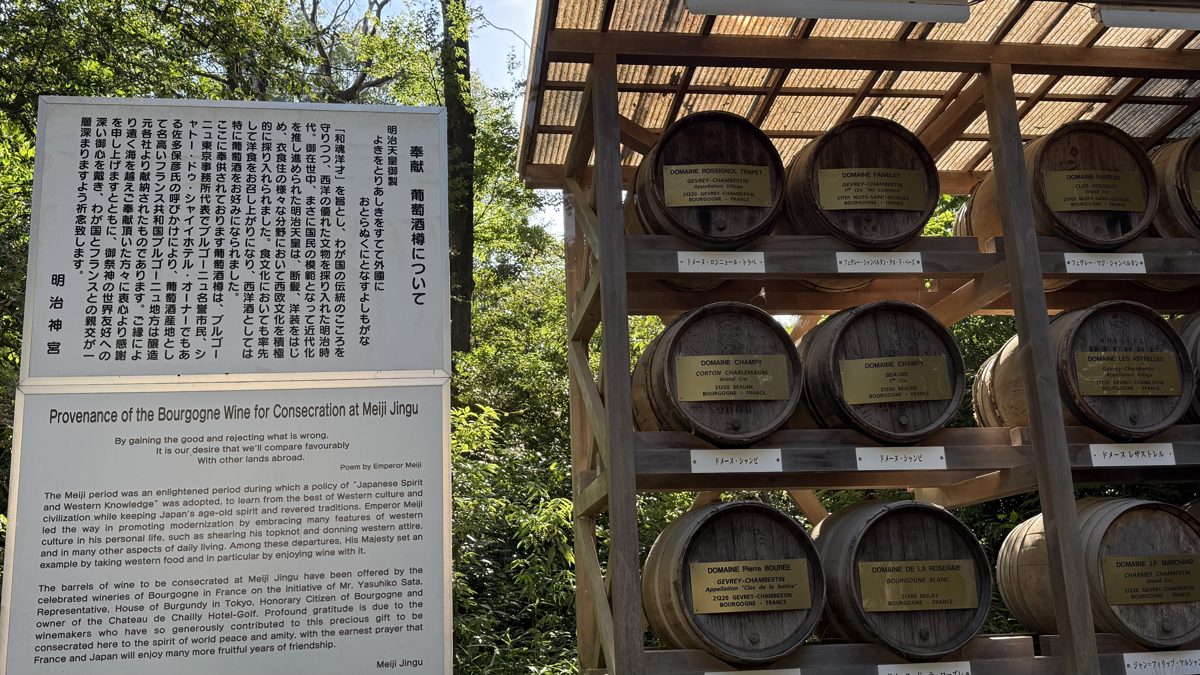
It is, in a sense, a centuries-old version of a crowdfunding backers' wall: the people who helped carry the shrine, kept visible by name, on purpose. Recognition you can walk past and read.
A bonsai the shrine keeps
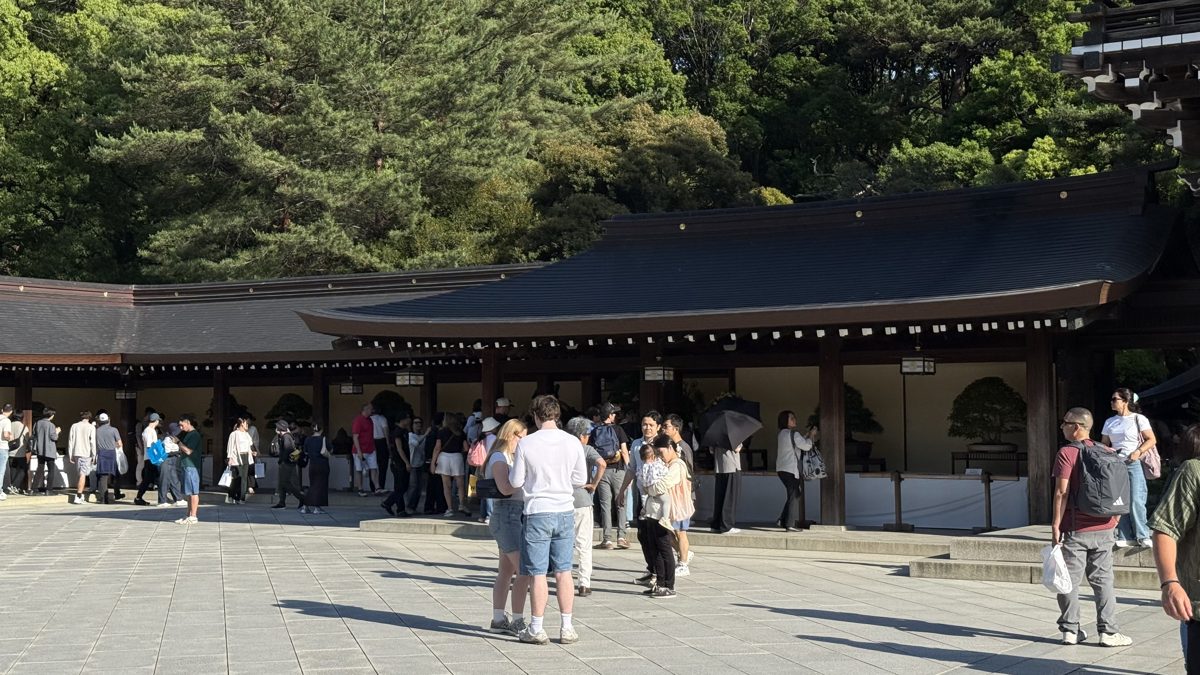
The exhibition is held each year in early June, inside the East Corridor of the main shrine, organized with the Japan Suiseki Association. Around eighteen masterpiece trees, chosen from across Japan, are shown beside suiseki — viewing stones prized for their natural form.
At the center stands Meiji Jingu's own bonsai: a Japanese five-needle pine, tended for around 120 years.
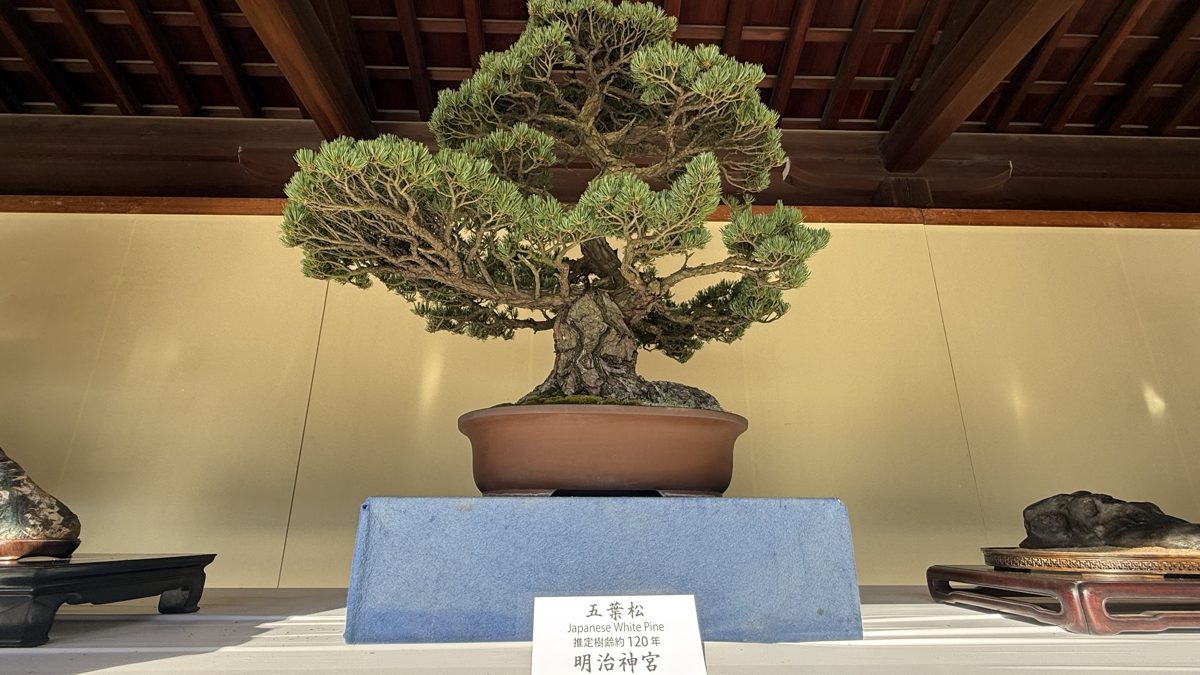
Here is the part that stopped me. The shrine owns the tree, but it does not keep the tree alive on its own. A bonsai professional tends it, season after season, while the shrine remains its owner. Ownership and daily care, held by two different hands, on purpose.
That is almost exactly the line Azukari draws: the owner owns the tree, and the artist keeps it alive. Watching a 120-year pine survive that way, inside a shrine, was the clearest proof I have found that the model is not something we invented. It is how Japan has kept living things for a very long time.
Flowers, and room to breathe
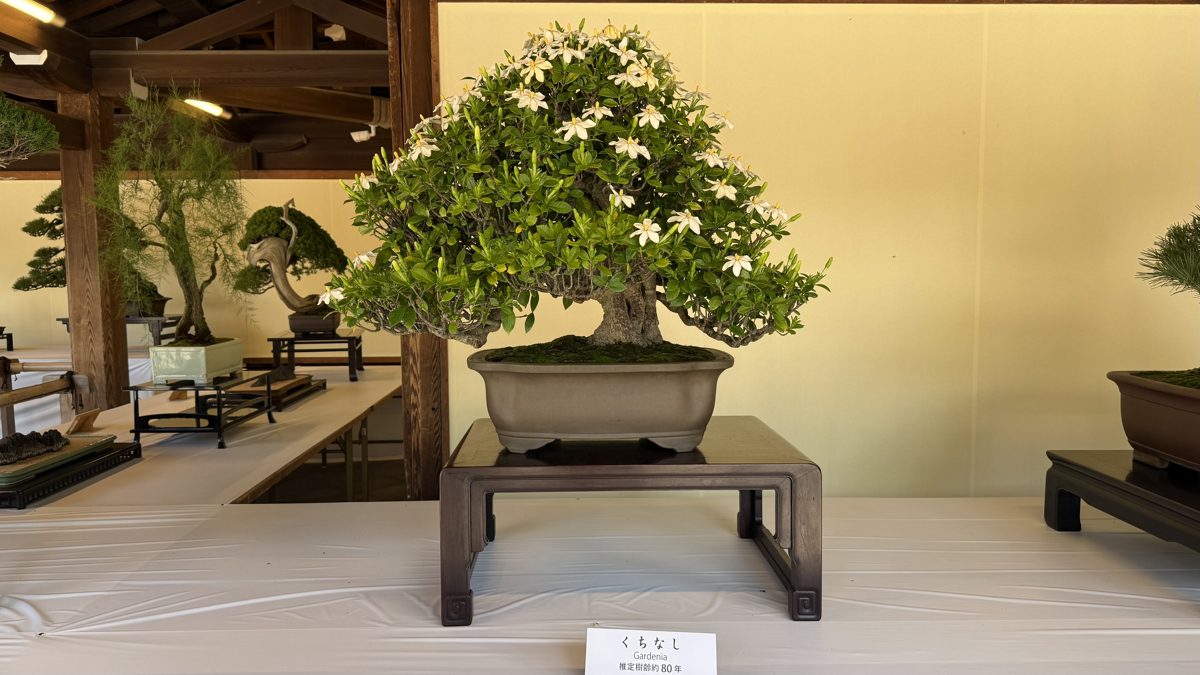
Not every bonsai is a pine. There were flowering bonsai too. And just beyond the exhibition, the shrine's inner garden holds an iris field — around 150 varieties that Emperor Meiji had planted for the Empress, in full bloom in June.
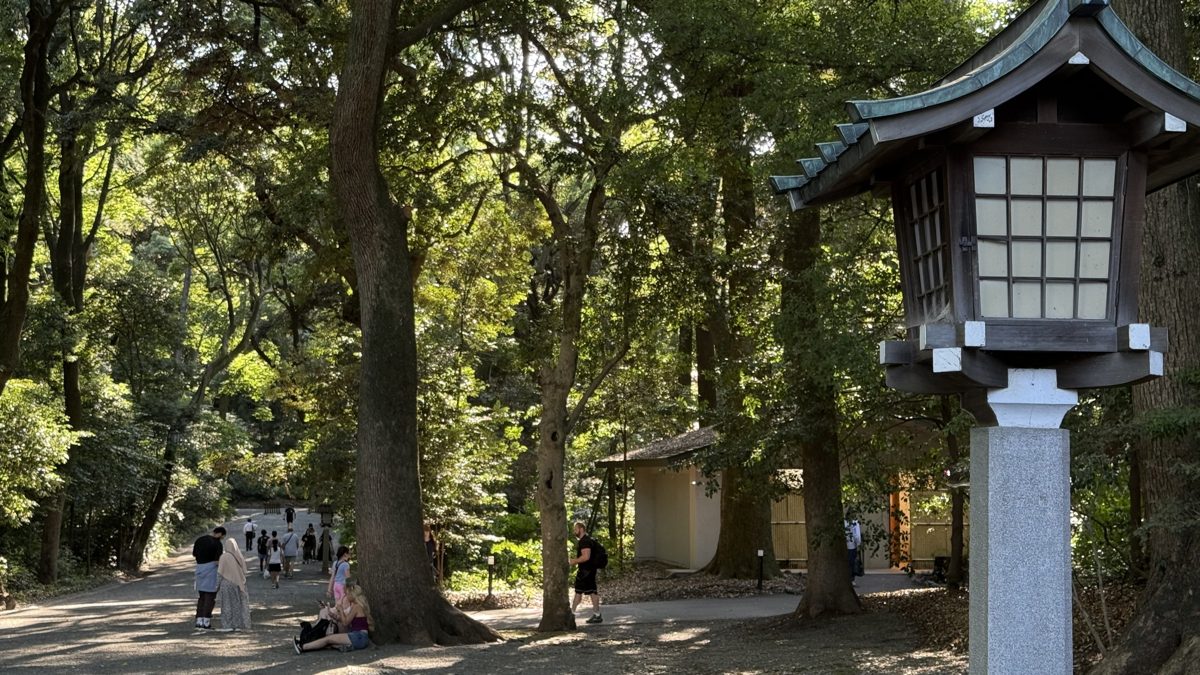
Afterward I sat in the green and did nothing for a while. Tokyo is unusually rich in this. The Meiji Jingu forest runs straight into the adjoining Yoyogi Park (about 54 hectares), and Shinjuku Gyoen (about 58 hectares) is a short ride away, along with old feudal-lord gardens scattered through the city such as Rikugien, Koishikawa Korakuen, Hamarikyu and Kiyosumi.
(Japan's three most celebrated gardens — Kenrokuen in Kanazawa, Korakuen in Okayama and Kairakuen in Mito — are out in the regions, not in Tokyo. Reason enough to stay a few extra days.)
Ownership and care, in two different hands
A forest planted by hand that keeps itself alive for a century. Supporters kept visible by name. A single pine the shrine owns and a professional keeps alive. Everything I saw at Meiji Jingu was built on the same idea: make it so it survives the people who made it.
The owner owns the tree, and the artist keeps it alive. The line Azukari draws is one Japan has been drawing for a very long time. Whenever you would like to see the four trees we are caring for, they are linked below.