
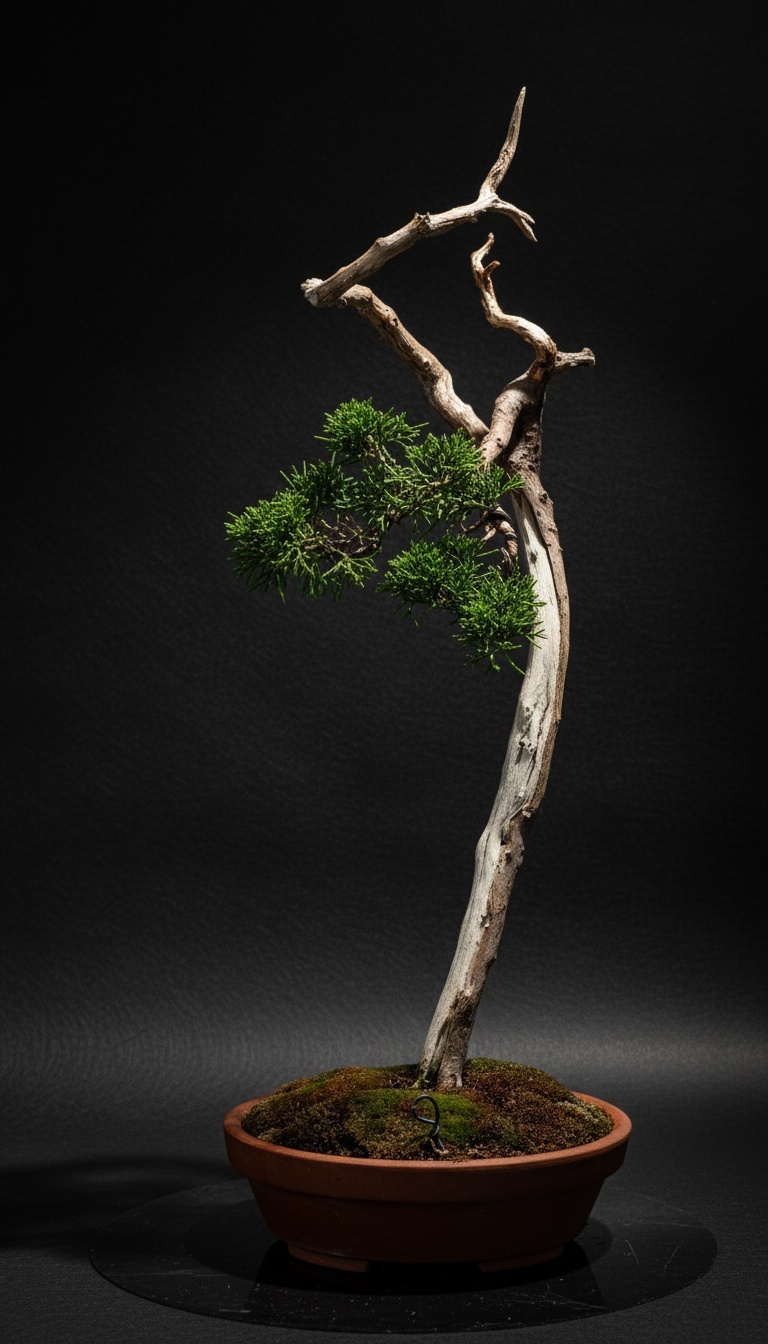
There is no fixed interval — not once a day, not every three days. A bonsai is watered when the surface of its soil has dried out, and that point can arrive daily in summer or once every few days in winter, depending on the season, the species, and the pot it sits in. The schedule is the tree, not the calendar.
Why "every X days" is the wrong question
New owners often ask for a number, and it is a reasonable thing to want: a fixed rule is easy to follow. But bonsai soil dries at a pace set by so many overlapping factors, heat, wind, humidity, how root-bound the tree is, that any single interval is only ever right for one tree, in one pot, on one kind of day. Apply that same interval through a heat wave or a cold snap and it stops being right within a week. Growers who water on autopilot, rather than by looking, are the ones most likely to lose a tree to root rot from soil that never had the chance to dry, or to drought stress from soil left too long between waterings.
Check the soil, not the calendar
The actual rule is simpler than a schedule, and takes about ten seconds to apply: press a finger roughly a centimeter into the soil. If it feels dry at that depth, water thoroughly, until it runs clear through the drainage holes. If it still feels cool and slightly damp, wait. The surface color is a second, faster clue once you know what to look for — most bonsai soil visibly lightens as it dries, so a glance at the topsoil each morning often tells you what your finger would confirm. Neither method requires any equipment, and both get easier with a few weeks of daily practice on the same trees.
What actually changes the frequency
Four things move the number of days between waterings more than any other:
- Season. In the active growth of spring and summer, a tree's roots are drawing water quickly and the air is doing more of the drying; many bonsai need water once a day, and on hot summer afternoons, twice. Once growth slows into autumn and stops through winter dormancy, the same tree may go two to four days between waterings.
- Species. Conifers such as junipers and pines generally tolerate the soil drying out between waterings, and some are harmed more by staying wet than by drying briefly. Moisture-loving species, including many maples and most tropical trees kept indoors, want the soil kept more consistently damp and dry out, and need rewatering, sooner.
- Pot. A smaller pot holds less soil and less reserve water, so it dries faster than a larger one regardless of species. Material matters too: unglazed ceramic breathes and loses moisture through its walls, which conifers tend to reward, while a glazed pot holds moisture longer and suits trees that prefer it.
- Placement and weather. A tree in full sun and wind dries out faster than one in a sheltered, partly shaded spot, and a single hot, dry day can double a tree's water needs compared with an overcast one, regardless of what the calendar says.
A rough range, held loosely
With all of that as a caveat, the ranges most growers describe run roughly like this: daily, sometimes twice, in summer heat; every one to two days in spring and autumn; and every two to four days in winter, when growth has mostly stopped. Treat these as a starting expectation to check against, not a rule to follow blindly — the finger test settles what the season alone cannot.
Reading the tree, not the schedule
None of this is a shortcut around paying attention. Bonsai growers in Japan describe watering less as a task performed on a fixed timer and more as a daily check-in, done well enough that a change in a tree, sooner or later, gets noticed in front of the pot before it shows up anywhere else. We go into that habit, and the old saying that mastering it takes about three years of daily practice, in a companion piece: Bonsai and Watering. If you are wondering what happens on the days that check-in is not possible, whether because you forgot or because you are away, those are their own separate questions, covered in What If You Forget to Water? and Who Waters Your Bonsai While You Travel?. Growers working outside Japan's climate face their own version of this same judgment call, discussed in Bonsai in Other Climates.
None of this changes with distance, either. A tree kept at Azukari is checked and watered on exactly this basis, by hand, season by season, by someone trained to read a given tree's soil rather than count days on a calendar, with the work entered as a dated record the owner can see. The habit is the same one described here. It is simply carried by someone else's hand.
References
- Bonsai Empire — "Watering Bonsai; how to water your trees" — on checking soil moisture roughly one centimeter deep with a finger rather than watering on a fixed schedule, and on higher water needs in spring/summer versus reduced needs in autumn/winter.
- Bonsai4Me — "A Guide To Watering Bonsai" — on judging watering by the changing color and appearance of the soil surface as it dries, and on pot size, plant vigor, and weather as factors that change frequency.
- Bonsai Mirai (Ryan Neil) — "Choosing the Perfect Pot for Your Bonsai" — on smaller pots requiring more frequent watering, and on unglazed pots allowing more air/water exchange through their walls than glazed pots, which conifers in particular benefit from.
- wabonbiyori — "季節ごとの盆栽の水やり頻度と枯らさないための基礎知識" — Japanese-language seasonal watering guide giving rough intervals of roughly once daily in spring/autumn, twice daily in summer, and every three to four days in winter, while emphasizing that checking the soil always takes precedence over the count.
- Bonsai Empire (Japanese edition) — "盆栽の水やり" — on the basic principle of watering thoroughly once the soil surface has dried, rather than on a fixed interval.