
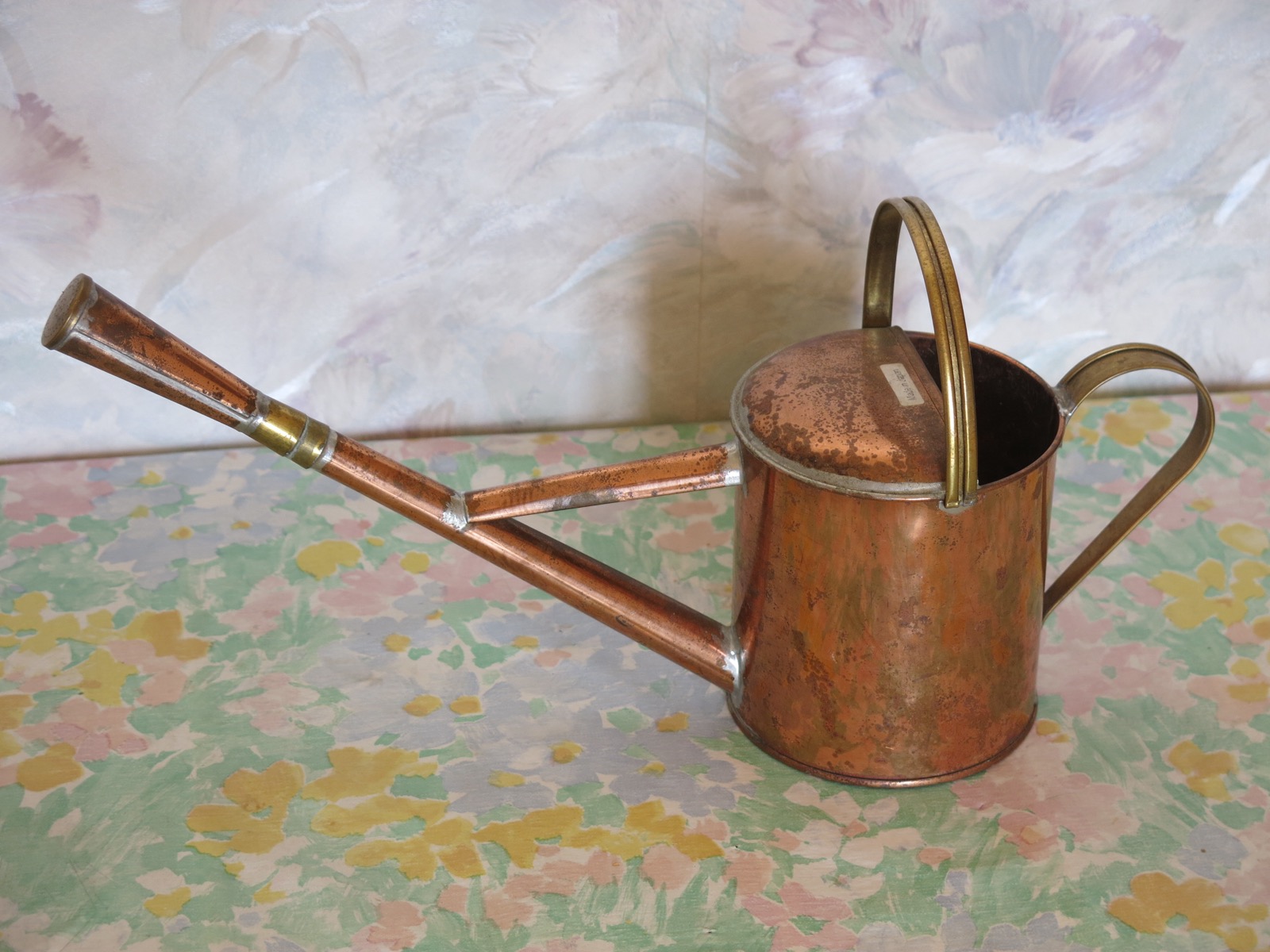
A copper watering can made for bonsai use. How narrow the margin for a missed day is depends almost entirely on the season it happens in. Photo by Tangopaso, public domain, via Wikimedia Commons — Source

A single missed day is rarely fatal in cool weather. In the height of summer, though, a small bonsai pot can slide from freshly watered to bone dry within hours, and a root system that has been allowed to dry out completely is, by a wide margin, the single most common way a bonsai actually dies.
The season decides how much time you have
In spring, autumn, or a mild winter, a bonsai that misses a day of watering usually shows nothing worse than slightly dry-looking soil the next morning. The plant has some buffer, and one late watering rarely does lasting damage. Summer removes that buffer almost entirely. On the hottest days, growers move from watering once a day to two or three rounds, because a shallow bonsai pot holds too little soil to carry a tree through a full day of direct summer sun the way open garden ground can. A single missed watering that would be a non-event in April can leave a small pot bone dry by evening in August. There is no fixed number of hours or days that applies everywhere — it depends on species, pot size, and how exposed the bench is — which is exactly why judging by the soil itself, not the calendar, matters more in summer than in any other season.
Why the margin is so thin to begin with
A garden bed holds a reservoir of soil many times deeper than any bonsai pot, so a missed day barely registers. A bonsai's roots have no such reserve. The whole point of the pot is to hold only as much soil as the tree's trained root system needs, which is very little, and that same restraint is also what makes the tree so quick to run dry. Bonsai4Me, one of the most established English-language references on the craft, puts the risk plainly: "the quickest way of killing a bonsai is to allow the compost to dry out completely." A garden shrub given the same lapse in attention would rarely even notice.
What a thirsty bonsai actually looks like
The damage does not happen everywhere at once. Leaf tips and the ends of branches are the first to show stress, followed by whole branches, and only in a serious, prolonged case do the trunk and root system themselves collapse. Bonsai Empire describes the same progression from the roots outward: once the soil has gone fully dry, the roots dry out quickly, and the foliage responds by wilting, yellowing, or dropping. The distinction that matters most for what to do next is whether the roots themselves are still moist anywhere. If they are, a thorough, gentle watering can usually bring the tree back. If the roots have dried through completely, that damage generally cannot be undone.
The real danger isn't the one missed day
Framed this way, an occasional lapse is rarely what actually kills a bonsai. What tends to be fatal is a pattern — a tree left on a schedule that never accounted for its season, its pot, or its species in the first place. This is part of why Japanese growers describe watering as a skill that takes roughly three years to learn properly, a practice explored at more length in our piece on watering as the deepest routine task in bonsai care: reading the soil correctly, day after day, matters far more than any fixed rule ever could. One missed day, caught and corrected the next morning, is a lesson. A month of guessing is a death sentence delivered slowly.
Before you leave the house
The moment this question usually comes up in practice is not an ordinary afternoon — it is the night before a trip. A tree that can shrug off a single warm day sitting on a bench cannot shrug off a week of no attention at all in mid-summer. Anyone leaving home for more than a couple of days in the growing season needs an actual plan for who, or what, keeps the soil from going fully dry in their absence, which is worth working out well before the suitcase is packed. We cover the specific options — from automated drip systems to asking a neighbor the right way — separately.
In Japan, this particular worry is one that professional nurseries are built around. A tree standing on a working bench is checked by an eye trained to read soil at a glance, every day, regardless of who is traveling and who is not. At Azukari, a tree in an owner's care never depends on a single person remembering to pick up a watering can before a flight — it stays where that daily attention has always been part of the routine, on a nursery bench in Japan, under an artist's care.
References
- Bonsai4Me — "A Guide to Watering Bonsai" — on underwatering as the quickest way to kill a bonsai, and the leaf-tip-to-branch-to-trunk progression of drought damage.
- Bonsai Empire — "Help! My Bonsai is Dying!" — on what happens once soil dries out completely, wilting and yellowing symptoms, and when a dried-out tree can and cannot be recovered.
- Bonsai4Me — "Watering Bonsai While on Holiday or Vacation" — on automated watering systems and the risks of relying on an occasional visitor while traveling.