
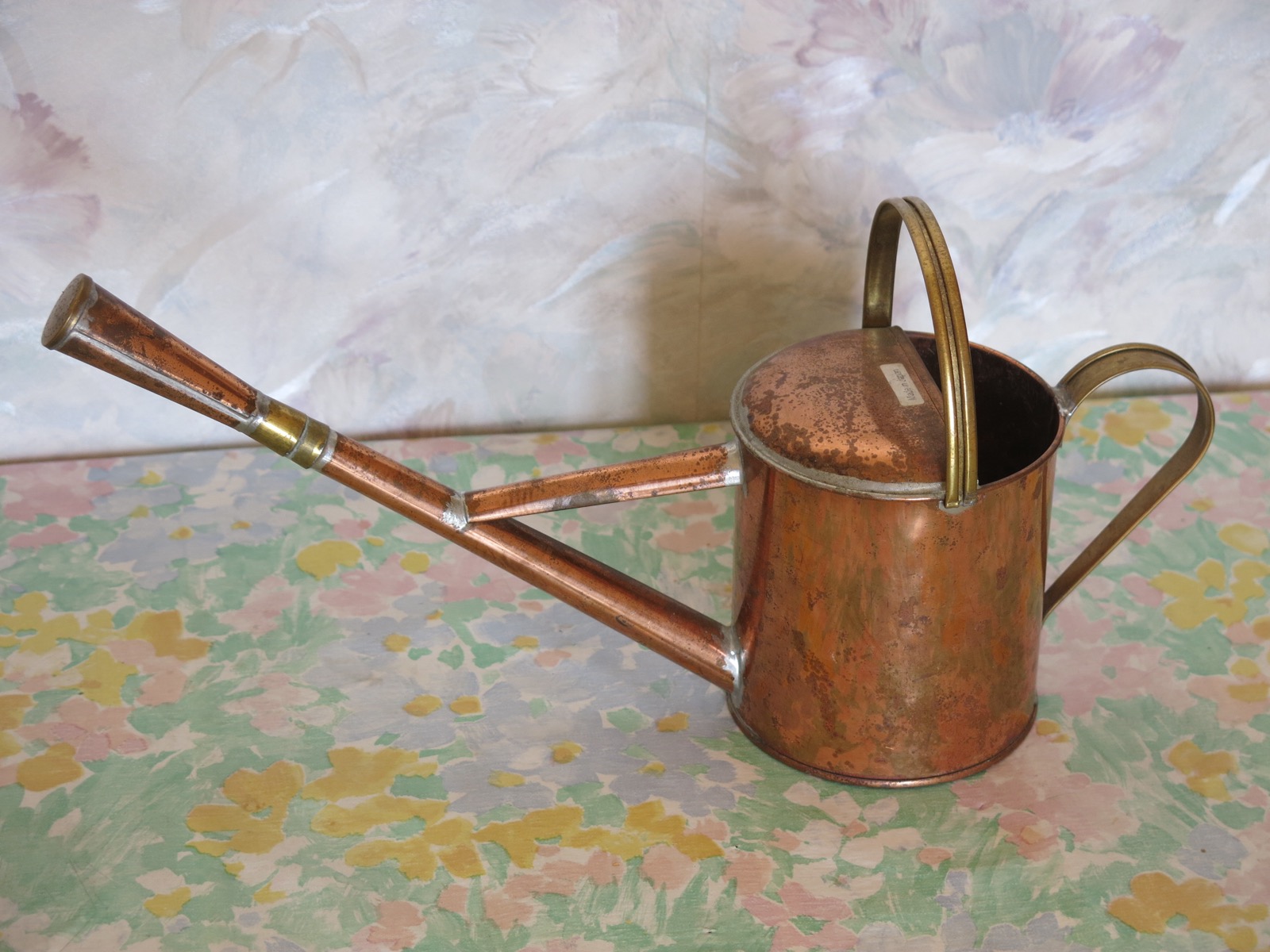
A copper watering can made for bonsai use. In summer it is picked up twice a day, sometimes more, and how carefully it is used often decides whether a tree thrives or scorches. Photo by Tangopaso, public domain, via Wikimedia Commons — Source

On the worst afternoons of a Japanese summer, growers tending a large collection of shallow pots report needing five or six passes with the watering can just to get everyone through the day. One heatwave account puts a harder number on how little time a mistake buys: at 101°F (38°C), visible leaf damage showed up within half a day of a single missed watering. That fact draws the real line between high summer and the rest of the growing year: in spring, a missed round costs a light day of stress; at the height of summer, it can cost the leaf itself, within hours.
Keeping a bonsai alive through summer comes down to watering roughly twice a day instead of once, guarding leaves against scorch and drying, adjusting shade and shelf position as the heat builds through the season, and accepting that a tree forgiving of a missed day in spring can show real damage within hours in August.
Twice a day becomes the baseline once heat sets in
Where watering once a day, in the cool of morning, is often enough in spring and autumn, growers in Japan generally move to two rounds a day once the heat sets in — one before the morning sun strengthens, one in the evening once it has passed. On the hottest days, and for the smallest pots, that can climb to three rounds, and, as with the collections mentioned above, some growers need five or six passes on the worst afternoons of the year. A shallow bonsai pot simply holds too little soil to buffer a full day of direct summer sun the way open ground does, so the daily rhythm set up in spring has to intensify to match it.
Timing matters as much as frequency. Midday watering under direct sun is generally avoided, since droplets sitting on a leaf can act briefly as small lenses, and water left on hot soil or foliage can approach scalding before it has any chance to cool the tree. Many growers add a second habit in the evening: hamizu (葉水, literally "leaf water"), a light shower over the whole canopy rather than just the soil, which cools the foliage after a hot day and is also credited with discouraging the mites and other pests that favor dry summer air.
Thin leaves scorch before pines even feel it
Hayake (葉焼け, "leaf scorch") is summer's most visible casualty: patches of leaf tissue that brown and crisp under strong, direct sun, sometimes worsened by the same water droplets that were meant to help. Broadleaf species with thin, tender foliage — maple and zelkova among them — are noticeably more prone to it than pines and junipers, whose needles are built to shed heat and light more readily. Growers commonly treat the hours around midday, roughly ten in the morning to two in the afternoon, as the window to avoid: not the day's heat alone, but its direct light, is treated as the real threat to a leaf.
One less obvious defense addresses the roots rather than the leaves: nijubachi (二重鉢, "double pot"), setting a bonsai's own pot inside a second, larger container and packing the gap between them with soil, water, or even damp newspaper. The buffer layer slows how quickly summer heat reaches the roots through the thin walls of the inner pot, and as a secondary benefit keeps the soil from drying out as fast — the same structure, left in place through winter, works in reverse to soften the cold.
Shade cloth and bench position both keep moving through the heat
Where a bonsai stands matters every month of the year, but summer is when that placement needs to keep changing. Shade netting, kanreisha (寒冷紗, a fine-mesh cloth originally used in agriculture), is commonly introduced early in the season at a light 20 to 30 percent shading and built up as the summer intensifies, reaching somewhere around 30 to 70 percent at the peak of the heat depending on how exposed a given bench is and which species sit on it. The cloth is generally taken down again each evening, so the trees still receive the night's dew and cooler air rather than sitting trapped under fabric around the clock.
The bench itself gets rearranged too. Smaller pots are tucked beneath the shade of larger trees, containers are grouped closer together so they shade one another's sides, and anything sitting near a hot stone path or a south-facing wall is moved off it, since radiated heat from a surface like that can undo the benefit of an otherwise well-shaded spot. None of these adjustments are permanent — the same tanaba that housed a tree in spring generally hosts it again in autumn — but through the hottest stretch of summer, it is rarely left arranged the same way for more than a few weeks running.
A missed watering shows within hours, not days
What makes summer different from every other season is how little time a mistake takes to show. Growers who have tracked a bonsai through a missed watering during a heatwave describe visible leaf damage appearing in as little as half a day under extreme heat, and a shallow pot left in full sun with dry soil can go from healthy to wilted well before the next scheduled watering arrives. Spring and autumn generally leave room to notice a problem and correct it the next day; summer, at its peak, rarely does.
The practical test, then, has little to do with the calendar. It is how many hours a tree can go unattended before the damage is visible, and at the height of summer that number can shrink to something closer to an afternoon. Judged that way, a watering schedule stops being a habit and starts being a deadline, and that narrowed margin is exactly why a fixed, twice-daily rhythm matters more here than in any other season.
Presence beats a calendar in July
None of summer's work is difficult on its own: filling a can, checking a shelf, unhooking a length of shade cloth. What makes the season demanding is that none of it can be skipped, and skipping it costs more here than it would in April or November. A collection tended well through a Japanese summer — watered twice a day without exception, watched closely enough to catch hayake or a drying pot before it becomes a crisis — carries that unglamorous discipline forward into the dense, healthy growth that autumn's work will later shape and refine.
Azukari exists partly because of this exact gap: no owner watching from nine time zones away can pick up a watering can twice a day in July. An artist in Japan does it instead, and what reaches the owner afterward is the record of a season that, without someone physically present through its hottest weeks, would not have survived it.
References
- Bonsai Empire — "Caring for a Bonsai during a Heatwave" — on late-morning watering, misting to cool trees and their surroundings, shade strategies, and signs of heat stress such as pale foliage and branch-tip dieback.
- Bonsai Tonight — "How to care for bonsai during heat waves" — on watering two to three times daily with additional misting during extreme heat, shade-cloth placement, and a grower's account of leaf damage appearing within half a day at 101°F (38°C).
- Miyagi Bonsai — "Do Bonsai Need Shade in Summer?" — on shade-cloth percentages and the difference in sun tolerance between conifers and thin-leaved broadleaf species such as maple.
- 盆栽なび — "夏場の盆栽のお手入れで気を付けたいこと" — on avoiding direct sun between roughly 10 a.m. and 2 p.m., the construction and purpose of nijubachi (double-potting) for root protection, and the use of shade netting.
- キミのミニ盆栽びより — "盆栽の夏の管理" — on watering frequency rising to two or three times daily (up to five or six on the hottest days) and building shade-cloth density from roughly 20–30% up to 50–70% as summer intensifies.