
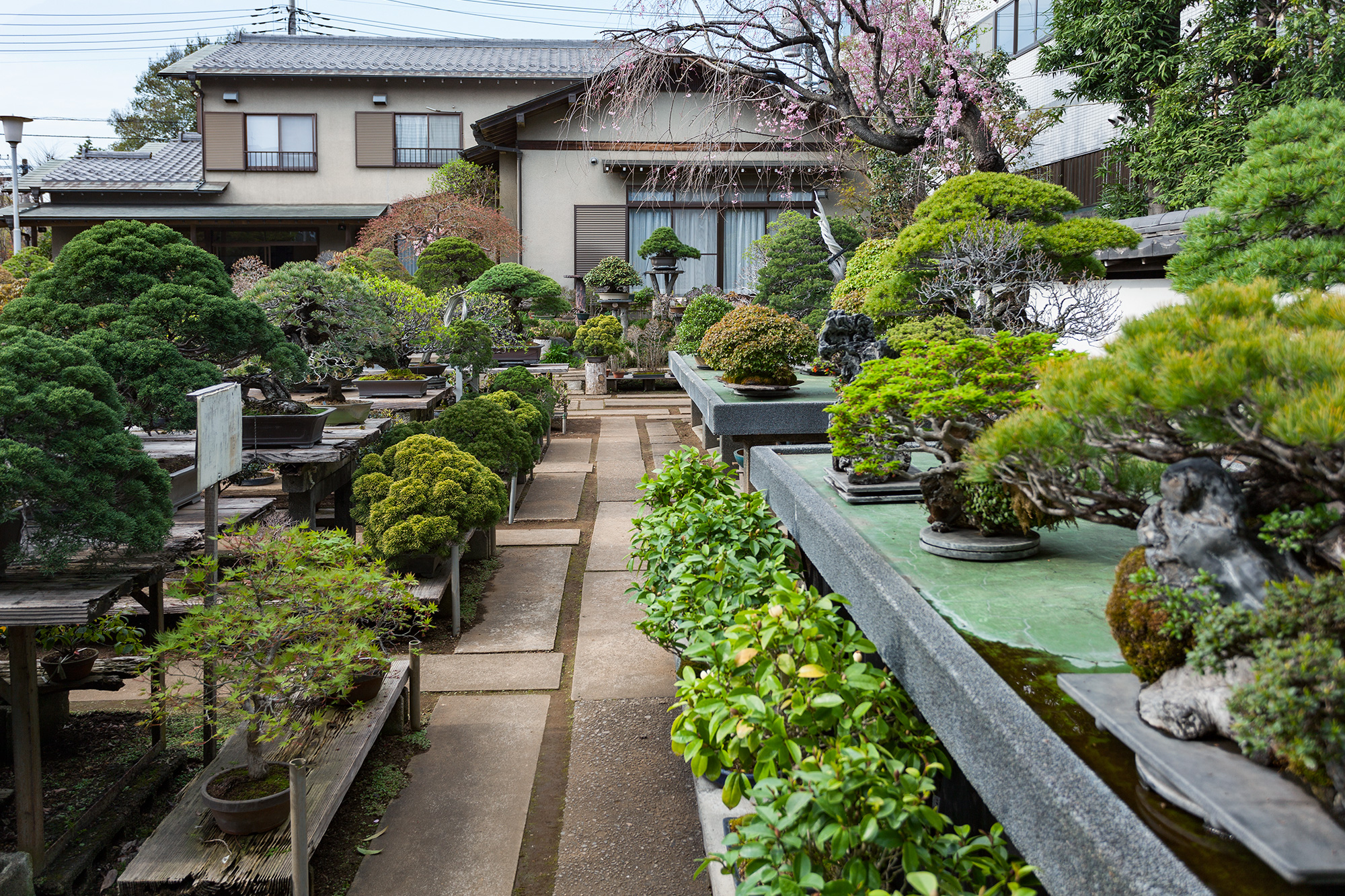
Fuyo-en, one of the resident gardens of Omiya Bonsai Village, Saitama — the kind of nursery where the question usually starts. Photo by TypeZero, CC BY-SA 4.0, via Wikimedia Commons — Source

No — not in a suitcase, and in most cases not at all. A potted bonsai is a rooted, living plant with soil around its roots, and every government a traveler might fly home to treats a rooted plant as a possible carrier of pests before it treats it as a souvenir. Japan requires an export inspection for any living plant leaving the country, whether it travels as commercial cargo or in a passenger's own bag. Most destination countries then add restrictions of their own, and for a bonsai specifically, those restrictions are rarely something a two-week trip can satisfy.
Japan doesn't wave a carry-on through either
It is tempting to assume the friction only starts on arrival, but Japan's own side of the border is not casual about it. The Plant Protection Station, under the Ministry of Agriculture, Forestry and Fisheries, runs export quarantine inspection counters at Japan's major international airports — Narita, Haneda, Kansai, and others — specifically so departing travelers can have a plant inspected and certified before boarding. In the agency's own paperwork, "cargo," "postal mail," and "personally transported items" are treated as three separate export categories, each with its own reference chart, but all requiring the same underlying step: an inspection and a phytosanitary certificate confirming the plant is free of regulated pests. A tourist checking a bonsai as luggage is not exempt from the process a commercial exporter goes through — they are simply routed through the traveler's version of it, at a counter built for exactly that purpose. The Quarantine Wall covers how demanding that process gets once a specific destination country's own rules are added on top.
What the country on the other end decides
Clearing Japan's counter only gets a tree to the gate. What happens next is entirely up to the country receiving it, and the two largest bonsai markets outside Japan handle personal luggage very differently.
In the United States, APHIS — the plant-health arm of the USDA — prohibits potted plants in passenger baggage outright; only bare-rooted plants, stripped of all soil, are considered at all. Even then, a traveler may hand-carry no more than twelve, and only if each one has a phytosanitary certificate and is not subject to "special restrictions, such as post-entry quarantine or treatment." Anyone wanting to bring in thirteen or more must obtain an import permit in advance and ship the plants to a USDA inspection station — hand-carrying that many is not permitted at all.
The European Union goes further and simply closes the door. Under EU plant health rules, travelers arriving from outside the EU may not bring "plants for planting" — the regulation's own phrase for anything with roots, including cuttings and bulbs — in their luggage under any circumstances. Belgium's food safety agency states the consequence plainly: if such a plant is found, it is confiscated and destroyed, phytosanitary certificate or not.
Why bonsai rarely qualifies even where an exception exists
Even the narrow US allowance for a handful of bare-rooted plants was never really built with bonsai in mind. Under APHIS's own rule for "artificially dwarfed plants" — its regulatory term covering bonsai and penjing (盆景, the Chinese tradition bonsai historically descended from) — a tree must first have spent a minimum of two years growing bare-rooted in a nursery in its country of origin that is registered with, and inspected by, that country's government. A tree bought during a trip has no such nursery record behind it, which places it squarely among the "special restrictions" the traveler exception excludes. In practice, a bonsai purchased in Japan this month is not a plant a US traveler can simply carry home this month, no matter how small the pot.
What a traveler actually has
None of this closes the door on owning a tree that is growing in Japan — it just rules out carrying it through an airport. A nursery willing to begin the years-long registered-cultivation process can, for some species, eventually ship a tree abroad; Which Trees Can Leave Japan goes through what that looks like species by species. The far more common choice is simpler: leave the tree exactly where its climate, its soil, and an artist's ongoing attention already suit it, and hold a different kind of relationship to it instead — visiting when travel allows, and following its care the rest of the year. Keep the Tree in Japan looks at what that choice involves, and it is the same idea behind Japan's older culture of entrusting a tree to someone else's care, which Azukari is built to carry into the present.
References
- Japan Plant Protection Station (MAFF) — "English Export Guide" — on export inspection counters at major Japanese airports and the separate reference charts for cargo, postal mail, and personally transported items, all requiring inspection and a phytosanitary certificate.
- USDA APHIS — "International Traveler: Plants, Plant Parts, Cut Flowers, and Seeds" — on potted plants being prohibited in passenger baggage, the 12-plant bare-root allowance with a phytosanitary certificate, exclusions for plants under special restrictions, and the requirement to ship 13 or more plants rather than hand-carry them.
- USDA APHIS — "Plants with Special Requirements and Prohibited Plants" — on the bare-root and minimum two-year registered-nursery requirements for importing artificially dwarfed plants (bonsai/penjing) into the United States.
- FASFC (Belgium) — "Plants and Plant Products" — on the EU-wide prohibition on travelers bringing plants for planting, including rooted plants, in personal luggage from outside the EU, and confiscation if found.