Ask a nursery in Japan whether a given tree can be exported, and the honest answer is almost never a flat yes or no — it is "it depends on the species, and on where it's going." We have already looked at the general shape of that wall: inspection, a phytosanitary certificate, and often a period of quarantine cultivation before a living plant is allowed to leave the country at all. What that general account leaves out is the detail that matters most to anyone standing in front of an actual tree — which species clear the wall, which do not, and why the answer changes so sharply from one genus to the next.
Pine is the species most likely to be turned away outright, most trees that do qualify must first spend years in a nursery built specifically for export, and the safest working assumption for any tree still in Japan is that it is not going anywhere.
Pine is the hardest case
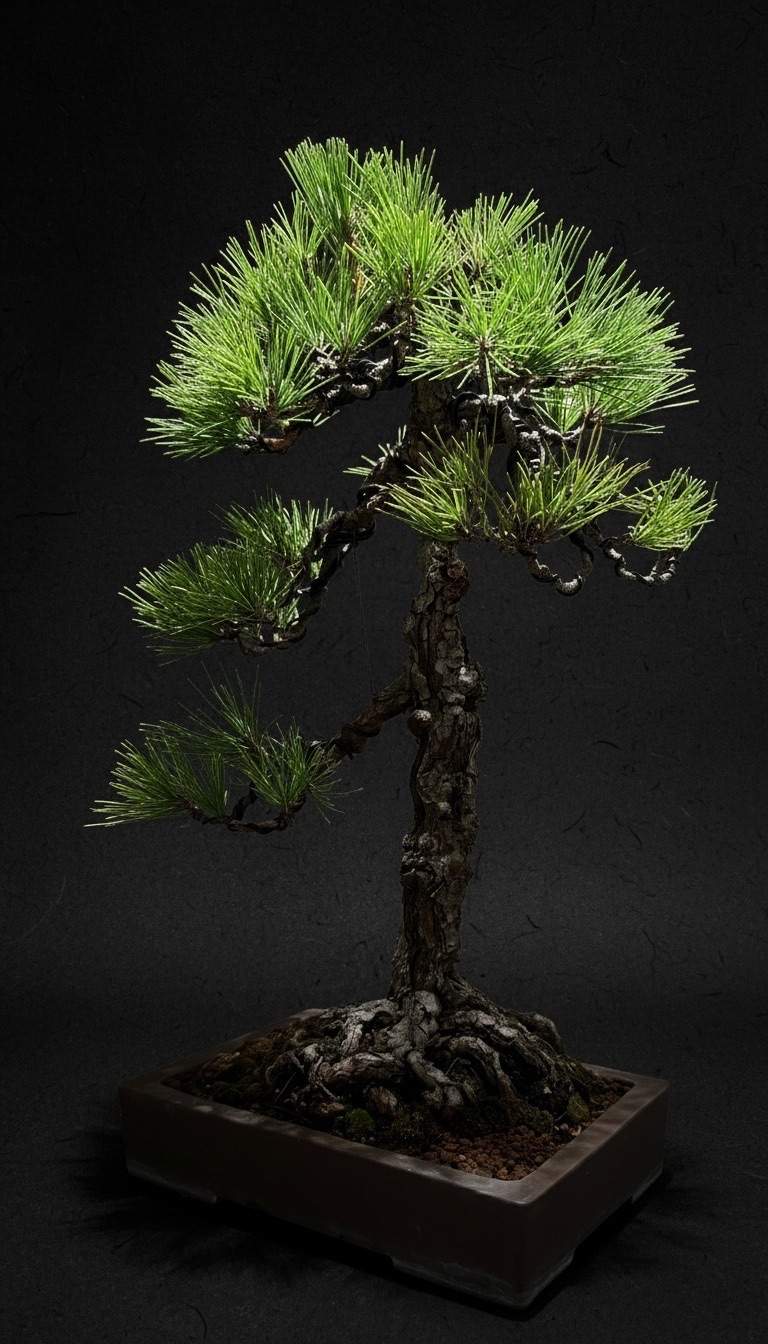
No genus illustrates the gap between "beautiful" and "exportable" better than pine. China's plant quarantine authorities list Pinus spp. as prohibited from import outright, with no exceptions carved out for bonsai. The European Union goes further still: under Commission Implementing Regulation (EU) 2019/2072, Pinus plants are barred from entry from outside the EU as a blanket rule, not a case-by-case judgment. Japan has managed to open a narrow exception for its black pine (kuromatsu, 黒松), after the European Food Safety Authority conducted a formal commodity risk assessment and granted a derogation — but a derogation is not a standing right, and it does not extend automatically to every pine species or every producer.
The United States takes a similar line. Japan's own plant protection authorities list Pinus spp. — specifically two- and three-needle pines, the group that includes most Japanese black pine and red pine bonsai — among the genera the US does not accept for import at all. Goyomatsu (五葉松, "Japanese white pine," a five-needle species) is treated separately and can, in narrow circumstances, still travel, but even that exception is tied to a trunk-diameter limit connected to a wood-boring beetle the US screens for, not a general clearance for the species.
The reason sits underground, in a nematode rather than in the tree itself. Bursaphelenchus xylophilus, the pine wood nematode responsible for pine wilt disease, is a quarantine organism for dozens of countries, and pine is its primary carrier. A tree can be perfectly healthy and still represent exactly the kind of risk a receiving country's agriculture ministry exists to keep out. That is a structural fact about the species, not a judgment about any individual pine's quality — and it is a large part of why a striking number of the trees prized most highly in Japan are also the ones least likely ever to be cleared for export.
Nurseries built only for export
Because ordinary nursery stock rarely meets an importing country's conditions, a separate category of growing site exists specifically to produce trees that can. Japan's Plant Protection Station registers individual greenhouses, screenhouses, and fields for this purpose, and the specifications are exact: benches raised at least 50 centimeters off the ground, screens no coarser than 1.6 millimeters across every opening, self-closing doors, sterile growing media confirmed free of specific soil pests, and a government inspection completed within the previous twelve months. A tree grown in an ordinary display area of a nursery, however well it has been trained, generally does not qualify simply by being potted up and shipped — it has to have spent its most recent growing seasons inside one of these registered sites from the start.
This is a meaningful thing to understand about the trade: an export-ready tree is not simply a fine tree that someone decided to sell abroad. It is a tree that has been cultivated, from a set point onward, inside infrastructure purpose-built to satisfy a foreign government's pest inspectors — a different track from the one most bonsai in Japan are grown on.
Measured in years, not weeks
Even once a tree is on that track, the clock runs long. The baseline figure Japan's own export guidance cites for the United States is a minimum of two years of registered-nursery cultivation before a tree can ship, and exporters are told to contact the Plant Protection Station in advance if a given bonsai's time in a registered site falls between two and three years — an acknowledgment that the timeline is routinely stretched, not a tidy fixed term. Other destinations run longer still: Turkey's requirements call for at least two years in a registered growing site for most trees, and at least three years for a handful of genera, including cherry (Prunus) and apple (Malus), that the receiving country treats as higher risk.
The clock does not always stop at the border, either. Certain genera — shimpaku juniper (Juniperus) among them — face a further quarantine period after arrival in the United States, commonly around two more years, before the tree can be released from postentry restriction. Add the growing time in Japan to the holding time on the other side, and a single tree can spend the better part of a decade moving through inspection and quarantine before an owner ever displays it freely. And even trees that complete every step are not guaranteed passage: Japan's own guidance notes that specimens exceeding certain age or size limits, which vary by species, are barred from import regardless of how the quarantine process went.
Assume it stays
Line up the genera Japan's export guidance lists as generally unable to enter the United States at all — pine, maple (Acer), cherry (Prunus), oak (Quercus), spruce (Picea), Japanese larch (Larix), flowering quince (Chaenomeles), and several more — and it becomes clear that this is not a short list of edge cases. It covers a large share of the species most commonly trained as bonsai in Japan in the first place. A tree in one of these genera is not merely subject to a long process; for most nurseries and most owners, it is simply not going to leave the country.
That is worth sitting with plainly, rather than treated as a technicality to route around. Plant quarantine exists because countries are protecting their own agriculture, not because the paperwork happens to be difficult this year, and the underlying restrictions on species like pine are unlikely to loosen. For a tree still growing in a Japanese nursery, the realistic starting assumption is that its climate, its soil, and its artist are also its permanent address.
None of that has to mean giving the tree up. Japanese bonsai culture has long separated who owns a tree from who tends it day to day — a distinction we look at in The Culture of Entrusting and in practical terms in Entrusting a Tree. We cover the short version of the export question, and what to do instead, in our companion piece. Held that way, a bonsai does not need to cross a border for its owner to hold a real, ongoing stake in it — Azukari is built around exactly that record of seasonal care, kept and shared while the tree remains exactly where it has always grown.
References
- Yokohama Plant Protection Station (MAFF) — "盆栽・植木の輸出検疫について" (Export Quarantine for Bonsai and Nursery Trees), February 2026 edition — on China's blanket prohibition of Pinus spp., the US prohibition on two- and three-needle pines with a narrow exception for goyomatsu under a beetle-related trunk-diameter limit, registered-nursery specifications (bench height, mesh size, inspection interval), minimum cultivation periods by destination, and postentry quarantine for Juniperus in the US.
- Japan Plant Protection Station (MAFF) — "Export of Bonsai and Garden Trees" — official overview of the bonsai and nursery-tree export process from Japan.
- USDA APHIS — "Plants with Special Requirements and Prohibited Plants" — on soil-removal and registered-nursery requirements for artificially dwarfed plants (bonsai) entering the United States.
- USDA APHIS — "Postentry Quarantine" — on the postentry quarantine period, generally around two years, required for higher-risk plant taxa after arrival in the US.
- EFSA Journal — "Commodity risk assessment of bonsai plants from China consisting of Pinus parviflora grafted on Pinus thunbergii" — on the EU's blanket prohibition of Pinus imports from third countries under Commission Implementing Regulation (EU) 2019/2072, and the case-by-case derogation process for pine bonsai.