
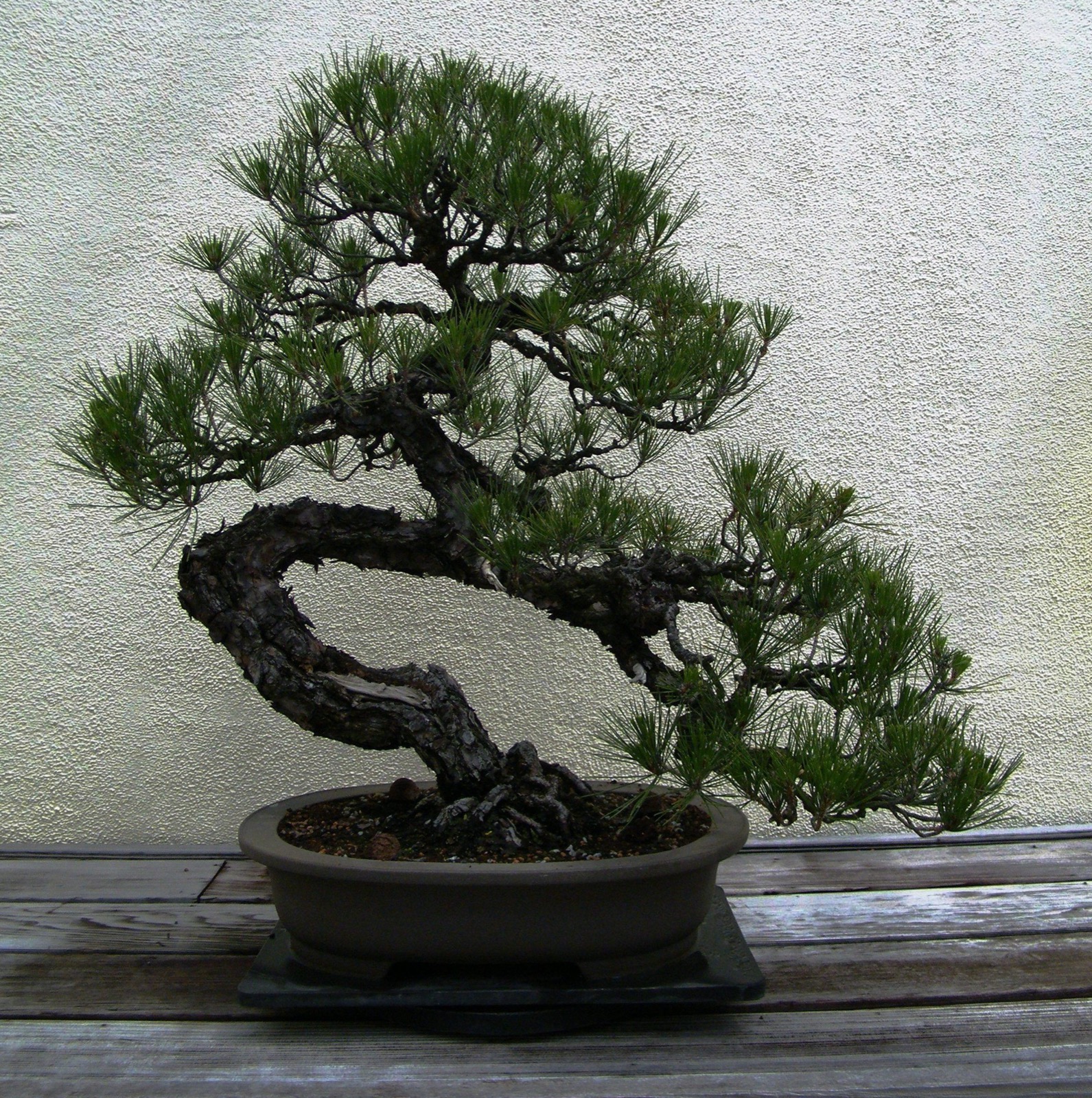
Photo by Sarah Stierch, CC BY 4.0, via Wikimedia Commons — Source

No government asks whether a tree is beautiful before it asks whether the tree might be carrying something dangerous. That ordering has nothing to do with bureaucratic indifference toward bonsai as an art form. It is simply the architecture of plant quarantine, built long before bonsai became an object of international interest, and applied to every rooted plant that tries to cross a border regardless of what it is worth.
A living bonsai leaving Japan does not pass through one inspection. It passes through a sequence of them — Japan's own export checks, then whatever the receiving country requires, which for some species means years of registered nursery cultivation before the tree can even be offered for shipment. This is the wall behind a much simpler question travelers ask at the end of a trip — can you take a bonsai home from Japan at all — and the mechanics of it are worth understanding on their own terms.
A System Built Before Bonsai Mattered To It
The international framework behind all of this is older than most people assume. Under the International Plant Protection Convention (IPPC), a treaty signed in 1951 and now counting more than 180 governments as parties, countries agreed to coordinate measures against the international spread of plant pests — not as a courtesy to traders, but as a shared defense of each other's agriculture and forests. Every phytosanitary rule a bonsai eventually runs into, in any country, traces back to that basic commitment.
On the Japanese side, exporting any living plant begins at a Plant Protection Station under the Ministry of Agriculture, Forestry and Fisheries. An exporter submits an application for export inspection, naming the plant's species, quantity, and destination; a Plant Protection Station officer — working out of stations attached to Japan's major airports and a further network of regional offices — then inspects the actual plant against the destination country's stated requirements before issuing a phytosanitary certificate. That certificate is Japan's signature confirming the tree left clean. It is not a guarantee of entry. What happens on arrival is decided entirely by the country receiving it, and MAFF's own guidance tells exporters plainly to confirm the current rules with the destination country before assuming anything, because those rules are revised as pest risk changes.
Where the Real Waiting Happens
The clearest illustration of how demanding "the current rules" can get is the European Union's treatment of black pine (kuromatsu, 黒松, Pinus thunbergii) bonsai from Japan. Under a special derogation reviewed by the European Food Safety Authority (EFSA), a black pine bonsai cannot simply be inspected and shipped. It must first spend a minimum of two years growing in a nursery that is registered with the Japanese authorities and inspected roughly six times a year, standing on raised concrete tables at least 50 centimetres off the ground. Its growing medium must be a soil substitute that has been heat-treated at 90°C for at least thirty minutes, replaced with freshly disinfected medium every year the tree remains in the nursery. Before shipment, its roots are washed completely bare of soil and repotted one final time in disinfected medium. On arrival in the EU, the tree then spends a further minimum of three months in a post-entry quarantine station, inspected at least twice more.
None of this exists to be difficult for its own sake. EFSA's assessment evaluated nineteen separate pests that could plausibly travel on a black pine bonsai from Japan — among them Bursaphelenchus xylophilus, the pine wood nematode responsible for pine wilt disease. According to the EPPO Global Database, the nematode is already present and widespread across Japan's pine forests, while within the EU it has gained only a restricted foothold in parts of Portugal and Spain. A regulator looking at that map has a plain reason to treat a Japanese pine differently from, say, a Japanese maple: the risk genuinely is not the same, tree to tree or country to country, in the way a buyer might assume.
Why "Impossible" Is Sometimes the Honest Word
This is where the fourth thread running through this whole subject — some trees can be exported, and some effectively cannot — stops being a rhetorical flourish. The two-year registered-nursery clock in the EU's own rule only starts once a tree is already growing inside a facility built and inspected to that exact specification from the outset. A black pine that has spent its life in an ordinary nursery, trained by an ordinary artist, cannot simply be enrolled the week a foreign buyer appears; the years of documented cultivation the rule demands have to already exist, or the pathway is not available. For a tree without that specific paperwork trail, "possible in theory, absent in practice" and "not exportable" end up meaning close to the same thing — one more reason a country's plant-health authority may simply decline an entire category of plant material rather than build a bespoke exception for it. Which Trees Can Leave Japan goes through how that plays out species by species.
What the Wall Actually Protects
It is worth saying plainly what this wall is not. It is not a device to keep bonsai expensive, not a hidden tariff on Japanese craftsmanship, and not a test a well-connected buyer can talk their way around. A Plant Protection Station inspector and an EFSA panel are doing the same job an agricultural quarantine service performs for citrus, cut flowers, or seed grain: keeping one country's ecosystem from absorbing another's pest problem through a channel nobody was watching. Bonsai simply experience that job differently, because unlike a crate of fruit, a bonsai is meant to keep living and growing for decades — which is exactly why regulators are willing to make the wait so long.
For anyone who wants a tree that is still growing in a Japanese nursery, none of this is a footnote. It is the actual shape of the choice in front of them: begin a process that, for some species, can run for years and may never clear at all — or leave the tree exactly where its climate, its soil, and the years already logged in its favour all still apply, and hold a different kind of relationship to it instead. Trees Cannot Cross Borders follows that second path in more detail, tree by tree, and what it eventually led to.
References
- International Plant Protection Convention — Overview — on the 1951 treaty and its current membership of more than 180 governments.
- Japan Plant Protection Station (MAFF) — "English Export Guide" — on the application, inspection, and phytosanitary-certificate process for exporting living plants from Japan, and the guidance to confirm requirements with the destination country.
- EFSA — "Commodity risk assessment of black pine (Pinus thunbergii Parl.) bonsai from Japan" — on the EU's minimum two-year registered-nursery requirement, soil disinfection, inspection frequency, and post-entry quarantine for black pine bonsai, and its evaluation of nineteen associated pests.
- EPPO Global Database — Bursaphelenchus xylophilus — on the pine wood nematode's status as widespread in Japan and of restricted distribution within the EU.