
Culture
The Zen Boom and Bonsai
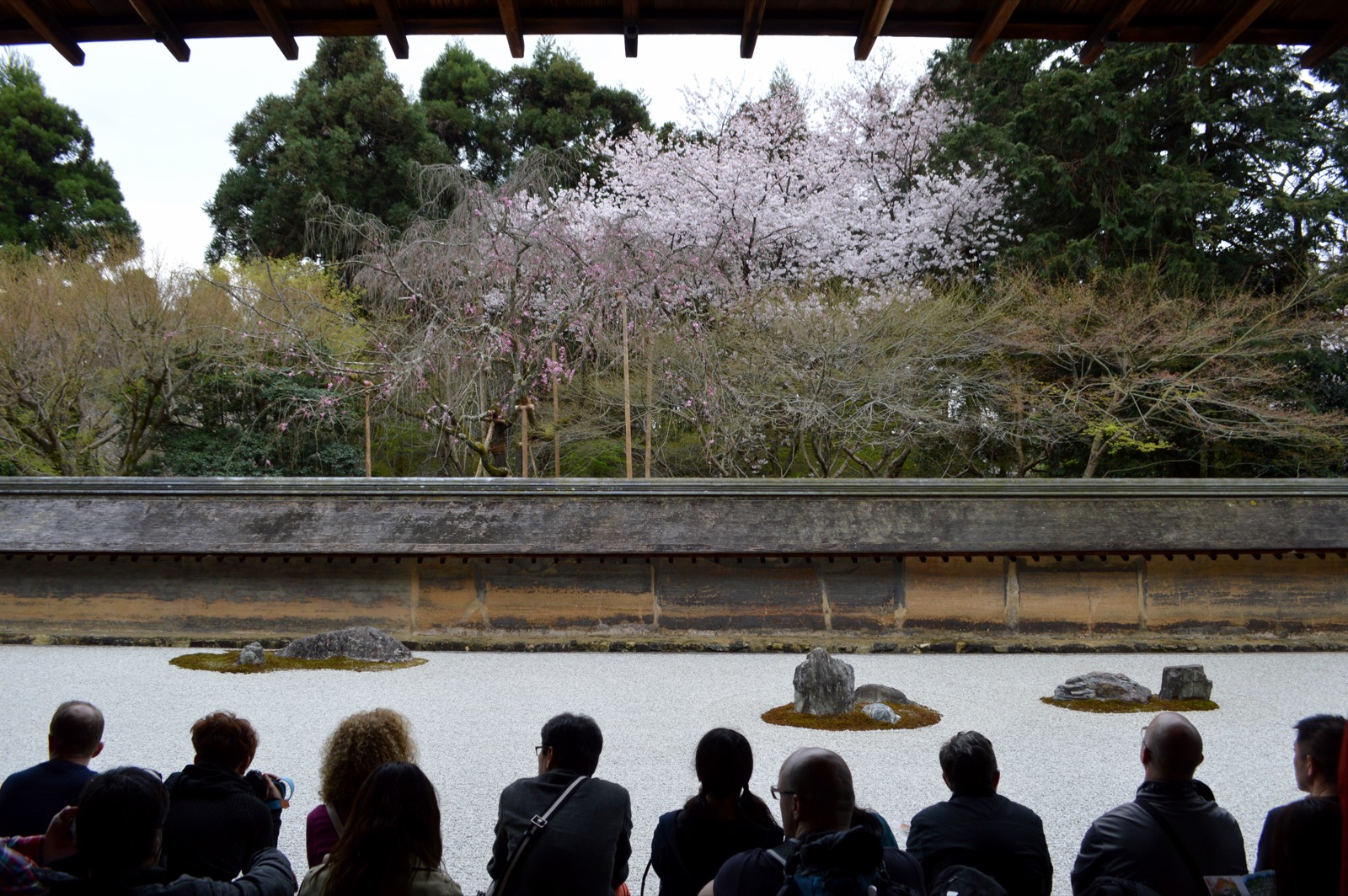
Bonsai's reputation outside Japan as an inherently "Zen" art owes less to the tree's own history than to a wave of Western interest in Zen that crested in the 1950s and has kept finding new products to move through ever since — and bonsai, already quiet and already potted, was standing nearby when the wave arrived.
The word Zen now sells candles, phone apps, throw pillows, and rock gardens the size of a placemat. It was not always this diffuse. It arrived in the West as a fairly specific intellectual event, with datable lectures, named essays, and writers who argued in print, at the time, about whether the whole thing was being done right. Tracing that history alongside bonsai's own — a much older, much slower story — shows two imports that happened to travel the same route without ever quite being the same cargo.
A boom with a start date
The postwar surge of Western interest in Zen has an identifiable point of origin: the scholar D.T. Suzuki, who delivered lectures at Columbia University across the 1950s that drew, by several accounts, a striking cross-section of New York's artistic and intellectual life — the composer John Cage, the psychoanalyst Erich Fromm, and the theologian Thomas Merton among the names that recur in later accounts of who was in the room. Suzuki's decades of English-language writing had already introduced the vocabulary; the Columbia lectures gave it a live audience. From there the interest spread into the Beat literary circle — Allen Ginsberg, Gary Snyder, and Jack Kerouac, whose 1958 novel The Dharma Bums fictionalized a hunger for Zen-inflected freedom that was, by then, widely shared.
That same year, the philosopher Alan Watts published an essay, "Beat Zen, Square Zen, and Zen," that is worth remembering precisely because of its timing: it appeared in the spring 1958 issue of the Chicago Review, at the height of the boom it was already gently criticizing. Watts distinguished a "square" Zen of imitated Japanese monastic form from a "beat" Zen used mainly to justify already-formed bohemian habits, and argued that both missed a Zen that was neither costume nor excuse. The lesson worth carrying forward is not the specifics of his taxonomy but the fact that it existed at all — a caution about shallow imitation, voiced by one of the boom's own central figures, in the very year the boom peaked.
A tree that was already there
Bonsai's own path into Western households ran on a mostly separate track — postwar servicemen who had seen trees in Japan, hobbyist clubs that formed around them, and decades of specialist growers and exhibitions that had nothing to do with Suzuki's lecture hall. And bonsai's link to Zen, inside Japan, is real but partial rather than definitional: historians of the art note that container-grown trees arrived from China well before Zen Buddhism reached Japan, and that it was specifically the aesthetic of Zen monks — favoring severe restraint over elaborate landscape — that shaped the style bonsai eventually took, not its origin. Zen influenced how the tree was arranged. It did not invent the tree.
None of that nuance travels easily into a single English adjective. What did travel was a general Western association, formed in the same postwar decades covered above, between "Japan," "Zen," and a certain quiet, uncluttered image — and a small potted tree, already associated with patience and restraint, was an obvious noun for that adjective to land on. As we wrote in "Zen Is Something You Do," actual Zen training is built from repeated physical acts — sitting, sweeping, cooking — done for their own sake rather than for what they signal. A tree sitting on a windowsill signals stillness perfectly well without ever having done any of that.
The desk garden and the loanword
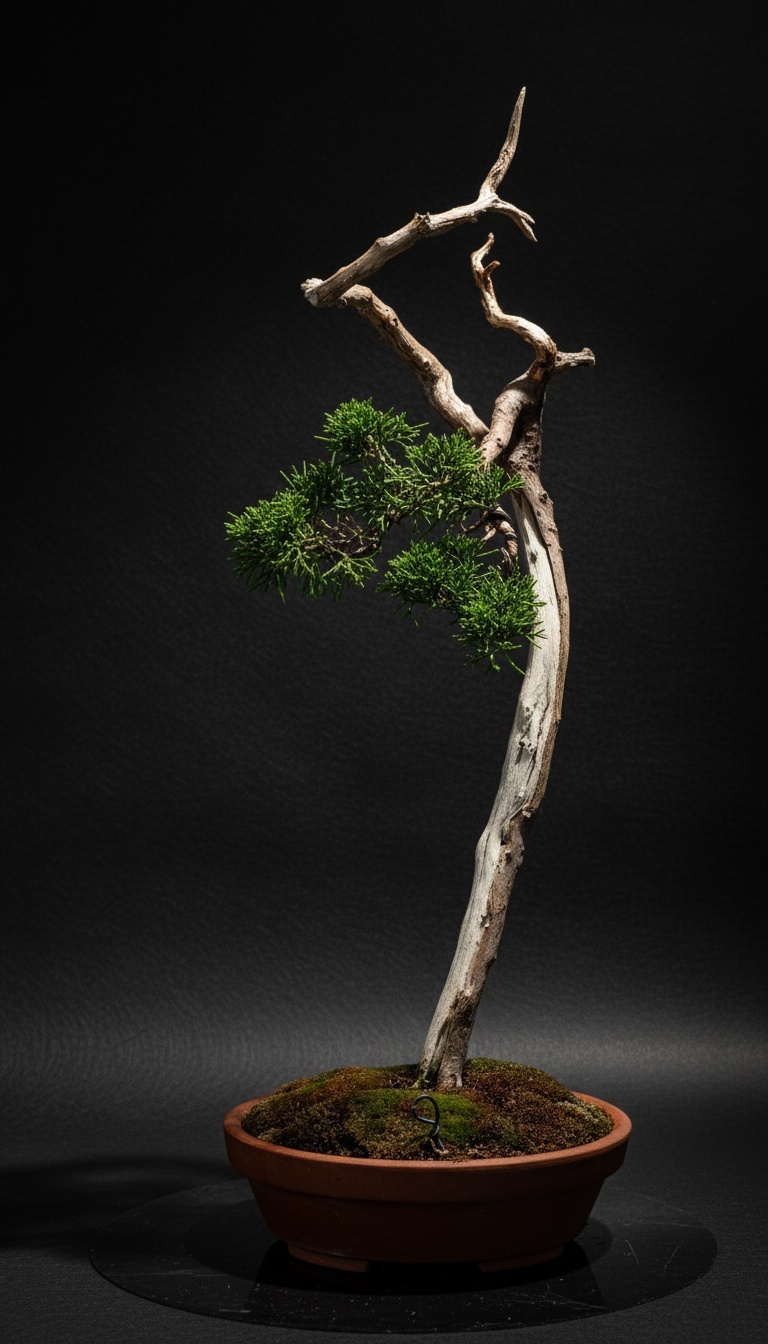
An actual bonsai, still requiring water, still requiring years — the part of the association that a boxed desk kit cannot include.
The clearest evidence of how far the label drifted from the practice sits in any home-goods aisle: miniature "Zen garden" kits, sold with a rake, a tray of sand, and, often, a small ornamental tree that will never need watering because it is made of resin. It is a tidy irony, and worth stating plainly rather than scornfully: the props of a discipline built entirely around repeated, unglamorous physical attention are sold, at scale, in a form that requires none. The broader mindfulness industry has drawn a more pointed version of the same critique from scholars like Ronald Purser, whose book McMindfulness argues that a practice rooted in Zen and Theravada training has, in its commercial form, been stripped down into a fast, individual stress fix — useful, perhaps, but a different object from what it was drawn from. Bonsai, imported alongside the same wave and carrying the same adjective, was always the harder thing to package this way. A tree, unlike a sand tray, keeps asking to be tended whether or not anyone is watching.
The part that turned out to be real
And that is the detail worth holding onto: whatever the marketing did with the label, the actual daily task of keeping a bonsai reproduces, almost without meaning to, the structure Zen training is built from. As we wrote in "Care as a Wordless Hour," the state Japanese calls mushin (無心), "no mind," tends to arrive not through effort but through a task small enough that the mind runs out of things to say about it — watering, turning the pot, checking the soil. The old grower's saying mizuyari sannen (水やり三年), "three years for watering," describes the same slow, physical apprenticeship Suzuki's lecture-hall audience could only read about. A resin tree in a sand tray cannot offer this, not because the idea behind it is false, but because there is nothing alive on the other end of the rake.
Why the busiest places ask for it most
It is not a coincidence that the Zen boom's original audience — Manhattan's overworked art and intellectual world of the 1950s — resembles the audience later claimed by the mindfulness apps that followed decades after: people with unusually little unstructured time, reaching for something that asks for stillness precisely because their days contain so little of it. The pattern has held long enough to become measurable. The Global Wellness Institute, tracking the broader "mental wellness" economy, has counted meditation and mindfulness as one of its fastest-growing categories even while remaining, in dollar terms, its smallest — a market of enthusiastic reach rather than deep individual spend, concentrated in the countries with the least spare time to spend it in. Jon Kabat-Zinn's Mindfulness-Based Stress Reduction program, founded at the University of Massachusetts Medical School in 1979 by adapting elements of Soto Zen and Theravada practice into a clinical, secular eight-week course, follows the same logic in miniature: not fewer places to import calm from, but more, precisely because demand for it kept rising with the pace of ordinary work.
Closing
Whatever brings someone to a bonsai — an essay half-remembered from a college reading list, a desk kit given as an office gift, or simply the word Zen attached to something in a shop window — the tree on the other side of that interest cannot be shipped pre-finished the way the label can. It asks, instead, for the same plain thing Zen training has organized into formal practice for eight centuries: showing up, repeatedly, for an ordinary task that never quite ends. At Azukari, that showing up continues in Japan under an artist's daily hand, tree by tree, regardless of which door — historical, commercial, or entirely accidental — first brought someone's attention to the idea.
References
- Zen boom — Wikipedia — overview of the 1950s–1970s rise in Western interest in Zen, including D.T. Suzuki's Columbia lectures and the Beat writers.
- Beat Zen, Square Zen, and Zen — Alan Watts, Internet Archive record — publication record for Watts's 1958 essay, first printed in the Chicago Review.
- About Jon Kabat-Zinn — jonkabat-zinn.com — official biography confirming the 1979 founding of the Mindfulness-Based Stress Reduction program at the University of Massachusetts Medical School.
- McMindfulness — Ronald E. Purser — author's own summary of his critique of the commercialization of mindfulness practice.
- GWI Finds Mental Wellness Is a $121 Billion Market — Global Wellness Institute — sizing meditation and mindfulness as a $2.9 billion global sub-sector, described as the smallest but fastest-growing of the mental wellness markets.
- History of Bonsai — Bonsai Empire — on the Kamakura-period arrival of container tree-growing in Japan and the specific, non-original influence of Zen aesthetics on bonsai's development.
Photo credit: "Ryoan-ji rock garden with silhouettes of tourists, Kyoto, 2016" by DimiTalen, via Wikimedia Commons, dedicated to the public domain under CC0. Resized from the original.
