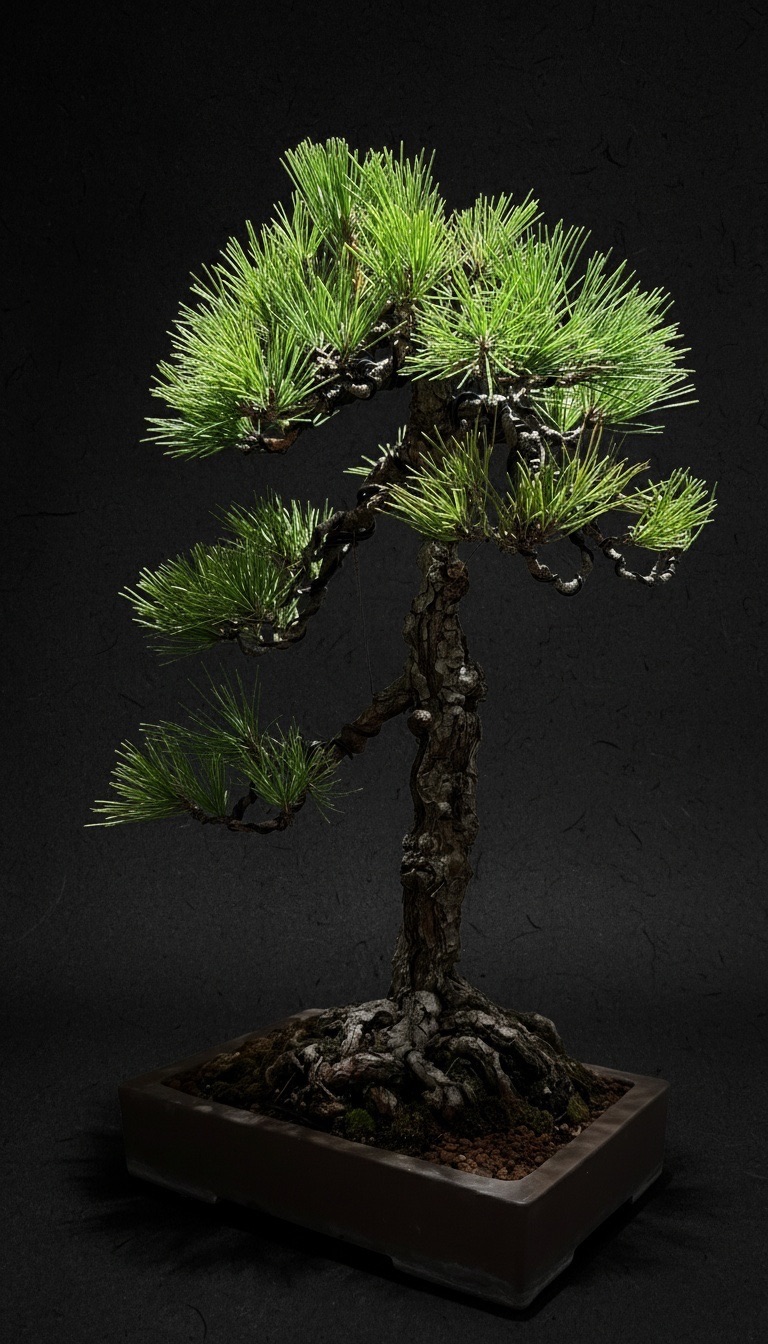
The Japanese white pine known today as the Yamaki Pine has been in training since 1625. One family in Hiroshima tended it across five generations, sheltered it behind a garden wall through the city's bombing in 1945, and in 1976 gave it to the American people as part of Japan's Bicentennial gift. By the time it changed hands, it carried roughly 350 years of care that no later owner could have supplied by paying for it.
That is the shape of what makes a bonsai's age different from almost any other quality a person might come to own. A tree trained by the same artist, in the same nursery, using the same technique, is still a different tree at ten years old than at a hundred — and no fee, however large, buys back the ninety years between them.
A bonsai's age is the part of its value that skill, money, and impatience cannot shorten. It accumulates at exactly one rate: one season at a time, and only for the tree that is actually allowed to live through it.
Skill and Money Move Fast; Growth Does Not
A person can hire a gifted artist this week. They can source finer soil, order a better pot, arrange for ideal light and water. None of it changes how long a trunk has actually been thickening, or how many seasons a branch has already been wired, released, and wired again until it holds its bend on its own.
Growers who start from seed describe the early timeline in plain terms: a seedling needs a minimum of three years before it is even mature enough to start shaping, and reaching a genuinely mature-looking form — bark beginning to show character, a trunk with real taper — often takes ten years or more of steady, unhurried growth. A bonsai with a documented jurei (樹齢, "a tree's age — how many years the tree itself has been alive, counted separately from how long it has been trained as bonsai") of several centuries has repeated that same slow process across a span many times longer than a single grower's career. Of everything that goes into a bonsai, age is the one part that stays entirely outside what a person can simply arrange.
A Tree's First Hundred Years Cannot Start Today
The white pine known as "Higurashi," now held at the Omiya Bonsai Art Museum in Saitama, is estimated at around 450 years old. Someone planting a white pine seed this year with the ambition of matching it would not see that age reached within their own lifetime, nor, in all likelihood, their child's. A tree's first hundred years are not a project a person can commission and complete on demand. They can only be joined already under way, at whatever point one happens to arrive.
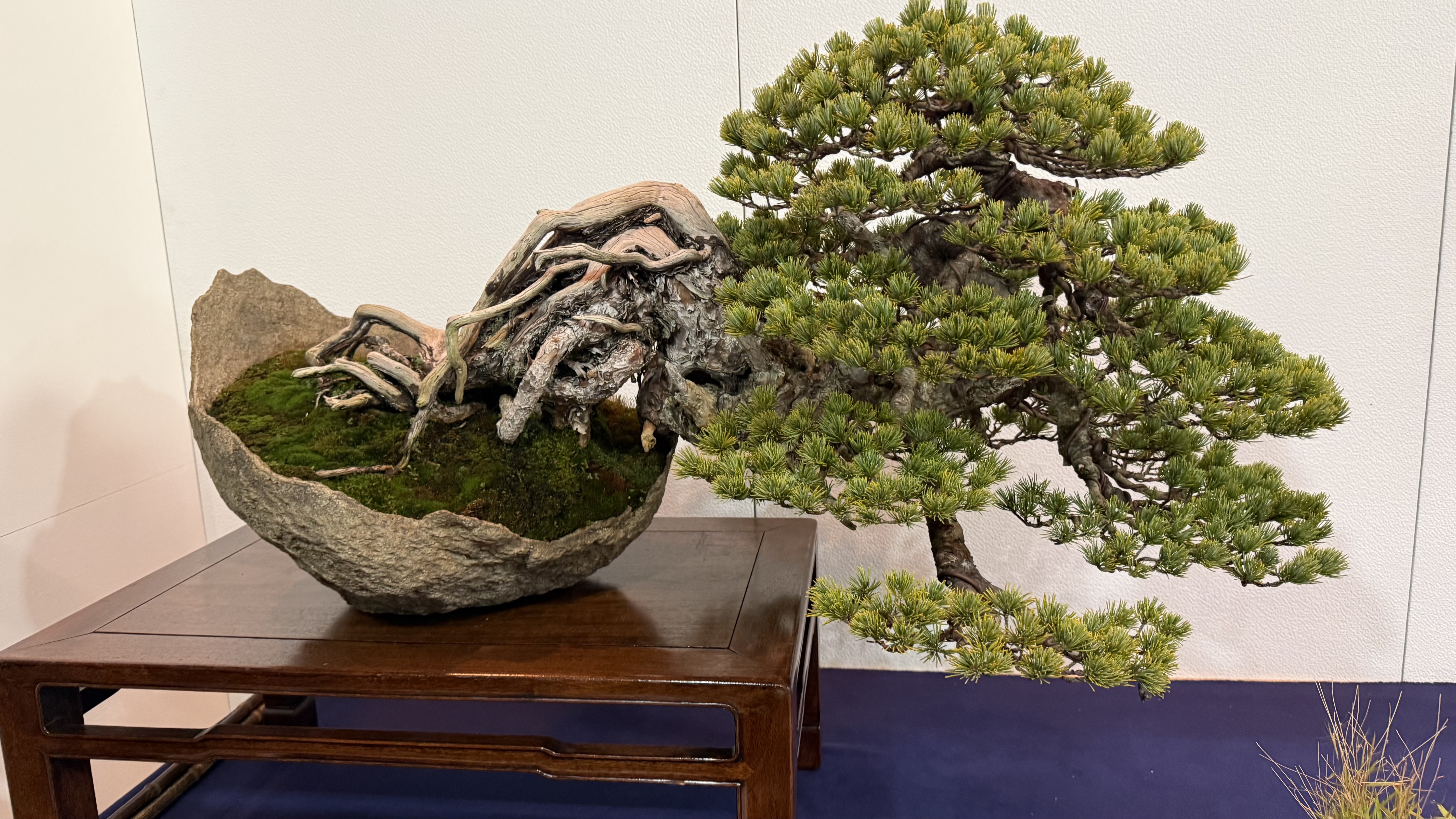
Both trees this article turns on — "Higurashi" and the Yamaki Pine — are goyomatsu (五葉松, Japanese white pine), a species whose slow growth is exactly what lets a trunk go on gaining character for centuries.
This is what sets a bonsai's age apart from almost anything else a person might come to own. A house can be built new. A fine tool can be manufactured to a historic design. A bonsai's years cannot be built new; they can only have already happened, tended one season at a time by whoever stood in front of the tree when each of those seasons came. We wrote more about what these long-lived, named trees look like in practice here.
What Changes Hands Is Time Already Spent
Whoever stands in front of the Yamaki Pine today — or any tree carrying a documented jurei like it — is not looking at something built for them. They are looking at a record of care that predates them entirely, with a turn of their own now added to it.
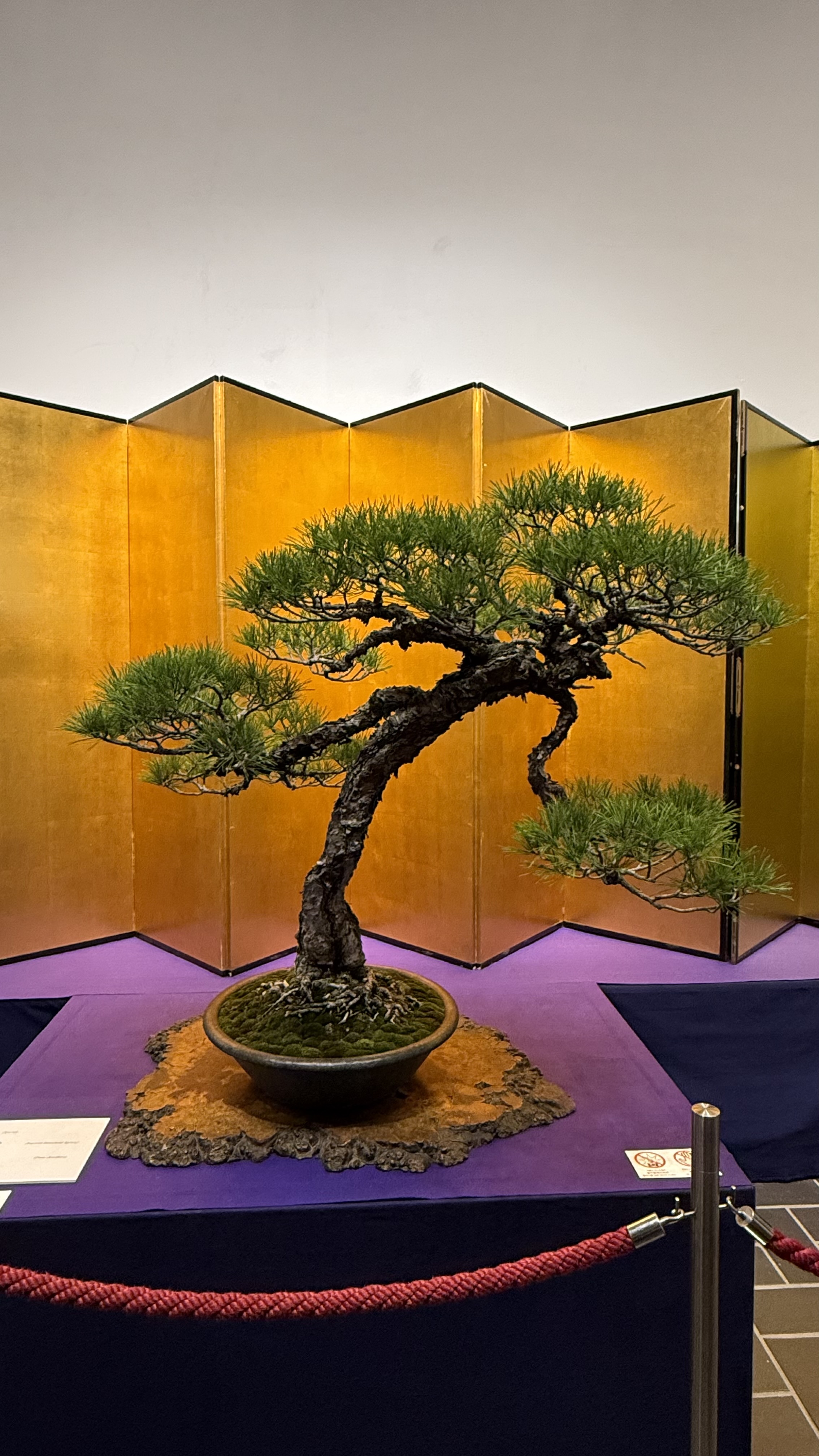
Continuity of care, not a single owner's project. At the Imperial Palace's Daido Garden, pines said to be centuries old are tended today by caretakers who took over the role from those before them, not from the beginning.
What changes hands is never raw material. It is a tree that already carries decades, sometimes centuries, of someone else's early mornings — someone else's decision on which branch to keep, someone else's judgment on when to repot. We have written elsewhere about the daily, unglamorous care that actually keeps a bonsai alive across that many years; a tree's age is simply the visible total of how many times that care was repeated, by how many hands, without a gap wide enough to break it.
The Kind of Value Azukari Is Built Around
None of this describes a number that climbs, or a price to watch. An old bonsai is not a financial product, and being entrusted with one is not a claim on its future price. What the years offer instead is closer to what a documented history offers a historic building or a piece of traditional craft — something irreplaceable by any other means, which is the entire point. The question worth asking of any aged tree is not what it is worth, but whether the record of care behind it has ever actually broken.
This is the structure Azukari is built to carry forward. A tree stays in Japan, continuing under an artist's daily care exactly as it always has. The person entrusted with it joins that same unbroken thread of attention, at whatever point they arrive, and receives a record of the seasons as they pass.
A Tree's Age Never Finishes Accumulating
Bonsai is never finished, and a tree's age is never finished accumulating either. It is simply handed the next stretch of time, one caretaker after another, one season after another. Being part of that, for however long a person's own turn lasts, is what an old bonsai actually offers — not a stake in what it might someday be worth, but a place in what it has already lived through.
References
- Bonsai Empire — Growing Bonsai from Seed — timeline for developing trunk character and a mature appearance when growing from seed.
- Omiya Bonsai Art Museum — "Higurashi" (Japanese white pine) — estimated age of 450 years.
- National Bonsai Foundation — The Yamaki Pine — trained since 1625, tended across five generations of the Yamaki family, donated to the United States in 1976.
- Bonsai Empire — The Bonsai That Survived Hiroshima — the tree's survival of the 1945 bombing and its subsequent history.