Culture
Why Bonsai Stay Small
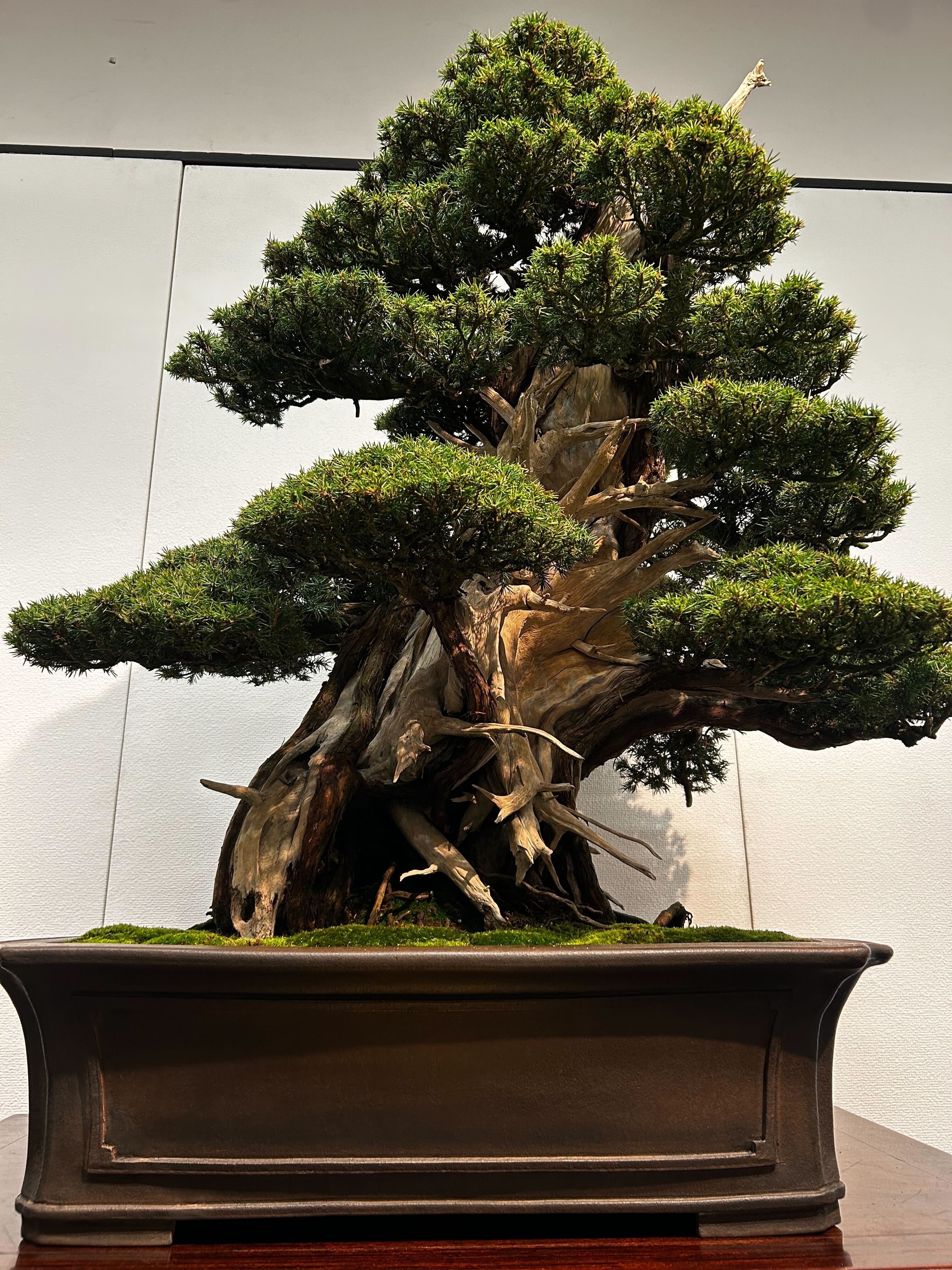
A bonsai stays small because its branches and its roots are both cut back on a recurring schedule, year after year, for as long as it is cultivated. No dwarf species is involved, no chemical stunts its growth, and no single trick is played on the tree once and left to hold forever. Left unpruned for even a few seasons, any bonsai will begin growing back toward the size of an ordinary tree.
Two cuts, not one gene
The species used for bonsai are, almost without exception, the same species growing as full-sized trees along ordinary streets and hillsides — a Japanese black pine trained on a nursery bench is the same species as a Japanese black pine growing sixty feet tall by the roadside. What separates the two is not what each tree is, but what has been done to it, repeatedly, over years.
The first cut is above ground: sentei (剪定, "pruning"), removing and shortening branches and new shoots so the tree's outline never advances past a certain scale. We wrote at length about this discipline of subtraction — how a bonsai's form is decided almost entirely by what is cut away rather than what is added, and how that cutting recurs through every growing season rather than settling the tree's size once and for all.
The second cut is below ground, and it matters just as much. Left in an open bed, a tree's roots simply keep spreading outward, drawing in more water and nutrients each year and fueling more growth above ground to match. A bonsai never gets that option. Its roots are confined to a small container and, every few years, trimmed back at uekae (植え替え, "repotting") — a practice we cover in more detail here — which keeps the root mass, and with it the tree's overall capacity to grow, from ever expanding much past where it already stands. A tree cannot out-grow a pot that is renewed, each time, to hold it at roughly the same size.
No dwarf seed, no growth-stunting drug
The most persistent misunderstanding about bonsai, outside Japan especially, is that a special kind of tree or a hidden chemical is doing the work. It is not. As the Royal Horticultural Society notes, confining a tree's roots to a small, often shallow container restricts the quantity of nutrients and water available to it, and that restriction — not a dwarf gene, not a growth inhibitor — is what keeps the tree, and even its individual leaves, reduced in scale. Wikipedia's overview of the practice is direct on the same point: bonsai "does not require genetically dwarfed trees but rather depends on growing small trees from regular stock and seeds," relying instead on pruning, root reduction, careful potting, and grafting to hold a tree at miniature scale. A seedling bought for a garden and a bonsai grown from the same packet of seed are, biologically, the identical plant. Only one of them has had its branches and roots cut back, on purpose, every year since.
An annual habit, not a single trick
This is also why bonsai size is never "finished" the way a sculpture is finished. Maintenance pruning continues through each growing season, trimming new shoots before they harden into permanent growth. Root work returns every two to five years, depending on species and age, each time the tree is lifted from its pot and a portion of its root system is cut away and replaced with fresh soil. Skip a season of either, and the tree does not stay put — it simply resumes growing toward the size it would have reached in open ground, a little further each year the cutting is deferred. What looks, in a finished photograph, like a fixed and permanent smallness is really a moving target that a grower keeps meeting, cut by cut, season after season.
Smallness is a choice, not a limit
None of this means a tree has to stay small forever. A bonsai can be moved into a larger container and allowed to grow on, and some are — we look at what that path looks like, and why an owner might choose it, here. Smallness in bonsai is not a ceiling imposed on the tree; it is a result its grower keeps choosing to produce, cut after cut, and could just as deliberately stop choosing.
That is also, in its way, an ordinary description of what care looks like in Japanese bonsai practice more broadly: not a single decisive act, but a repeated one, returned to every season for as long as someone is willing to keep returning to it. At Azukari, that recurring work — the pruning, the root trimming, the repotting — continues under an artist's hand in Japan, tree by tree, exactly as it always has.
References
- Wikipedia — Bonsai — on bonsai not requiring genetically dwarfed trees, and on pruning, root reduction, potting, defoliation, and grafting as the techniques used to keep a tree small.
- Bonsai Empire — "Definition and meaning of Bonsai" — on bonsai being created from ordinary tree species, dwarfed through pruning of roots and branches and the training of branches with wire, rather than through genetic dwarfing.
- Royal Horticultural Society — Bonsai: Growing Miniature Trees — official guidance on root pruning and repotting intervals, and on how confining a tree to a small container restricts the nutrients and water available to it, reducing growth and leaf size.
- Bonsai Empire — Pruning Bonsai, cutting branches to shape the tree — on structural and maintenance pruning as a recurring, season-by-season practice rather than a one-time shaping.