
Culture
What If You Want It Bigger?
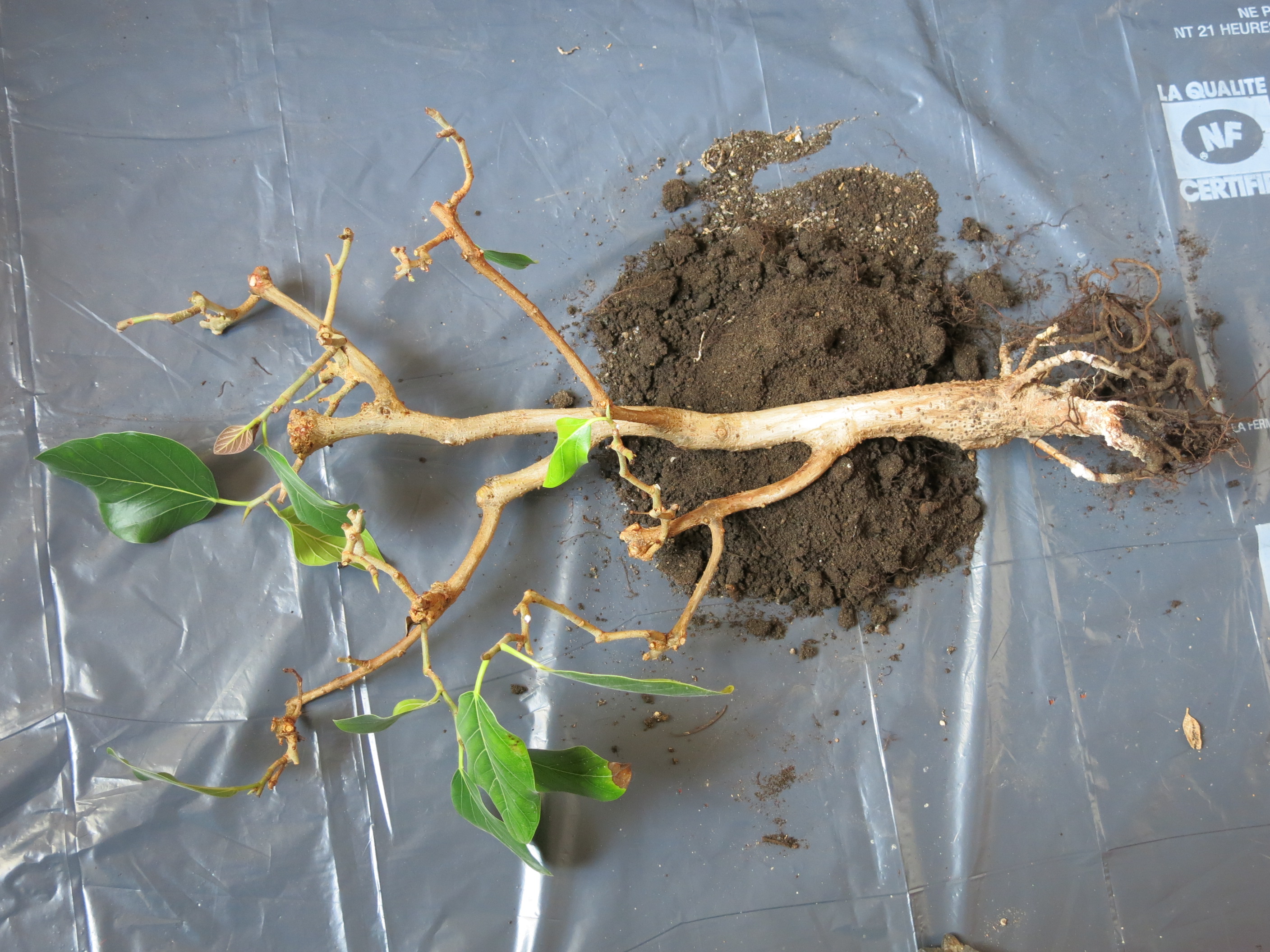
Yes. Move a bonsai into a larger container or the open ground and ease off on pruning, and it grows — sometimes into an ordinary-sized tree — because a bonsai was never a separate, genetically dwarfed species. It is the same tree, held at that size by a routine that can also be relaxed. Nothing about a bonsai's biology locks it into miniature form forever. Its size is a standing decision, renewed every season, not a wall it cannot cross.
Move it to a bigger pot, and it grows
The mechanism runs in reverse just as reliably as it runs forward. A bonsai stays small because its roots and branches are cut back on a recurring schedule — confined roots draw in less water and fewer nutrients, and that restriction is what keeps growth, and even leaf size, reduced. Loosen the restriction and growth resumes. Bonsai Empire's guide to trunk development puts it plainly: "the only way for a trunk to grow thicker is to let the tree grow freely in a large container or in the ground, without pruning it much for several years." Growers who deliberately want a tree to size up use exactly this move — a bigger pot, or better still open ground, and far fewer cuts. Bonsai4Me's guide to field-growing trees is blunt about the difference in speed: "a large container is an alternative but not equivalent to growing in the ground," where an unrestricted young tree can add inches of girth in a season that a potted one would take years to match. None of it requires anything exotic. A European Commission research-news article on the science of bonsai explains that a bonsai's cells carry "similar genetic instructions" to a full-size tree of the same species, and "given access to enough nutrients, light and water, they'll try to do what they're genetically programmed to do" — grow toward an ordinary tree's size.
There is also a path from bonsai to garden tree
Growing on does not have to mean abandoning a bonsai's shape entirely. Japan's gardens hold a related tradition built around this larger scale: niwaki (庭木, literally "garden tree"), trees planted directly in the ground and pruned into the same wind-carved, asymmetrical forms bonsai is known for, just at the size of an actual tree rather than a tabletop one. The UK's Royal Horticultural Society describes the relationship simply: "the only difference between niwaki and bonsai is that bonsai are grown in containers and niwaki are grown in the ground." A bonsai released into a garden bed and allowed to grow on does not have to abandon the design already trained into it — trunk line and branch placement can keep guiding it, just on a landscape scale rather than a tray scale. Moving from pot to ground is a change of container and ambition, not a change of art form.
Keeping it small was always a choice
It is worth naming the assumption that often sits under this question. A tree wired, pruned, and kept for decades in a shallow pot can look, to a newcomer, like something restrained against its will — as though growing it out would be a kind of rescue. That reading gets the practice backward: a bonsai kept well is checked daily, protected from the hazards that kill trees in the wild, and often lives centuries longer than it would growing free. Smallness was never a cage the tree needed freeing from. It is a form a grower chooses to keep producing, cut by cut, and — as the reverse of the same mechanism shows — could just as deliberately stop choosing. Letting a tree grow bigger does not correct a wrong done to it. It is simply a different decision about the same tree, open to its owner at any point.
The tree's next chapter belongs to its owner
That, in the end, is the real answer beneath the technical one. A bonsai has no fixed destiny written into its cells — small forever, or large forever. It has an owner and, in Japan, usually an artist as well, and between them a size is chosen and re-chosen each season: continue the pot, the wire, and the yearly cuts, or shift the tree toward a larger container, open ground, or a niwaki future in a garden. Both keep the same tree alive and well. Most bonsai stay bonsai simply because their owners keep choosing that path, not because any other path is closed to them.
This is close to the sense of stewardship running through Japanese bonsai practice more broadly — a tree's form followed and adjusted, season after season, by whoever is currently responsible for it. At Azukari, that same ongoing decision-making continues under an artist's care in Japan: the pruning, the repotting, and the seasonal judgment calls that keep a given tree exactly the size its owner and artist have chosen for it.
References
- Bonsai Empire — "The Bonsai trunk; shape, taper and thickness" — on letting a tree grow freely in a larger container or the ground, without much pruning, as the way to thicken a trunk.
- Bonsai4Me — "Field Growing Trees for Bonsai" — on open-ground planting removing root restriction and producing markedly faster trunk growth than container cultivation.
- CORDIS (European Commission) — "If I plant my bonsai in the ground, will it grow into a normal-sized tree?" — on bonsai sharing the same genetic instructions as full-size trees of their species, and reverting toward ordinary growth once resource constraints are lifted.
- Royal Horticultural Society — "Cloud Pruning: Japanese Garden Style" — on niwaki as Japanese garden trees pruned in the same style as bonsai but grown in the ground rather than in containers.
- Royal Horticultural Society — "Bonsai: Growing Miniature Trees" — official guidance on root restriction, repotting intervals, and how confining a tree to a small container limits its growth.