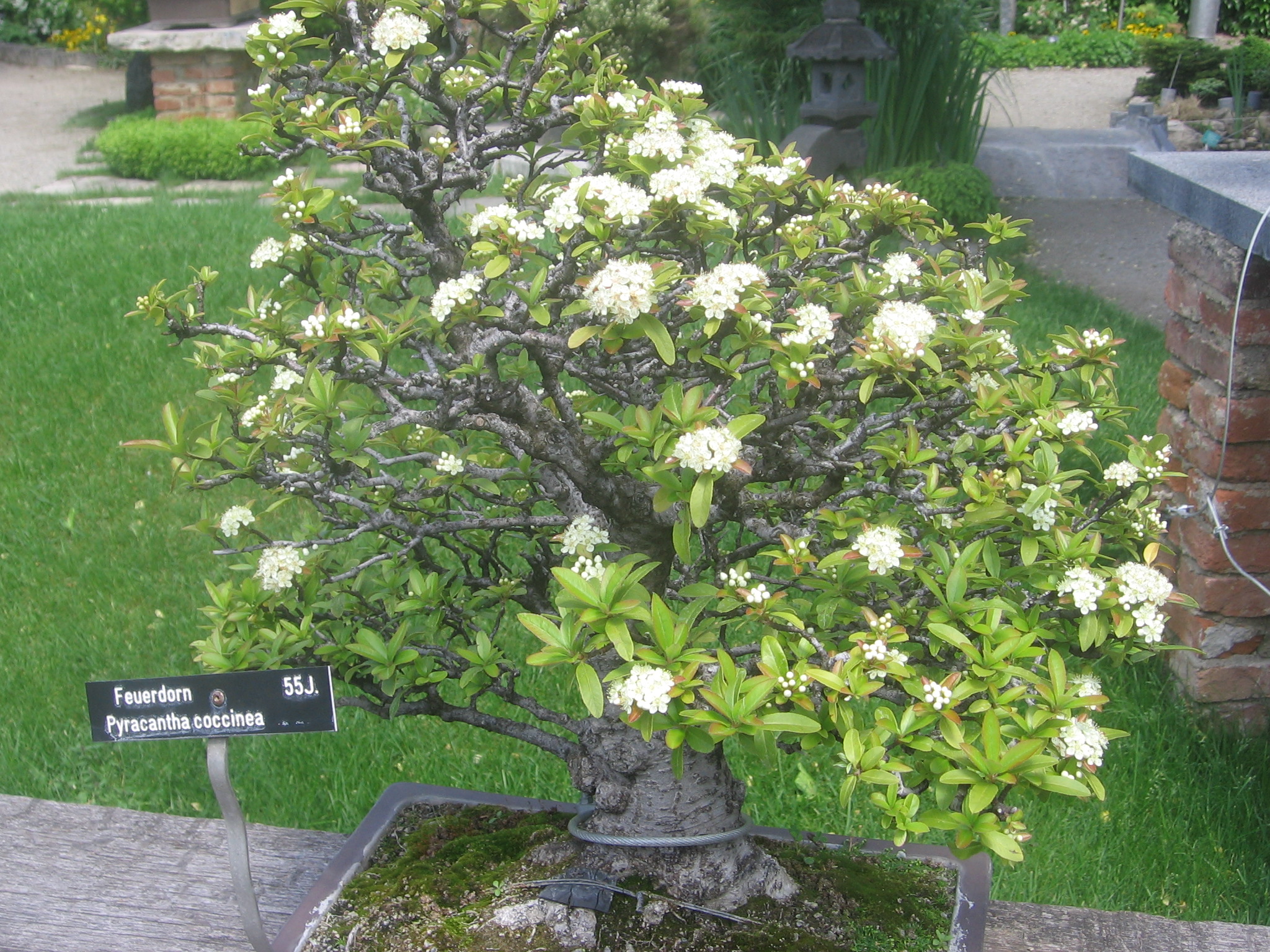
A Pyracantha coccinea (firethorn) bonsai in full spring bloom at the Alpengarten in Vienna's Belvedere gardens, its thick, weathered trunk carrying dense clusters of small white flowers. Photo by Vladaig, public domain, via Wikimedia Commons — Source

Pyracantha takes its scientific name from the Greek pyr ("fire") and akantha ("thorn") — a plant defined, in its own name, by two things at once: a crown of sharp spines and a color that reads as flame. In Japan it is usually sold simply as pirakansa (ピラカンサ, a loanword from the Latin genus name), though its older native name is tokiwa-sanzashi (常磐山査子, "evergreen hawthorn," from tokiwa, "evergreen," and sanzashi, the hawthorn it resembles). Whichever name is used, growers reach for the tree for one reason above the rest.
A pyracantha bonsai is kept for a single, unambiguous purpose: to carry more fruit, more densely, than almost any other tree grown in a pot.
A fruit set few trees match
Where a fruiting bonsai like the princess persimmon, rouyagaki, carries its fruit scattered one or two to a twig, pyracantha carries its fruit the way its late-spring flowers were arranged in the first place — in tight, packed clusters, so numerous that a well-fed specimen can look, by November, as though it is wearing more fruit than leaf. The genus sits in the rose family, Rosaceae, in the same pome-bearing branch of it as apples, pears, and hawthorns, and it inherits from that family the same small white, five-petalled spring flower, borne not singly but in flattened clusters. Every flower in such a cluster is a candidate to become a fruit, which is the simple arithmetic behind pyracantha's reputation: a tree that flowers this generously between April and June has little choice but to fruit generously as well, provided the grower has done the groundwork of sun and feeding to let it.
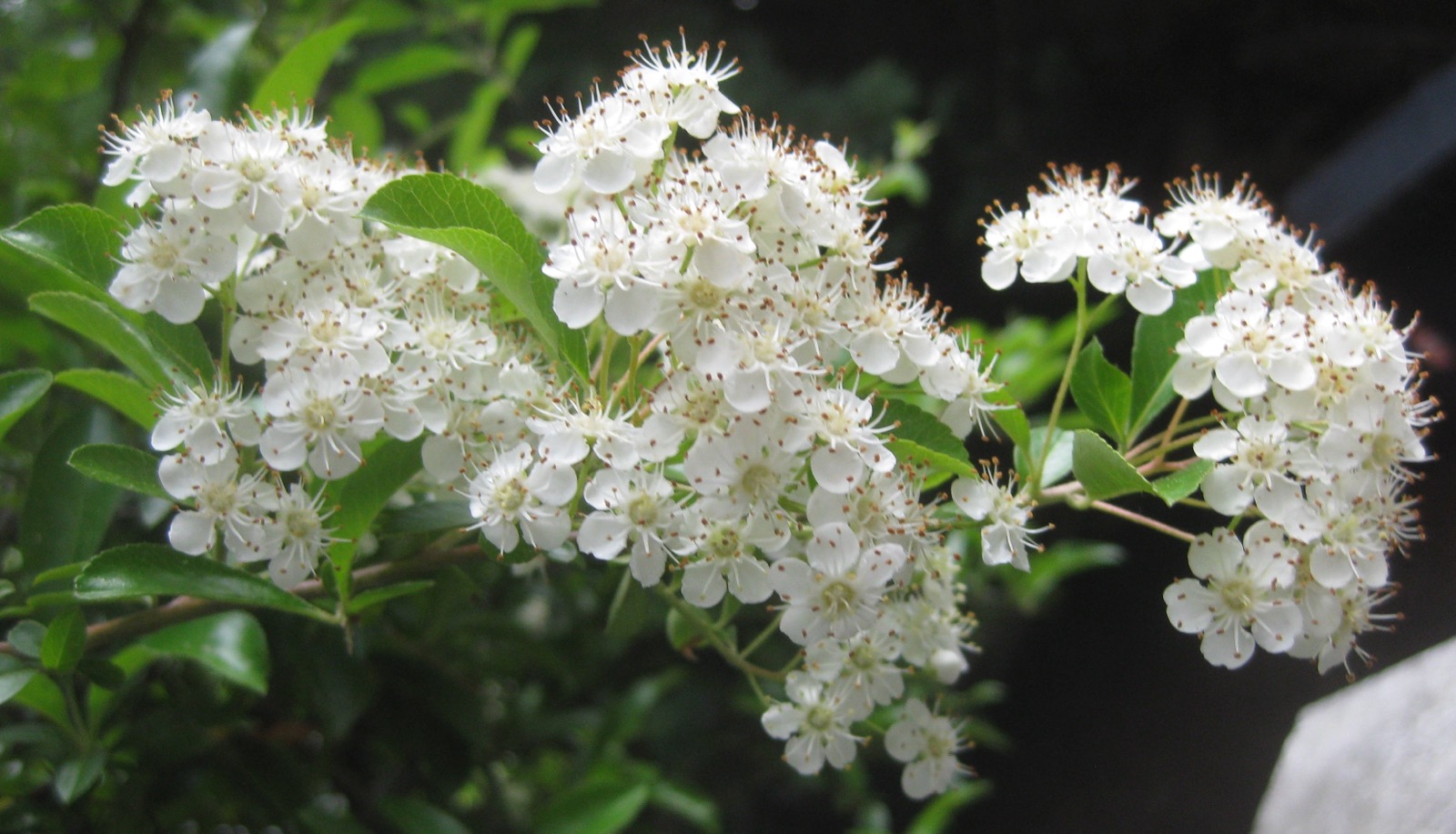
The spring flowers that set up the autumn display: small, white, five-petalled, and carried in flat clusters rather than one to a twig. Photo by Wilhelm Zimmerling PAR, CC BY-SA 4.0, via Wikimedia Commons — Source

Clusters like bells
Japanese growers have a word for this kind of dense, hanging fruit set: suzunari (鈴生り, literally "growing in clusters like bells"), used for any tree whose fruit hangs thick enough to seem to chime together in the wind. Pyracantha is one of the trees the word fits most literally. Depending on species and cultivar, the fruit — technically small pomes, the same fruit type as an apple, rather than a true berry — ripens red, orange, or yellow. The species usually meant by the name — tokiwa-sanzashi, Pyracantha coccinea, native to southern Europe and western Asia — turns a deep scarlet; a related orange-fruited species out of southwestern China, long established in Japanese gardens, is called separately tachibana-modoki (橘擬き, "mock tachibana," after the citrus its fruit colour recalls). Neither is native to Japan, and neither has needed to be. Growers graft branches of both onto a single trunk, or plant the two side by side in one container, so that a single pot carries two colours of suzunari fruit through the same autumn — a combination common enough that Japanese garden centres sell it ready-made.
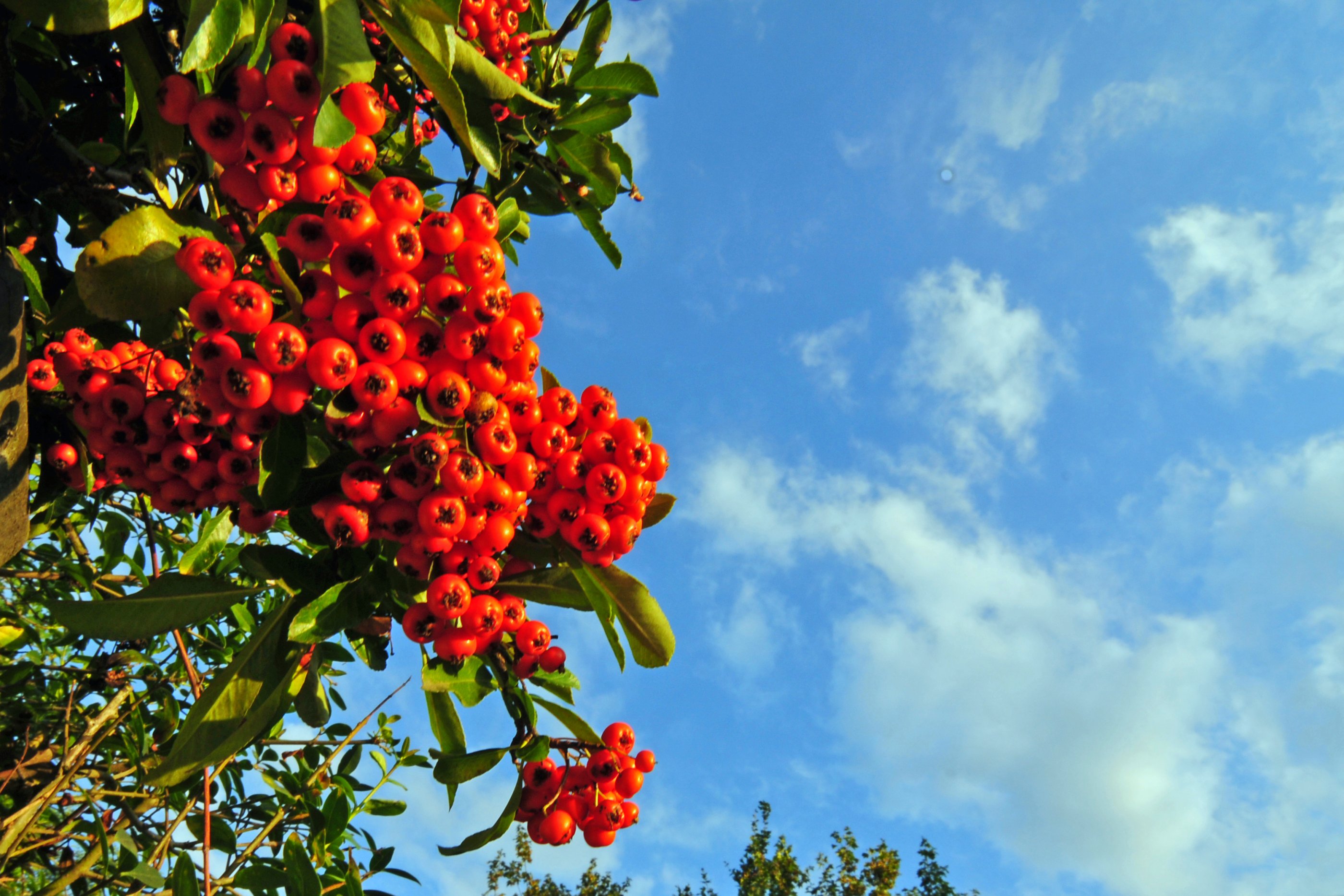
Ripe pyracantha fruit, packed dense enough along the branch to read as a single mass of color. Photo by salomon10, CC BY-SA 2.0, via Wikimedia Commons — Source

Hardy enough for a first tree
Pyracantha's other reputation has nothing to do with its fruit and everything to do with how little the tree asks in return for it. Introduced to Japan from Europe and Asia in the Meiji era, it tolerates heat, cold, and poor soil with a forgiveness few flowering or fruiting species share: NHK's gardening encyclopaedia rates it "strong" for both heat and cold, and scores its cultivation difficulty a 2 on a scale of 5. It also buds back willingly from old, bare wood, which lets a grower cut a rough nursery shrub back hard and still recover a workable branch structure — a trait that makes it a common recommendation for a first fruiting bonsai. The one caution the tree does ask for is built into its own name: pyracantha carries genuinely sharp thorns along its branches, sharp enough to break skin, so growers typically strip them from any branch destined for wiring before shaping it, handling the tree with more care at the workbench than its easy reputation in the ground would suggest. What it does need, to fruit as heavily as its reputation promises, is sun — a shaded pyracantha still grows, but flowers and fruits far more thinly — along with steady moisture through spring and summer, and a season of feeding weighted toward the phosphorus and potassium that push flowering and fruit rather than leaf.
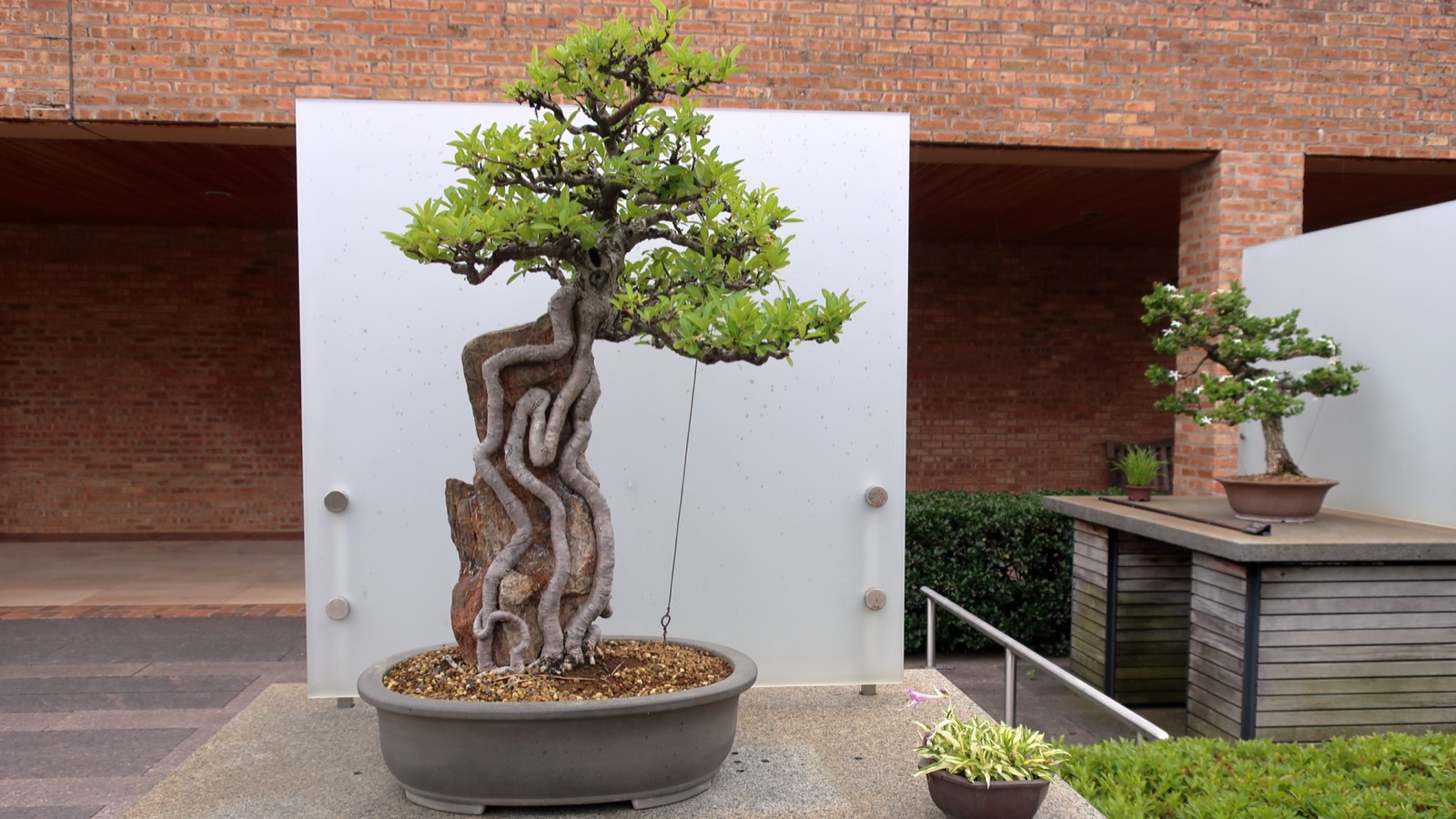
A narrow-leaf firethorn — the orange-fruited tachibana-modoki — grown as bonsai in root-over-rock style at the Chicago Botanic Garden. Photo by cultivar413, CC BY 2.0, via Wikimedia Commons — Source

Color that outlasts the season
Pyracantha's fruit generally colors up by November and, unlike most garden fruit, does not drop or spoil quickly once ripe. Left alone, it can hold its color on the branch into the following January, part of why the tree reads as an autumn subject in Japan even though its display often outlasts the season that produced it — a slower burn than the maples and other true autumn foliage around it. The tree is evergreen, which sharpens the effect further: the fruit sits against dark, glossy leaves that never fall away to compete with it, rather than against the bare branches a deciduous fruiting tree offers by midwinter. That same persistence is exactly what makes the fruit a valuable winter food for birds, which is a problem if you were planning to show the tree: growers who want a display to survive to exhibition cover the chosen specimen — a birdcage set over the pot is one tidy answer — rather than leave the outcome to whichever bird finds it first. The display is not meant to run indefinitely either. Japanese growers advise stripping whatever fruit is left once the new year has turned, at the latest.
None of it happens by accident
None of what makes a pyracantha carry that much fruit happens by accident. The flower clusters have to be fed and watered through a demanding spring, the thorned branches have to be shaped with more care than convenience allows, and the fruit, once it colors, has to be watched and sometimes protected through a season when nearly everything else that could eat it agrees it is worth eating. It is a plainer kind of work than the slow trunk-building asked of a pine or the patient branch-work asked of a maple, but it is exacting in its own way, repeated every year the tree is kept.
Azukari exists to carry that kind of season-by-season work across the distance between a tree and its owner. An artist in Japan tends the flowering, the feeding, and the fruit set through the months a pyracantha needs the most attention, and folds what happened — how heavy the suzunari came in, how long the color held — into the record its owner receives. You do not have to stand in front of the pot in November to know whether the tree kept its promise that year.
References
- Wikipedia — Pyracantha — genus overview: six accepted species, Rosaceae family (tribe Maleae), native range in south-eastern Europe and Asia, the Greek fire-and-thorn name origin, thorns "easily able to puncture human skin", small white 5-merous flowers, and red, orange, or yellow pomes that "persist significantly into winter", making them valuable bird food.
- Bonsai Empire — Firethorn (Pyracantha) — bonsai-specific care: sun requirements for fruiting, phosphorus/potassium feeding, thorn removal before wiring, hard-pruning tolerance, and susceptibility to fire blight and other pests.
- NHK Shumi no Engei — Pyracantha plant profile — Meiji-era introduction to Japan, May–June flowering period, low cultivation-difficulty rating, and heat/cold tolerance.
- Wikipedia (Japanese) — トキワサンザシ属 — Rosaceae / nashi-akka (ナシ亜科, the pome subfamily) classification; the native ranges of the three species grown in Japan — tokiwa-sanzashi from southern Europe and western Asia, tachibana-modoki from southwestern China, kazan-demari from the Himalaya, none of them Japanese natives; April–May flowering and November fruit ripening that persists into the following January; the corymb inflorescence of tachibana-modoki; and the pirakansa/tokiwa-sanzashi naming distinction.
- Kimi no Mini Bonsai Biyori — ピラカンサの魅力 — red-fruited and orange-fruited forms combined in one pot by grafting or group planting and sold that way at garden shops, covering a display specimen with a birdcage to keep birds off the fruit, and the advice to strip any remaining fruit once the new year has turned at the latest.