Each fruit colors on its own clock
A princess persimmon takes roughly seven to ten years from its first flowers to its first fruit. Its botanical name is Diospyros rhombifolia; in Japanese it is rouyagaki (老爺柿, "princess persimmon"). It is a relative of the common persimmon, with diamond-shaped leaves and fruit only a few centimetres across.
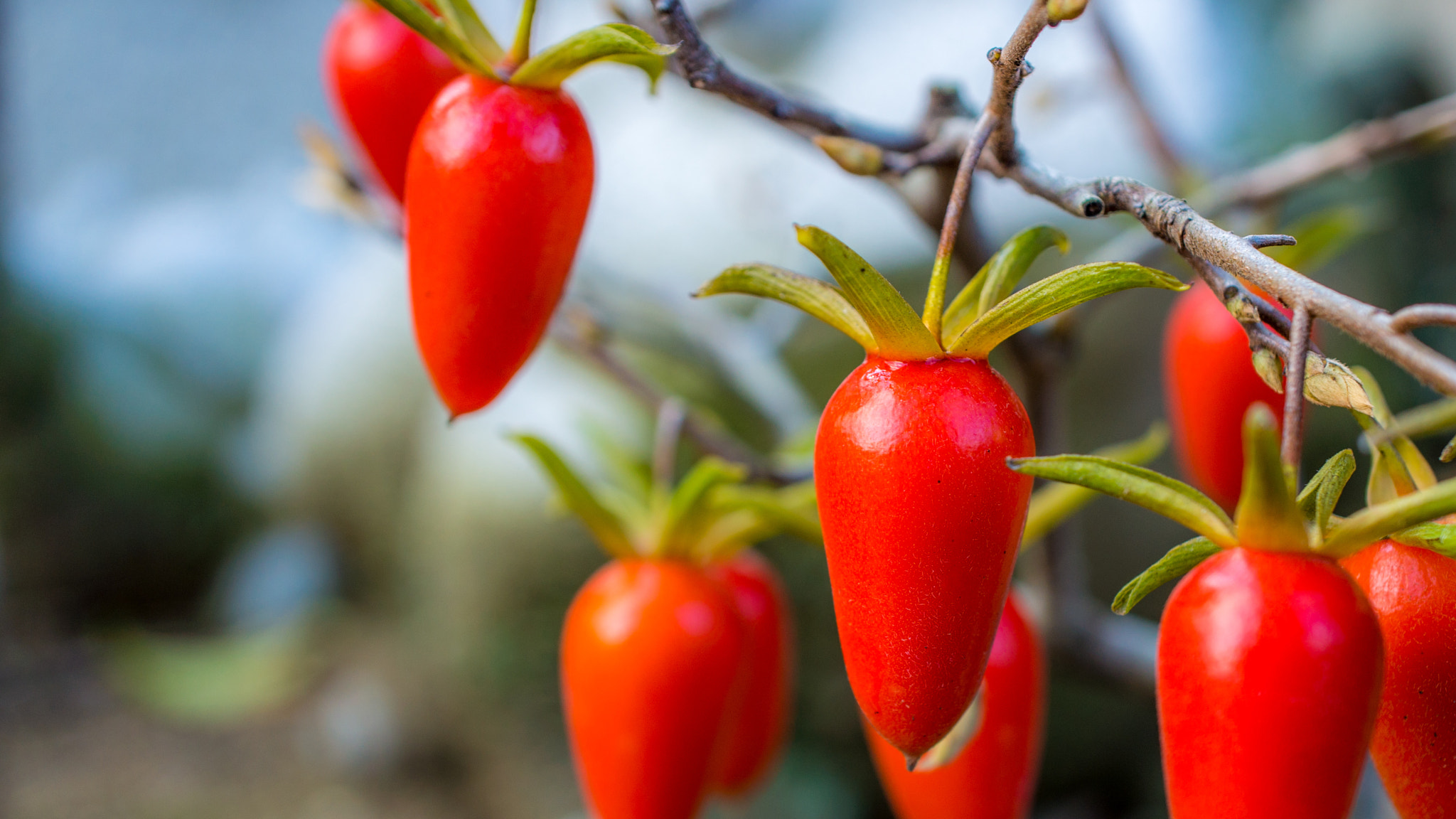
On a single tree, each fruit colors at its own pace rather than all at once, so the tree keeps changing day by day instead of overnight. Small white flowers open in spring. Green fruit hangs through summer. In autumn the fruit turns orange and red, and the leaves color alongside it, so the whole tree reads as autumn itself.
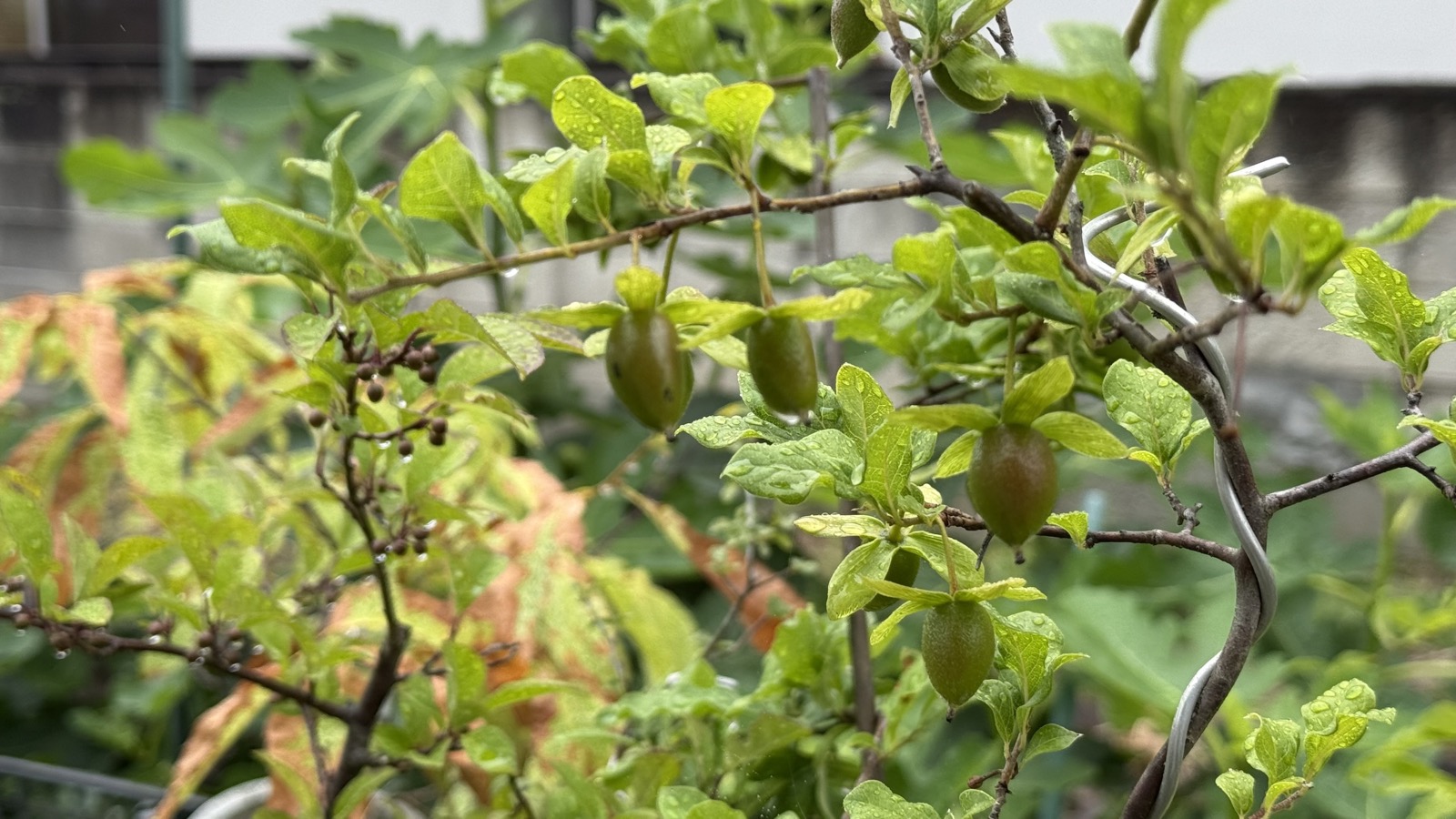
A tree in summer. Green fruit, with wire guiding the branches. From here it turns toward the reds of autumn.
The trees are either male or female, and a female needs pollen from a male to set fruit at all. In Japanese bonsai this category is called mimono (実もの, "fruiting trees, grown to be watched for what they bear"). A persimmon already in fruit, in other words, is a tree that has already been given years it cannot get back.
One hand grows the material for years before an artist shapes it
This persimmon was raised by Nijuri Yoshio (二十里芳男), in Kiryu, Gunma. He is a grower of persimmon bonsai — a maker of raw material, not of finished trees. Over thirty to forty years he has produced more than three hundred varieties of persimmon bonsai, work that makes him a pioneer in the field.
Bonsai divides into two hands: one spends years in the field raising a tree's potential, and the other reads that potential later and gives it form. Every finished tree passes through both, though usually only the second hand gets named. This is the story of the first.
A name marks a story that has already started
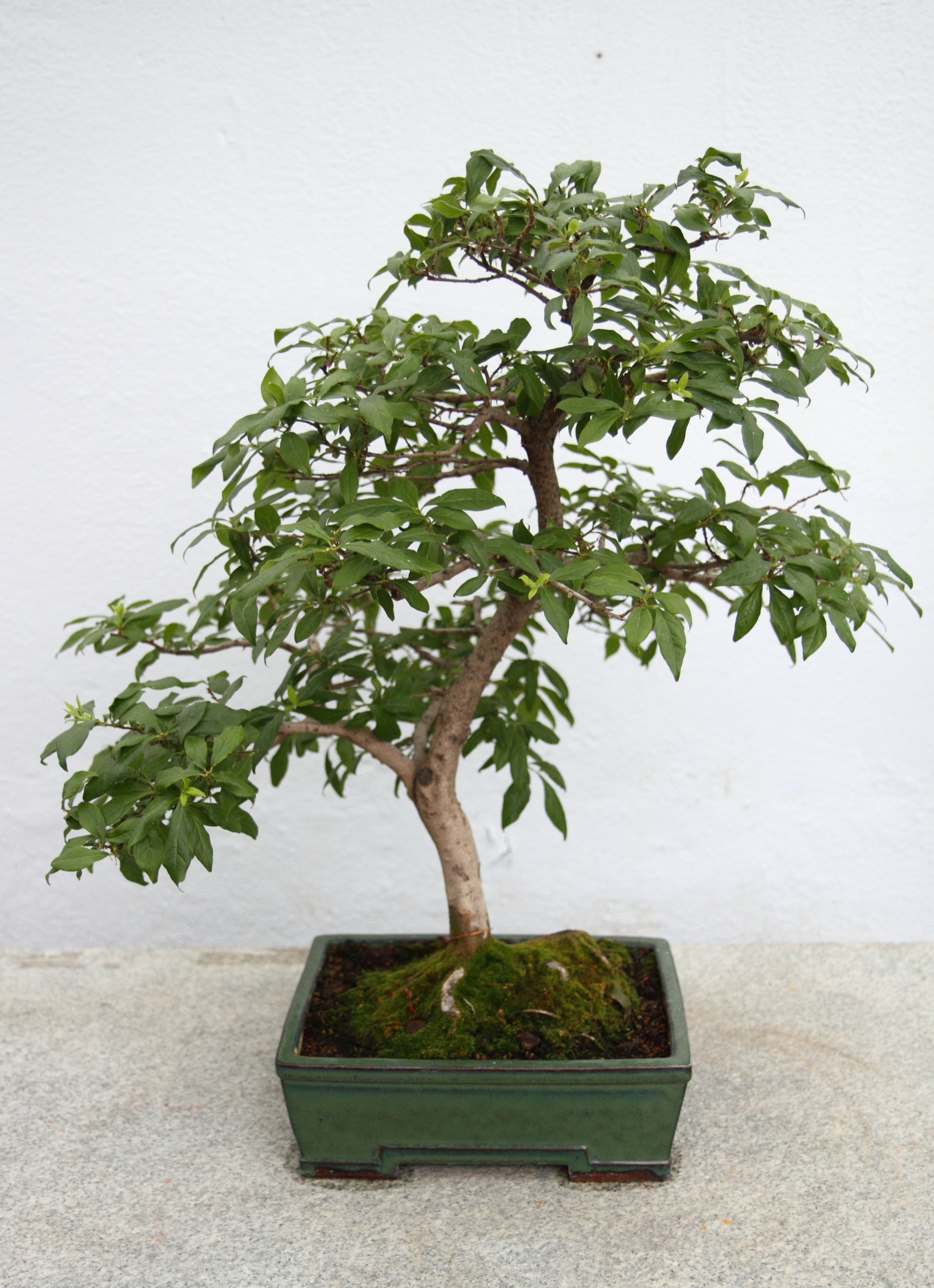
Two Princess Persimmons came from Nijuri's field, chosen to be considered as a pair.
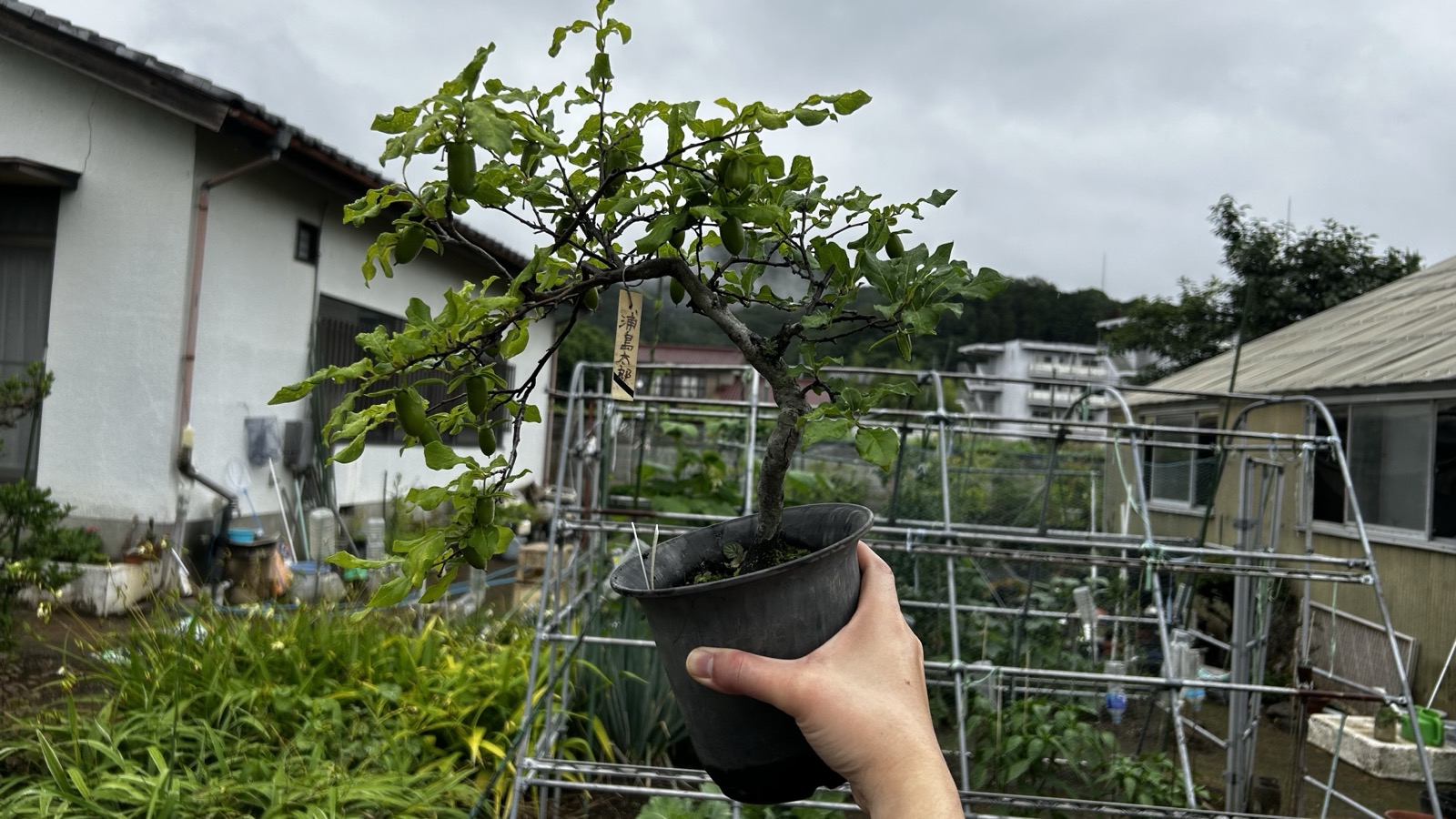
The tree with the mei "Urashima Taro." Photographed with its name tag still on, in Nijuri's field.
One carries a mei (銘, "a name given to a bonsai, marking the story it has carried"): Urashima Taro, after the old Japanese tale of a fisherman handed a box he is told never to open. The other has no name yet. A mei is not an inventory number; it is given to the story a tree has carried, so a tree with no name yet simply has a story that has not started.
Both trees are still exactly as they came out of the field. From here an artist will change the pot, shape the branches, and carry them toward their autumn fruit — a process this record will follow as it happens.
The tree stays in Japan; the record reaches the owner
These two trees will now be shaped by an artist toward their fruiting form. The tree stays in Japan; the owner can be anywhere in the world. Each year's fruit arrives as a record, and eventually the owner comes to meet the tree in person. Because the tree itself does not travel, the value sits in what does travel: the record, and the story attached to it.
Japanese bonsai has continued for centuries by passing from hand to hand. Joining that line as a new owner is what custody means at Azukari.
For one persimmon to fruit in autumn, decades of a grower's time and a season of an artist's work are layered on top of each other before a single fruit turns red. What an owner takes on is that layered time, not the tree itself, and passes it forward again the next time the tree changes hands.
See fruiting bonsai at Azukari
References
- Diospyros rhombifolia — Trees and Shrubs Online — botanical account describing the species as a shrub or tree to 8 m with rhomboid-obovate leaves 4–8.5 cm long and orange fruit to 2 cm across, native to five provinces of eastern China, and noting its "Princess Persimmon" name in cultivation.
- Diospyros rhombifolia — Wikipedia — overview entry giving the common names "diamond-leaf persimmon" and "princess persimmon," its family Ebenaceae, its native range in southeast China, and its cultivation as an ornamental for small leaves and orange fruit.
- Diospyros rhombifolia — Wikidata — taxonomic data record listing the parent genus Diospyros, the author citation Hemsl., and common names in Chinese and Japanese, including the Japanese name rouyagaki (ロウヤガキ).