Flower bonsai spend most of the year preparing for a few weeks
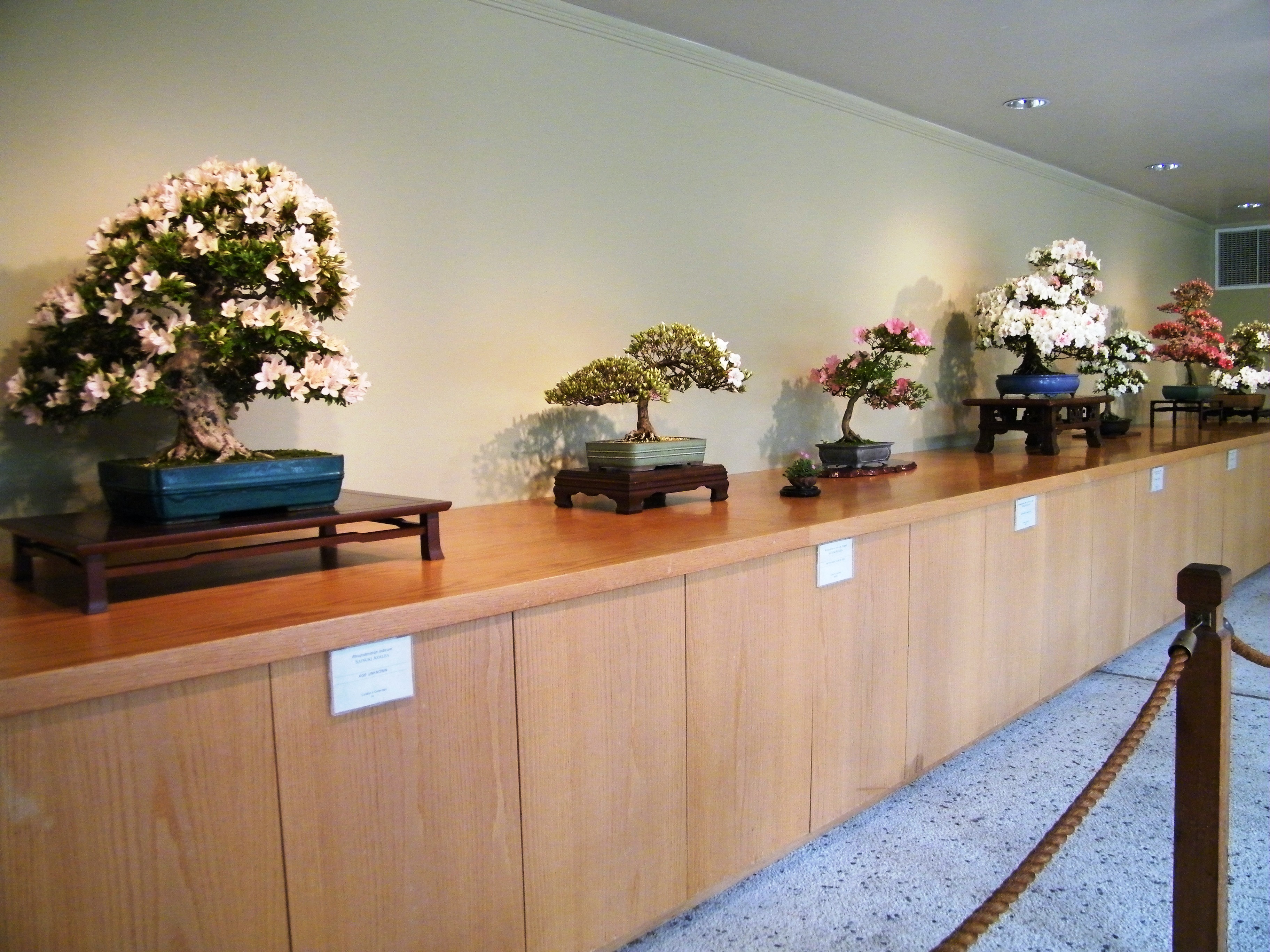
Photo by Sarah Stierch, CC BY 4.0, via Wikimedia Commons — Source

In May 2011, a visitor to the National Bonsai and Penjing Museum in Washington, D.C. stopped in front of a satsuki azalea and photographed it mid-bloom: a mass of red flowers dense enough to hide the pot underneath. That single frame is close to the whole definition of a flower bonsai — known in Japanese as hanamono (花物, "flowering things") bonsai — a tree grown from a flowering species and shaped in a pot so that its blooming season becomes the thing you plan the year around. Not every tree planted in a pot is a bonsai; a bonsai has to carry the feeling of a large tree from the mountains or the forest inside a small container, with growing it and viewing it fused into one practice. Plum, cherry, satsuki azalea, and chojubai quince are the trees most people mean when they use the phrase. (Sources Omiya Bonsai Art Museum of Saitama, Azukari internal material Week 1)
A flower bonsai and a conifer bonsai are grown, wired, and repotted by the same techniques for most of the year — the entire difference sits in a few weeks most keepers spend the rest of the year preparing for.
The five-way split gives flowering trees a lane of their own
For viewing, bonsai are loosely grouped into five kinds: conifer bonsai, deciduous bonsai, flowering bonsai, fruiting bonsai, and herbaceous bonsai. By species they divide first into the conifers, the evergreen needled trees, and the broadleaf group, which splits further into trees kept for foliage, for flowers, and for fruit. Flower bonsai sit inside that flowering branch. Roughly sixty kinds of trees are commonly grown as bonsai in Japan, so flower bonsai are not a novelty grafted onto the art — they are one of its long-established branches. (Sources bonsai-bonsai.com, Omiya Bonsai Art Museum of Saitama)
One extra judgment call is the whole difference from conifers
Conifer bonsai sit at the center of Japanese bonsai culture — black pine, red pine, Japanese white pine, shimpaku juniper — evergreen trees whose bark, branch structure, and overall silhouette reward being looked at across an entire year. Flower bonsai carry that same green presence and add one clearly defined highlight on top of it, because their value gathers around a single window. That window brings a piece of care a conifer keeper never has to think about: knowing where and how the flower buds form, and holding growth back during the exact stretch when those buds are differentiating. Push water or feed too hard at that moment and the tree spends its energy on shoots and leaves instead of flowers — a failure mode covered in more depth in why a flowering or fruiting bonsai sometimes refuses to bloom at all. The sculptor Fumio Asakura is said to have advised that bonsai are meant to be enjoyed with the seasons, which is why spring and autumn displays suit them best — and a flower bonsai is built around exactly that advice. (Sources bonsai-bonsai.com, Kimi no mini bonsai biyori, Azukari internal material Kokufu exhibition report)
A handful of species carry nearly the whole tradition
The species most often meant by "flower bonsai" include satsuki azalea, plum, cherry, flowering crabapple, flowering quince, chojubai, wisteria, azalea, crape myrtle, and camellia. Plum and cherry are the two most loved flowers in Japan, and cherry viewing is often traced back as far as the Nara period. Satsuki, in the azalea family, opens flowers that vary in color, shape, and size across May and June, sometimes more than one pattern from a single branch. Chojubai is a dwarf deciduous tree with finely divided twigs and a strong tendency to bloom in more than one season, carrying small vermilion flowers in spring and autumn; because it is vigorous and forgiving, it has long been a favorite starting point for the whole category. Which species someone chooses settles both the season of bloom and the character of the flower, and that choice is most of the pleasure of keeping one. (Sources Kimi no mini bonsai biyori, Bonsai Empire entries for plum, cherry, and satsuki, Bonsaimyo on chojubai)
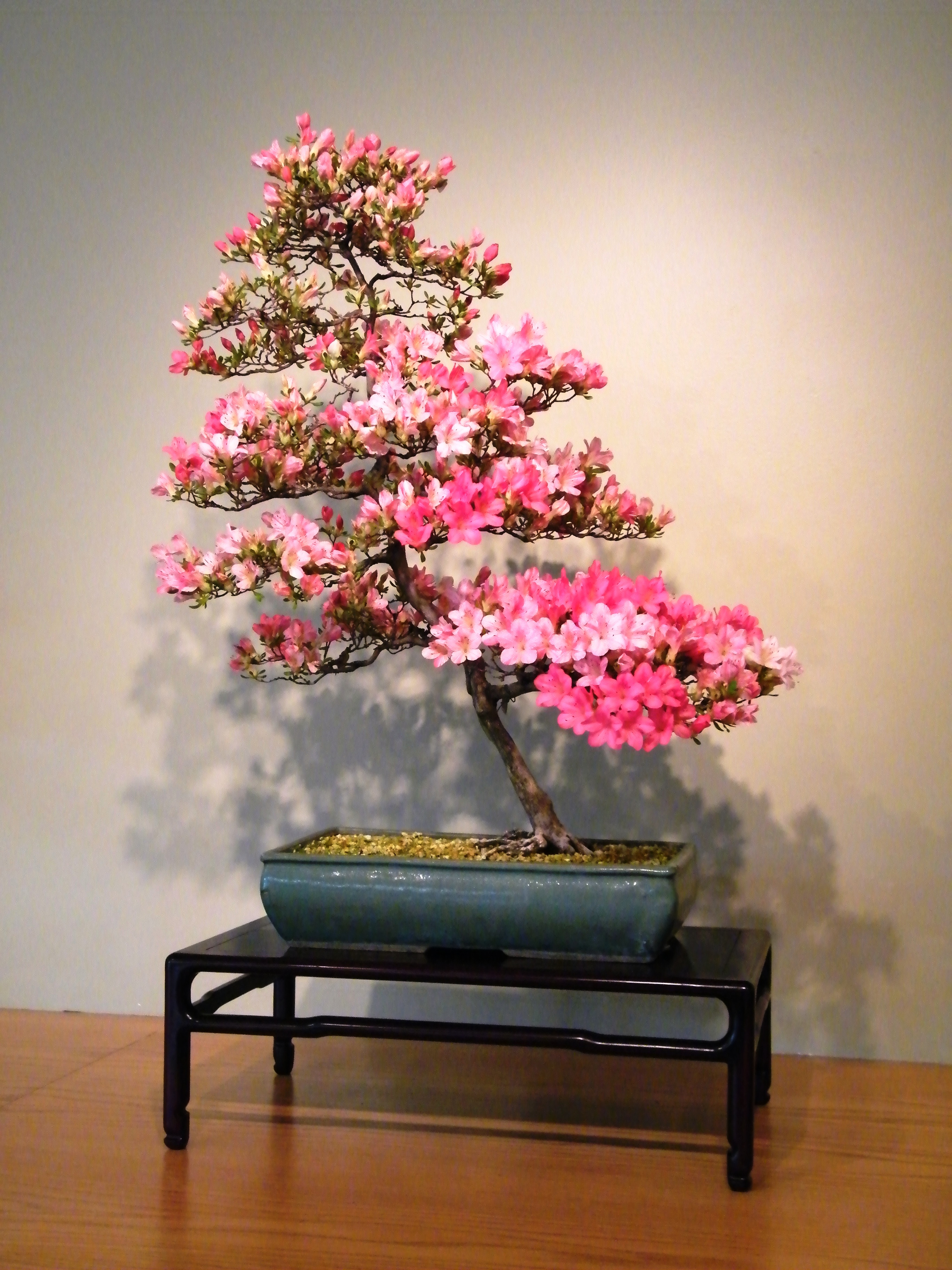
Photo by Sarah Stierch, CC BY 4.0, via Wikimedia Commons — Source

Within that same flowering category, the face of the flower and its season shift entirely with the species. Wisteria, camellia, and plum are all classic examples.
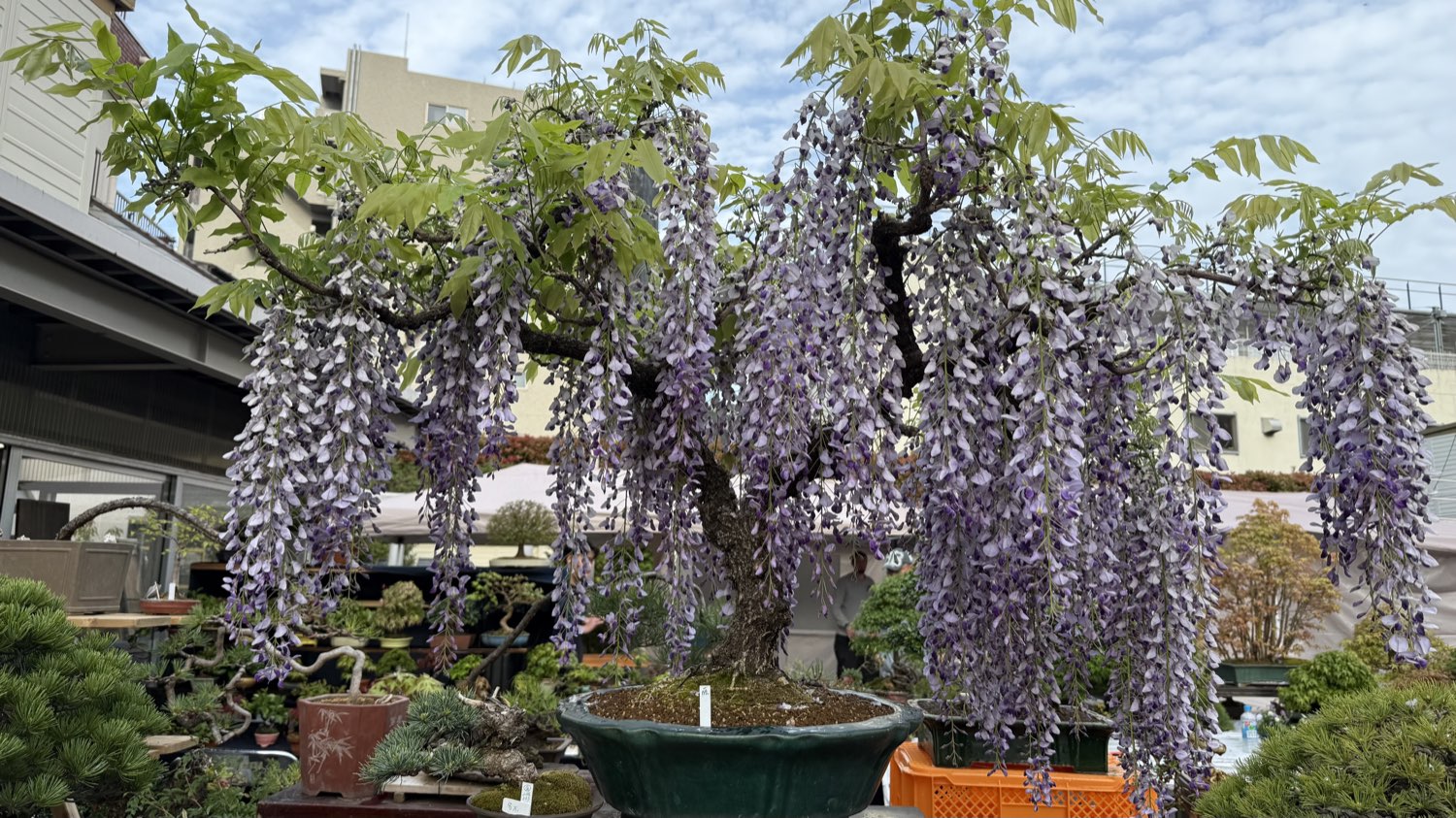
Wisteria. In early summer it hangs long clusters of purple flowers from the branches.
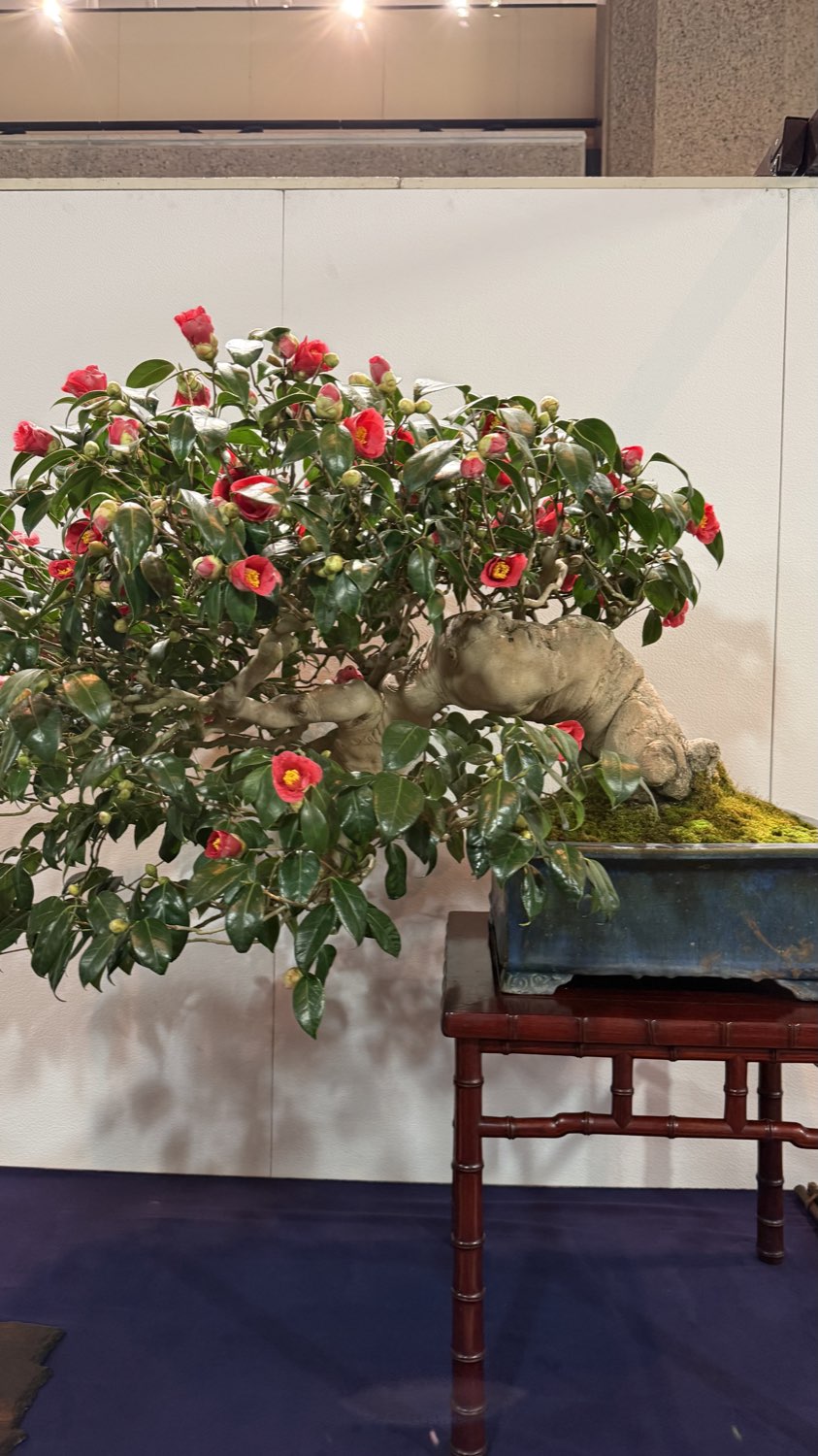
Camellia. A yabu-tsubaki that blooms from winter into spring.
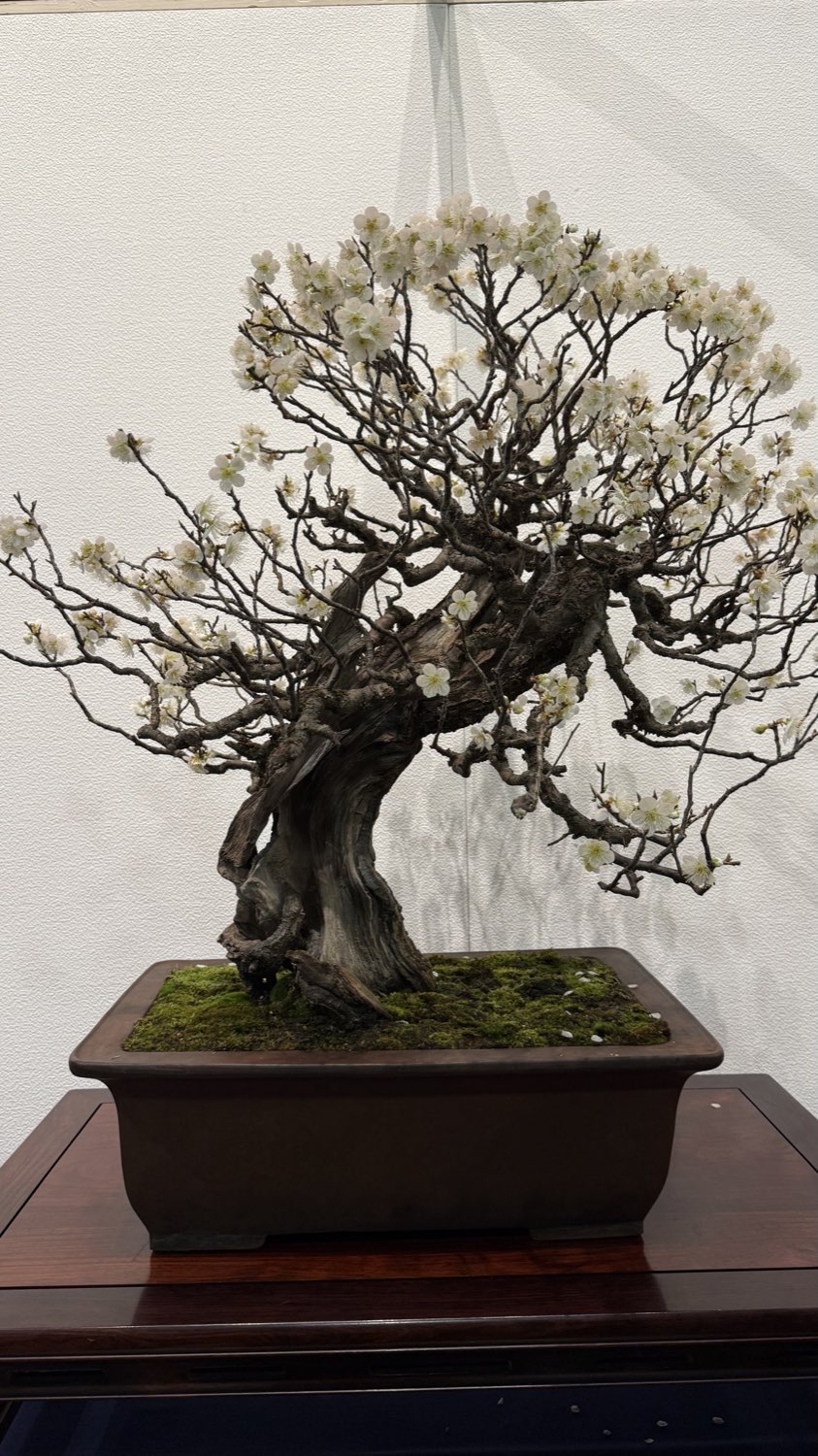
Plum. White flowers in full bloom on the gnarled trunk of an old tree.
The bloom is managed on a calendar, not left to chance
The heart of growing a flower bonsai is seasonal care aimed squarely at the bloom rather than at year-round shape. Push water and feed too hard while the flower buds are forming and the tree channels its energy into shoots and leaves instead, flowering poorly as a result — so this is precisely the time to hold growth back a little. Satsuki left in shade stretches its branches and gives fewer flowers, so it wants a spot with good morning sun, pruned as soon as that year's bloom ends. Chojubai tolerates half shade but suffers badly from drying out, so it wants a thorough watering the moment the surface soil turns dry. Read across a full year, keeping a flower bonsai amounts to alternating between the season of preparing to bloom and the season of watching it happen. If there is one hinge that decides whether next year's bloom is good or thin, it is this: pruning has to land right after this year's flowers drop, before the tree sets next year's buds — not whenever it is convenient. (Sources Kimi no mini bonsai biyori, NHK Shumi no Engei on satsuki, Bonsai Q on flowering mini bonsai for beginners)
Chojubai or satsuki settle the question for a beginner
For a first flower bonsai, chojubai or satsuki is the sensible place to begin. Chojubai is vigorous and blooms across more than one season, which means more chances to see flowers while still learning how the tree behaves. Satsuki is among the easier flowering trees to keep and thickens its trunk readily, which makes it simpler to train into a convincing bonsai form. The underlying care is the same short list either way — watering, pruning, guiding branch direction with wire, repotting every few years — done to keep the tree healthy and handsome for decades, not to strain it. The choice mostly comes down to working backward from the season a beginner wants to see: satsuki for a concentrated spring show, chojubai for flowers spread across more of the year. (Sources Bonsai Q, GardenStory on satsuki, Azukari internal material Week 1)
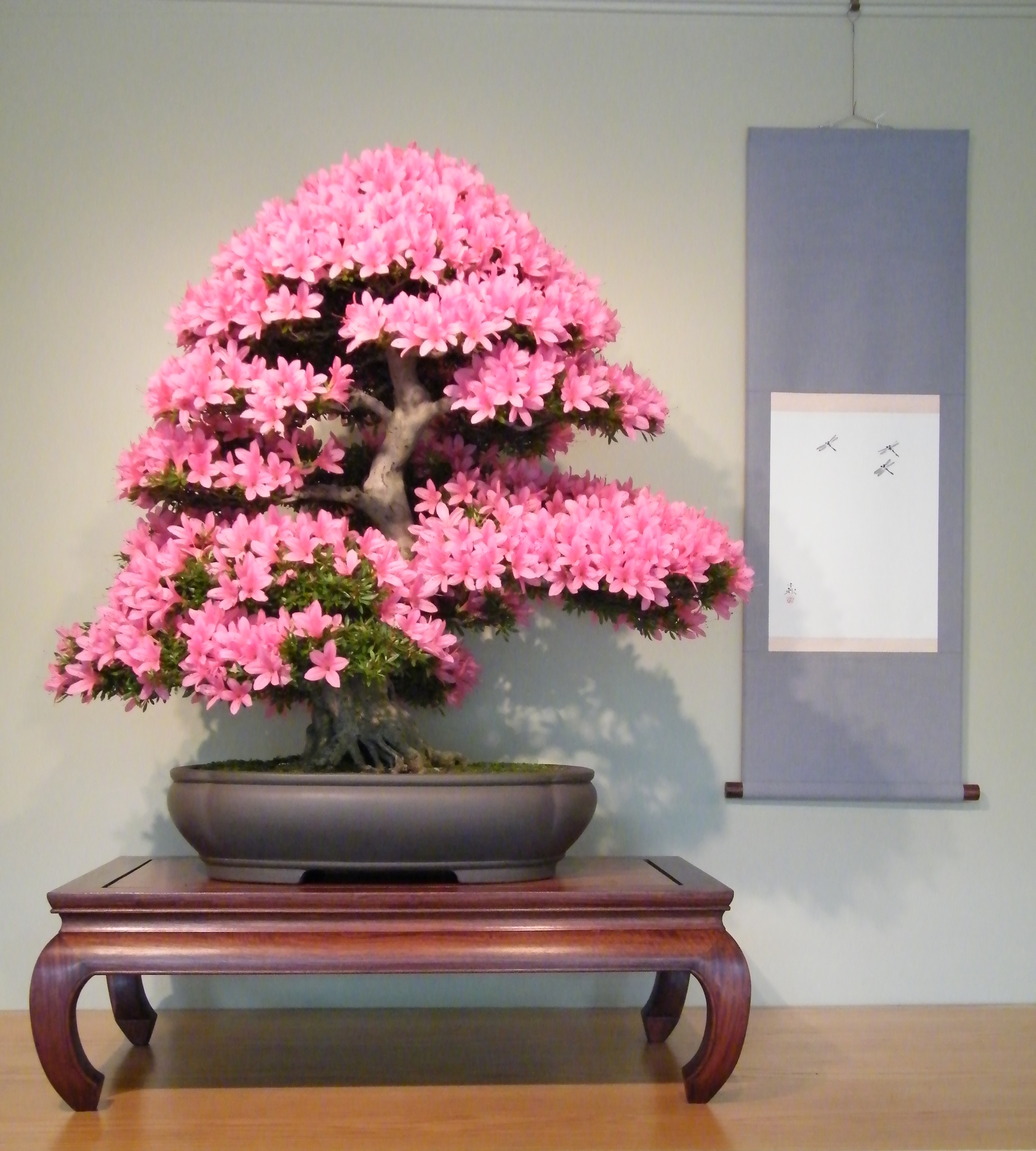
Photo by Sarah Stierch, CC BY 4.0, via Wikimedia Commons — Source

Owning a few weeks is a different problem than owning a whole year
A flower bonsai asks for something a conifer bonsai does not: someone has to be paying close attention during a specific, short, easy-to-miss window, or the one payoff the tree offers that year never fully arrives. For generations, Japanese bonsai artists have treated a fine tree not as something owned outright but as something entrusted to them by whoever kept it before — passed forward, not simply held. Azukari fits a flower bonsai into that same arrangement: the tree stays in Japan, an artist manages the bloom on the calendar it actually needs, and the owner receives the record of that season instead of the burden of catching it in person. Ownership, on this model, does not require being the one standing in front of the tree the week it opens. For someone who wants a flowering season without taking on the bloom management themselves, that is the specific trade the category is asking for — and it is worth deciding, before choosing a tree, which side of that trade matters more to you. You can see individual trees by species on the Azukari marketplace. (Sources Azukari internal material Post 01, Sunday Azukari 3)
Frequently asked questions
How do flower bonsai differ from ordinary bonsai? Technically they are the same craft, but flowering trees are viewed for their bloom and carry extra care aimed at producing flowers. Can a beginner really get them to flower? Choose a tough, forgiving species such as chojubai or satsuki, give it sun and steady water, prune soon after the bloom ends, and flowers in the first year are common. Can they be grown entirely indoors? Most flowering species need outdoor sun and the warmth and cold of the seasons, so the workable approach is to keep them outdoors and bring them in only for the few days of bloom.
If you would like a seasonal tree on terms that fit your life, you can start by getting to know the trees and the model at Azukari. See flower bonsai at Azukari
References
- The Omiya Bonsai Art Museum, Saitama — the Saitama museum's own account of how bonsai are grouped for viewing, cited above for the definition of a bonsai and the flowering category's place among the roughly sixty species commonly grown in Japan.
- Satsuki azalea — care guide, Bonsai Empire — species page covering satsuki's bloom window, light requirements, and post-bloom pruning timing.
- Japanese apricot (Prunus mume) — care guide, Bonsai Empire — species page referenced for ume/plum's place among Japan's classic flowering bonsai.
- Dwarf flowering quince 'Chojubai' — care guide, Bonsai Empire — species page referenced for chojubai's multi-season bloom habit and watering needs.
- Satsuki — plant guide, NHK Shumi no Engei — Japanese-language cultivation guide referenced for satsuki's flowering window and post-bloom pruning timing.