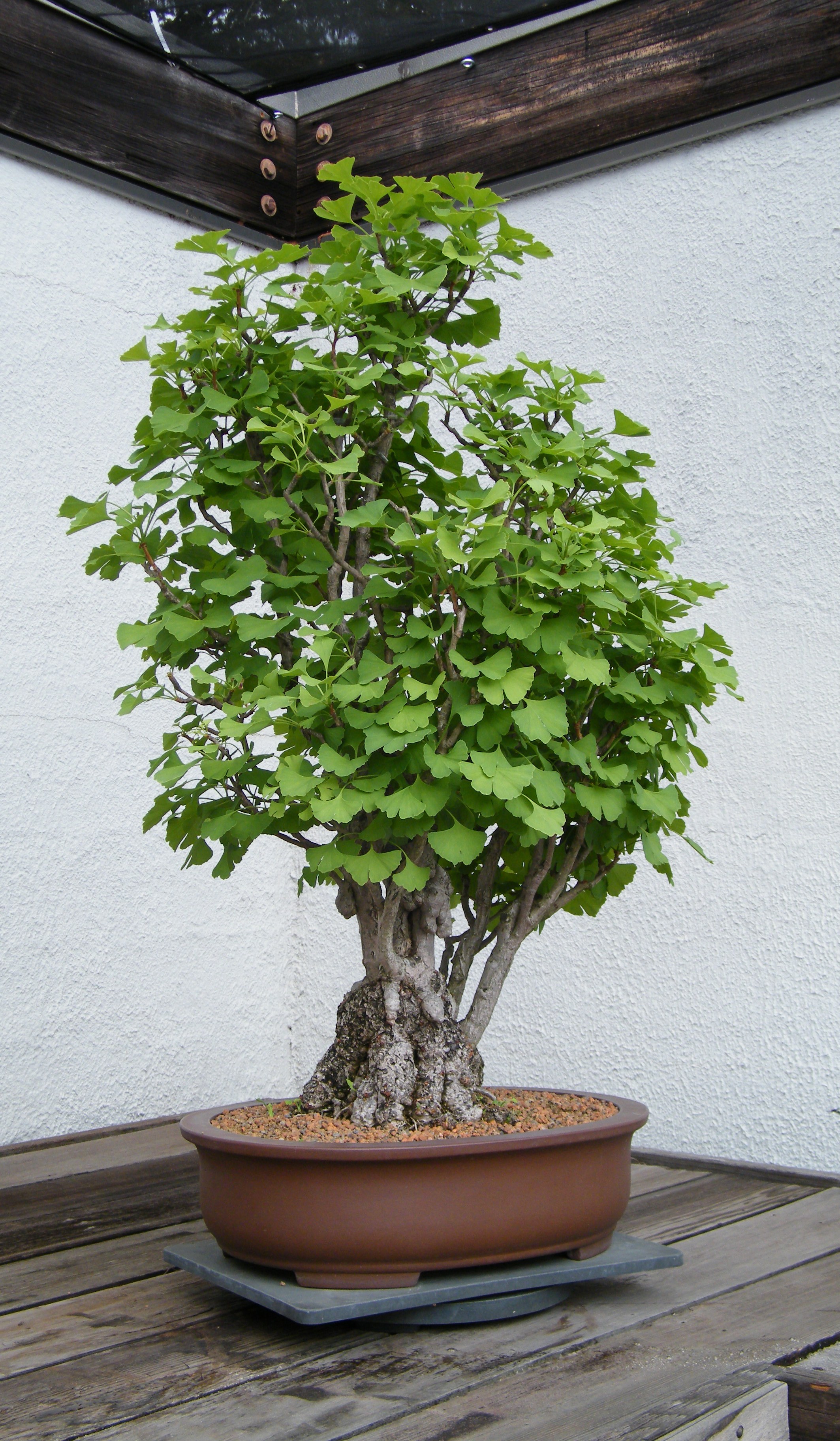
One Japanese maple's buds open over roughly a week. A grower with several of them can spend the better part of a month checking trees daily, because the buds do not all open at the same time. What the grower does when one is ready takes about a second: two fingers close around a new shoot that has just begun to extend, and its tip comes off. The Japanese word for this is metsumi (芽摘み, "bud pinching"). On most plants the shoot is soft enough to take with bare fingers, though growers often reach for tweezers to get at a shoot buried between leaves. Either way no wound is left to heal, and from a few steps back nothing about the tree appears to have changed.
A bonsai's fine branching is built almost entirely through metsumi: hundreds of small, well-timed pinches accumulated across a growing season.
A pinch only works while the shoot is still soft
Left alone, a bonsai grows the way any tree does: the highest, outermost buds are favored with most of the plant's energy — apical dominance, the tendency of the leading bud to outgrow the buds below it — and they race ahead while the growth lower down and further in holds back. Metsumi interrupts that race at its earliest point. As soon as a new shoot has extended enough to be held between thumb and forefinger, but before its stem has hardened and the spacing between its leaves has set, the tip is removed. Because the shoot is still soft, most species can be pinched with the fingers, and no cut mark is left to callus over. Wait too long and the same shoot hardens into woody structure. The work then belongs to pruning: Japanese gardening references separate the two by the verb — pruning cuts, metsumi pinches. In Japanese gardening practice the window for most trees falls between mid-April and May, a few weeks after the new shoots first push.
Removing the tip is what wakes the buds behind it
Taking off that soft tip does something specific to the shoot's chemistry. The growing point at the end of a shoot carries auxin, the growth hormone that both drives the shoot's extension and keeps the buds behind it suppressed. Remove the tip and two things happen at once: the shoot stops lengthening, and the interior buds that would have stayed dormant are free to break. One shoot that would have run in a single direction becomes two or more points of growth further back on the branch.
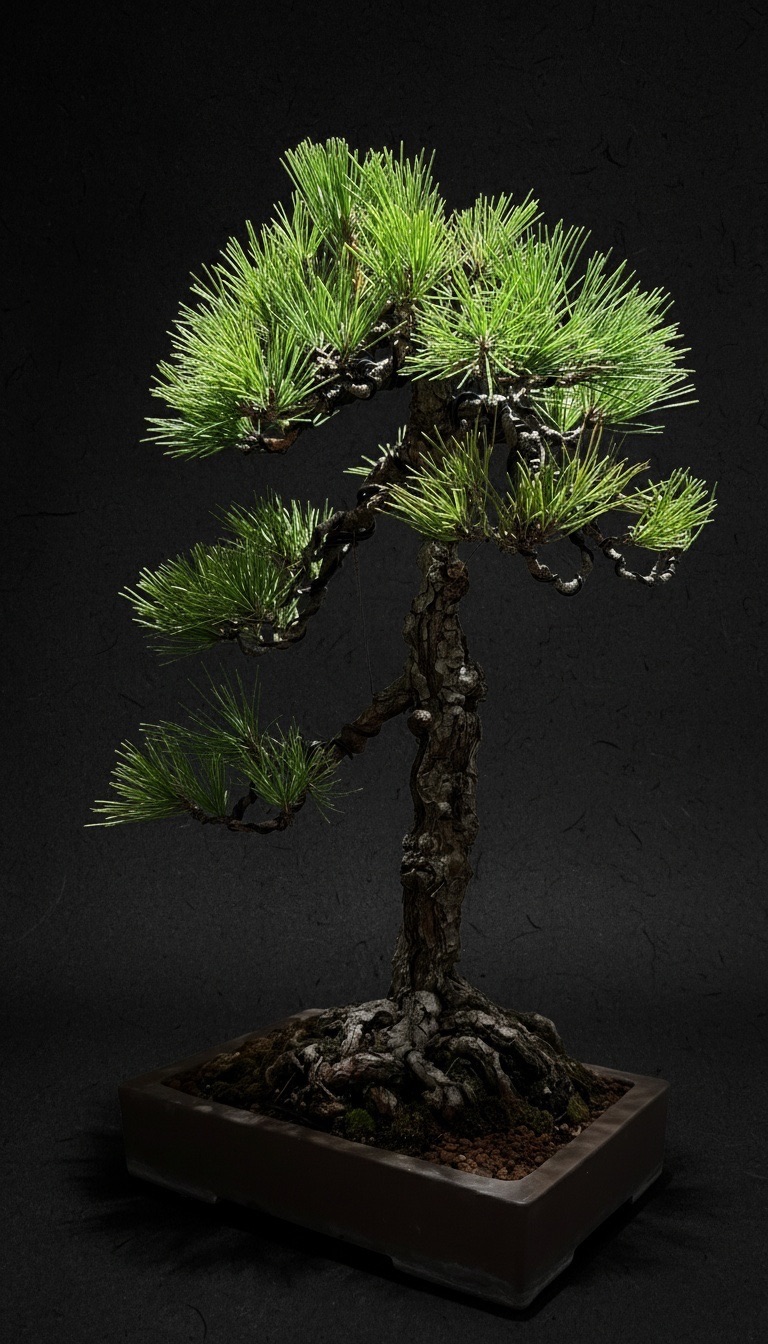
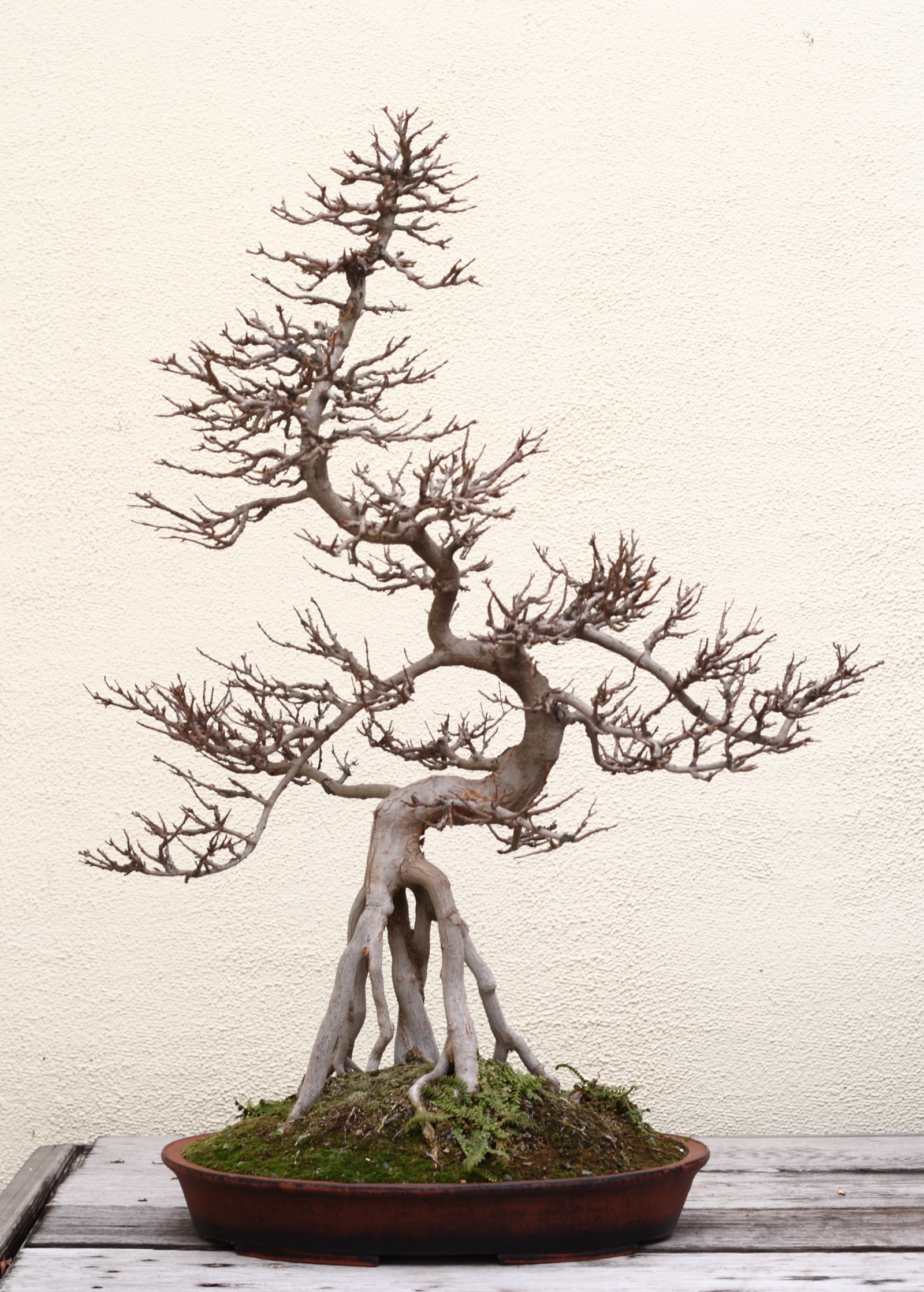
Repeat that across a season, and across years, and a young tree's few coarse branches slowly become the dense, layered structure of fine twigs that growers call ramification — the trait that does more than almost anything else to make a tree read as old. The work is not identical across species. On a Japanese maple, one grower's method is to leave the first pair of leaves alone and remove the small shoot developing between them, using tweezers to spread that pair apart and reach the shoot inside. On pines the equivalent is a different job under a different name: candle pinching reduces part of a soft spring candle before the needles elongate, and it is used mainly to even out vigor on trees that still throw extra-long candles, while mekiri (芽切り, "decandling") removes the fully developed spring shoots outright — a technique we cover on its own terms elsewhere.
The motion takes a minute to learn; the timing takes years
Anyone can be shown how to pinch in a minute. What takes years is knowing which shoot, and when. Bonsai Mirai's rule is blunt about the "when" at the scale of the whole tree: do not pinch at all until the tree has reached tertiary ramification — that is, until its trunk, primary branches and secondary branching are already established. Pinching is refinement work. Applied to young material still being grown out, it spends growth the tree has not yet banked. At the scale of a single branch, the judgment runs the other way: a weak interior or low branch is left with more buds so it can build leaf mass and gain strength, while an overly strong or leggy shoot is cut back to a single bud — or to none at all, in the hope that a dormant bud breaks further back. The general rule for a broadleaf shoot is to leave one to three nodes.
That is the axis worth carrying away. A pinch is a decision about how much strength to leave in that particular branch relative to the rest of the tree, made while the shoot is still soft enough that the decision costs nothing. Miss the window and the option closes: a hardened shoot can only be cut, and a cut leaves a mark. Timing is what separates metsumi from the tree's larger acts of removal. A structural cut is a deliberate judgment made once a year at most; a pinch is a provisional one, made and remade dozens of times in a season, resting on the same close attention that governs how a bonsai's branches are read before any of them is touched.
The season's pattern is what accumulates
A shoot removed in May changes almost nothing about how a tree will look in ten years. What accumulates is the pattern across the season — hundreds of these small choices, each nudging strength toward one part of the tree and away from another, repeated year after year until the branch structure has quietly become something no single cut could have produced. A big cut asks for nerve, once. Pinching asks for the patience to keep showing up on the days when there is almost nothing ready and the visit looks like a waste of a walk.
Fine branching is a record of attendance
Next time a bonsai's twigs look impossibly fine, the useful question is how many springs of daily checking are behind them. Nothing else produces that. The same is true of watering, the other task too ordinary to look like craft. It is also the practical reason a tree in Azukari's care stays in Japan while its owner does not: the work described here has to be done by someone standing in front of the tree through the weeks when its buds are opening, and the owner, wherever they are, receives the record of it season by season.
References
- Bonsai Mirai — "Pinching vs. Pruning" — defines pinching as using the finger to remove soft emerging growth, which stops internode elongation and removes the auxin at the branch tip, transitioning energy to interior buds that would otherwise stay suppressed; states the rule that a tree should not be pinched until it is at the stage of tertiary ramification.
- Bonsai Tonight — "Pinching spring buds on Japanese maple" — a grower's account of checking a maple daily because its buds open at different times, with one tree's buds opening over about a week and several maples amounting to a month of monitoring; the method described is leaving the first pair of leaves alone and pinching the inner shoot between them.
- Bonsai Tonight — "Pinching spring candles on black pine" — distinguishes candle pinching, the partial reduction of candles before the needles elongate, from decandling, the removal of fully developed shoots in spring; notes that extra-long candles become rarer as pines mature and vigor evens out.
- Seikatsu110 — "How do you pinch? On the difference from pruning and apical dominance" — a Japanese gardening reference giving mid-April to May as the usual window, explaining apical dominance as the leading bud being favored over the side buds, distinguishing metsumi's purpose (balance and more small branches) from pruning's, and noting that soft new shoots can be pinched by hand on most plants.
- Kimiko's Mini-Bonsai Days — "The Basics of Metsumi" — a mini-bonsai grower's practical guide: leave one to three nodes as a basic rule, work while the shoot is still soft enough to pinch with the fingers, leave more buds on weak interior branches to build strength, and reduce an overly strong shoot to one bud or none.