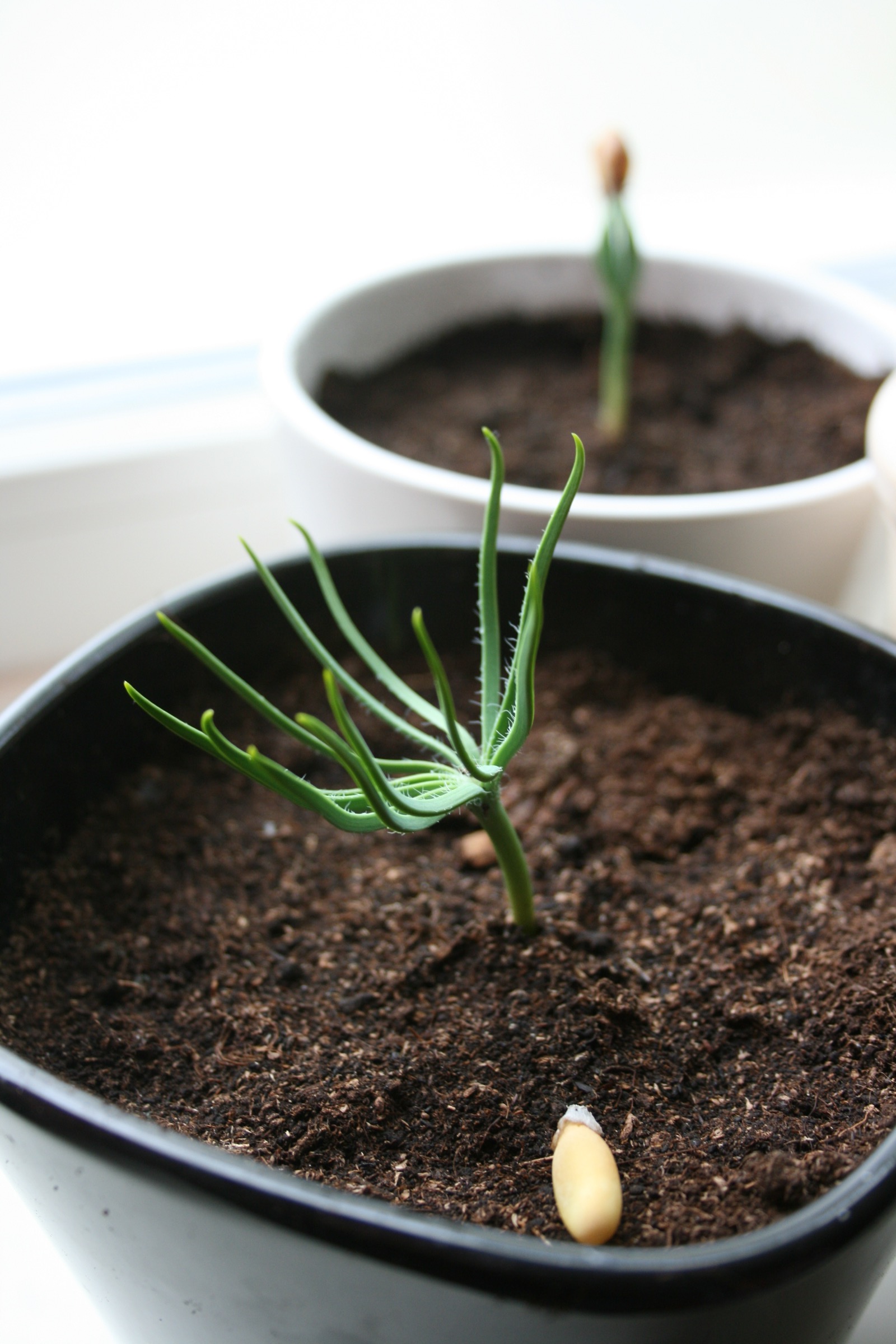
Photo by Pdreijnders, CC BY-SA 3.0, via Wikimedia Commons — Source

A Japanese black pine seed is smaller than a fingernail. A yamadori (山採り, "collected from the wild") pine pulled from a cliffside can arrive at a workshop carrying fifty years of trunk character already carved by wind and stone. Between those two extremes sits misho (実生, "grown from seed"): the one path in bonsai that starts with no trunk, no branch, and no root yet in the ground. A nursery sapling's roots were already set by another grower's hand. A cutting keeps the exact character of the branch it was taken from. A seed starts before any of that history exists.
Misho is the only way to grow a bonsai in which every year of the tree's life, from germination onward, has been shaped with a bonsai's future already in mind.
Nothing is inherited, so nothing is fast
Growing a tree from seed is considered the slowest way to arrive at a finished bonsai, and the reason is exactly that: nothing carries over from a previous life. Seeds of many temperate species need a period of cold before they will sprout — soaked in water, then held cool and moist for a month or two — unless they are sown in autumn to follow the season's own rhythm and skip the step. Japanese black pine seed, one of the most commonly seed-grown bonsai species, is typically chilled for about a week before sowing and germinates within one to several weeks the following spring.
Germination is the easy part. A seedling is usually left a full year in its first small pot before being moved into one of its own, and growers are commonly advised to wait at least another year after that before the first pruning or wiring — a minimum of about three years before any shaping begins at all. One commonly cited progression tracks roughly twenty-two years from seed to a tree that reads as a mature bonsai. Set that number against the yamadori pine's fifty years of head start, and the shape of the trade becomes clear: misho buys total control over a tree's history at the cost of most of a working life.
Only misho lets a grower build the roots from nothing
The one place misho outperforms every other starting material is the root. A seed germinates with a single taproot, driving straight down rather than spreading outward — the opposite of what a bonsai needs, which is a shallow, radial fan of surface roots called nebari (根張り, "surface roots"), the flare at the base of a trunk that tells a viewer how firmly a tree stands. Left alone, a taproot only grows more dominant with each season, so growers cut it back early, usually within the first year or two, once the stem has thickened enough to recover — often timed to the season when the tree is drawing down its energy for dormancy, so the wound heals on stored reserves rather than active growth. Some growers set a flat tile or board beneath the seedling at this stage, forcing the remaining roots to spread sideways instead of down, building the radial pattern nebari is judged by.
A nursery sapling or a rooted cutting arrives with its roots already decided — by someone else's hand, or by whatever chance put them there — and correcting them later is possible but never as clean. A seed-grown tree has no such history to undo. Its roots can be built, deliberately, from the very first cut, which is part of why growers who care about nebari (see our related piece on reading a bonsai's roots) still choose to start some trees from seed, in spite of the years it costs them.
Every early cut is a bet on a decade not yet arrived
None of this is a hobbyist's weekend project. Growing from seed is usually described as something a grower takes on only with real experience behind them, because every early decision — when to cut the taproot, how hard to prune, when to repot — has consequences that will not show themselves for ten years or more. A trunk left to thicken freely in open ground or a large training box grows faster than one confined early to a small pot, but choosing between them is a bet placed years before there is a tree worth judging. There is no shortcut that turns a three-year-old seedling into a bonsai; there is only a plan, drawn now, for a tree that will be judged much later.
That gives misho a plain test for judging any seed-grown tree, and it is the one worth carrying past this article. Count how many of its decisions were already deliberate before there was anything to look at.
The grower who starts it rarely sees it finished
A tree sown today by a grower in mid-career will likely not reach a shape worth exhibiting within that grower's working life. This is not incidental to misho; it is close to the point. As we wrote in an earlier piece on why age is value, no fee and no shortcut can manufacture years a tree has already lived — and a seed-grown tree makes that truth visible from day one, since the person sowing it is, from the very first cut of the taproot, working toward a form they may never see finished. In that sense misho sits inside the same idea we wrote about in "Bonsai Is Never Finished": a tree's story is built to be picked up by whoever tends it next, not closed off by whoever happened to plant the seed.
A misho tree makes a plain case for what Azukari is built to record: ownership that does not require having been the one who started the work, only the one continuing it. Whoever plants the seed and whoever eventually receives the tree's seasonal record are, more often than not, two different people separated by years neither can shorten — and the record is what carries the tree between them.
References
- Bonsai Empire — "Grow Trees from Seed as a Bonsai Cultivation Technique" — sowing timing and stratification, the three-year minimum before shaping begins, and a cited roughly 22-year seed-to-bonsai progression.
- Bonsai Tonight — "How to Grow Japanese Black Pine from Seed" — stratification and germination timing for Japanese black pine, and first-year seedling care.
- Growing Bonsai — "Nebari Creation with Seedlings" — taproot removal timing and technique for building radial nebari from seedlings.
- Wikimedia Commons — File: Pinus Pinea seedling.JPG — photograph by Pdreijnders, licensed CC BY-SA 3.0.