Photo by Sage Ross, CC BY-SA 3.0, via Wikimedia Commons — Source

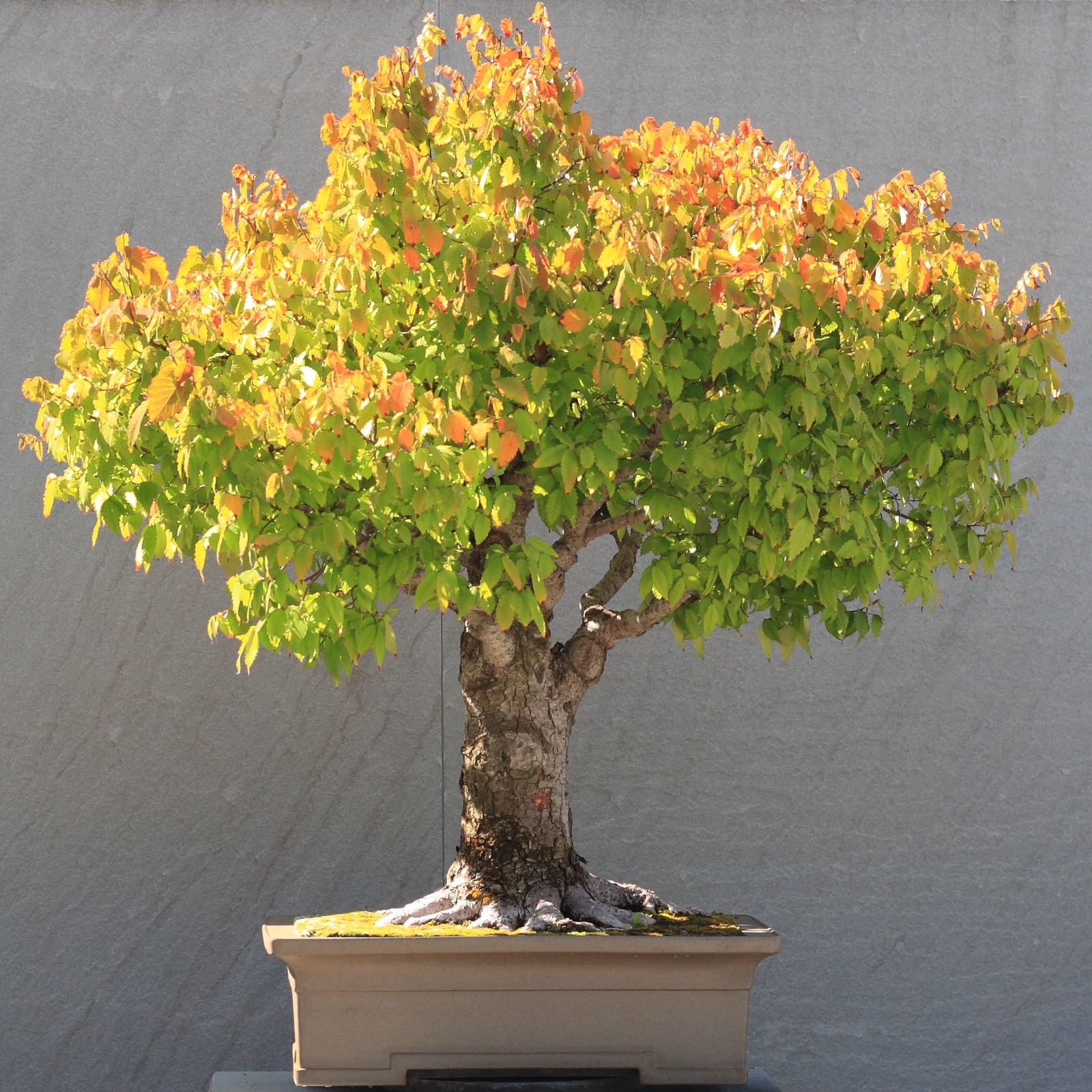
The zelkova above has stood in the National Bonsai & Penjing Museum's Japanese Collection since 1895. It came to the museum in 1976, a gift from the bonsai artist Yoshibumi Itoigawa, and every year since it has run through the same four stages on the same trunk: bare wood in winter, uncurling buds in spring, a dense green canopy through summer, and — as it appears in the photograph — a turn to gold and rust in autumn. A garden performs this same cycle, technically speaking. But a garden spreads it across an acre nobody stands in front of all at once.
A single deciduous bonsai, tended through one year, shows its owner every season the tree has — budbreak, bloom, turning color, bare branch — on one trunk small enough to see whole, from a single chair, without moving.
What follows is not a growing guide. It is an account of what that compression does: to the tree, to the person who tends it, and to a much older cultural habit of chasing a season before it passes.
Each stage is watched for on its own terms
Japanese does not fold a deciduous tree's year into one word. Mebuki (芽吹き, "budbreak," the first uncurling of leaf buds) opens the year. Kaika (開花, "flowering," the opening of blossoms) follows, for species grown to bloom. Koyo (紅葉, "autumn color," the turning of leaves to red, orange, and gold) marks the year's second climax. Rakuyo (落葉, "leaf fall," the shedding of that year's foliage) closes it, leaving trunk and branch bare until spring.
A conifer bonsai — a pine, a juniper — skips this entirely: it holds its green through all four stages and is prized for form and bark rather than change. A deciduous bonsai is prized for the opposite reason. It will not sit still. The zelkova pictured above owes part of its reputation to how legibly it performs each stage: its dense, broom-shaped canopy of small leaves turns and drops as a single mass rather than leaf by leaf, so koyo and rakuyo both read clearly from a distance. A Japanese maple performs the same sequence differently — its spring growth often opens yellow, orange, or red before settling into summer green, then turns again by autumn into, in the words of one widely used care reference, "attractive autumn colours in all shades of yellow, orange and red," before it too goes bare.
The pot changes scale, not the calendar
None of this can be rushed. A tree sets its winter buds the previous season and opens them on a schedule tuned by cold and daylight, not by an owner's calendar. What a pot changes is not the pace of the year but its scale. The four stages that, on a mountainside, would be scattered across a whole slope of trees are, in a bonsai, stacked onto one trunk the owner already knows in detail — this branch, this scar, this particular lean. Watching koyo arrive on a tree hand-watered for years is a different experience from watching it arrive on a hillside of trees with no names. The pot does not shrink the season. It shrinks the distance between the person and the change.
A museum can only rotate what one pot already holds
Institutions that keep deciduous trees for exhibition lean on exactly this compression. The Omiya Bonsai Art Museum in Saitama runs a standing exhibition called Shiki (四季, "the four seasons"), swapping its indoor collection roughly weekly so that something is always at its seasonal best. In the museum's own description of a November rotation, "the leaves on maple trees grow brighter and brighter every day, telling us that autumn is deepening"; a May rotation instead shows "freshly budded leaves" opening in early-summer light. What the museum does at institutional scale — rotating a collection so that one tree is always at its peak — a single tended pot already does for one owner, without needing to rotate to anything else.
Hanami and momijigari chase one peak; a full-cycle tree skips the itinerary
Japan built other institutions around the same chase. Hanami (花見, "cherry-blossom viewing") and momijigari (紅葉狩り, literally "autumn-leaf hunting") both send people to a particular place in a particular week to catch a season at its peak, a practice covered at more length in "The Luxury of Waiting." A flowering or fruiting bonsai, as described in "What Is Flower Bonsai," offers a version of that same peak without the travel: the bloom comes to a balcony instead.
A deciduous bonsai kept through all four stages answers a different question. The point is not which single stage photographs best — a koyo zelkova will always win that contest against its own bare winter self. The real choice, for anyone deciding between a conifer that holds one form all year and a deciduous tree that will not sit still, is whether you want a constant image or the whole sequence: bud to bloom to color to bare branch, on the same trunk, in the same corner of a room. Waiting for one peak is a luxury of anticipation. Keeping a tree that runs through all four stages is a different luxury — the luxury of being present for the parts that are not the peak.
Japan named the habit of noticing before it passes
None of this is unique to bonsai. Classical Japan built an entire aesthetic vocabulary around noticing nature's small shifts before they pass. Kacho-fugetsu (花鳥風月, literally "flower, bird, wind, moon") is the old term for it, a phrase that first appears in Zeami's Muromachi-period writings on Noh theater and came, over centuries, to stand for finding art and meaning in exactly this kind of fleeting natural detail. The finer calendar described in "The Luxury of Waiting" — the twenty-four solar terms that divide the year into stretches as short as two weeks — comes from the same impulse: a tool built for tracking change, not for waiting on the four blunt seasons of a Western calendar to turn.
A bonsai kept through mebuki, kaika, koyo, and rakuyo is a small, living instance of that same habit. It does not describe the passage of time. It performs it, on a schedule no one can move, in a pot an owner can check every morning.
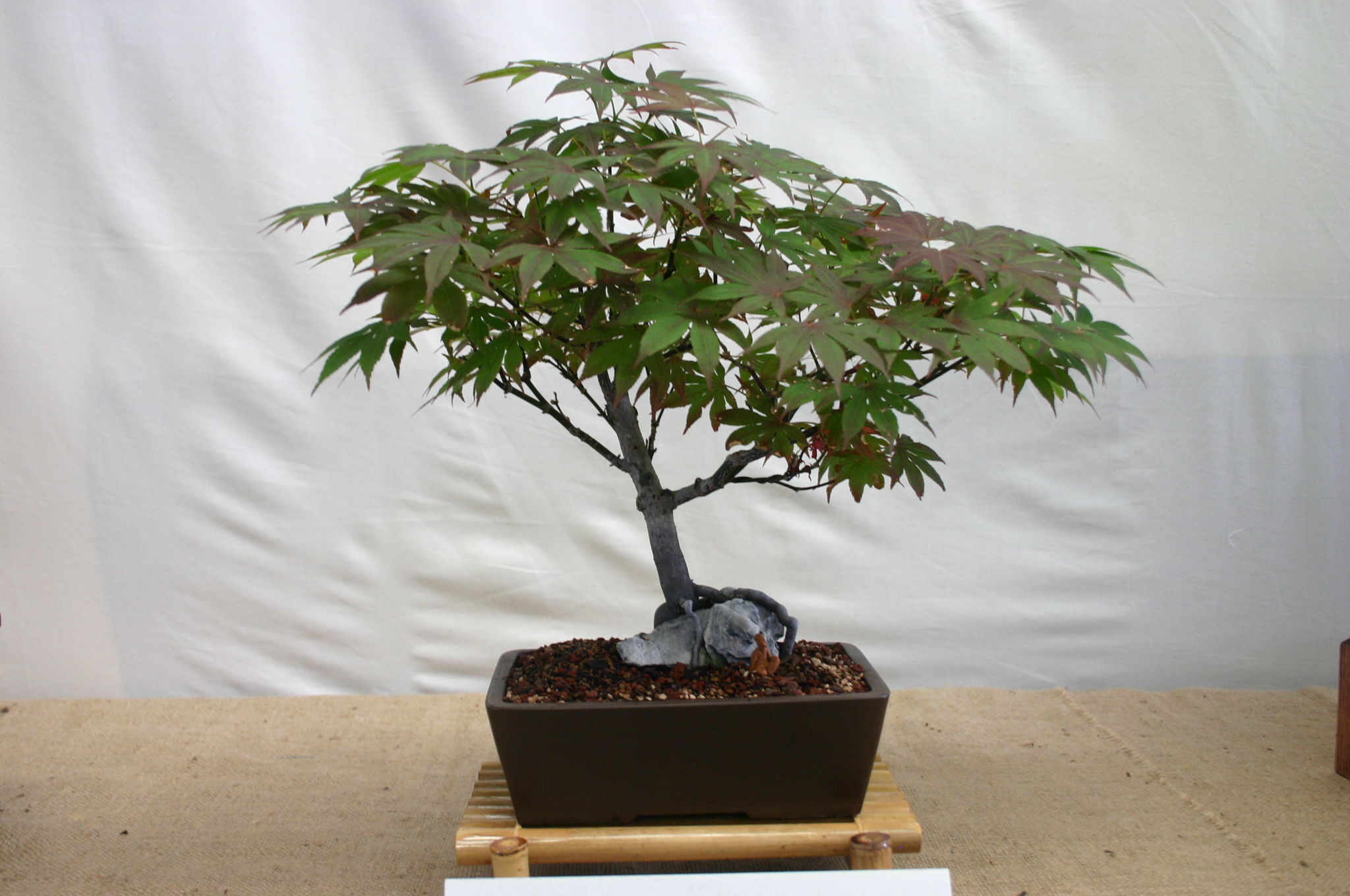
Photo by Ryan Somma, CC BY-SA 2.0, via Wikimedia Commons — Source
.jpg)
The tree keeps the calendar; the owner keeps watching
In practice, a deciduous bonsai sets its keeper's calendar as much as the other way around. Watering shifts with the seasons, heavier through the growing months and sparer once the leaves are down, as described in "Bonsai and Watering." Wiring and shaping wait for the brief windows after new growth has hardened but before heat or cold stresses the tree. Repotting is timed to the narrow stretch before spring budbreak, when roots recover fastest. None of it is optional or improvised. It is dictated by mebuki, kaika, koyo, and rakuyo arriving in the same fixed order, year after year.
This is the part of bonsai that distance does not remove, and it is the part Azukari is built to carry across that distance: the tree stays in Japan, under an artist working to the same seasonal calendar, and its owner receives that calendar back as a record — an update at budbreak, at bloom, at the turning of the leaves, at the bare branch of winter. Not a single photograph of a peak season. Not a promise that nothing changes. A calendar, kept for someone else, one stage at a time.
References
- National Bonsai Foundation — Japanese Collection — collection record for the Japanese zelkova (Zelkova serrata), in training since 1895 and donated by Yoshibumi Itoigawa in 1976.
- The Omiya Bonsai Art Museum, Saitama — Seasonal Bonsai Exhibition, Shiki — official description of the museum's rotating, roughly weekly seasonal display, including its November maple and May budding rotations.
- Bonsai Empire — Japanese Maple (Acer palmatum) care guide — on the maple's seasonal cycle, including spring leaf color, summer care, and autumn foliage color.
- Bonsai Empire — Overwintering Bonsai Trees — on why temperate, deciduous bonsai must be kept outdoors through winter to enter proper dormancy.
- Tokyo Weekender — "Kachofugetsu: The Beauty of Nature" — on the origin and meaning of kacho-fugetsu, tracing the term to Zeami's Muromachi-period writings on Noh.