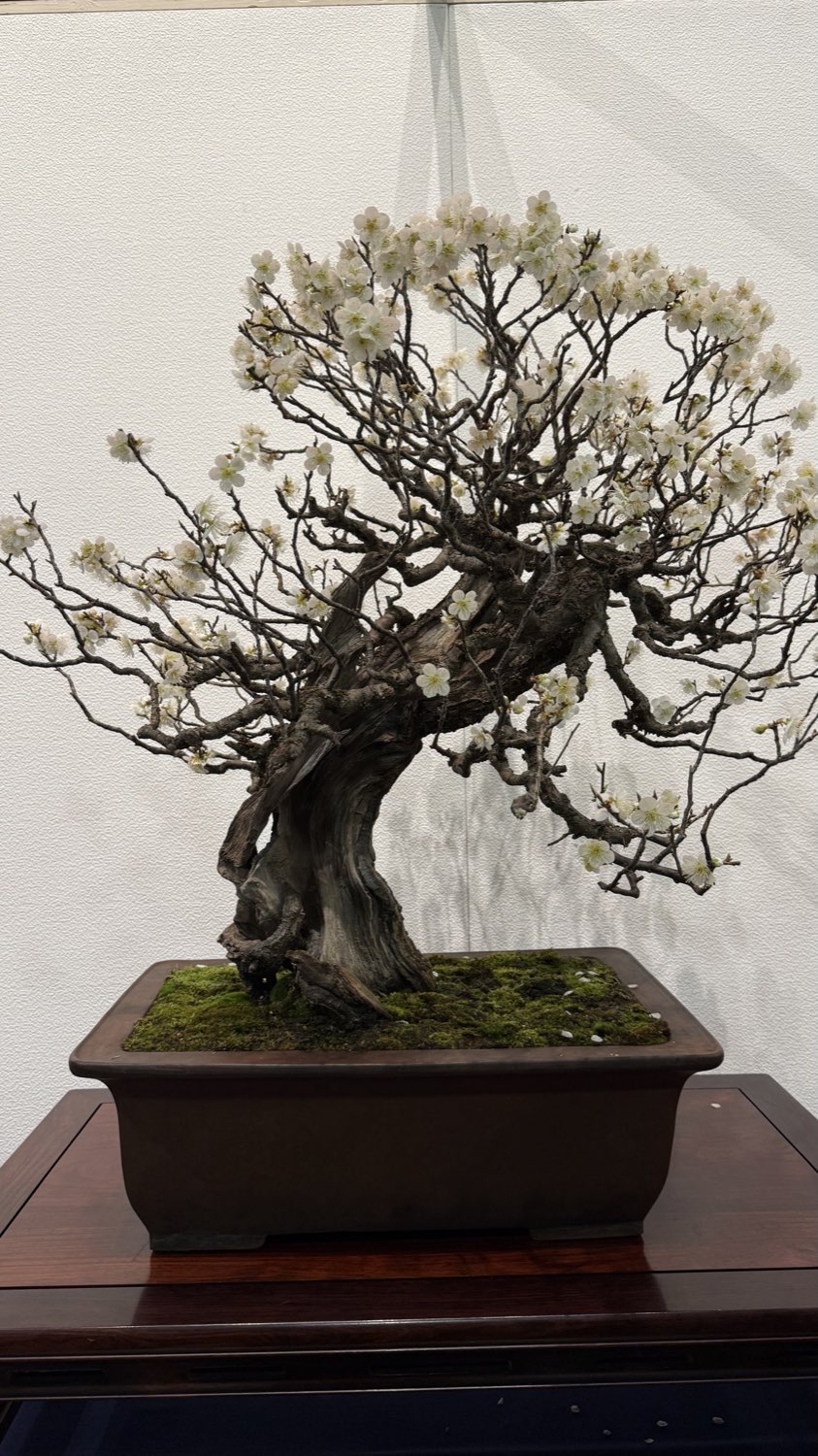
A flowering plum bonsai spends fifty-one weeks in unglamorous work — watered, wired, fed, its non-flowering growth cut back — for a bloom that lasts four or five days. No fee moves that fifth day earlier, and no urgency shortens the fifty-one weeks that come first. The tree is an extreme case of something true of anything worth having: the best of a thing — a fruit at its peak, a view under the right light — arrives on its own schedule, and what can be bought instantly has, by definition, already given up the quality that made it worth waiting for.
Waiting, done well, has become the rarest luxury available, because almost nothing left still requires it.
Shun rewards only those already paying attention
Japanese food culture names this precise, unrepeatable window shun (旬, the short peak period when an ingredient is at its best in flavor, nutrition, and abundance). A fish, a vegetable, a fruit each has its own shun — weeks, sometimes days — outside of which the same ingredient is simply lesser. A chef cannot create shun. A chef waits for it, then moves fast once it arrives, which is why the finest Japanese menus change constantly and a menu fixed a year ahead is nearly a contradiction in the tradition. Meeting the peak, rather than manufacturing it, is the whole skill — someone has to have been paying attention all along for the moment it appears.
Eating by shun means arranging attention around nature's calendar instead of one's own convenience, an old discipline that a century of refrigeration and freight has worked hard to make optional.
Twenty-four seasons ask a sharper question than four
Centuries before refrigeration made every ingredient available every day, Japan inherited from China a calendar built for exactly this kind of attention: nijushi sekki (二十四節気, the twenty-four solar terms — a division of the solar year into twenty-four roughly fifteen-day periods, each named for a seasonal marker). The Gregorian calendar marks four seasons; nijushi sekki tracks the sun's position along the ecliptic in twenty-four fixed steps, and UNESCO recognized it in 2016 as intangible cultural heritage — proof that a calendar can be a form of knowledge and a scheduling tool at once.
The names read like a season narrated in stop-motion. Risshun (立春, the beginning of spring) lands in early February, often while snow is still on the ground; it marks a turning point already passed, whatever the thermometer says. Keichitsu (啓蟄, "awakening of hibernating insects") follows in early March, the moment the ground itself is judged warm enough to stir what sleeps in it. Seimei (清明, "clear and bright") in early April names the particular clarity that early-spring light takes on. Each term is narrow enough to check against the world outside the window.
A four-season calendar answers "which season is it." A twenty-four-term calendar answers something sharper — "what, specifically, is changing right now" — and answering it takes the same unhurried attention that shun asks of a cook. Nijushi sekki did not speed the seasons up. It built the vocabulary to notice how they were already moving.
Instant delivery has made waiting the rare signal
Nearly everything else in daily life has been re-engineered to remove the wait. Overnight became same-day; same-day became instant, and each compression was sold, correctly in most cases, as pure gain. The cumulative effect has been to make waiting itself feel like a defect to engineer away, taking with it the one property that used to separate something exceptional from something merely available.
Once nearly everything can be had immediately, immediacy carries no information — it is simply the baseline everyone starts from. What stands out now is the rarer case where waiting was never eliminated: a wine cellared rather than opened young, a craft that still takes the months it always took, a view saved for the one week a year it exists. None of these were made scarce on purpose. Their value is inseparable from the interval before them, and no supply chain has found a way to strip out that interval without stripping out the value with it. Patience, once simply the price of getting anything at all, has become a deliberate and legible choice — proof, now, that the thing on the other side of the wait is real.
Before you pay a premium for anything marketed as rare, one question sorts the real cases from the marketing: can the wait behind it be shortened without losing what makes it good? If yes, you're paying for convenience. If no, the wait is the product — and that is the kind of scarcity worth paying for.
A flowering bonsai keeps this calendar whether anyone is watching
Nowhere is this pattern more literal than in a flower or fruit bonsai — a plum, a cherry, a persimmon trained in miniature. The bloom described at the start of this piece is tended through fifty-one weeks of quiet work for four or five days of flower, and there is no way to compress it. The tree sets its flower buds the previous season, carries them through winter dormancy, and opens them only when its own internal calendar, tuned by temperature and daylight, reaches the moment. An artist can shape the branch that will carry the flower. No one can move the flower's date forward.
This is shun and nijushi sekki turned into a living object instead of a word or a chart. The tree keeps its own twenty-four-part year with total indifference to its owner's schedule, and the owner's only real choice is whether to be paying attention when the moment finally arrives. That, in the end, is the honest part of a flowering bonsai's luxury: not the four or five days of bloom, but the fifty-one weeks of unremarkable care that make those days real.
For more on this way of keeping time with a tree, see "What Is Flower Bonsai," "Why Japan Loves Falling Cherry Blossoms," and "Bonsai and Watering."
References
- National Astronomical Observatory of Japan — "What are the Twenty-Four Solar Terms" (暦Wiki) — official explanation of the nijushi sekki, their division of the solar year into twenty-four terms, and their 2016 UNESCO Intangible Cultural Heritage registration.
- National Astronomical Observatory of Japan — Calendar Calculation Division, "Explanation of Calendar Terms: The Twenty-Four Solar Terms" — reference listing of the twenty-four solar terms including risshun, keichitsu, and seimei.
- South China Morning Post — "'Shun', decoded: the Japanese philosophy behind seasonal flavour" — on the definition of shun as the narrow window when an ingredient is at its most flavorful, nutritious, and reasonably priced, with chef commentary on cooking to the season.