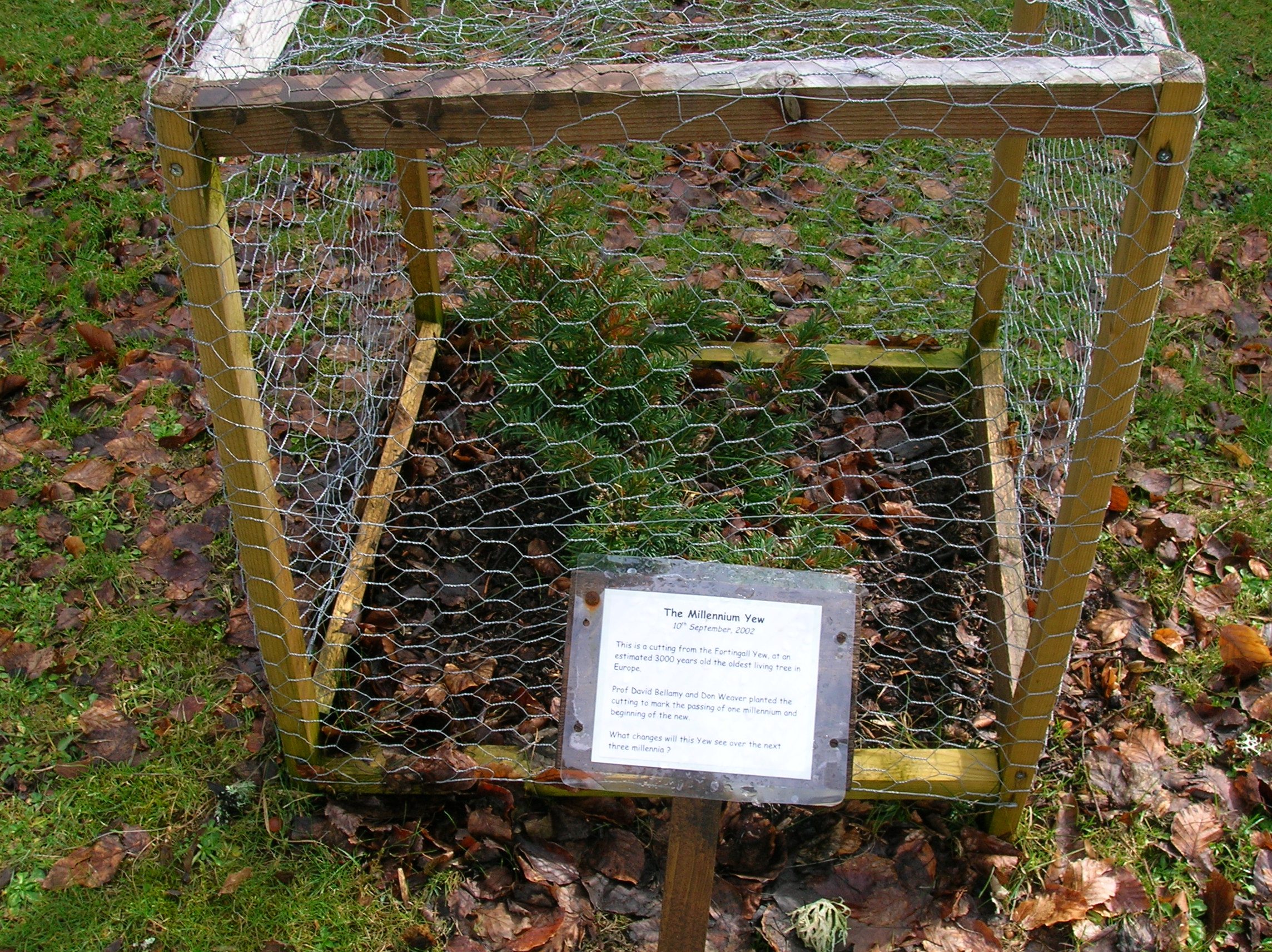
A tree grown from a rooted cutting, photographed at a Scottish field studies centre. Photo by Roger Griffith, public domain, via Wikimedia Commons — Source

Yes — most bonsai species can be grown from cuttings. Snip a healthy shoot, root it in free-draining soil, and within weeks to months it becomes an independent tree that is, genetically, a continuation of the one it came from. Junipers root especially easily; pines are the main exception.
Which trees say yes
Not every species roots with equal willingness, but the list of ones that do is long. Junipers are among the most cooperative subjects in the whole practice — shimpaku cuttings in particular are a routine way nurseries multiply stock — and many of the flowering and fruiting trees common in bonsai, quince and cotoneaster among them, take root readily too. Bonsai Empire's own propagation guide treats cuttings as a mainstream method across deciduous trees and conifers alike, prized because it is faster than starting from seed and lets a grower see the parent's traits in the result from the start. Pines are the exception that proves the rule: two-flush pines such as kuromatsu (黒松, Japanese black pine) root poorly from a cutting and are usually grown from seed or grafted onto seedling rootstock instead.
What a cutting actually inherits
The reason cuttings work at all is genetic, not just practical. A seed carries a fresh, unpredictable mix of traits from both parents. A cutting carries none of that uncertainty — barring a stray mutation, it is genetically identical to the branch it was cut from: same bark, same growth habit, same foliage. What it does not inherit is the parent's training history. A cutting rooted today starts with no seasons of wiring behind it and no years yet spent in a pot, even if its genes are decades old. We go into this distinction in full in our piece on sashiki, including what a cutting can and cannot carry forward from a tree with a documented past.
Why nurseries do it on purpose
Cuttings are not just a shortcut — they are how a nursery multiplies a specific result it cannot otherwise reproduce. Hasho (葉性, "leaf character") — the size, density, and color of a tree's foliage — is fixed largely at germination and cannot be trained into an ordinary tree through pruning alone. A cultivar known for unusually fine, dense needles exists because someone once found that trait in a single seedling; every fine-leaved specimen since traces back to it by cutting or graft. Taking a cutting from that one tree is how the trait gets multiplied, rather than hoped for again from a fresh batch of seed — the same reason misho (実生, growing from seed) and cuttings serve different purposes in a nursery's plan, not competing ones.
One tree, then two
For a hobbyist, none of this needs to be complicated. The Royal Horticultural Society's guidance for semi-ripe cuttings — a shoot taken from summer into mid-autumn, firm at the base and still soft at the tip, trimmed below a leaf node and set into a sand-and-compost mix — applies just as well to a bonsai-bound shoot as to any garden shrub. What makes it worth doing, beyond the economy of it, is the plainer pleasure: a single healthy branch, cut with care, becomes a second tree with its own pot and its own future ahead of it. That is closer to how most bonsai in Japan actually begin their lives — not bought whole, but started small, from a seed, a graft, or a cutting, and given years to become something.
At Azukari, the trees an owner is entrusted with are usually well past that stage — already carrying years of training and a documented record behind them. But the logic of a cutting is the same one that underwrites the whole practice: a tree that begins with good genetic material and an empty record still has to earn everything else, one season at a time, exactly like every tree before it did.
References
- Wikipedia — "Cutting (plant)" — on cuttings as vegetative propagation producing offspring that are, in the article's words, "practically clones of their parent plants."
- Royal Horticultural Society — "Cuttings: semi-ripe" — technique and timing (summer to mid-autumn) for semi-ripe cuttings of shrubs and conifers.
- Bonsai Empire — "Juniper Bonsai Tree" — on propagating juniper bonsai from seed or cuttings.
- Bonsai Empire — "Japanese Black Pine Bonsai Tree" — on propagating two-flush pines from seed or by grafting rather than from cuttings.
- Bonsai Empire — "Growing Bonsai from Cuttings" — on cuttings as a common propagation method that is faster than growing from seed and gives some foresight into the resulting tree's characteristics.
- Wikimedia Commons — File: Fortingall Yew cutting, Kindrogan.JPG — source and public-domain license (photo by Roger Griffith) for the header image.