
Culture
Fertilizer: How Much, When?
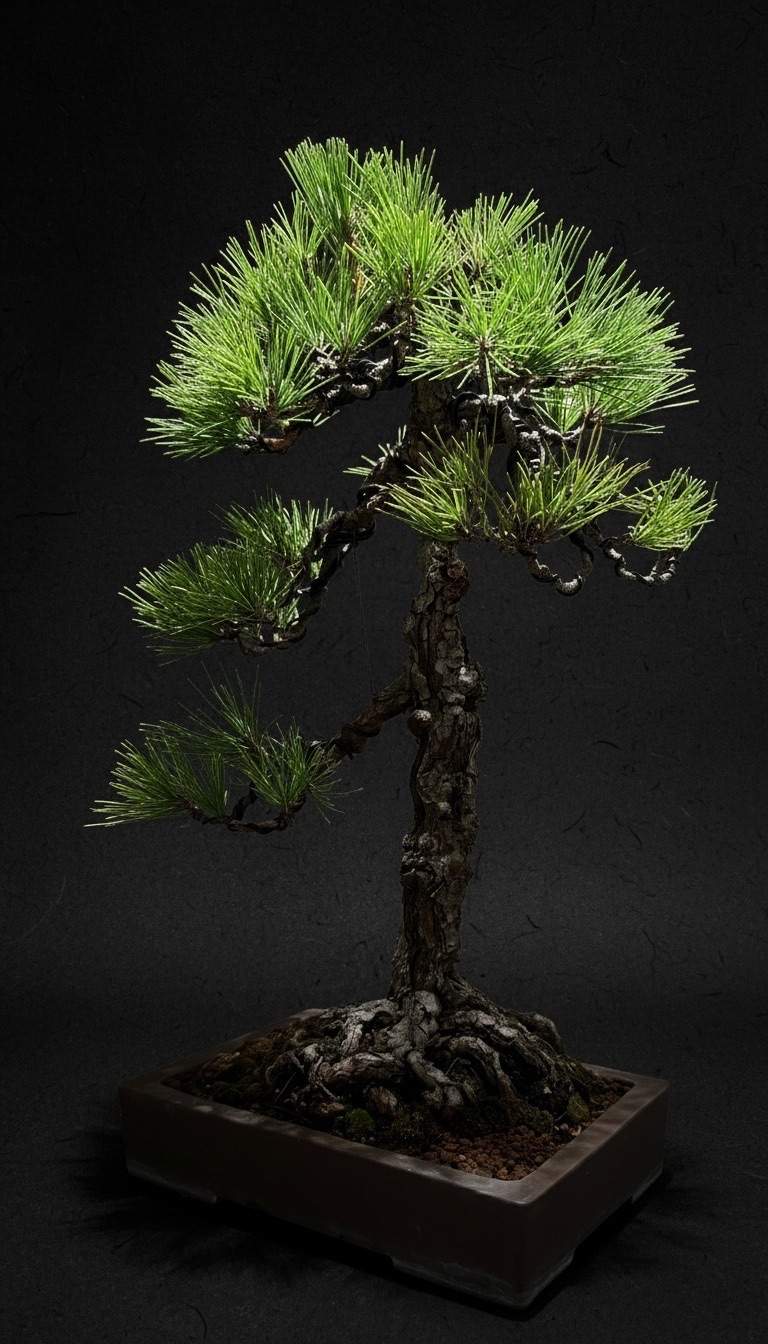
A tree fed on a disciplined schedule tends to hold small, tightly spaced leaves rather than long, soft growth.
Most bonsai are fed only during the growing season, roughly spring through autumn, and the single most common mistake is giving a tree more fertilizer than it can use — not too little. Flowering and fruiting species need a different balance of nutrients from foliage trees, and skipping feeding at specific points, such as right after repotting, is itself part of correct care rather than an oversight.
Too much, not too little
New growers tend to assume a hungrier-looking tree needs more food, and reach for the fertilizer whenever a bonsai looks tired. In practice, overfeeding is the far more common failure. Excess nitrogen — the nutrient responsible for leafy, above-ground growth — pushes a shoot to keep extending well past the point where a bonsai's compact form calls for it, producing long internodes and oversized leaves that years of pinching and pruning then have to correct. Pushed further, it turns into direct injury: fertilizer salts build up in the soil faster than routine watering flushes them out, and roots confined to a shallow pot can scorch, showing up as browned or dropped leaves. If in doubt, a tree that receives slightly less than it could use will hold a tighter, more refined shape than one fed generously. The deeper reasoning behind that trade-off, and why restraint is treated as a technique in its own right, is covered in Fertilizer: A Question of Restraint.
When to feed: the growing season, not the calendar year
Bonsai are fed on the rhythm of active growth, not year-round. Feeding generally begins as new growth starts in spring and continues, often lightening through the hottest part of summer, into autumn, when a somewhat heavier feed helps the tree build strength ahead of winter dormancy. A solid organic fertilizer left on the soil surface to break down with each watering is typically renewed roughly every four to six weeks; a diluted liquid feed, where one is used, runs on a shorter cycle, closer to every one to two weeks. Feeding stops once a tree goes dormant for winter, since there is no active growth left to make use of it, and it is also withheld — not simply reduced — for a period after repotting or hard pruning, while a tree's roots are recovering from the disturbance. None of these pauses are exceptions to a feeding plan. They are the plan.
Flowering and fruiting trees need a different design
Fertilizer is not one substance with a single job. Of the three nutrients printed on any bag as an N-P-K ratio, nitrogen drives leaf and shoot growth, phosphorus supports root development and the formation of flowers and fruit, and potassium supports the tree's overall health and hardiness. A pine or juniper grown mainly for its silhouette can usually be kept on a fairly even mix through the growing season. A tree grown for its blossom or its fruit is fed on a different balance entirely: nitrogen is held back, particularly as flower buds are forming, because too much of it pushes the tree toward leafy growth at exactly the moment its energy needs to go into bud formation instead, while phosphorus and potassium are raised to support the flowers or fruit the grower is actually after. Getting this wrong is one of the more common reasons a flowering or fruiting bonsai grows plenty of leaf but produces disappointingly little else.
Restraint is part of the technique, not a shortcut
Put the timing and the nutrient balance together, and a feeding schedule turns out to be less about generosity and more about judgment. Deciding when a tree has had enough takes as much attention as deciding when it needs more, and the pauses built into the schedule — after repotting, through the hardest heat of summer, into dormancy — are as deliberate as the feeding itself. That same rhythm sits alongside watering and the soil a tree grows in — most bonsai soil is built around free-draining akadama precisely so that fertilizer salts do not linger around the roots — as one more ordinary task that carries far more of a bonsai's real technique than its size would suggest.
At Azukari, that same seasonal judgment governs how each tree in an owner's care is fed by an artist in Japan — never as much as a tree could take, but as much as it actually needs, at the moment it needs it.
References
- Bonsai Empire — Fertilizing Bonsai — on the roles of nitrogen, phosphorus, and potassium, overfeeding producing long internodes and oversized leaves, salt buildup and root burn from excess fertilizer, and pausing feeding through winter dormancy.
- Bonsai4Me — Fertilising Your Bonsai / Bonsai Feeds — on avoiding high-nitrogen feed late in the growing season, and on leaving newly repotted trees unfed for at least six weeks.
- Bonsai Myo (Japanese) — "Seven Effects of Fertilizer on Bonsai" — on overfeeding producing leggy branches and oversized leaves, the periods to avoid feeding (rainy season, bud formation, right after repotting), and the differing nutrient ratios used for flowering versus fruiting stock.
- Kimiko's Mini-Bonsai Days (Japanese) — "Bonsai Fertilizer" — on solid versus liquid fertilizer types, the lighter-spring/heavier-autumn feeding rhythm, and withholding fertilizer through midsummer and for about a month after repotting.