In Montalcino, in southern Tuscany, a winery called Podere Le Ripi has planted 1.4 hectares of vines at a density normally reserved for a bonsai pot: staked upright, bud counts kept deliberately low, roots forced down by the sheer competition of their neighbors until they reach roughly three meters — about double what a conventionally spaced vineyard achieves. The estate calls the result, fittingly, "Bonsai." It bottles only a few hundred cases a year.
No tree made the trip from Japan to produce that wine. What crossed the Montalcino hillside was an idea — concentrate a plant's growth instead of letting it spread — and the vines did the rest. That is roughly how bonsai itself has moved past Japan's borders over the past century: not tree by tree, but idea by idea, each one rebuilt out of whatever climate and species a given place has on hand.
A Japanese word entered dozens of languages without being translated
The word bonsai — 盆栽 in kanji, literally "tray planting" — is now used, largely unchanged, across dozens of languages. Few Japanese terms make that crossing this cleanly; most get glossed, shortened, or swapped for a local equivalent along the way. Bonsai did not. The word, the patience it names, and the way its results are displayed and discussed all moved together.
The idea holds steady; the execution answers to the local climate
What stays fixed, wherever bonsai lands, is the underlying task: find a large landscape inside a small container, and hold that composition over a long stretch of time. What changes is everything required to carry it out. Climate sets the watering schedule. Winter severity decides whether a tree can stay outdoors year-round or needs a cold frame. And the species available to a grower shift from region to region, because a tree suited to a Japanese winter is not necessarily suited to a Mediterranean or a subtropical one.
In Japan, black pine and shimpaku (真柏, a hardy juniper prized for its dense, silvery foliage) sit at the center of practice. In Mediterranean climates, olive has become the natural substitute — its gnarled trunk and silver leaf answer to the same aesthetic. In drier or more temperate regions, growers reach for whatever native species can tolerate root confinement and repeated shaping. The tree changes from place to place. The task does not.
An Italian vineyard borrowed the pressure, not the tree
Podere Le Ripi's vines are trained much as a bonsai artist trains a young pine: staked upright, thinned, forced to compete for room until the roots dig down rather than out. Some growers elsewhere have taken the comparison further still, training an actual grapevine as bonsai — kept small, kept in a pot, its trunk allowed to thicken and twist with age the way a centuries-old vine's would in open ground.
None of this proves the wine is better for it. A vine pushed to concentrate its growth, like a tree confined to a shallow pot, only reveals over years of tasting whether the pressure produced character or simply strain. What the comparison does prove is narrower and more useful: bonsai's discipline — root pressure, restraint, patience measured in years rather than seasons — turns out to be portable to a plant that has nothing else in common with a Japanese pine.
International federations move people across bonsai's borders, not trees
The effort to connect bonsai practitioners across countries has its own long history. The World Bonsai Friendship Federation (WBFF), founded in 1970, has run a World Bonsai Convention every four years since; the first was held in 1989 in Omiya, now part of Saitama City just north of Tokyo, and the convention has changed host countries each time since, with the tenth due to draw growers and enthusiasts to Kuala Lumpur in 2026. Bonsai Clubs International (BCI), founded seven years earlier in 1963, connects enthusiasts of bonsai and viewing stones around the world — one of the oldest standing international bodies in the field. Europe, North America, and Oceania each maintain their own national bonsai societies and federations, with local clubs organized underneath them and regular exhibitions of their own.
What moves through this network is people and technique, not the trees themselves. A grower in one country picks up a method at a convention on the other side of the world and goes home to apply it to a species that grows nowhere near Japan.
A bonsai garden is probably closer than it seems
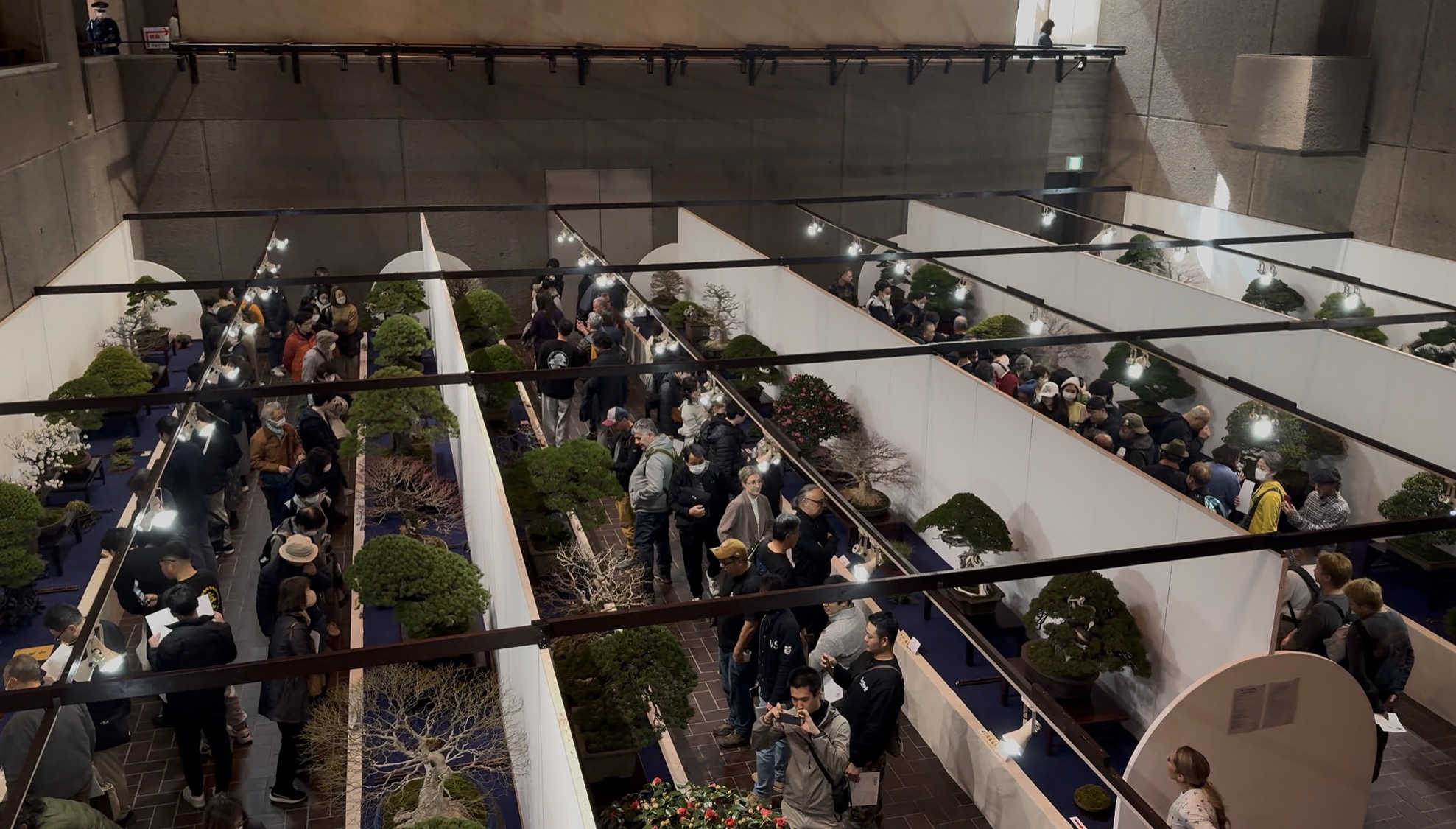
Bonsai gardens are no longer a Japan-only proposition. Many countries have their own bonsai nurseries and specialty shops. Some botanical gardens keep a dedicated bonsai collection. And small clubs of enthusiasts meet in more towns than most people would guess, usually in a rented room on a weekday evening, working through pruning and wiring one branch at a time.
Finding the nearest one is mostly a matter of looking, and a tree seen in person carries a weight no photograph gives it — the case made at more length in Bonsai Gardens Near You. For why the idea of bonsai crosses cultures so readily in the first place, see Bonsai and World Cultures; for the definition itself, start with What is Bonsai?; to feel the scale of an exhibition in Japan, see 100 Years of Kokufu; and for bonsai showing up in ordinary city life, see Our Artists Are Out in the City.
What has to stay in Japan is smaller than it looks
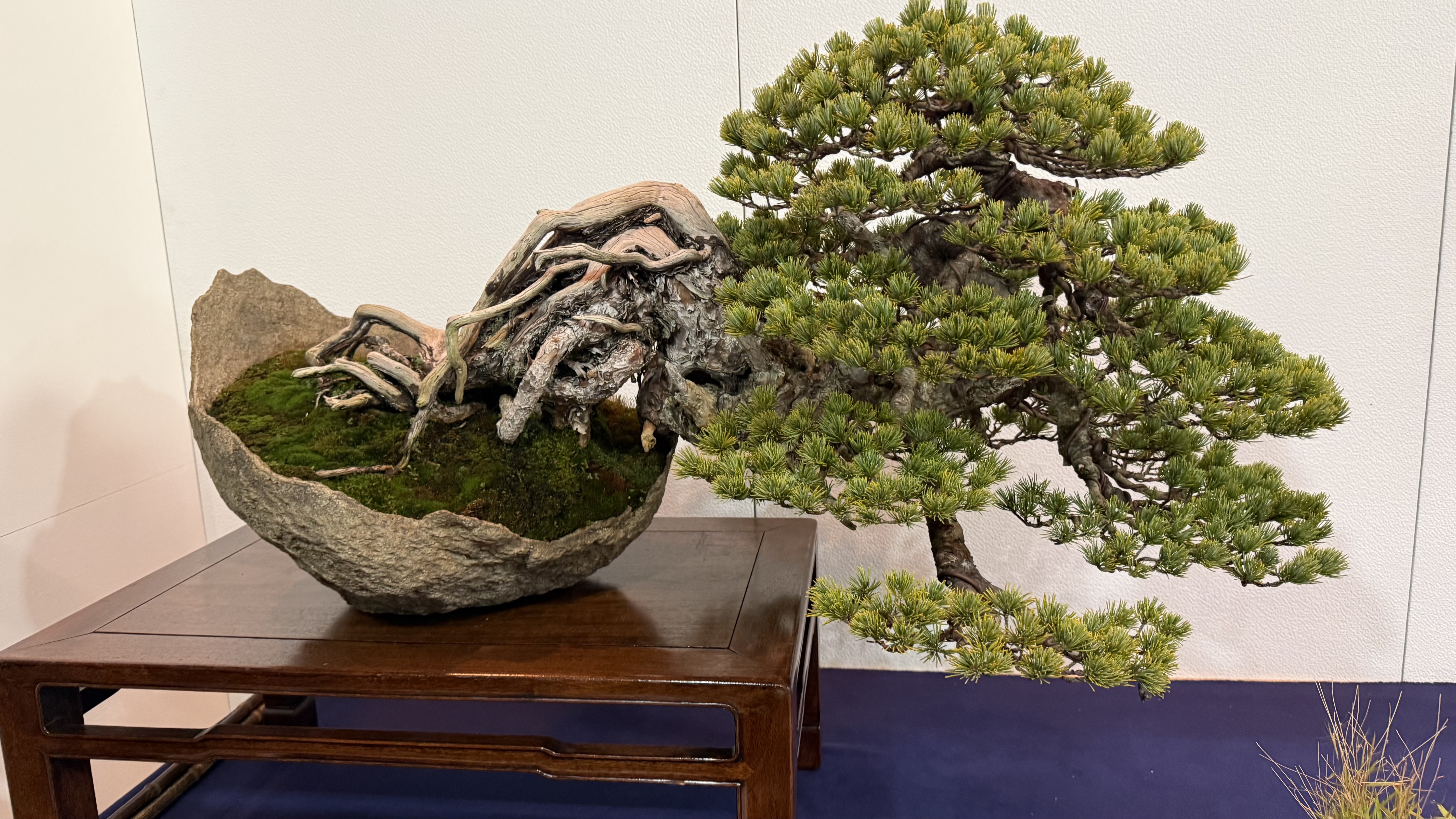
Bonsai now has places to be practiced and admired in nearly every part of the world. But trace any tree in any of those places back far enough, and a Japanese source is usually still there — in the species chosen to echo a Japanese silhouette, in the technique taught at a convention, in the word itself.
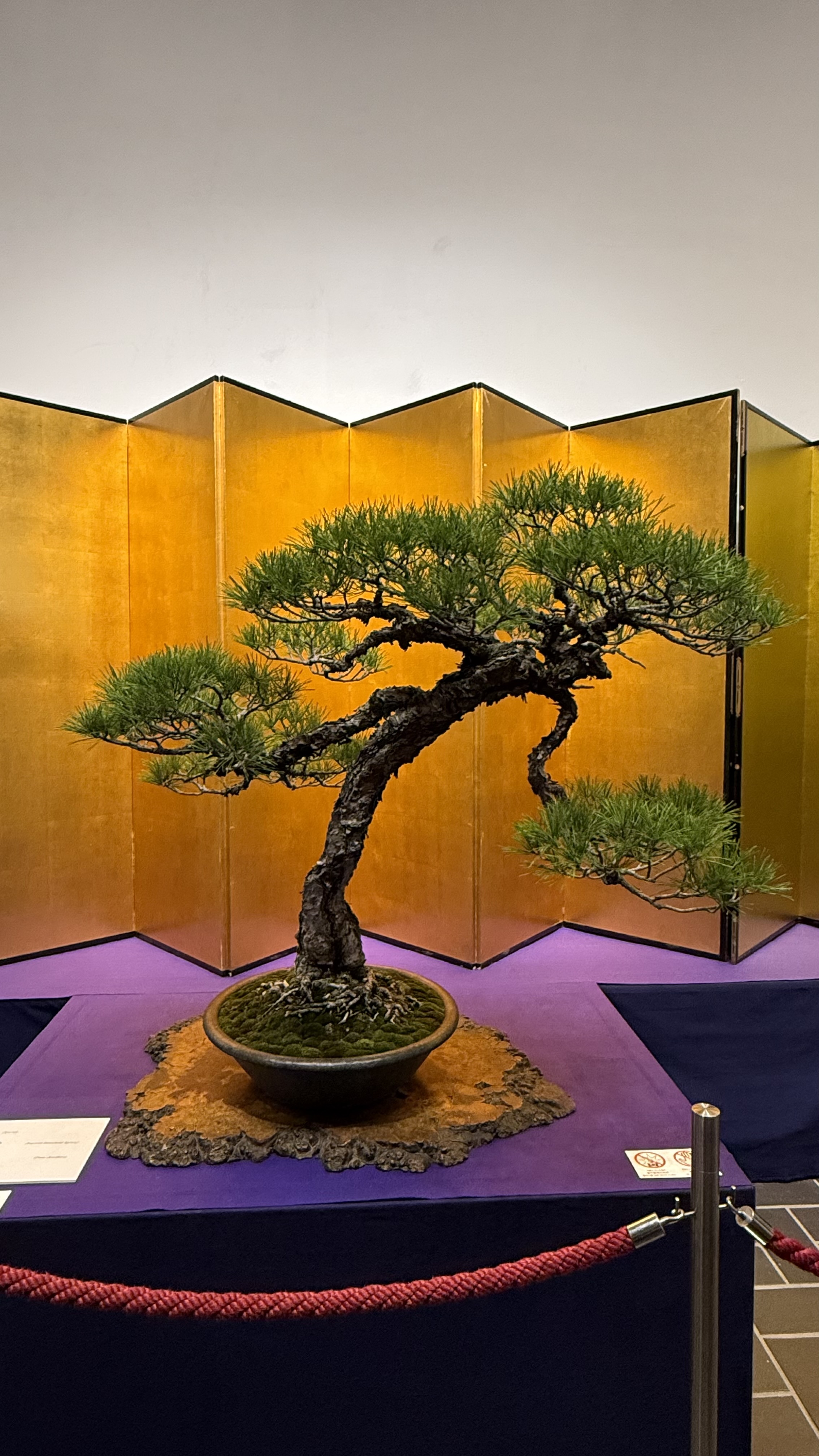
What Azukari works with is that source directly, rather than an adaptation of it: a single tree, shaped over decades by a Japanese artist, kept in Japan's own climate rather than approximated in someone else's. An owner elsewhere receives the record of that work, season by season, without the tree ever leaving the ground it was trained for.
The idea, the technique, and the connection to a tree can all cross a border. The tree itself is the one part that does not have to.
References
- World Bonsai Friendship Federation — founding year, four-year World Bonsai Convention cycle, and the first WBC (Omiya, 1989)
- Bonsai Clubs International — founded 1963, connecting bonsai and viewing stone enthusiasts around the world
- Bonsai Vineyard, the densest vineyard in the world — Podere Le Ripi — high-density vine training, root depth, and the "Bonsai" name
- 一般社団法人 日本盆栽協会 (Japan Bonsai Association) — organizer of the Kokufu Bonsai Exhibition