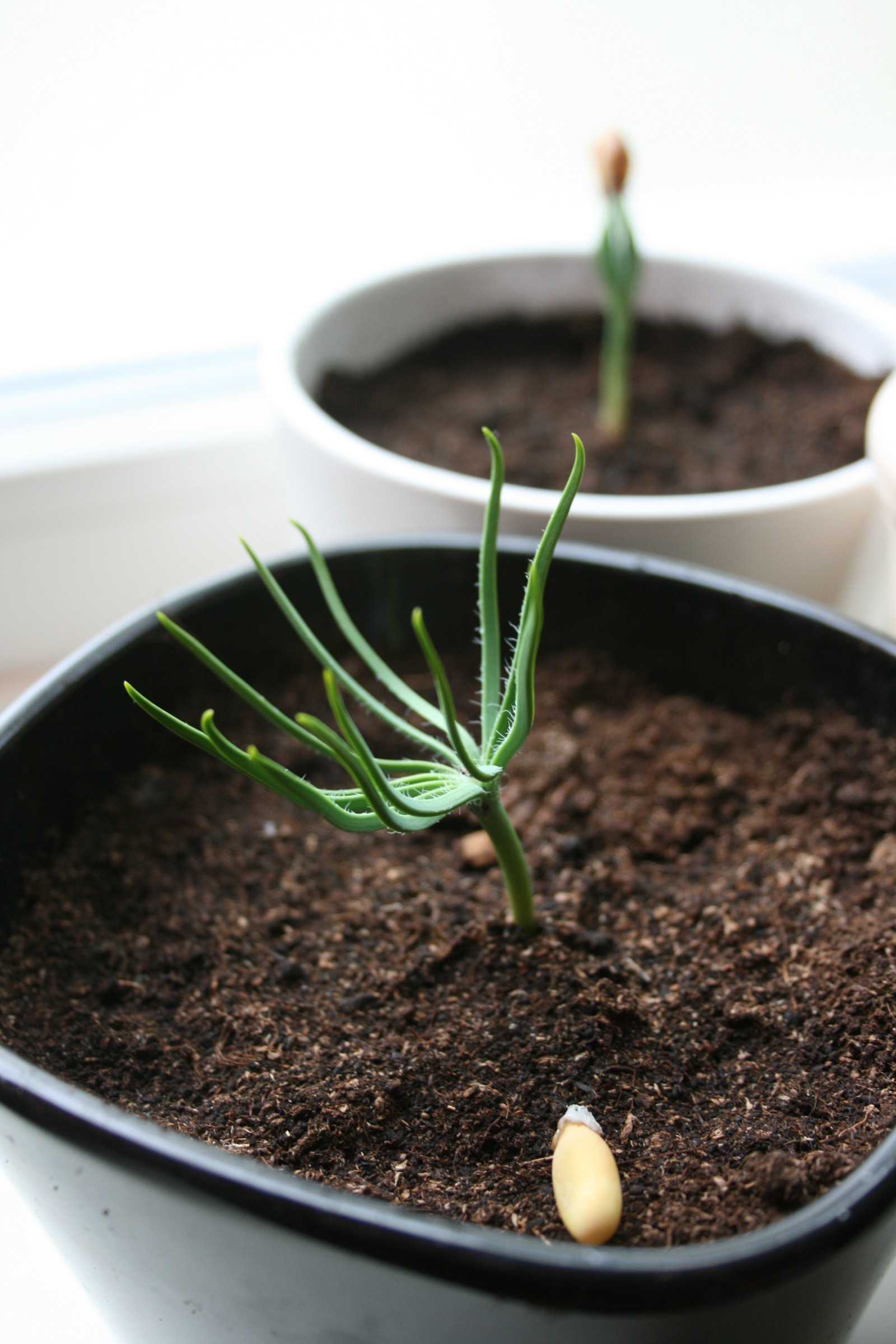
Photo by Pdreijnders, CC BY-SA 3.0, via Wikimedia Commons — Source

Yes and no. The seeds inside a bonsai seed kit are real tree seeds — usually pine, juniper, elm, or a handful of ornamental species chosen for their small leaves. But there is no such thing as a genetically distinct "bonsai seed" that sprouts a miniature tree. Left in the box a few weeks, then planted, a kit seed grows into an ordinary sapling of its species, exactly like one bought from any garden center — and it takes a decade or more of deliberate shaping, not a season on a windowsill, before that sapling starts to look like a bonsai.
No such thing as a bonsai seed
A pine seed does not know it is destined to become a bonsai any more than a wheat seed knows it is destined to become bread. Bonsai is not a plant variety; it is a set of techniques — pruning, wiring, root restriction, repotting — applied over years to an ordinary tree. One widely read bonsai reference puts the point bluntly: there are no "magic beans" for bonsai, because bonsai trees are not genetically different from their full-sized counterparts. What a kit actually sells is a small packet of standard tree seed, a starter pot, a pinch of soil, and a card of instructions. If every seed in the packet germinates and is left untouched, every one of them grows into a normal, full-sized tree.
What "a decade or more" actually looks like
Even under good conditions, a seed-grown tree needs real time before it resembles anything worth calling a bonsai. Growers and educators who have tried to walk beginners through the process put the honest figure at ten to twenty years from seed to a tree that reads as a finished bonsai, and note that this timeline rarely appears anywhere on the packaging. We go into the mechanics of that process in more depth in "Misho: Starting from Seed" — the stratification a seed needs before it will even sprout, the year a seedling spends untouched in its first pot, and the taproot that has to be cut and redirected before the tree can begin building the surface roots a bonsai is judged by. None of that happens inside a kit's plastic tray. It happens on a bench, over years, under a grower's ongoing attention. For a fuller answer to how long the whole road takes, see our companion piece on the timeline from seed.
Why the kits still sell
The gap between the marketing and the timeline is exactly why seed kits keep showing up as novelty gifts. A box that promises "grow your own bonsai" is inexpensive, ships easily, and photographs well — everything a decade-long horticultural project is not. The trouble shows up almost immediately: many of the species chosen for kits need weeks of cold stratification before they will even germinate, a step beginners often skip or get wrong, and customer reviews of these kits describe germination rates that lag far behind seed sown from the same batch under proper nursery conditions. A kit does not fail because the buyer lacks a green thumb. It fails because the box quietly asks a first-time grower to succeed at a step that experienced growers spend years learning to get right.
Buying a tree instead of a species
If the goal is an actual bonsai and not a horticultural experiment, most experienced growers point the same direction: skip the seed and start with a young, already-established tree — sometimes called "pre-bonsai" — or a rooted cutting, from a nursery that can show you the plant in hand. That single choice removes the hardest and least forgiving years of the process, the ones a seed-grown tree spends with no trunk, no branch structure, and no guarantee of surviving its first repotting. It does not remove the years bonsai still requires after that. It simply starts the clock somewhere a beginner can actually keep pace with it.
Buying time, not a shortcut
None of this makes a seed kit worthless as a gift or a curiosity — a handful of tree seeds in a pot is still, at minimum, a tree seed in a pot. What it is not is a shortcut to a bonsai, because there isn't one. The years a real bonsai carries are not a packaging problem to be solved with better instructions; they are the actual substance of what makes a tree a bonsai rather than a seedling. That is the same reason some owners choose, instead of starting a tree from nothing, to take up the next stretch of a tree that has already lived those years — not to skip the time bonsai asks for, but to join a tree's record at a point further along it, under an artist's continuing care rather than a windowsill.
References
- In Vivo Bonsai — "Ryan's Bonsaiclopedia: Bonsai Seed Myths" — on there being no genetically distinct "bonsai seed," and the recommendation to start with an established young tree instead of seed.
- Laidback Gardener — "The Tragic Story of My First Bonsai" — on typical seed-kit contents, the 10-to-20-year timeline rarely disclosed on packaging, and the advice to start with a plant or cutting rather than a seed.
- Bonsai Empire — "Grow Trees from Seed as a Bonsai Cultivation Technique" — on stratification requirements, the multi-year minimum before shaping begins, and a cited roughly 22-year seed-to-bonsai progression.
- Homegrown Garden — Bonsai Tree Grow Kit product listing — an example of typical commercial seed-kit contents: multiple seed varieties, starter pots, soil, and printed growing instructions.