
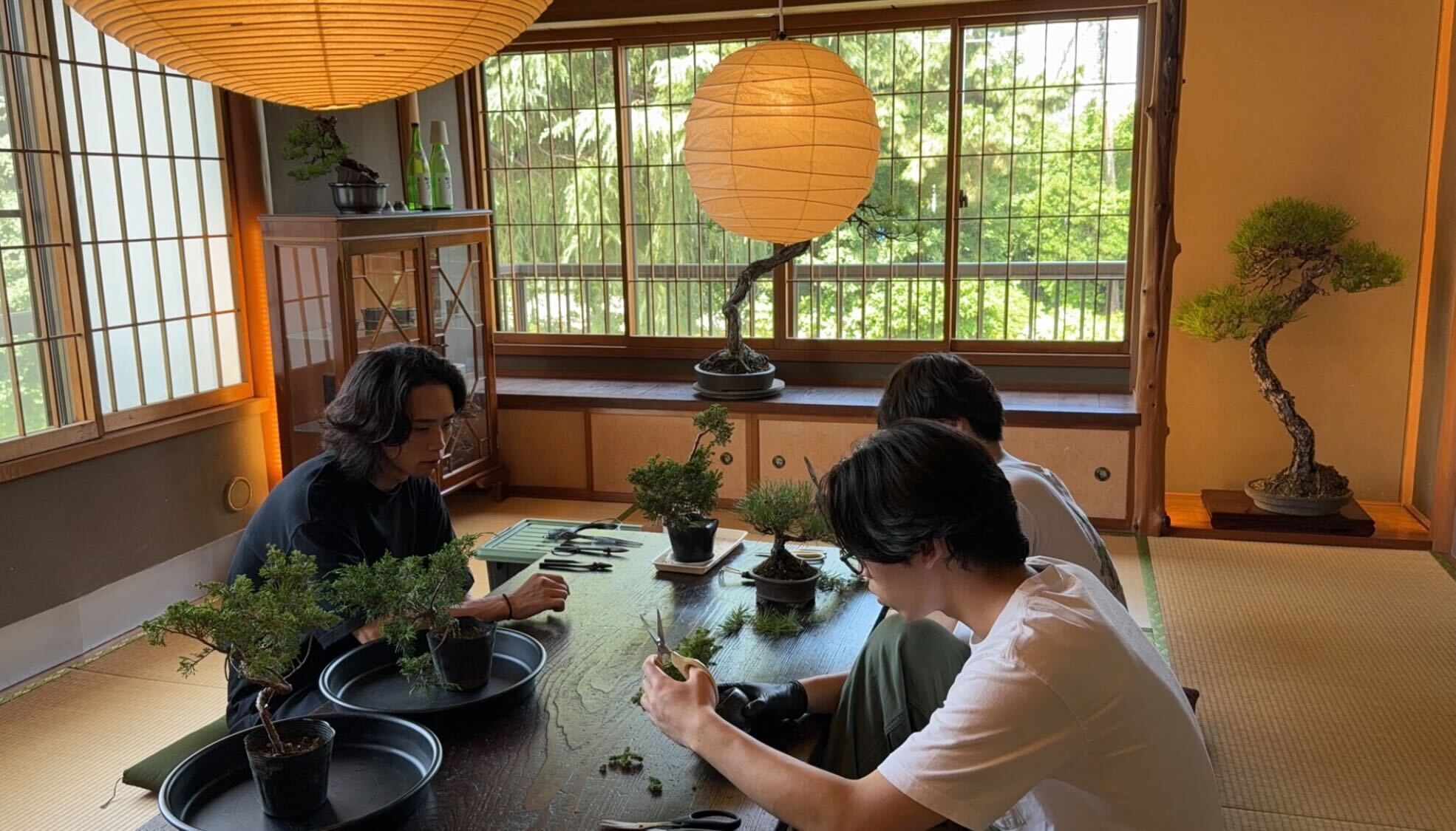
In an interview reported by Japan's Nikkei newspaper, temple carpenter Ogawa Mitsuo described the day his own training effectively began. His master, the celebrated carpenter Nishioka Tsuneichi, planed a single piece of wood, produced a shaving thin enough to see light through, and said almost nothing else. Ogawa — Nishioka's last direct apprentice, and later founder of the Ikaruga workshop for training temple carpenters — spent the following months sharpening his own blade and practicing alone until his shavings matched it.
A shokunin's knowledge lives in the hands before it lives in words.
Plane it once, then go work it out yourself: that is the shape of the word shokunin (職人), and the usual translations, "craftsman" or "artisan," drop most of what it carries. A shokunin is not simply someone who makes things skillfully for a living. The word names a way of holding knowledge — knowledge that has moved so completely into the body that it no longer needs, and sometimes cannot survive, being put into words.
The hand moves before the thought
Ask a shokunin how they know when a blade is sharp enough, or when a joint will hold, and you will often get a demonstration rather than an explanation. A lacquerware craftsman quoted in a 2021 essay on the subject in Kyoto Journal describes speaking to a piece of wood almost literally, asking it "which way do you want to curl" — not as poetry, but as the closest available description of a decision made through the hands rather than through reasoning laid out in advance.
That is what happens when a task has been repeated enough times that the body absorbs a feedback loop faster than conscious thought can follow — no mysticism required. The wisdom accumulates through what the same essay calls "repetitive and meditative movements over millions of times." A shokunin trusts the hand first because the hand has been trained longer, and more precisely, than the part of the mind that would try to narrate the decision afterward.
Sharpening the blade counts as the craft, not preparation for it
Among the clearest expressions of this belief is the tradition of miyadaiku (宮大工, "temple carpenters," craftsmen who build and restore shrines and temples using joinery methods that predate modern fasteners) — the tradition Ogawa now trains others into. A miyadaiku does not simply pick up a kanna (鉋, a Japanese hand plane) and get to work. Sharpening and tuning the blade — sometimes for years before it produces work the carpenter considers acceptable — is treated as part of the craft itself, not preparation for it. In interviews about his training method, Ogawa states his philosophy plainly: that people are not "raised" or instructed into skill; rather, an environment is built in which skill has no choice but to grow. Miyadaiku workshops still run on some version of this principle: shared meals, shared cold nights, and tools that each apprentice earns the right to use by first learning to keep them sharp.
This is also why the oldest continuously operating enterprise in the world is not a bank or a shrine but a construction company. Kongo Gumi, founded in 578 CE to build and maintain Shitenno-ji temple in Osaka, carried its construction methods — and by extension its tools and their handling — across roughly 1,400 years of family succession before becoming, in 2006, a subsidiary of a larger construction group. The techniques survived that long because they were never fully written down. They were re-taught, hand to hand, in every generation.
A shokunin spends a career narrowing
A second trait separates the shokunin from what is usually meant by "artist" in the modern sense. An artist, broadly speaking, is expected to develop — to move across subjects, styles, even mediums, expressing something recognizably their own as they go. A shokunin moves the opposite direction: toward a single, narrow craft, practiced for an entire working life, refined by fractions rather than reinvented.
The distinction is not a matter of skill or ambition. It is a difference in what the work is for. The same Kyoto Journal piece on the subject draws this line directly: a master carpenter describes his own work as "the result of endless repetitions," drawing on "accumulated wisdom from ancient times" rather than on personal inspiration. A shokunin, in this account, thinks in terms of what "we" make — the lineage of hands before them and the lineage to come — rather than what "I" have made. Fidelity to a standard larger than any one career matters more here than an individual signature.
This is one reason shokunin culture tends to produce narrow specialists rather than generalists: a lifetime is barely long enough to bring one craft to the point where the hands, not the mind, are doing the deciding.
A bonsai artist trains inside the same discipline
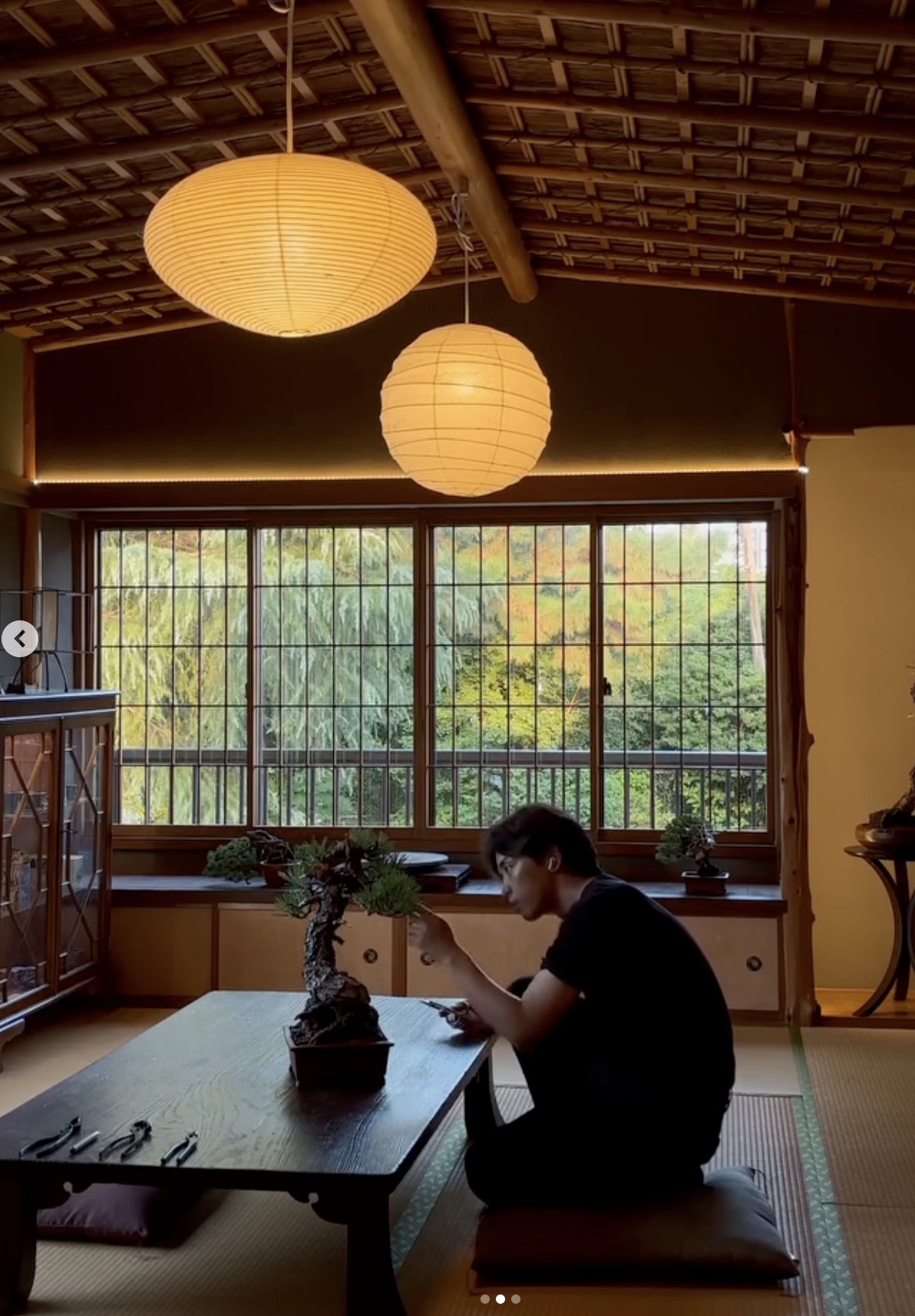
A bonsai artist at work. The daily attention a tree requires — watering, wiring, the timing of a single cut — belongs to the same tradition of hand-held knowledge described above.
A bonsai artist fits this description closely, closer than the word "gardener" or "artist" usually suggests to a non-Japanese ear. The work is daily and repetitive: checking moisture in the soil by hand, not by instrument; knowing which branch to wire this month and which to leave for next year; making a cut whose consequences will only be visible seasons later. None of this is decided by formula. It is decided by hands that have made thousands of comparable decisions before.
And it is rarely a solitary inheritance. Many bonsai artists train for years under a master before being trusted with a tree of consequence, in an apprenticeship structure not far from a miyadaiku workshop — long stretches of unglamorous maintenance work before the first real cut. What is handed down is not a signature style but a discipline: how to look at a tree, how to wait, when to intervene and when not to. The tree, like the temple, outlasts any single pair of hands that shapes it, so the next pair must be trained into the same discipline before they are trusted to change anything.
That is the plain test for any shokunin, tree or temple: not the flourish visible in a single piece, but the years of narrow, repeated work sitting underneath it, and how many hands it has already passed through. Azukari's partner artists are judged by exactly that measure. Readers curious what this daily, hand-led attention looks like in practice may want to read our interview with bonsai artist Kazuki Saeki, or our earlier piece on what it means to look at a bonsai shaped across generations of exactly this kind of care. For how a craftsman's apprenticeship itself is structured, see "Shu-Ha-Ri."
References
- Kyoto Journal — "Shokunin and Devotion" — essay on the meaning of shokunin, embodied craft knowledge, and the distinction between shokunin and artist.
- Nikkei — interview with temple carpenter Ogawa Mitsuo — Ogawa's apprenticeship under Nishioka Tsuneichi and his philosophy of training by environment rather than instruction.
- Wikipedia — Kongo Gumi — history of the temple-carpentry company founded in 578 CE and its role as miyadaiku for Shitenno-ji.
- Ikaruga Kousha — official site — the temple-carpentry training workshop founded by Ogawa Mitsuo.