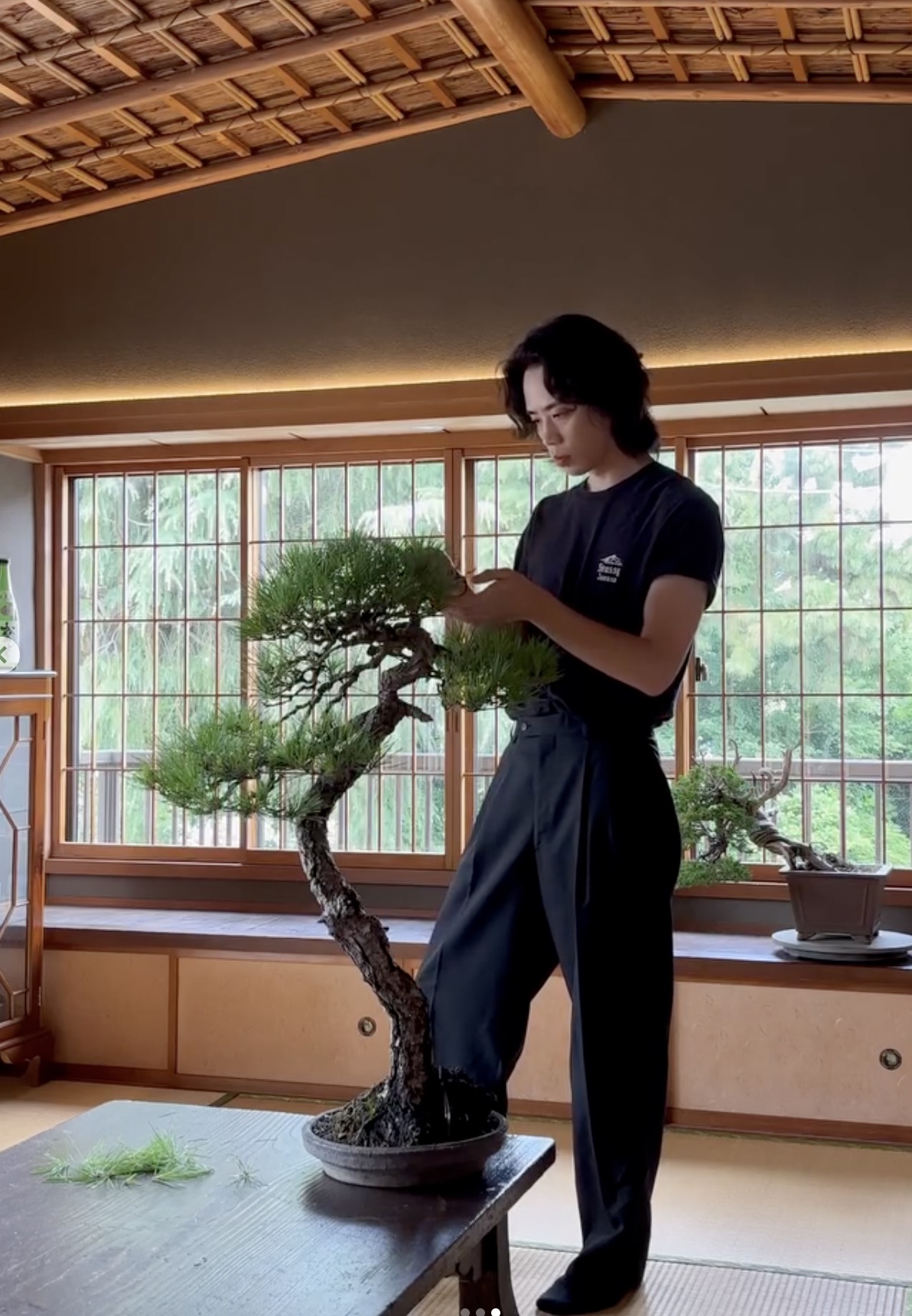
Kazuki Saeki entered the world of bonsai in Odawara, Kanagawa. Today he is based in Tokyo, where he continues to shape trees while working in real estate. He was 24 when he wandered into a garden store between sales calls, saw a bonsai, and simply thought, that's cool. Since then he has kept his hands on trees — as many as fifteen a month at his most intense — repeating the kind of experiments that push a tree to the edge of survival. He shares his daily practice on social media and has built a following in Japan and abroad. He is the first partner artist of Azukari, and we spoke with him about what the craft means to him and where he wants to take it.
"I met a bonsai artist named Mr. Saeki, and he was unlike any image of a bonsai practitioner I had held before. He is an innovator, someone who holds deep traditional craft while simultaneously creating an international community around it. He documents his daily practice on social media, building a global following in the process. Through Mr. Saeki, I could finally picture, concretely, how a bonsai artist might operate and connect with the world. Mr. Saeki became the first artist on my platform."
— Hayato Takahashi, Founder
The Craftsman's Journey
What drew you into bonsai, and why did you become so absorbed in it?
I started in earnest at 24, about six years ago. I had been working in sales, and one day I happened to stop by a garden store, saw a bonsai, and simply felt it was cool. What pulled me in most was the way the white, dead wood — the jin and shari — sits alongside the deep green of the living parts. Life and death plainly coexisting within a single plant, holding together. I found that strange, singular presence fascinating, and I fell into it.
What has been the hardest part, and how did you get through it?
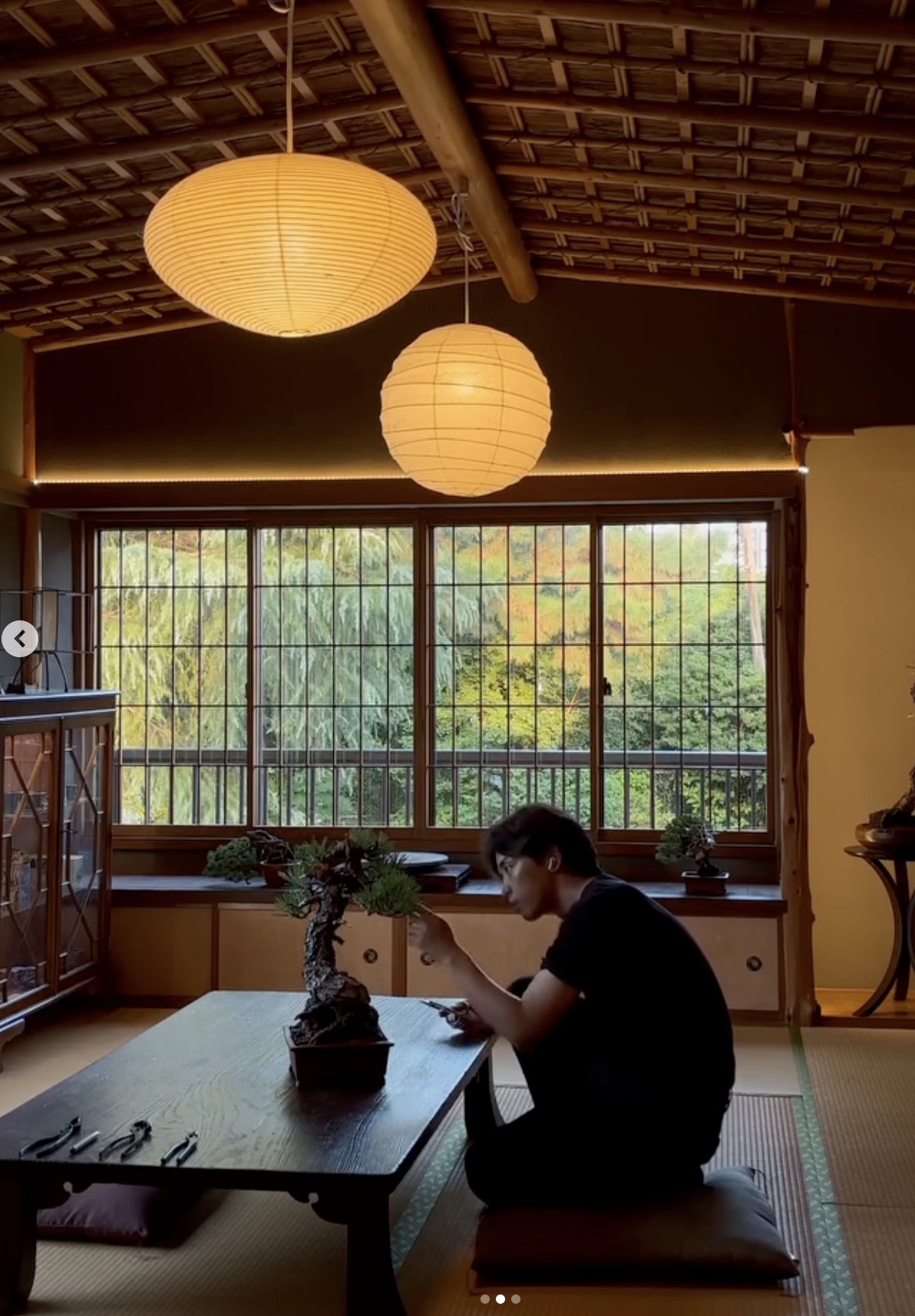
There is always the difficulty of reaching the form I hold in my head. To sharpen my technique, during my hobbyist years I worked at a pace of fifteen trees a month — finishing one tree every two days — pushing each as far as it would go. I bent branches to their limit, deliberately pushed trees to the brink of dying, sometimes breaking them. Through repeated failure, I came to grasp the line between life and death that can only be known by the feel of the hand. Closing the gap between the ideal in my mind and the reality in front of me also took a kind of mental control — an unwillingness to compromise.
What He Believes
What do you hold most important in making bonsai?
First of all, the simple fact that I love bonsai. On top of that, I find it fascinating to take the ideal I picture in my mind and make it real, pursuing the subtle differences that the smallest details produce. I don't believe there is some "beauty the world has yet to recognize." Beauty, and a sense of value, are things you hold within yourself.
And a tree is never truly "complete." As long as the bonsai keeps living, it is never finished. That is exactly why I feel genuine joy at the moment an owner changes and a new life begins from there.
How do you want to engage with bonsai going forward?
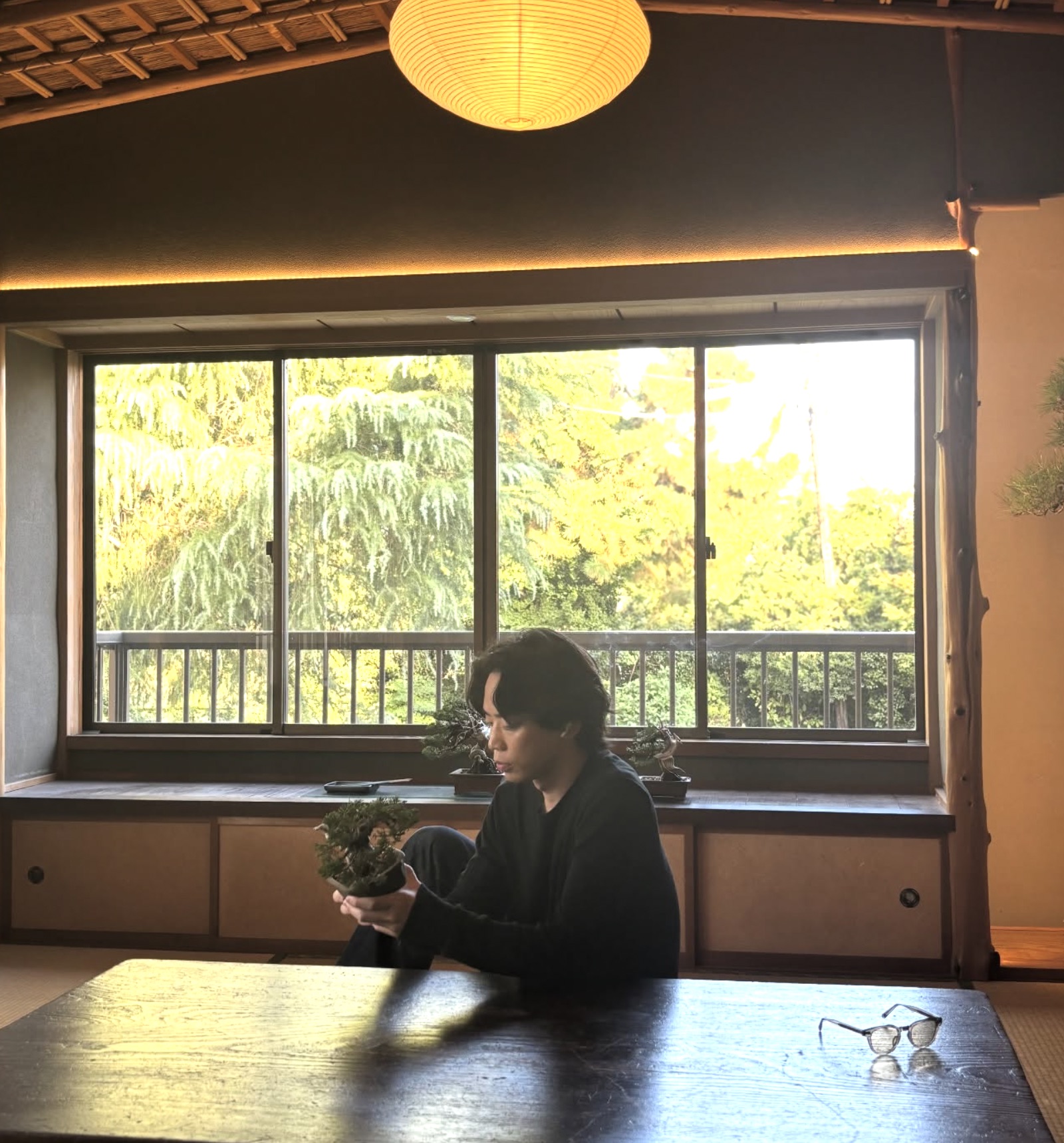
Rather than offering an easy, tourist-friendly version of "Japanese culture," I want to blend the things Japanese people themselves genuinely love and send that out to the world as something new. I want to change the slightly dated, rustic image bonsai has carried and bring its appeal to people who haven't encountered it before.
I don't have some grand move I'm trying to make on the industry. In the end, I'd like to grow the number of people who can share the joy of the process of making a tree — friends, in a sense, made through bonsai.
The Trees in Saeki's Care
Here are the four bonsai now in Kazuki Saeki's care.
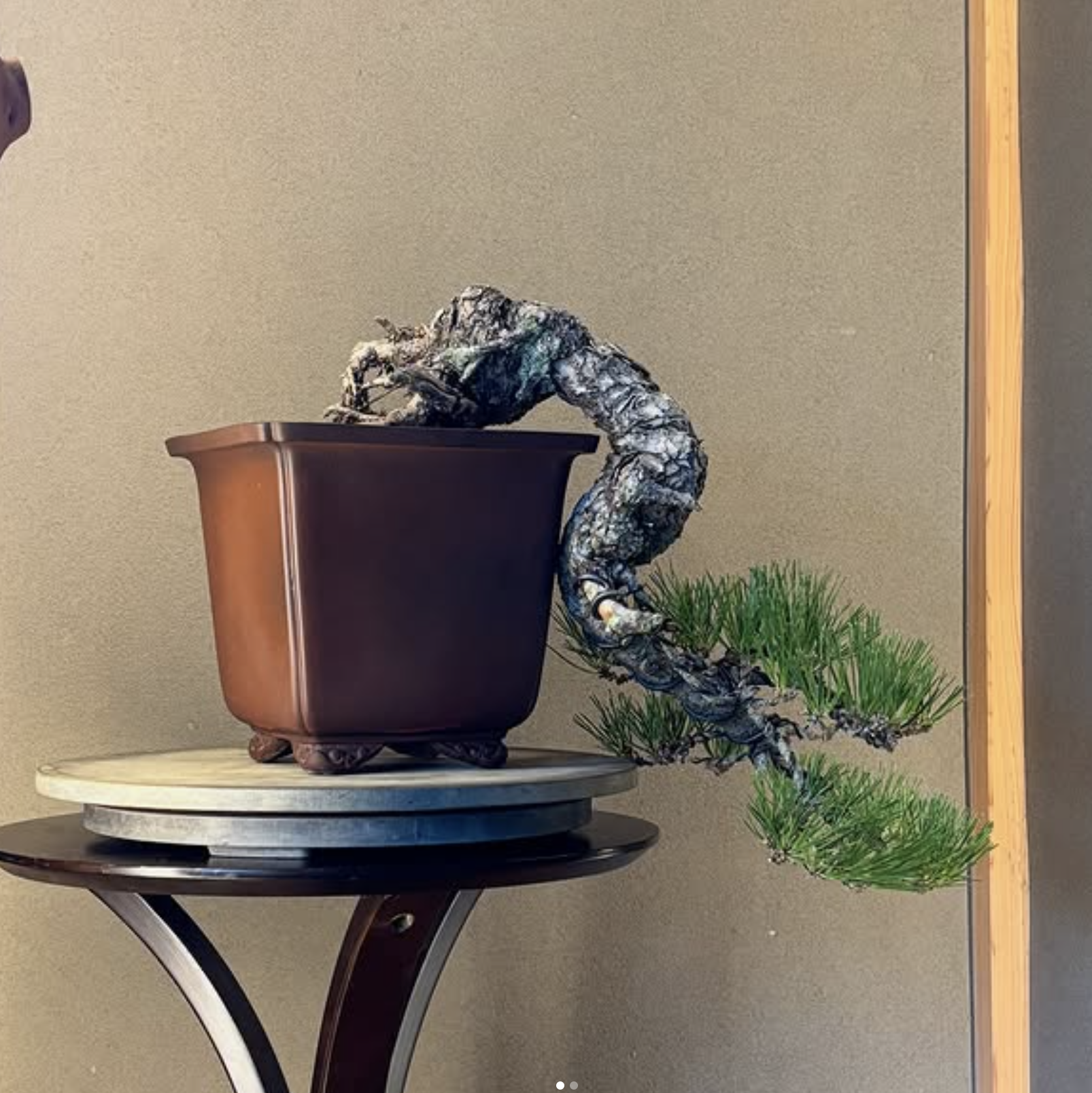
MKT-001 — Black Pine (Kuromatsu), 45 years, kengai (cascade)
A trunk that falls over the edge of a cliff and continues downward. From Kagawa to Kanagawa — a life passed on.
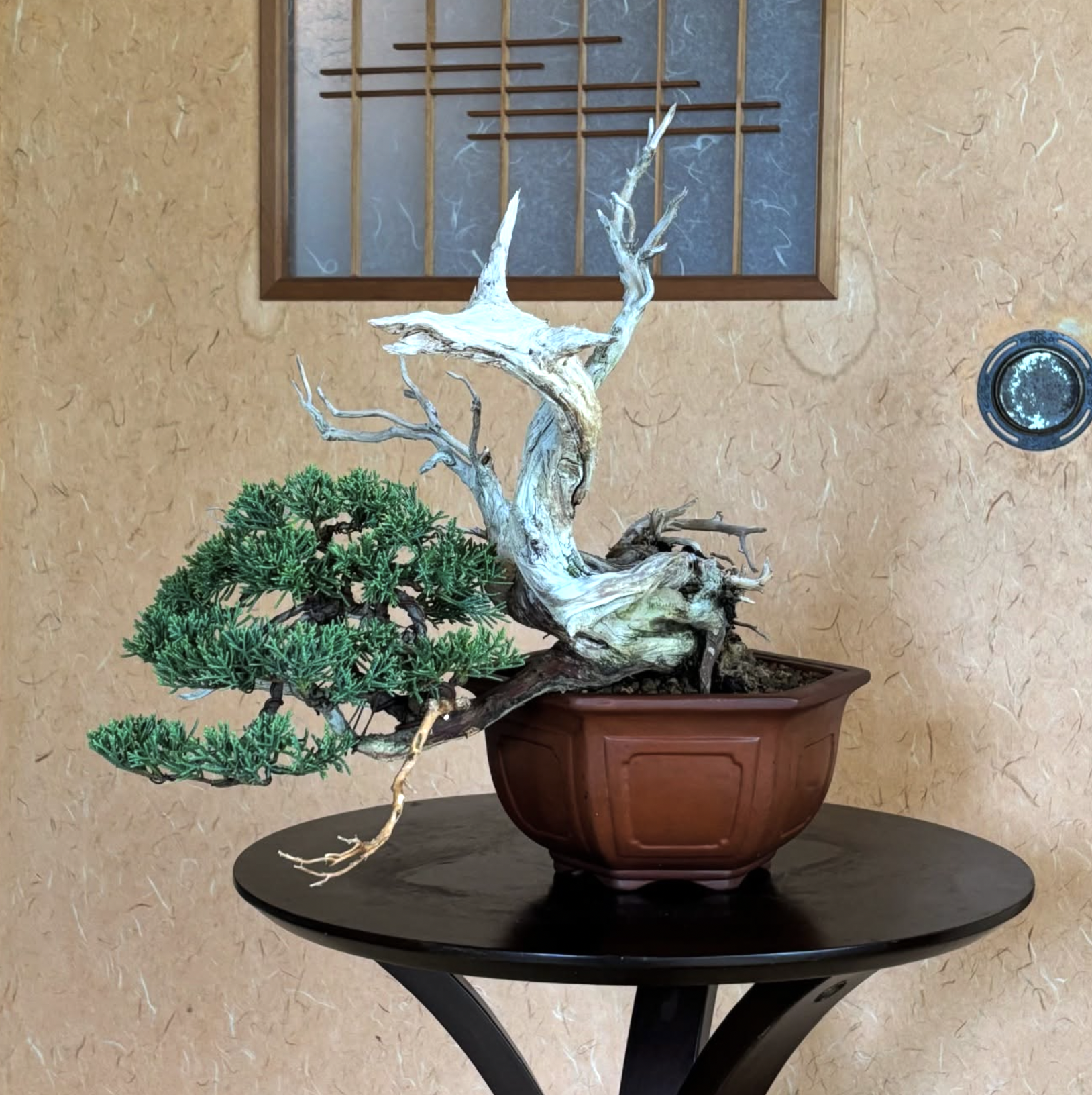
MKT-002 — Shimpaku (Sargent juniper), 40 years, han-kengai (semi-cascade)
Extending sideways past the rim of the pot without falling as far as a full cascade. A balance of wildness and stillness.
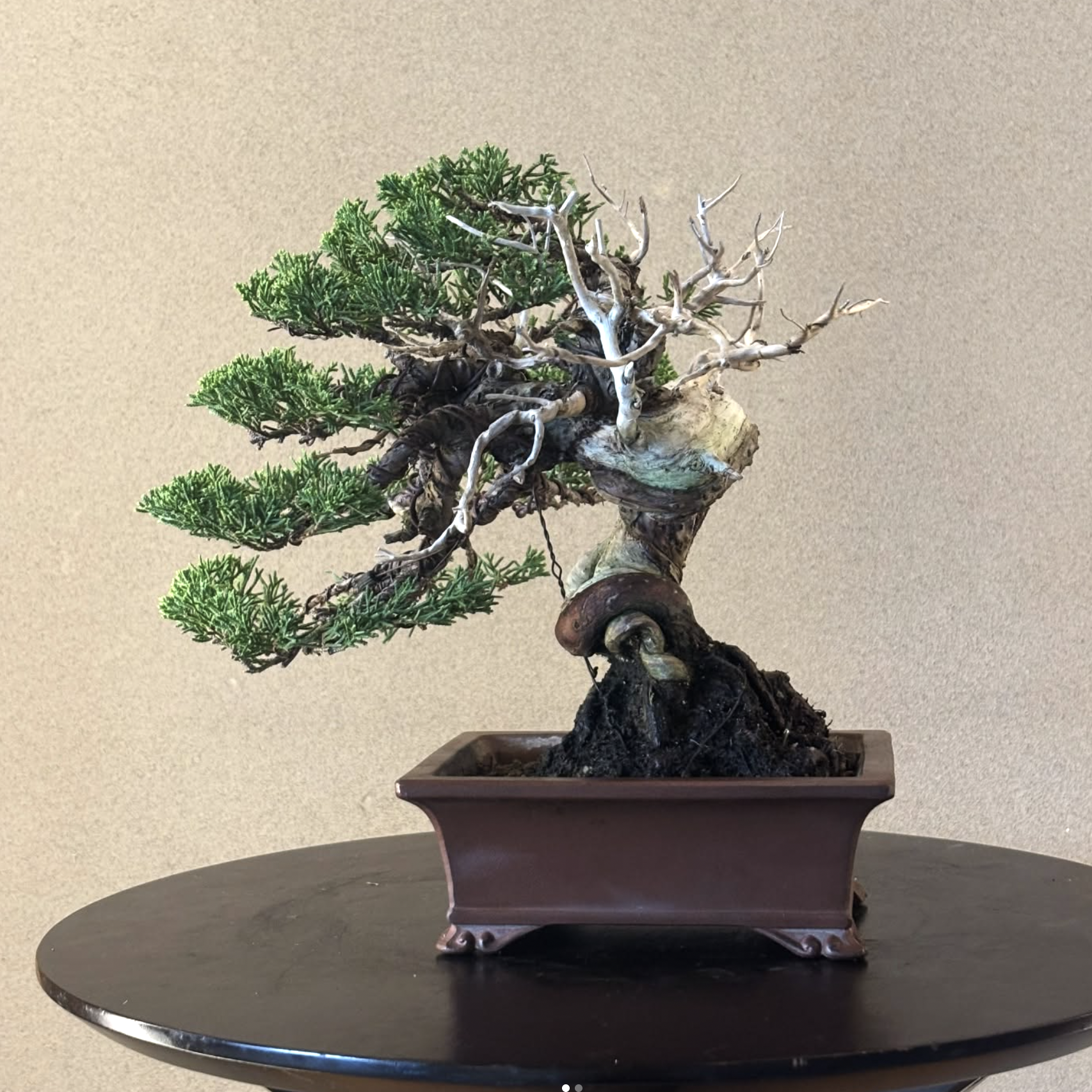
MKT-003 — Shimpaku, 30 years, moyogi (informal upright)
A trunk that rises while curving gently, settling and rising again — the shape of mountain trees that have lived through generations of snow and shifting wind.
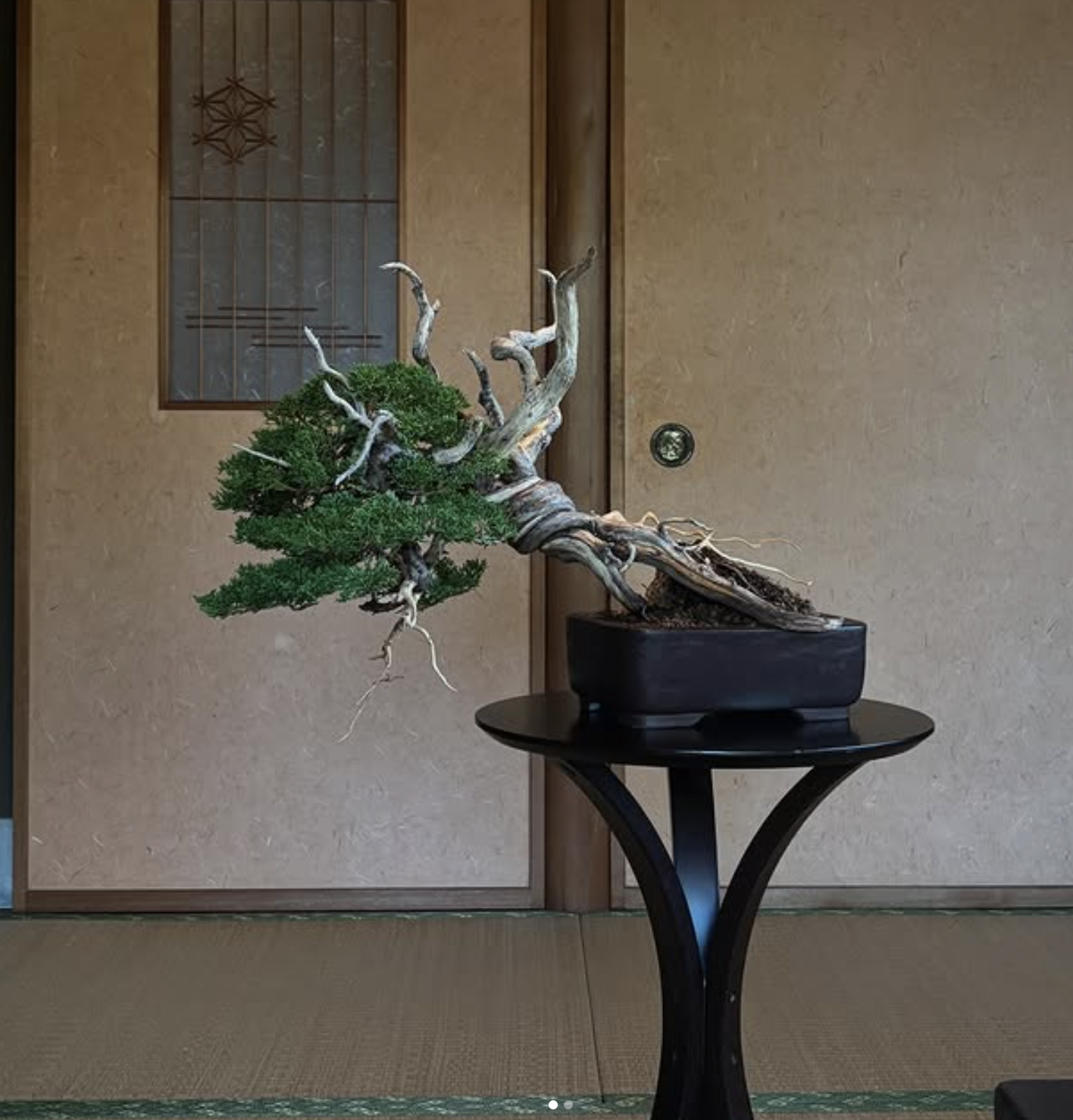
MKT-004 — Shimpaku, 50 years, han-kengai (semi-cascade)
The oldest of the four. Even within the same form, fifty years deepens a trunk into a quieter, fuller presence.
Becoming an Owner
At Azukari, you can become the owner of a tree shaped by a partner artist. The tree stays in the artist's care, continuing to be tended and grown, so you can own it without needing the space to keep it yourself. Its growth and the work performed on it are recorded digitally, and that record becomes the tree's own story. Passing it on to a future owner remains possible.
Follow Saeki's work on Instagram: @3_k_saeki