In 578, Prince Shotoku brought three carpenters from the Korean kingdom of Baekje to Osaka to build Shitenno-ji, one of Japan's first Buddhist temples. One of them, Kongo Shigemitsu, stayed on. His descendants kept building and repairing temples under the same name for the next fourteen centuries, and the firm, Kongo Gumi, is generally recognized as the world's oldest continuously operating company. It is the extreme case of something far more ordinary than the number suggests.
Japan counts more than 46,000 companies past their hundredth year, and the discipline behind that figure is not a growth strategy at all — Japanese business culture optimizes for continuing, not for getting bigger.
Century-Old Businesses Are Ordinary Here
Teikoku Databank, a research firm that has tracked Japanese corporate longevity for decades, counted 46,708 companies with a business history of 100 years or more as of 2025 — a shinise (老舗, an old, established business) appearance rate of 3.11%, the first time the figure has passed 3%. Kyoto prefecture led at 5.45%, followed by Yamagata and Niigata. A separate 2024 count put 1,813 companies past 200 years, 889 past 300, and 47 past 500.
Kongo Gumi's own place inside that count is not spotless: the firm ran into serious financial trouble in the early 2000s and, in 2005, was reorganized as a subsidiary of the Takamatsu Construction Group. The restructuring changed who owned the company. Under its new owners, the firm carried on doing the same work it had always done, building and repairing temples.
Shitenno-ji, in Osaka. Kongo Gumi, the carpentry firm founded to build it in 578, is generally recognized as the world's oldest continuously operating company.
Photo by lienyuan lee, CC BY 3.0, via Wikimedia Commons — Source

A Lost Record Barely Touches the Business
Hoshi Ryokan, an inn in Awazu Onsen, Ishikawa prefecture, was founded in 718 under the order of the priest Taicho and is now on its 46th generation of innkeepers. Guinness World Records listed it for years as the world's oldest hotel still in operation; in 2011 the title passed to Nishiyama Onsen Keiunkan, a hot-spring inn in Yamanashi founded in 705, a few years earlier still. Hoshi's 46th generation was receiving guests before the title changed hands, and it has kept receiving them since. What Guinness tracks and what keeps a ryokan open turned out to be two different things.
Each Generation Sets Its Own Ceiling
None of this happens by chance. Ask the people who run these companies why they have lasted, and scale rarely comes up. What comes up instead is something closer to mi no take ni au (身の丈に合う, "matching one's own true size") — running a business sized to what the founding generation can actually oversee and stand behind, rather than expanding past anyone's ability to guarantee its quality.
That shows up as a preference for the core trade over diversification. A ryokan stays a ryokan. A temple carpenter stays a temple carpenter, even through recessions when general contracting would have paid better. Generation after generation, the question being answered is whether the business will still exist in fifty years, and it gets answered ahead of every question about how large it could become. A shinise (老舗) is the residue of that choice repeated enough times.
Noren Must Be Re-Earned Every Day
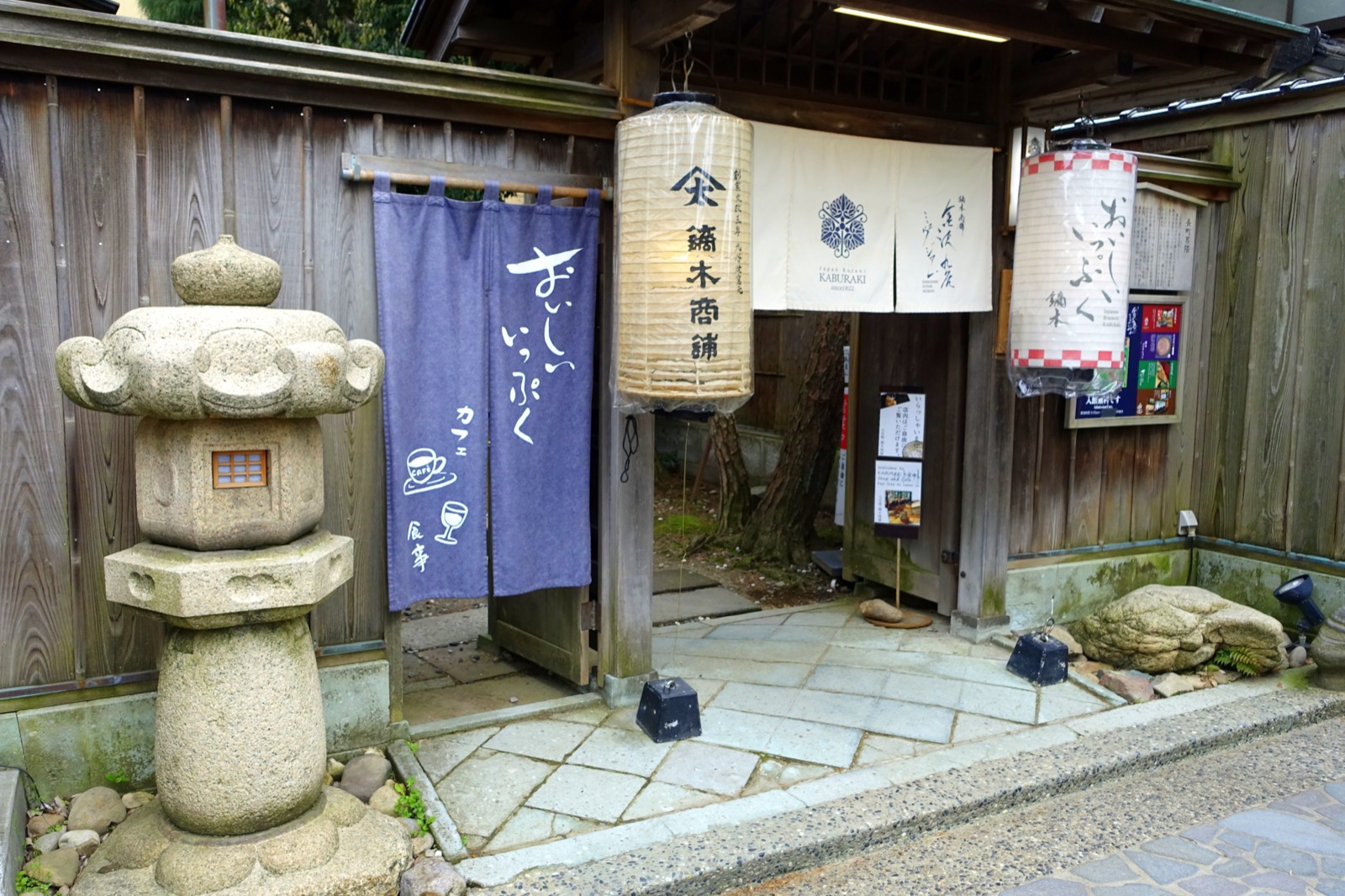
The word that captures this best is noren (暖簾) — literally the fabric curtain hung at a shop's entrance, printed with its name or crest. In ordinary speech, noren has come to mean something closer to a business's accumulated trust: its reputation for standing behind what it sells. Japanese business vocabulary still carries the phrase noren wo mamoru (暖簾を守る, "to protect the noren") — running the business today in a way that does not embarrass the customers who trusted the name yesterday, or the ones who will trust it tomorrow.
No single generation can build a noren from scratch and then bank it. It exists only because one owner after another kept the same promise under the same name, year after year, until customers stopped needing to ask whether it would be kept. That is also why losing it can happen fast, even after centuries of care: one broken promise can undo what a hundred years of them built. The proof a shinise offers is never finished; it is renewed with the next customer, and the one after that.
The Same Discipline Keeps a Hundred-Year Tree Alive
This is not a business idea foreign to trees. A bonsai trained for a century runs on identical logic: no single owner sizes the tree to their own lifetime, no single artist finishes it in one career, and the whole arrangement depends on each generation keeping a promise to the next rather than optimizing for what it alone can show off today. We wrote about that continuity in "Why Bonsai Live Long" and in our piece on meiboku (銘木, celebrated named trees), "Japan's Historic Bonsai." The same pattern of narrowing rather than expanding, explored in "Japan's Format: Super-Niche Quality," is what keeps a nursery tending one kind of tree, in one place, for four generations running.
It also gives a fast way to test a shinise claim on a shopfront: the age printed on the sign matters less than what the business has refused to widen into in order to keep earning it. The oldest bonsai nurseries in Japan pass that test the same way Kongo Gumi does, measuring success in continuity for as long as anyone has kept records. Azukari works inside that same discipline: a tree stays under one nursery's daily hand for the years an owner holds it, so that when those years end, the promise the nursery made at the start is still the one it is keeping.
References
- Teikoku Databank — Nationwide "Shinise" (Old Business) Analysis Survey (2025) — the source for the 46,708-company count and 3.11% appearance rate.
- Teikoku Databank — Nationwide "Shinise" (Old Business) Analysis Survey (2024) — the source for the counts of companies past 200, 300, and 500 years.
- Kongo Gumi — official company site — company history since its 578 founding and its present work in temple and shrine construction.
- Wikipedia — Hoshi (ryokan) — founding date of 718, its 46th-generation ownership, and the 2011 change in the Guinness World Records "oldest hotel" title.
- Nikkei Business — "What sustains Kongo Gumi, 'Japan's oldest,' is its ancient meritocracy" — reporting on Kongo Gumi's 2005 restructuring under Takamatsu Construction Group and its continued temple-building work.