
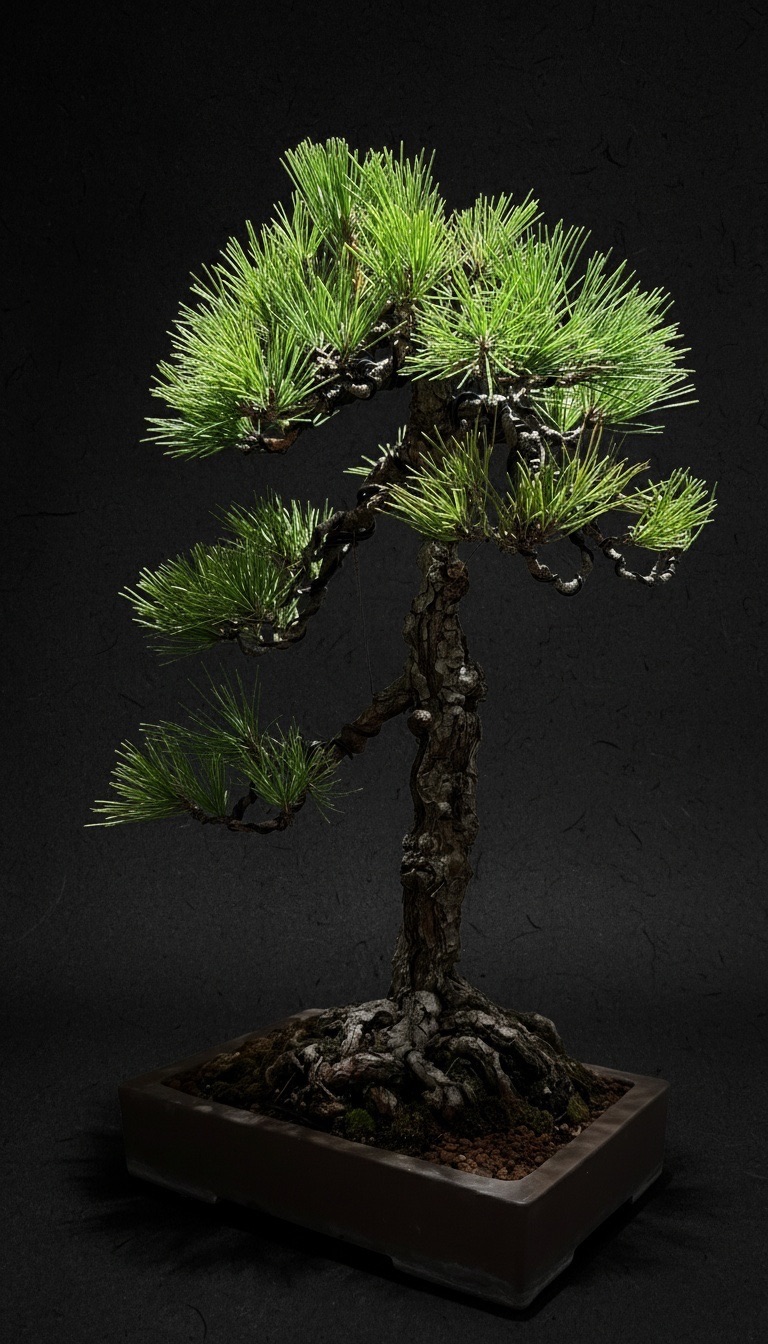
I did not find this format in a business book. I found it in bonsai. Part of my work is writing about Japan's structures for an American business readership, and once bonsai had shown me the shape, I started finding it everywhere I looked: in car factories, at sushi counters, inside companies that have been trading since the sixth century.
Japan's most globally admired fields share a repeatable format: learn the leading edge, imitate it precisely, branch off into a school of your own, and then spend generations narrowing the work until it is small enough to master completely.
It is easy to mistake this for a cultural mystery — some inherited patience, some national aesthetic gene. It is not. It is a method, and the clearest evidence is that Japan long ago gave its parts names.
The format already has names in Japanese
The learning arc has been codified for centuries as shuhari (守破離): protect the teacher's form exactly, then break from it, then leave it to found a form of your own. The branching step has its own word too — bunke (分家, "branch house"), a school that splits from a main line while carrying its training forward. And the mechanism that hands the narrowing across generations is institutionalized in the iemoto system, which exists precisely so that a discipline survives the death of the person who deepened it last.
The corporate record shows the machinery working. Japan has more companies over a hundred years old than any other country — tens of thousands of them — and the extreme case, the Osaka temple builder Kongo Gumi, was founded in 578 to build the Shitennoji temple and worked continuously at that one trade for more than fourteen centuries. A format that produces even one such company by accident does not produce thousands of them. This is infrastructure, not folklore.
Winning by narrowing, not by scaling
The counterintuitive part is the direction of ambition. The format does not point toward being the best at a broad category. It points toward finding an extremely narrow slice of that category and going deeper into it than anyone else has bothered to.
Broad categories are crowded by definition — everyone competes in them, on the same terms. A narrow slice, chosen carefully and worked for decades, empties out the competition almost automatically. Few people are willing to spend a working life on one joint, one cut, one species. Fewer still are willing to have their teacher's teacher have spent a working life on it before them. The moat is not secrecy. It is time spent on a target most competitors consider too small to bother with — and a competitor can imitate a broad approach in a season, but imitating forty years of narrowing takes forty years.
Three fields, one mechanism
Automaking. In the spring of 1950, Eiji Toyoda spent three months studying Ford's operations in Detroit and came home convinced that copying American scale was neither possible for Toyota nor, more importantly, necessary. What his production chief Taiichi Ohno borrowed instead was the restocking logic of the American supermarket — a shelf refilled only as it empties — which became kanban, the pull system at the heart of the Toyota Production System. Everything after that was kaizen (改善, "continuous incremental improvement"): not one dramatic redesign but thousands of small corrections, applied by every generation of workers for decades, each narrowing waste a little further than the last. Toyota did not out-invent the assembly line. It learned it, then narrowed it until the accumulated refinement became the advantage itself.
Sushi. Edomae-style sushi (江戸前寿司, "Edo-front sushi," named for the fish drawn from the bay in front of old Edo) took shape in the early nineteenth century out of preservation methods — salting, vinegar-curing, fermentation — that cooks had used long before nigiri existed. The famous modern illustration of how seriously the field takes the imitation phase comes from the documentary Jiro Dreams of Sushi: an apprentice at Sukiyabashi Jiro, a ten-seat Tokyo counter, recounts spending years on preparation work before being permitted to attempt the tamagoyaki omelet at all — and then having some two hundred attempts rejected before the first one was judged fit to serve. One egg dish, one decade. The point is not cruelty or theater. It is that a shop narrowed enough to be judged on every piece cannot let a single component be handed forward unfinished.
Bonsai. In the Kinashi and Kokubunji districts of Takamatsu, on Shikoku, roughly sixty nurseries have specialized in pine bonsai since the early nineteenth century, building on grafting techniques carried over from fruit-tree cultivation. That single area now accounts for roughly 80 percent of Japan's domestic pine bonsai production and draws buyers from around the world. No nursery there tried to be excellent at every species; the region narrowed to pine until pine became the thing the world comes to Takamatsu for. And the narrowing continues inside the art itself. Display alone — the scroll, the stand, the empty space around a tree — is treated as a discipline with its own schools and teachers, called keido (景道), which I only understood was a separate road when I began studying it myself in a Tokyo bonsai garden. Even the apprenticeship that produces a bonsai artist follows the same clock: years of watering before wiring, years of wiring before design.
How to recognize the format from outside
The format gives an outside reader a practical test, and it works on a workshop, a supplier, or a two-hundred-year-old brand equally well. Ask three questions. What has this group refused to widen, even when widening would clearly have paid in the short run? How many hands has the narrowing passed through — is the depth one founder's obsession, or has it survived a succession? And who inherits it next? A maker with good answers to all three has quality that is structural. A maker with good answers to none of them may still be excellent — but the excellence is resting on one person, and it will leave when they do.
That third question is the quiet crisis in several of the fields above, bonsai included: the format only works while someone downstream keeps accepting the handoff.
Why a bonsai company writes about factories
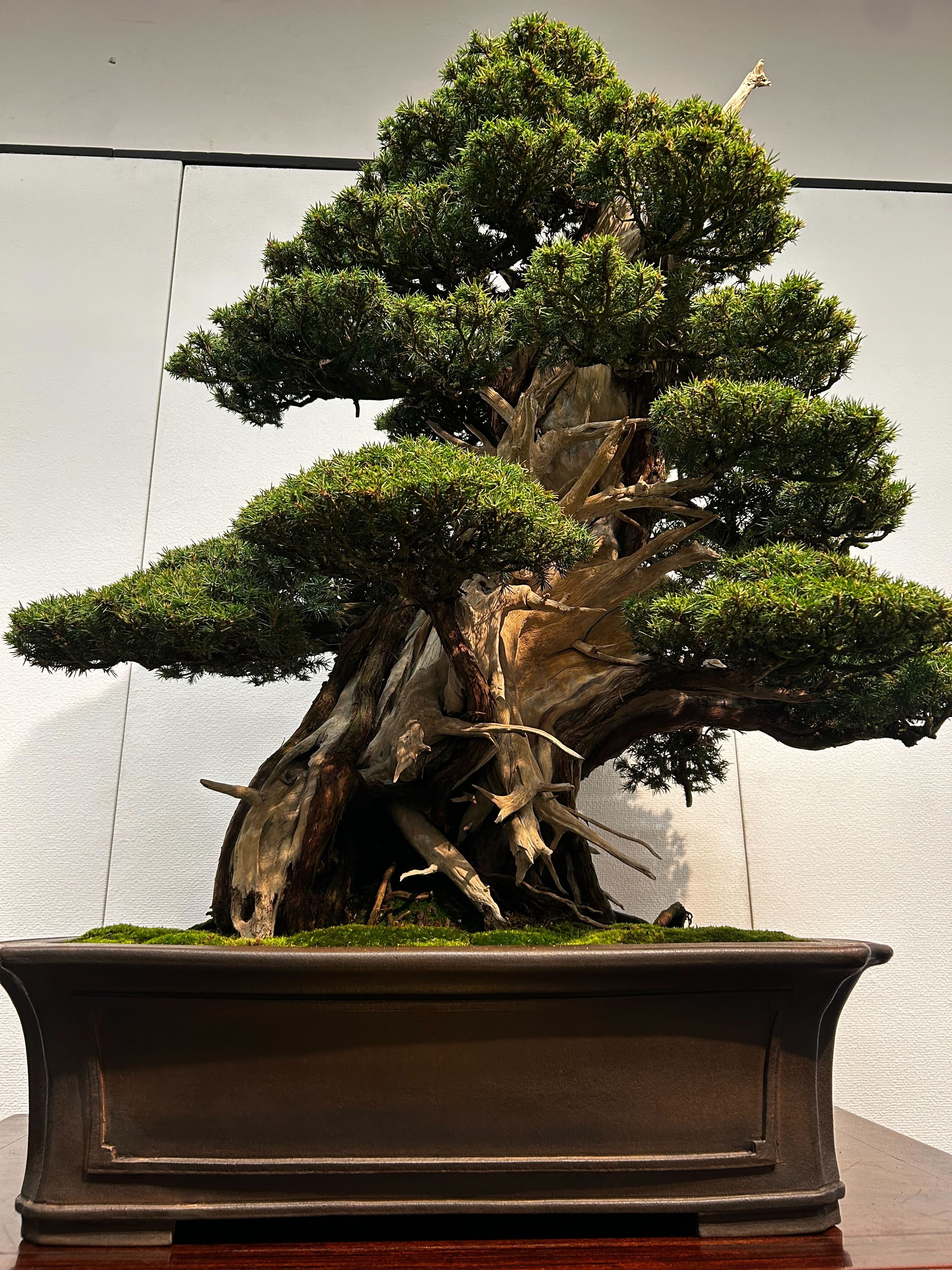
None of this is really about cars, fish, or trees. It is about what happens when a group of people agree, across generations, to stop trying to be good at everything and hand a narrower and narrower target forward. Bonsai is simply where that agreement is easiest to see whole — a juniper shaped by a workshop that has narrowed its attention to one species across several generations is the format made visible in bark and branch, the way a shokunin's workbench makes it visible in tools. It is also why I keep writing about factories and sushi counters on a bonsai company's site: bonsai taught me to see the shape, and the shape is the most exportable thing Japan makes. Under Azukari, a tree from such a workshop stays in Japan with the artist who is still deepening that one species, and what its owner receives, season by season, is the record of the narrowing as it continues.
References
- Toyota Motor Corporation — Toyota Production System — Toyota's official account of TPS, kanban, and kaizen as continuous incremental improvement.
- Wikipedia — Toyota Production System — on Eiji Toyoda's 1950 study visit to Ford and Taiichi Ohno's supermarket-inspired pull system.
- Nippon.com — "Edomae Sushi: A Fast Food with a Long Tradition" — history of Edomae sushi's origin in early-19th-century Edo and the preservation techniques behind it.
- Wikipedia — Jiro Dreams of Sushi — the 2011 documentary on Sukiyabashi Jiro, including the apprentice's account of two hundred rejected tamagoyaki.
- Takamatsu Bonsai — About Takamatsu Bonsai — official regional site describing the Kinashi/Kokubunji pine bonsai area, its roughly 80 percent domestic share, and its Edo-period origins.
- Wikipedia — Kongo Gumi — the Osaka temple construction company founded in 578, generally regarded as the world's oldest continuously operating company until 2006.