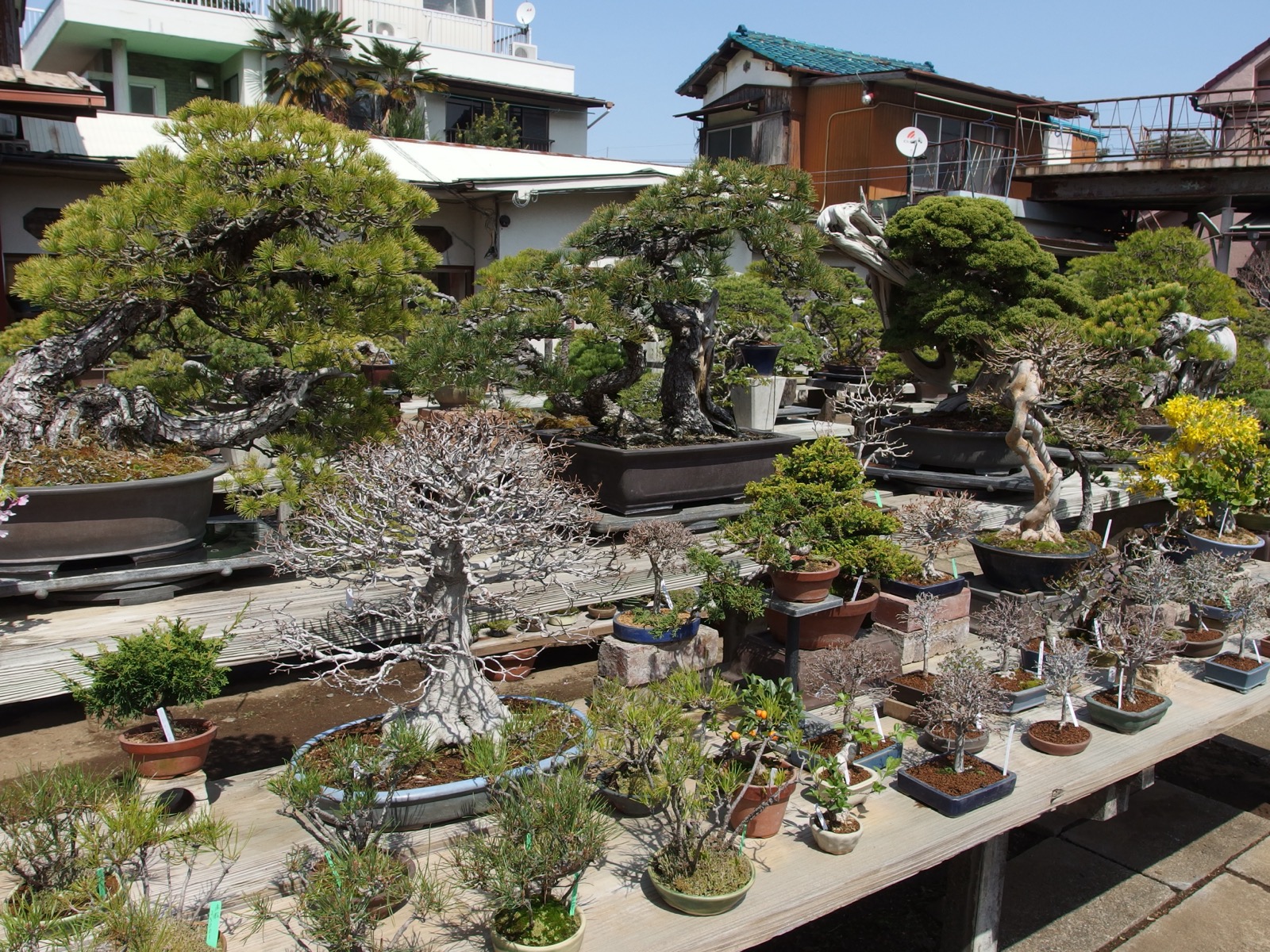
A working nursery bench in Omiya Bonsai Village, Saitama — the kind of ground where trees stay for years, not weeks, in someone else's keeping. Photo by Guilhem Vellut, CC BY 2.0, via Wikimedia Commons — Source

A Japanese bonsai nursery can take over a tree's care indefinitely, not as storage but as ongoing training — an old arrangement Japan calls azukari (預かり, "to receive and hold something in trust"), and one an owner enters by trusting a particular grower, not by shopping a price list. There is no chain of "bonsai storage" facilities built for this the way there are for wine or fine art. The person who ends up caring for a tree long-term is almost always a working nursery or an individual artist an owner has come to trust, one relationship at a time.
An old answer, not a new service
Long-term custody is not a product a nursery invented for owners who travel too much. It is closer to the default shape of Japanese bonsai practice, stretched to cover years instead of weeks. At Daijuen, a nursery in Aichi Prefecture with roughly ninety years in business, an owner's tree can be entrusted to the nursery outright, with staff taking on the full year's calendar of bud-cutting, pruning, repotting, fertilizing, and pest watch for as long as it stays in their keeping. The Japan National Tourism Organization has recorded the same pattern from a grower's side: Yoichi Nakanishi, a fifth-generation cultivator in Kinashi, says plainly that some clients bring him a tree only while they travel, while others simply keep their trees at his nursery all the time. Both are the same arrangement, differing only in how long it runs.
Trust, not a price list, is what you're actually choosing
There is no published rate card for long-term custody the way there is for a storage unit. What an owner is really evaluating is a person: does this grower's judgment, over years of unsupervised decisions about your tree, match the tree's needs? General guidance on picking any bonsai nursery lands on the same criteria — a track record of good reviews from other enthusiasts, membership in recognized bonsai organizations, and specific, detailed feedback about tree quality and care, rather than simply the lowest quote. None of that is unique to custody arrangements, but it matters more here than in a one-time purchase, because a bad fit is not discovered in a single afternoon. It surfaces two years in, in the shape of a branch nobody meant to grow that way.
The tree keeps training, not just waiting
What separates azukari from a coat check is that nothing about a bonsai holds still. Daijuen's own description of the work makes this plain: bud-cutting, pruning, repotting on a multi-year cycle, fertilizing, pest watch, winter protection — the entire seasonal calendar a bonsai needs to keep improving, not merely stay alive. A tree left with a skilled grower for several years does not sit in a holding pattern until its owner returns. It is refined, cycle after cycle, exactly as it would be if the owner lived next door and tended it daily. The distance is invisible to the tree; the calendar of work is not.
A culture older than the question
None of this is a workaround for the modern habit of living far from where a tree grows best. Japan has kept records of long-term stewardship for generations — the Nippon Bonsai Association has run a formal registration since 1980 for trees it calls kicho bonsai (貴重盆栽, "a bonsai registered for its documented value"), with more than 1,200 trees reviewed and recorded over the decades, each entry outlasting any single owner or keeper. We've written at length about the culture this comes from: Japan built ownership and daily care into two separate roles long before anyone needed a term for a nursery keeping a tree for a client living abroad.
Where this question tends to come from
The people who end up asking this are rarely thinking about custody in the abstract. They're wondering who will water a tree while they're away for a season, working out what to do with a tree they've just inherited, or facing a move that would put real distance between them and the pot. Long-term custody is simply what each of those questions turns into once the absence stops being temporary — the same answer, applied for as long as it's needed rather than for a single trip.
Azukari is built on exactly this arrangement: a tree stays in Japan under a working artist's care, its seasonal work entered as a dated record, so an owner living anywhere in the world can see plainly what has been done to their tree and by whom — the same trust a nursery client has always had to place in the person tending their tree, made visible.
References
- Daijuen — "A 90-Year Professional Explains the Care and Custody of Premium Black Pine Bonsai" — on the nursery's custodial (azukari) cultivation service and its full-year calendar of bud-cutting, pruning, repotting, fertilizing, and pest watch.
- Japan Travel (JNTO) — "Bonsai Is Big in Japan" — quoting grower Yoichi Nakanishi on clients who leave trees with him only while traveling and others who keep their trees at his nursery permanently.
- Bonsai Tree Gardener — "Choosing a Bonsai Nursery: Tips for Beginners" — on evaluating a nursery by reviews, professional memberships, and detailed customer feedback rather than price alone.
- Nippon Bonsai Association — About the Association — on the kicho bonsai registration system, running since 1980 with more than 1,200 trees documented.