
Culture
Is Bonsai Cruel?
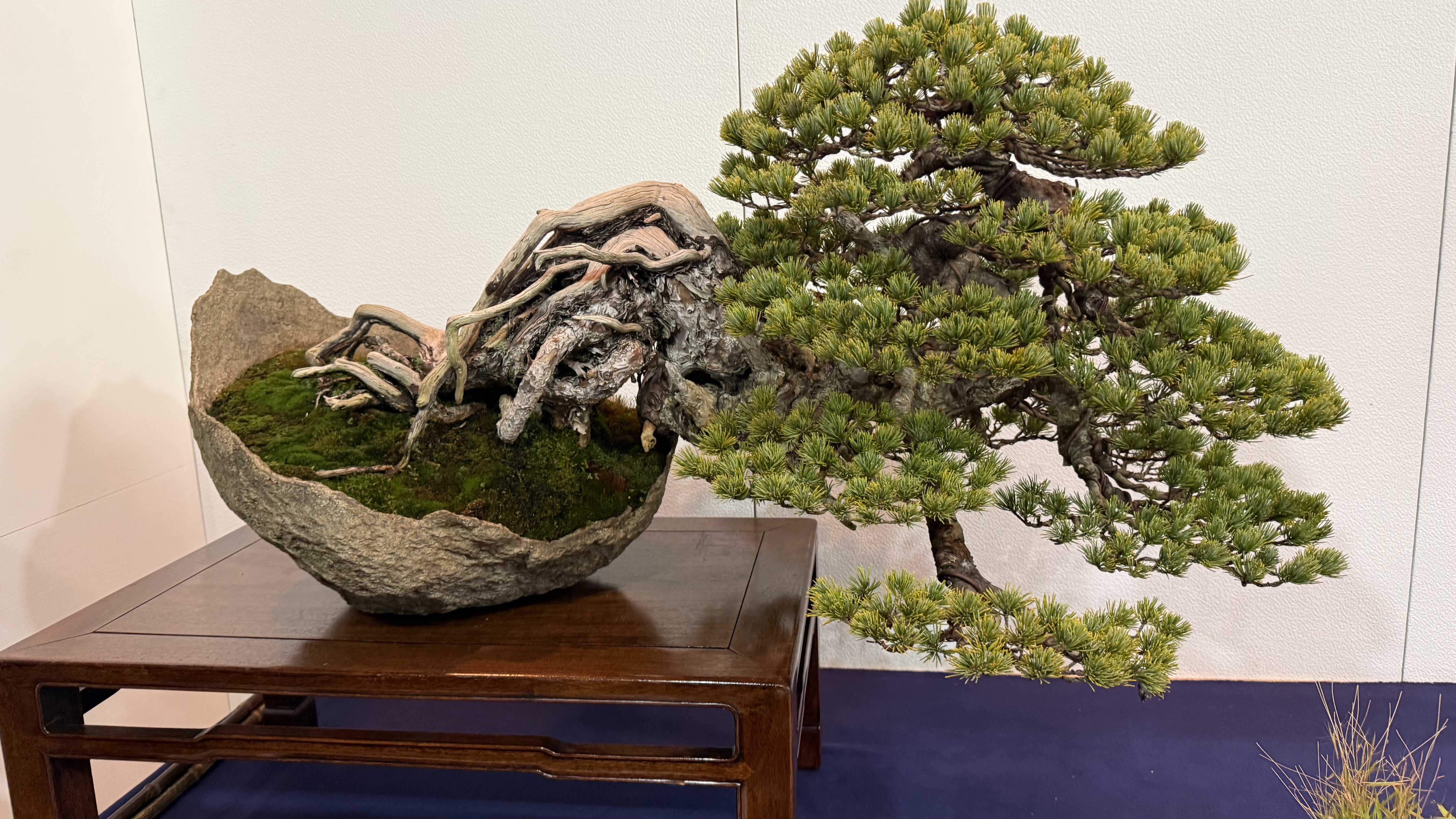
It is, by most accounts, the single most common question a newcomer asks the first time they see a bonsai up close. Wire wound tightly around a branch. Roots cut back with shears. A tree that should, by rights, be forty feet tall, kept at knee height in a shallow tray for decades. To an eye unfamiliar with the practice, none of it reads as care. It reads as restraint.
The honest answer is not an argument. It is the tree itself — and how long it has been alive under someone's hand.
The question, taken seriously
The objection deserves to be met plainly rather than waved off. Wiring bends a branch into a position it did not choose. Root pruning removes tissue the tree grew. Repotting disturbs a system that, left alone, would simply keep expanding outward. Stacked together, these look like a long list of impositions on something with no way to consent or object.
What the objection tends to miss is what each of those acts actually does to the tree over time, and what the alternative — no wiring, no root work, no repotting, ever — actually looks like for a tree kept in a container. A pot-bound tree with an ever-thickening, tangled root mass does not thrive on being left alone; it slowly suffocates. A branch left to grow wherever gravity and light pull it does not become healthier for the lack of a wire holding it in place for a season. Bonsai technique is not the absence of a gentler option. It is closer to what a good gardener already does to a hedge, a fruit tree, or a climbing rose — shaping done in the plant's own interest, at a scale and a frequency that container life requires.
For a shorter, more direct answer to this same question, see "Is Bonsai Tree Abuse?" This piece takes the longer route.
What the record shows
One tree makes the point better than any argument can. A Japanese white pine now known as the Yamaki Pine was put into training by the Yamaki family of Hiroshima in 1625. It remained in that family's care for generations — six of them, by the family's own account — until Masaru Yamaki donated it to the United States in 1976 as part of Japan's bicentennial gift of fifty-three bonsai. Eight years before that gift, in August 1945, the tree survived the atomic bombing of Hiroshima itself, shielded by a wall around the family's outdoor nursery while the blast, only a few kilometers away, shattered the windows of the house behind it. The tree is now close to four hundred years old and still growing, at the National Bonsai & Penjing Museum in Washington, D.C.
Almost nothing in an unmanaged forest reaches that age. University extension foresters who study why trees die point to the same handful of causes again and again: storms, lightning, drought, disease, insects, and competition from neighboring trees for light and water. Old age on its own is rarely what ends a tree's life outdoors — something else usually gets there first. A tree kept in a container, checked daily, watered by hand, and shielded from most of those hazards is not fighting the same battle a wild tree fights every year it survives. That difference, more than any single technique, is why some bonsai are recorded in the centuries rather than the decades.
Care that looks like restraint and isn't
Two techniques draw most of the concern, and both hold up under a closer look.
Wiring is temporary. It is left on a branch for a matter of months — long enough for the wood to set into its new position — and then removed, the same logic a gardener uses when staking a young tree so its trunk grows straight. It does not stay wound around the tree for its entire life. As for whether the tree registers the bending as pain in any sense we would recognize, the scientific consensus is that it does not: plants have no nociceptors, no centralized nervous system, and no brain, the physical architecture pain in animals depends on. A tree can respond to injury with chemical signals and altered growth. It cannot suffer the way an animal can.
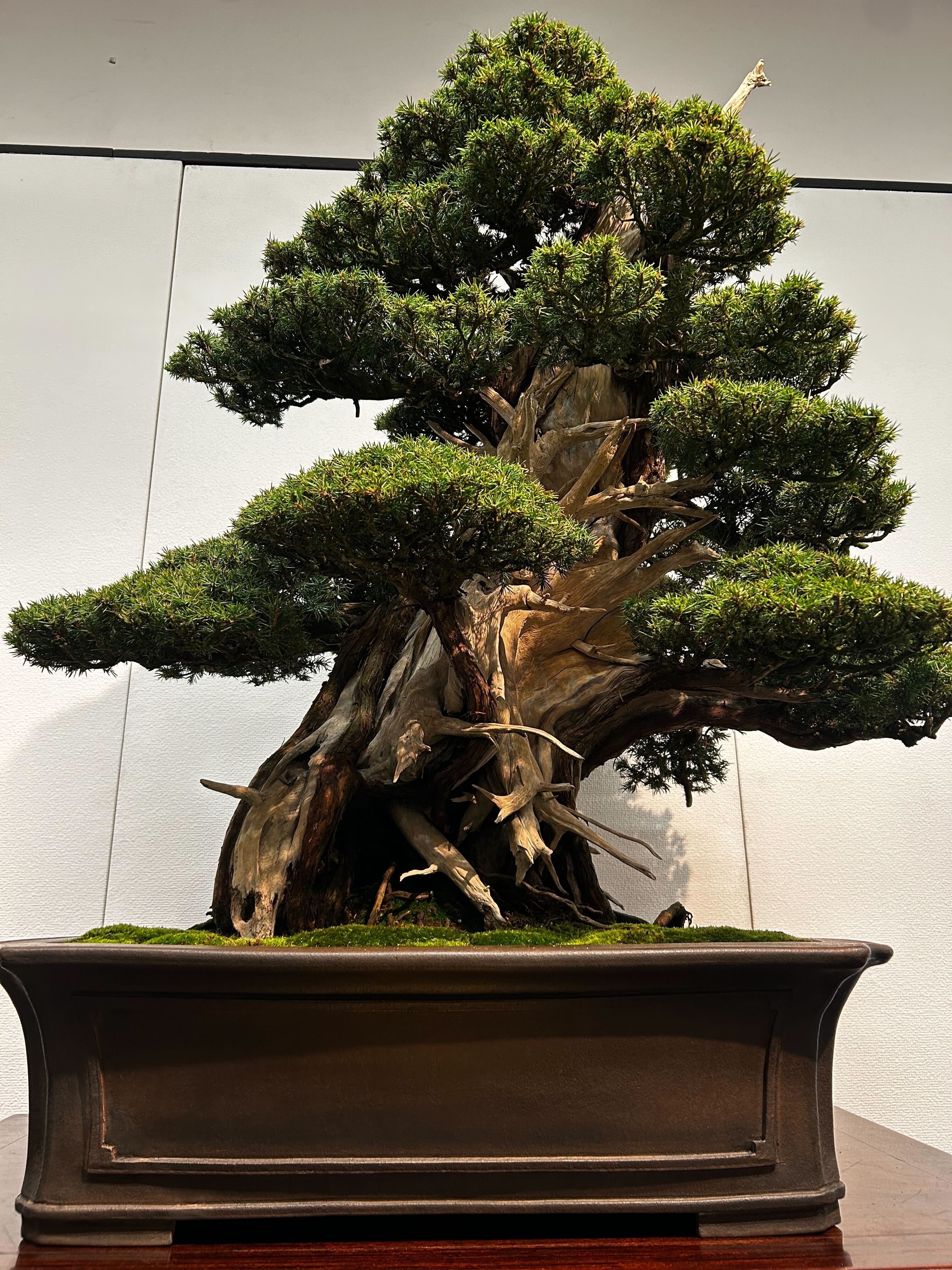
A tosho juniper shaped over decades, its weathered deadwood standing beside living wood still under active care.
Root pruning follows a similar logic. Removing the oldest, thickest roots on a two- or three-year cycle does not weaken a bonsai — it is what keeps it strong. Cutting back a coarse root stimulates a cluster of new, fine feeder roots at the cut, and those fine roots are far more efficient at drawing in water and nutrients than the old ones they replace. Growers describe repotting as a revitalization, not an injury: a tree left in the same soil indefinitely, its roots tangled and aging, is the one in real danger, not the one being repotted on schedule.
What this amounts to is closer to symbiosis than confinement. A bonsai is checked every day of its life — its soil moisture, its foliage color, the set of each branch — in a way almost no tree in open ground ever is. Care of that intensity is not the profile of neglect or restraint. It is closer to the ongoing attention given to something the owner intends to keep alive for a very long time, because that is, in fact, the intention.
The answer the tree is already giving
None of this makes every bonsai the product of good practice — a tree can be mistreated in a pot exactly as it can be mistreated in a garden, through neglect or impatience rather than technique itself. But that is an argument about individual care, not about the practice as a whole. For the trees kept well, the record answers the ethical question more persuasively than any defense of the method could: a pine cared for since 1625, still alive and still growing four centuries later, is not a small claim about what this kind of attention does for a tree. It is simply what four hundred years of it looks like.
That same idea — a tree outliving any single person who tends it, passed forward through one steward's hands into the next — sits at the center of how bonsai is practiced in Japan, and of how Azukari structures the relationship between an owner and a tree still growing under an artist's care. The wire comes off. The tree stays.
References
- Smithsonian Magazine — "The Bonsai Tree That Survived the Bombing of Hiroshima" — reporting on the Yamaki Pine's age, its survival of the 1945 bombing, and its 1976 donation to the United States.
- National Bonsai Foundation — "Yamaki Pine" — history of the tree's training since 1625 and generations of care by the Yamaki family.
- Kutschera, U., Briggs, W.R. — "Anesthetics and plants: no pain, no brain, and therefore no consciousness," Protoplasma (2021) — peer-reviewed discussion of the absence of nociceptors and a central nervous system in plants.
- University of Tennessee Extension — "SP615: Why Do Trees Die?" — extension publication on the environmental causes of tree mortality in the wild.
- Bonsai4Me — "Repotting and Root-Pruning Bonsai, Part 1" — explanation of how root pruning stimulates fine feeder-root growth.