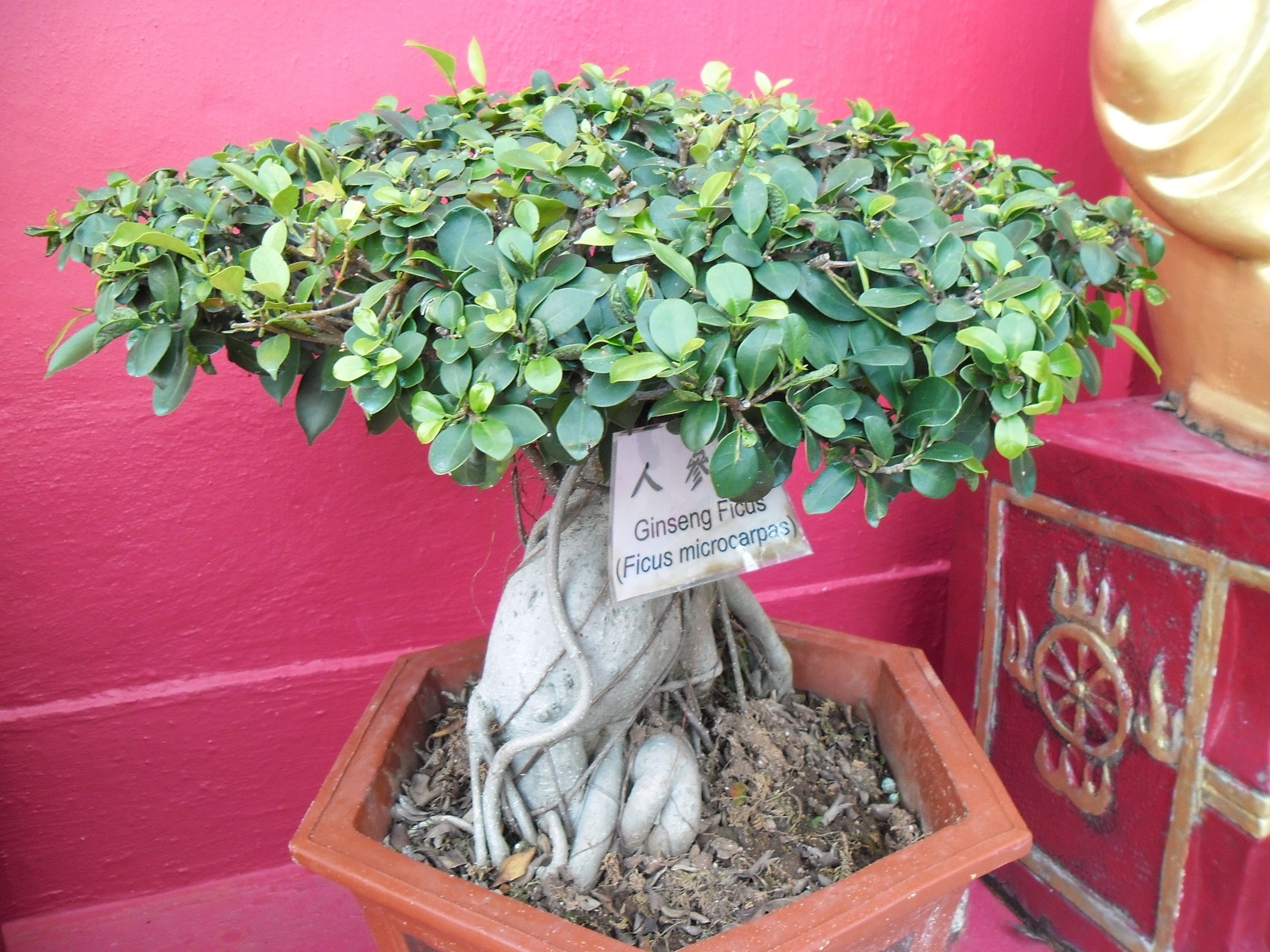
A Ficus microcarpa 'Ginseng' bonsai, its swollen aerial roots rising above the soil, photographed in Hong Kong. Photo by Earth100, CC BY-SA 3.0, via Wikimedia Commons — Source

Yes, with real caveats. Ficus — usually sold under the trade name "Ficus Ginseng" — is one of the very few bonsai species that can live indoors year-round, and it tolerates a beginner's mistakes better than almost anything else in the hobby. It still needs more light than most windowsills provide, and treating it as a maintenance-free houseplant sets the wrong expectation from the start.
One of the only species that actually lives indoors
Most bonsai are temperate trees that need a real winter to stay healthy, which is why almost no bonsai can actually live indoors long-term. Ficus is one of the exceptions. Native to a wide band running from India through China and Japan, across Southeast Asia, and out to Queensland, Australia, Ficus microcarpa never evolved a dormancy requirement — the climates it comes from do not have a winter to prepare for in the first place. That is what makes it sellable as an "indoor bonsai" in a way a juniper or a pine never can be: it is generally sold as a houseplant precisely because it thrives at ordinary room temperature and only needs protecting from real cold, not from central heating.
Hard to kill, which is the whole point
A first tree usually survives a string of small mistakes before it survives anything else. Ficus tolerates most of them. It shrugs off occasional over- or under-watering better than more sensitive species, recovers well from hard pruning, and will push new shoots from bare old wood that would kill many other trees outright. None of that makes it indestructible — a ficus moved between rooms, set near a draft, or exposed to a sudden temperature swing can drop a startling number of leaves within days, which panics almost every first-time owner — but the drop is usually a stress response, not a death sentence, and the tree grows the leaves back once conditions settle. Among tropical starter species, it is widely regarded as the most forgiving one available at a general retailer, which is a large part of why it became most people's first encounter with the hobby outside Japan.
Why "Ginseng" is on the label
The tree behind most beginner ficus purchases is not a single natural form. What is sold as "Ficus Ginseng" is a grafted plant: a rootstock, usually Ficus microcarpa, is grown for several years until it swells into a thick, bulbous shape reminiscent of a ginseng root, then a scion of fine-leaved foliage — often the same species, sometimes a related one such as Ficus retusa — is grafted onto the top. The swollen root gives the plant its name and its instantly recognizable silhouette, and it is also why the trunk on a beginner ficus can look dramatic well before the tree has any real bonsai training behind it. That matters practically: the potbelly shape is not something a new owner needs to work toward, and no amount of pruning higher up will change it. What is left to shape is everything above the graft — the canopy, the branch structure, and the aerial roots that thicken with time and humidity.
Real conditions, not none
"Forgiving" does not mean "no conditions." A ficus indoors still wants as much light as a window can give it — as close to a south-facing exposure as the room allows — and it holds its form better with steady warmth, ideally not below about 15°C, than on a cold, drafty sill. Watering by the calendar is the wrong approach here as with any bonsai; check the soil and water once the surface has dried rather than on a fixed schedule. Given that much attention, a ficus bought as a first tree — even one from a supermarket rack rather than a nursery — can be kept alive and gradually improved for years.
Where a ficus leads
A ficus is where many growers outside Japan first learn the habits that carry over to every other species: reading a leaf instead of a calendar, pruning with a reason instead of out of habit, recognizing when roots have filled a pot. None of those lessons are specific to the tree. When a beginner is ready to try an outdoor species — a juniper, a maple, eventually one of the temperate trees that make up Japan's own bonsai tradition — the ficus was never a lesser starting point. It was simply the tree that could survive being learned on.
In Japan, that same species rarely appears in a nursery's serious collection; outdoor pines and junipers, cultivated on open benches through real winters, are what most Japanese growers spend a lifetime training. Azukari works with those trees specifically — the ones a ficus eventually points a beginner toward, still growing on a nursery bench in Japan, under a working artist's care.
References
- Bonsai Empire — Ficus Bonsai Tree Care Guide — Ficus as the most popular indoor beginner species, its tolerance of watering mistakes and hard pruning, and its light and temperature needs.
- NC State Extension Gardener Plant Toolbox — Ficus microcarpa 'Ginseng' — common names, native range, and indoor care conditions for the 'Ginseng' form.
- Gardening Know How — "What Is A Ficus Ginseng Tree" — the grafted rootstock-and-scion origin of the "potbelly" trunk, and its recommendation for beginning bonsai growers.
- Gardening Know How — "Ficus Dropping Leaves? Here's Why & How To Fix It" — environmental change and temperature swings as the leading cause of ficus leaf drop, and typical recovery once conditions stabilize.
- Wikipedia — Ficus microcarpa — native range from India to China, Japan, Southeast Asia, and Queensland, Australia, and its cultivation as a houseplant and bonsai species.
- Wikimedia Commons — File: Ginseng Ficus Hong Kong.jpg — source and license (CC BY-SA 3.0, photo by Earth100) for the header image.