
In 1919, the martial arts reformer Nishikubo Hiromichi proposed a one-character change to the name of a centuries-old fighting art: replace the suffix -jutsu (術, "technique," "art") in kenjutsu (剣術, "sword technique") with -do (道, "way"), making it kendo (剣道, "the way of the sword"). The swordsmanship itself did not change that year. What changed was what the swordsmanship was understood to be for.
When a body of technique in Japan is given the character 道 — do, "way" — it stops being a set of skills to master and becomes a discipline for shaping a person over the whole of a life.
Tea, flowers, and the sword have each been practiced, in some form, across most cultures. Only in Japan did all three settle into institutions carrying this same suffix: chado or sado (茶道, "the way of tea"), kado (華道, "the way of flowers"), and kendo, named above. The suffix is not decorative. It is a claim about what the practice is for.
The character marks a road with no destination
Do (道) is read two ways in Japanese — michi in ordinary speech, do in compounds — and both point to the same image: a road, something one walks rather than something one finishes building. Urasenke, the largest school of Japanese tea ceremony, describes chado as "a spiritual and aesthetic discipline for refinement of the self," language that applies equally to kado or kendo. Ikenobo, the founding school of Japanese flower arranging, traces its own kado to the priest Senno, who in the fifteenth century framed the practice of arranging flowers as a path toward enlightenment: something reached by doing it, much as a destination down a road is reached by walking toward it.
What the three schools share is a demotion of technique from end to means. Whisking tea, cutting a branch to the right length, holding a sword correctly — none of this stops mattering once do is attached; if anything, the technical demands rise, since these schools have codified centuries of formal training. But the technique stops being the point of the training. It becomes the material the training uses to work on something else: the practitioner.
Renaming kenjutsu to kendo rewrote its purpose
The clearest official record of this reordering is Nishikubo's 1919 renaming. The All Japan Kendo Federation's own 1975 statement of purpose makes the intent explicit: "The concept of kendo is to discipline the human character through the application of the principles of the katana." Winning a match is still possible and still scored. But the federation's stated aim sits above winning: the cultivation of the practitioner, sustained, in its own words, as something people are asked to "devote themselves to... throughout their lives."
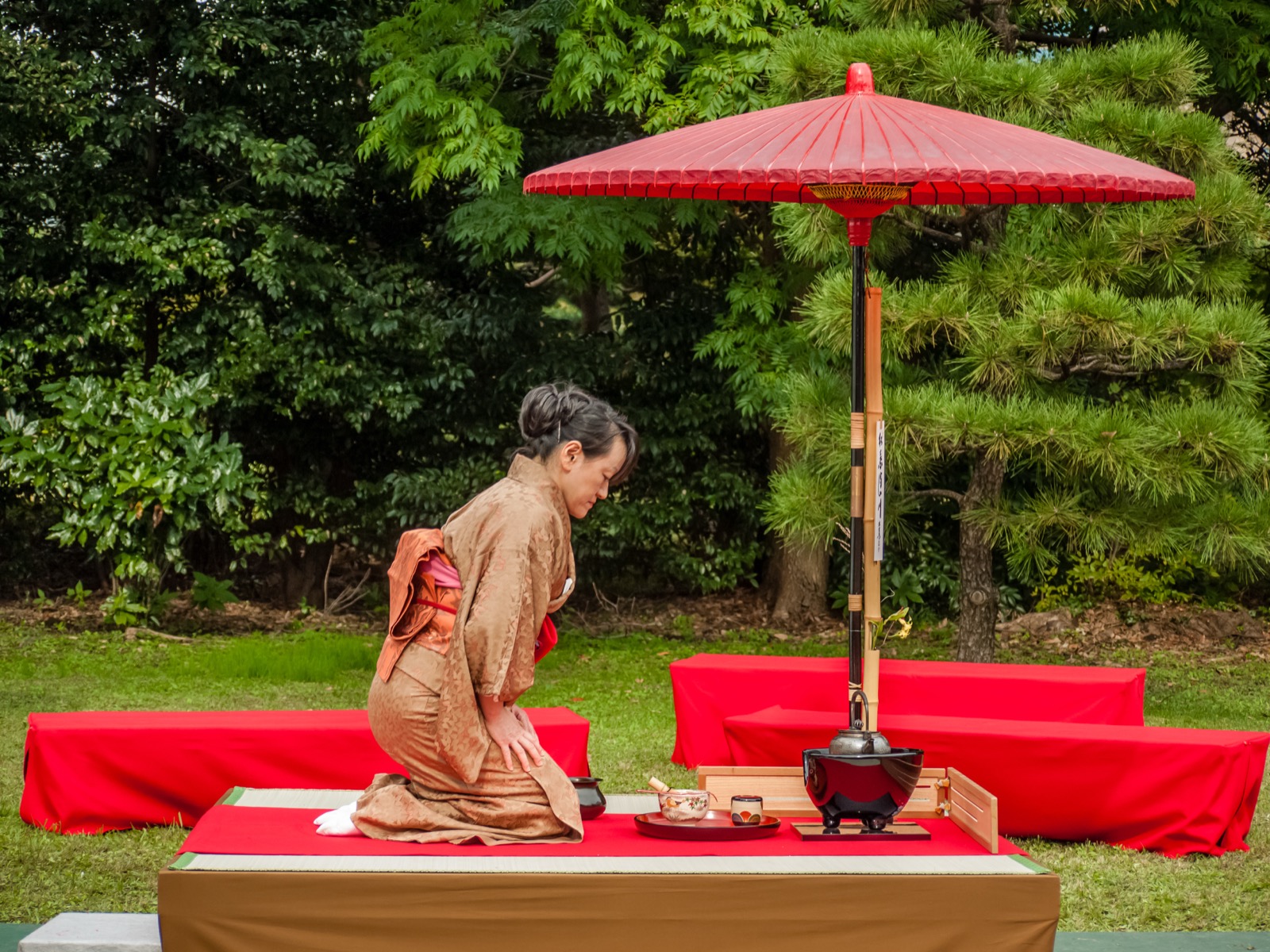
The tea room makes the same substitution in a gentler register. Folding a cloth, turning a bowl, timing a gesture to a guest's presence — these are simple physical actions, no harder in themselves than washing dishes. What Urasenke's own teaching materials describe as difficult is not the motion but "great cultivation": the years it takes for a simple, repeatable gesture to become an expression of attentiveness rather than a rehearsed routine. The technique looks the same after ten years of practice as after the first lesson. What has changed is the person performing it.
A finished technique still leaves an unfinished way
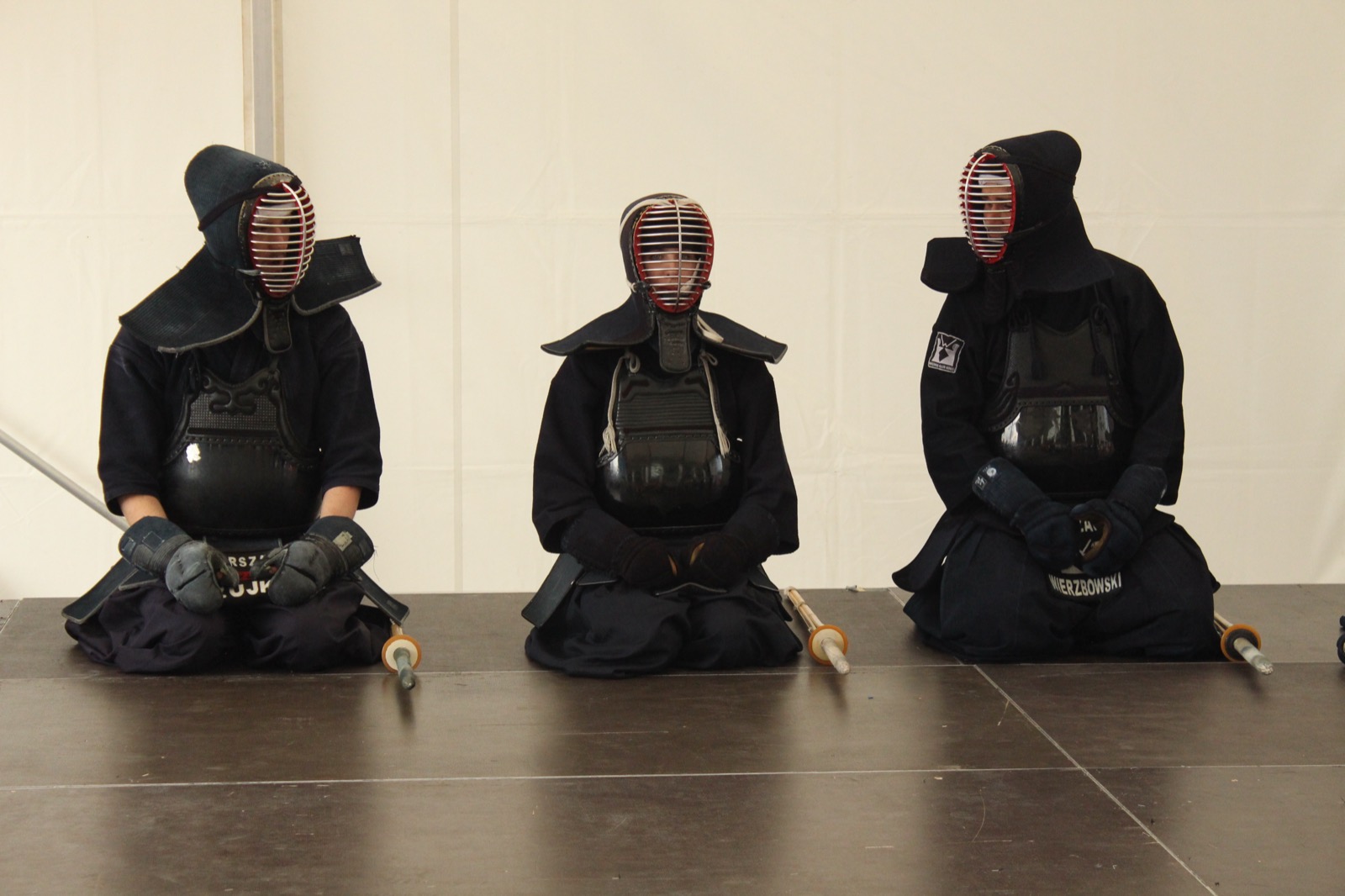
Kendo practitioners kneeling in seiza before training. A do is not a course to be completed; it is a discipline entered and re-entered for as long as one is able to.
A course has a finish. A do does not, and this is close to the entire point of the word. The Encyclopedia of Bushido notes that the concept, tied loosely to Zen currents in medieval Japan, treats full mastery under a teacher as a spiritual undertaking that continues for as long as the student is willing, with no credential marking its end. There is no rank in kendo stamped "complete," no license in chado that closes the file, no diploma in kado that ends the study. Practitioners speak instead of "walking the way" for decades, sometimes across an entire lifetime, with senior students and elderly teachers still describing themselves as learners.
This gives a practical test for telling a -jutsu from a -do: ask whether becoming fluent in it would end the practice. Learning to grip a sword correctly, to whisk tea to the right froth, to cut a branch at the correct angle — each of these, in a narrow sense, can be finished. That is a technique, and techniques can be completed. A way cannot be completed in the same sense, because it was never a destination to arrive at. Stopping does not mean finishing. It only means stopping.
Bonsai-do holds a tree to the same standard
Bonsai carries its own version of this suffix: bonsai-do (盆栽道, "the way of bonsai"), used less formally than chado or kendo but built on the identical structure. Wiring a branch, reading a tree's water needs, choosing the angle a trunk should lean at — these are technical skills, and bonsai has no shortage of them. But as we wrote in "Bonsai Is Never Finished," no bonsai artist treats a tree's current shape as a final answer, because the tree keeps growing regardless of what any single caretaker intends. Apply the test above: would becoming fluent in the technique end the practice? For a tree that outlives the artist shaping it, the answer is no on both counts — the shaping never reaches a last session, and the tree does not stop growing when the artist's working day ends. The same structure that turned sword-fighting into kendo and tea-serving into chado is present here too. We wrote more directly about this same discipline of ordinary, repeated attention in "Zen Is Something You Do," where the daily watering of a bonsai is treated as an act closer to a monk's daily chores than to routine maintenance.
To call bonsai a do is to make the same claim tea ceremony and martial arts already make, applied to a different material: not a technique finished once and filed away, but a discipline that keeps shaping whoever practices it, one branch, one season, one year at a time. At Azukari, that unfinished walk continues in Japan under an artist's care, and an owner joins it for one stretch, through the seasonal record of a practice with no last chapter.
For more, see "Bonsai Is Never Finished," and "Zen Is Something You Do." On the three stages a learner passes through on any of these ways, see "Shu-Ha-Ri."
References
- An Introduction to Chado — Urasenke Konnichian — Urasenke's official description of chado as "a spiritual and aesthetic discipline for refinement of the self."
- The Concept of Kendo — All Japan Kendo Federation — the AJKF's 1975 official statement of purpose: "to discipline the human character through the application of the principles of the katana."
- The All Japan Kendo Federation's Perspective of Kendo — AJKF — official account of the 1919 renaming from kenjutsu to kendo by Nishikubo Hiromichi.
- Ikenobo — Wikipedia — history of Japan's founding ikebana school and the priest Senno's development of kado, "the way of flowers."
- Bushido — Wikipedia — background on do (michi) as a medieval concept linking mastery of a discipline to spiritual cultivation.
Photo credits: "Japan tea ceremony 1165" by Reinhold Möller, and "Kendo (1)" by Przemek Pietrak, both via Wikimedia Commons, licensed under CC BY-SA 4.0 and CC BY-SA 3.0 respectively. Resized from the originals.

.jpg)