
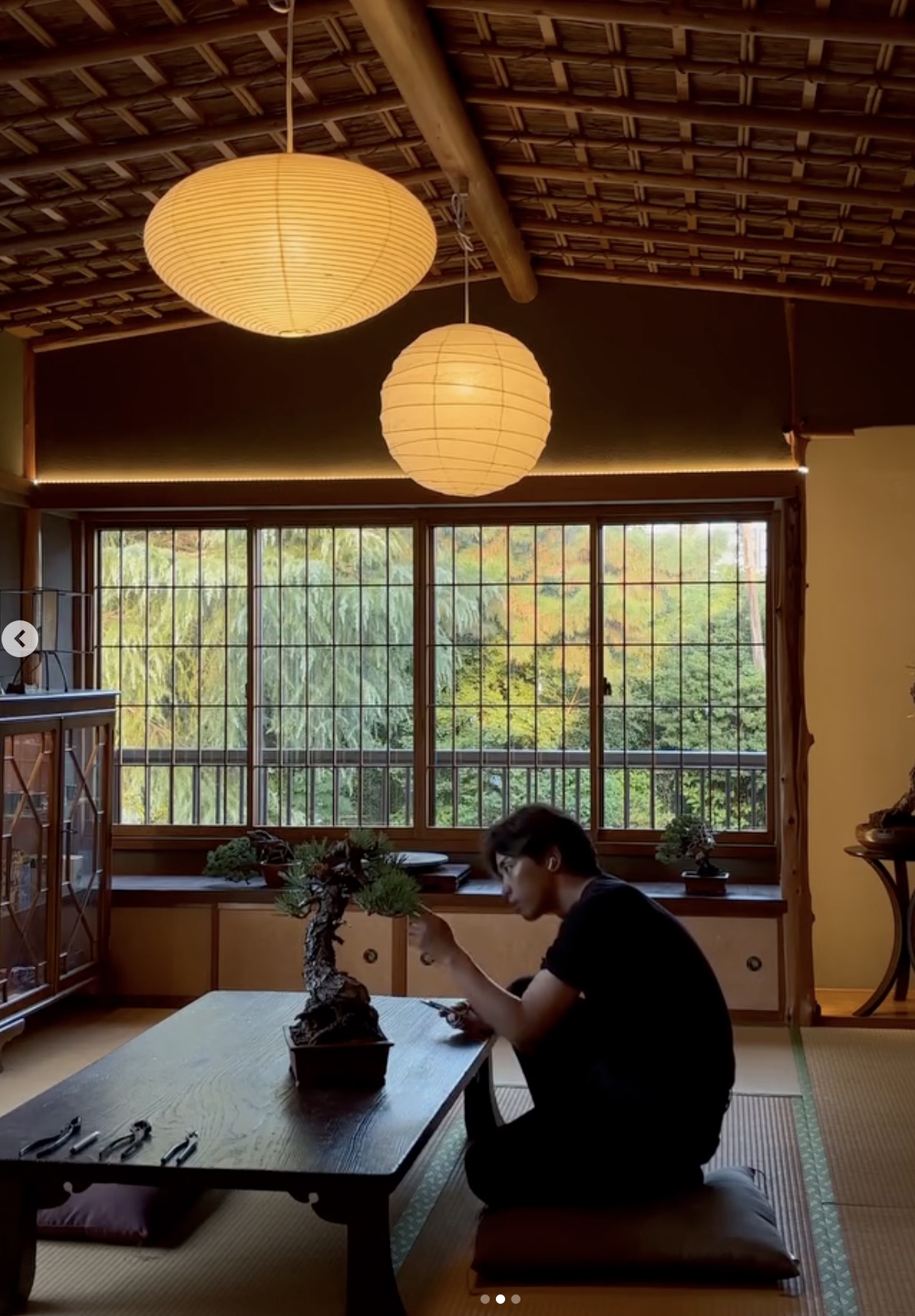
Yes. A small number of Japanese nurseries take on non-Japanese apprentices and short-term trainees, and several have done so for decades. But the door is narrow: a full apprenticeship runs five to six years, the visa that allows it does not allow paid work, and near-fluent Japanese is assumed rather than taught. Most people who want to study bonsai in Japan do not start with a multi-year apprenticeship. They start with a short course lasting a week or a few months, and decide from there.
The long path exists, but it is rare
A handful of foreign artists have completed the full, years-long training inside a Japanese nursery — the same live-in uchi-deshi (内弟子, "an apprentice who lives with the teacher") structure a Japanese apprentice goes through, with no shortcut for language. We cover two documented cases, an American who trained six years under Masahiko Kimura and another who trained six years at Kouka-en in Osaka, in our companion piece on foreign apprentices in Japanese bonsai. Both are real, but both are also exceptional — the kind of case that gets written up precisely because so few people finish it.
The visa allows study, not income
Long-stay foreign apprentices in Japan typically enter under the "Cultural Activities" residence status, a category built for unpaid study of a traditional Japanese art or craft under a recognized expert. Japan's Immigration Services Agency describes it as covering research into Japanese culture or the mastering of traditional techniques under expert guidance, with no accompanying income, and a maximum continuous stay of three years. That last point matters: an apprenticeship under this visa is explicitly not a job. Apprentices are expected to live on savings, family support, or part-time work permitted separately, not on wages from the nursery training them.
The wall most people actually hit
Visa rules are not the hardest part. Language and years are. A nursery floor runs on observation more than instruction, and a master training an apprentice for free is not going to pause the day's work to translate. Reports from people who have gone through it are consistent: Japanese fluency is assumed before the apprenticeship starts, not built during it, and the five-to-six-year term is treated as the minimum, not a target to shorten. Anyone weighing this route honestly has to weigh the language and the years before the visa paperwork.
A door that opens without the full commitment
Because a full apprenticeship is such a narrow path, most nurseries that work with non-Japanese visitors offer something shorter instead. Taisho-en, in Shizuoka, was one of the first gardens to open its doors to foreign students for study lasting a few months rather than years, and has trained a number of artists who later built careers of their own in Europe. In Kagawa Prefecture, home to one of Japan's best-known bonsai production areas, the local growers' council runs an official technical training program open to applicants "regardless of nationality," charging a daily rate and asking overseas applicants to apply at least two months ahead so visa and travel details can be arranged. Programs like these do not produce a finished bonsai artist. They let someone test, in a matter of weeks, whether the years-long version of this path is one they actually want to walk.
What the long path leads to
For the small number who do complete a full apprenticeship, the years are rarely the end point. As we cover in our companion article, more than one foreign-trained apprentice has gone home to open a nursery or teaching garden of their own, carrying the training method rather than just the techniques back across the border with them. That is the real shape of the path: years of unpaid, live-in study inside Japan, followed by a career built somewhere else, using judgment a nursery floor is still the only place to learn.
Where this leaves someone weighing the trip
None of this is a reason to stay home. It is a reason to be honest about which door a given trip actually opens. A week in Kagawa or a season at a garden like Taisho-en is a real way to stand at a bench beside a Japanese artist and watch a cut made before it is explained — the same habit of observation that shapes the craft everywhere it is practiced, including for the artists who tend trees for Azukari between visits from an owner who lives an ocean away. Whether someone eventually pursues six years of uchi-deshi life or simply comes once and goes home with sharper eyes, the door into Japanese bonsai training has never been fully closed. It has just always asked for years, not weeks, from anyone who wants to walk all the way through it.
For more, see our companion pieces on foreign apprentices in Japanese bonsai and on apprenticeship measured in years.
References
- Immigration Services Agency of Japan — "Cultural Activities" status of residence — official description of the visa category covering unpaid study of traditional Japanese arts and crafts under an expert, its no-income condition, and its maximum three-year period of stay.
- Bonsai Empire — Taishoen bonsai garden — on Taisho-en being among the first Japanese gardens to accept foreign students for short-term study, and on students who went on to build careers in Europe.
- Takamatsu Bonsai — Bonsai Technical Training recruitment page — official Kagawa Prefecture Bonsai Production Promotion Council page describing the training program, its openness to applicants regardless of nationality, its daily fee, and its two-month advance application requirement for overseas applicants.