
— what a small tree does on screen
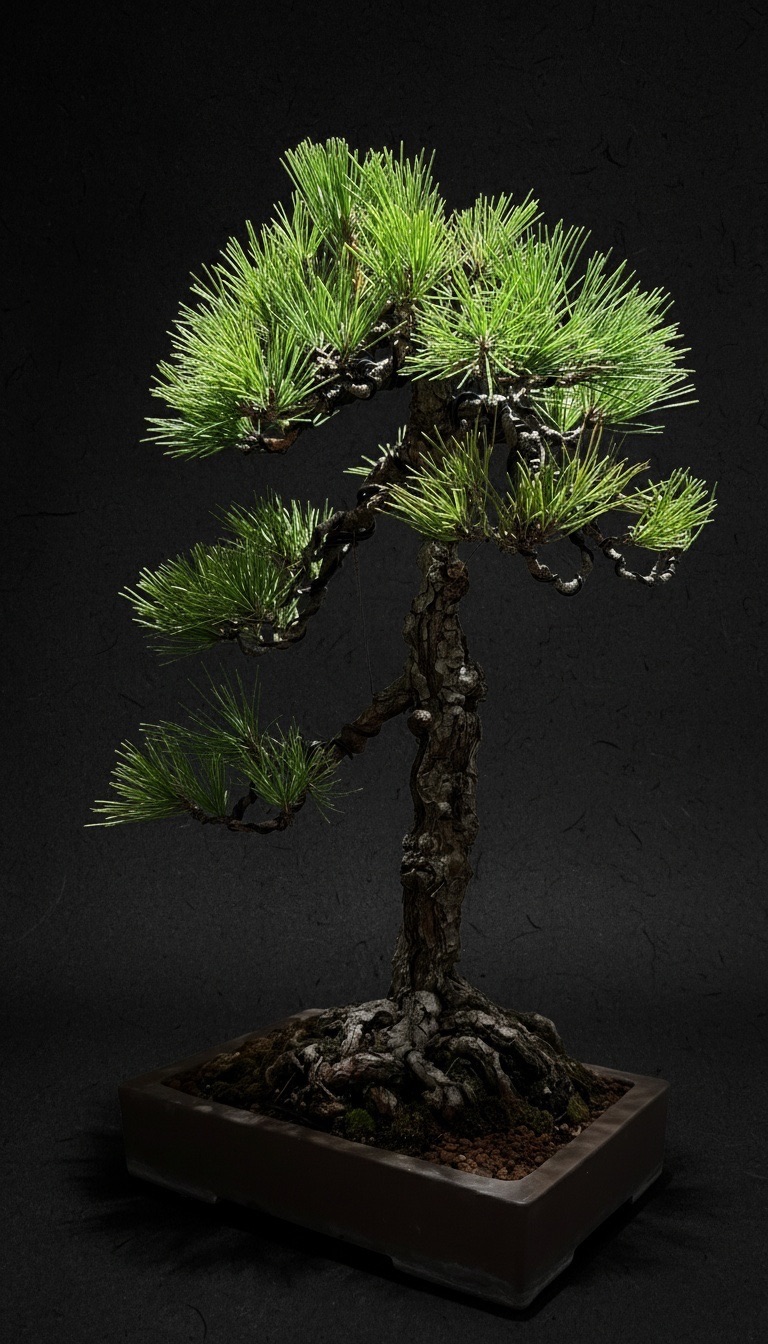
In The Karate Kid, released in the United States in 1984, the camera settles on Mr. Miyagi tending a bonsai before he ever teaches Daniel a single karate technique. He shapes the tree the way the film later shows him fighting: patiently, without a wasted motion, stepping back to look at the whole before touching it again.
Bonsai works on screen only when the care looks unremarkable — no music swelling, no dialogue explaining it, just someone doing the same small task they would do whether or not a camera were there. The moment the tending turns into a display, the device stops working. Two productions made a decade and a half and an ocean apart, The Karate Kid (1984) and the anime Cowboy Bebop (1998), lean on this same unglamorous ordinariness to say something about a character that no line of dialogue says directly.
Miyagi's pruning scene stands in for the lesson he hasn't taught yet
Directed by John G. Avildsen, The Karate Kid returns repeatedly to shots of Miyagi at his bonsai. He is a karate master, but the film takes care to show him first as someone who does not rush into force of any kind.
Bonsai care never finishes in one motion. A branch has to be watched as it grows; a cut has to be chosen, then reconsidered from a distance before the shears go anywhere near it. The pruning scenes are allowed to breathe rather than being cut away from quickly — an odd choice, on the surface, for a sports film built around a tournament clock.
That patience is doing double duty. Shaping a tree and shaping a person turn out to run on the same method: look, wait, move the hands only a little, repeat — closer to teire (手入れ, ongoing, patient tending rather than a single fix) than to any single decisive act. Bonsai also carries a lesson about what stays hidden: however the branches catch the light, the roots holding all of it up are underground, out of view. A tree, and a person who stays composed under pressure, both depend on roots nobody watching can see. Before Miyagi ever throws a punch on screen, the pruning scene has already told the audience where his calm comes from.
Jet Black's bonsai is the one thing his rough life hasn't touched
Cowboy Bebop, produced by Sunrise and first broadcast in Japan in 1998, follows a crew of bounty hunters aboard the spaceship Bebop. Jet Black, a former police investigator who lost an arm in a betrayal he still carries, keeps a bonsai in his quarters.
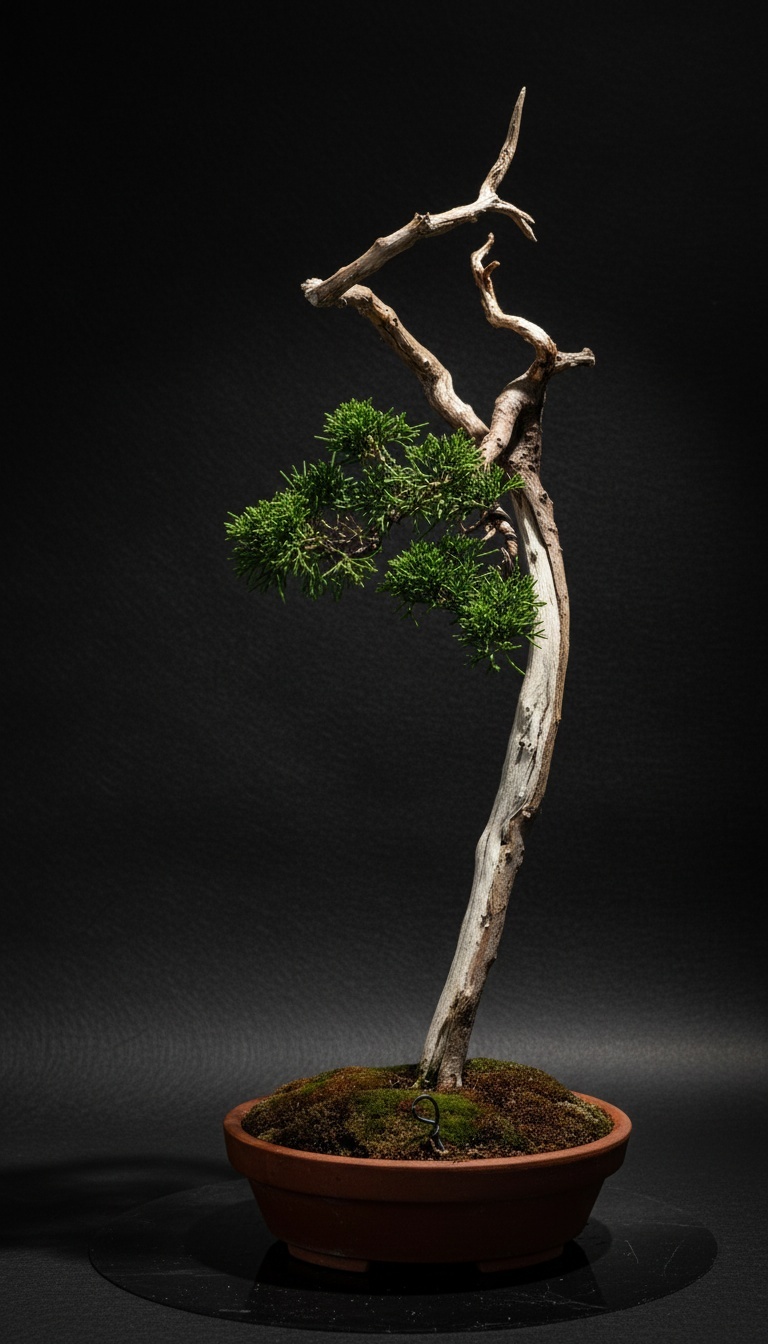
Nothing else about Jet's life is this steady. Trouble does not really stop for a bounty hunter, and Jet carries a cybernetic arm he could have replaced with living tissue and chose not to. Between jobs, though, he waters the tree. He trims its branches. No episode's plot ever asks this of him.
That gap is the point. A bulky, gruff, mechanically half-rebuilt man tending something this delicate, on a schedule nothing in the story requires of him, tells the viewer he has not thrown his past away — he is carrying it forward a day and a cut at a time. The bonsai does not resolve anything for Jet. Tend it and it responds; neglect it and it withers, the same plain arithmetic that applies to everything else he has chosen to keep.
Stillness that holds time reads differently from stillness that holds nothing
Why do a 1980s American film and a 1990s Japanese anime reach for the same object to make this point?
A bonsai does not move, speak, or run. On its own it cannot push a plot forward. What it holds instead is ma (間, the charged interval of stillness that Japanese aesthetics treats as active rather than empty) — years of growing already behind it, more care still to come after the credits roll. That is a different kind of pause than an empty room or a silent phone. Knowing how to look at a bonsai — which way it faces, how many years its branches took to reach that shape — turns out to be exactly the skill that lets a viewer read Miyagi's tree or Jet's tree the same way, whether the frame is a dojo in Los Angeles or a spaceship above Ganymede.
The screen borrows a discipline it did not invent
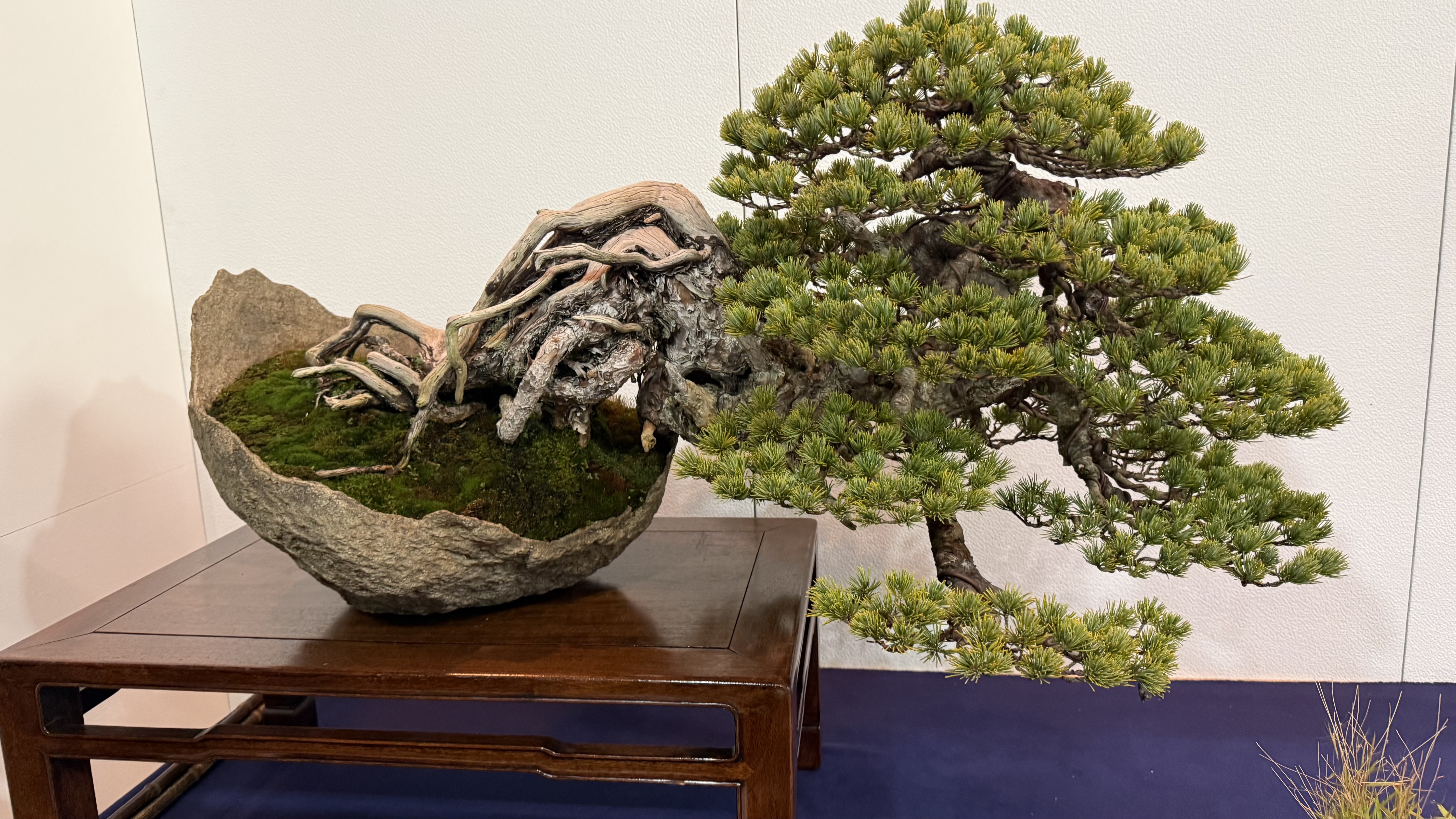
A production designer or animator builds the bonsai in a given scene to do one job for a few seconds of runtime. The discipline behind it — what bonsai actually is, tended without any script requiring it — is not fiction. Stand in front of a real tree kept this way for years, one that has earned a name of its own, and the same unremarkable ordinariness is there, minus the camera. Nothing about the moment is written for an audience. That is exactly why it works when a filmmaker borrows it, and why it keeps working when there is no film at all.
Azukari connects you with bonsai still in the ongoing care of Japanese artists, on the same unhurried schedule Miyagi and Jet Black were only ever imitating.