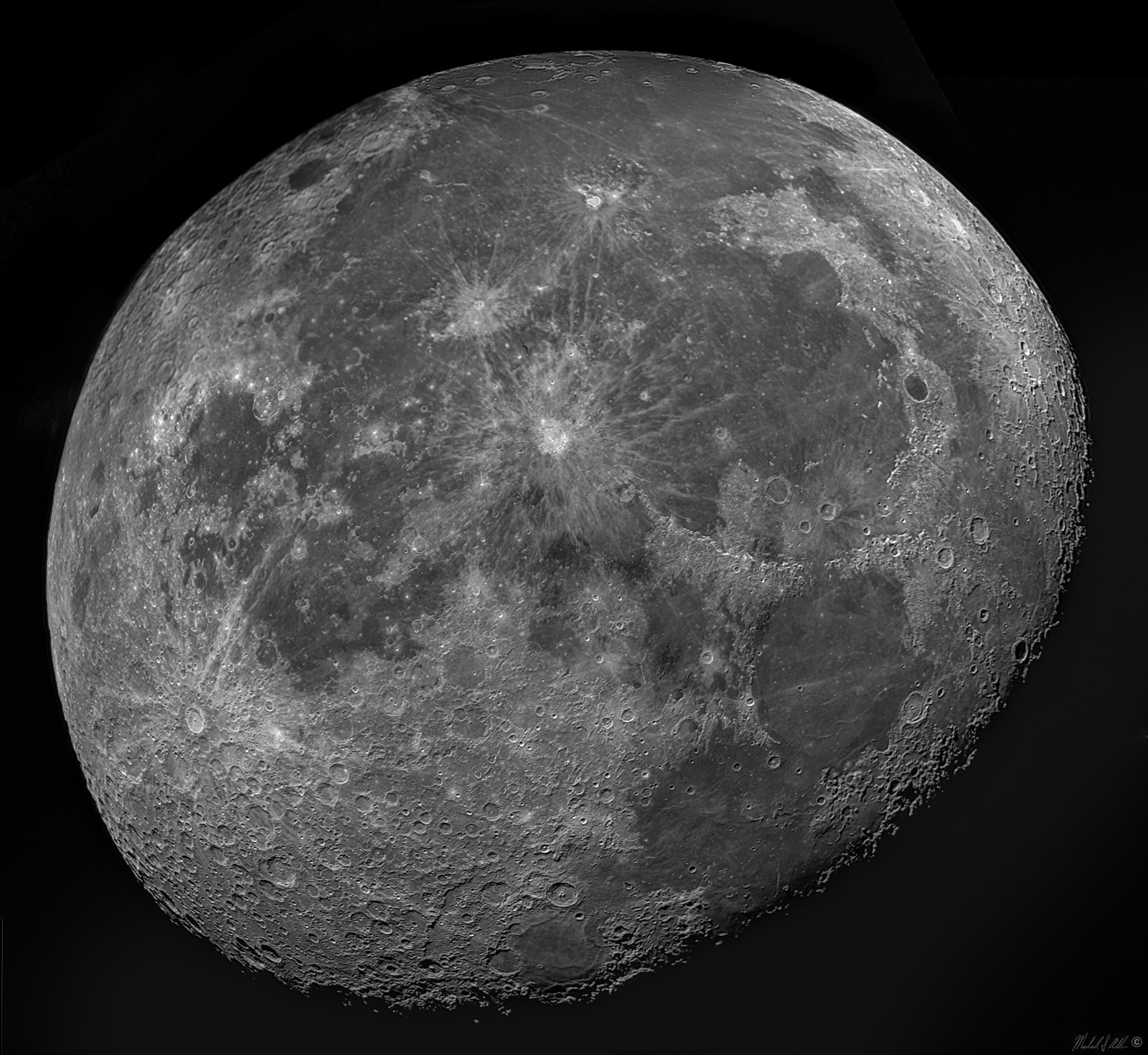
Photo by Msadler13, CC BY 4.0, via Wikimedia Commons — Source

Sometime between 1330 and 1332, the court official turned Buddhist monk Yoshida Kenko sat down to write a loosely connected set of essays now known as the Tsurezuregusa (徒然草, "Essays in Idleness"). One passage, still quoted today, asks a plain question: must the cherry blossoms be seen only in full bloom, or the moon only when it is perfectly round? Kenko goes further — a person who has never watched rain block out the moon, who has never sat indoors while spring quietly passed outside, is missing something. He calls the withering branch and the scattering petals 見所多けれ (midokoro okere, roughly "there is much worth looking at"), no less worth attention than the peak itself. By his account, it is only the unrefined viewer who decides a scene is over once the flowers have started to fall.
A finished thing has nowhere left to go, and that is precisely its limitation: the Japanese eye has long preferred the moment before completion, when a branch, a bowl, or a month still has somewhere to travel.
Kenko's point sits somewhere narrower than a claim that ruins are prettier than palaces, or that decay is automatically noble. At the moment of maximum completion, a thing stops asking anything further of the person standing in front of it — the interest is already spent. Something still becoming holds that person in the room a little longer.
The moon is more interesting before it is full
Japan's autumn moon-viewing custom, tsukimi (月見, "moon viewing"), centers on the full moon nearest the mid-autumn date on the old lunar calendar — a night for offerings of rice dumplings, chestnuts, and pampas grass, practiced from the Heian court down to ordinary households for over a thousand years. It would be easy to assume the full moon is the whole point. But the culture around tsukimi has never treated fullness as the only occasion worth marking. There is jusan'ya (十三夜, "the thirteenth night"), a second, deliberately partial-moon viewing about a month after the main festival, on the thirteenth night of the ninth lunar month — a night when the moon is not yet full and is admired precisely for that. There is izayoi (十六夜, "the hesitating moon"), the night just after the full moon, named for how the moon seems to rise a little reluctantly, as though unsure it should still be the center of attention now that its fullest moment has passed.
A moon that is waxing is a promise. A moon that is waning is a memory still being written. Only the full moon is simply what it is and nothing more — which is why, across centuries of poetry, it is so often the crescent, the gibbous, the moon half-lost behind a passing cloud that receives the more attentive verse. Completion, once reached, has no further story to tell; what falls short of it still does.
Unfinished work leaves room for the viewer
A painting finished to the last brushstroke, a sentence that explains its own meaning in full, a piece of music that resolves every tension it raises — each of these has, in a real sense, dismissed its audience. There is nothing left to complete, so there is nothing left for anyone else to do.
Work that stops short of that point behaves differently. A branch left at an angle that suggests, but does not confirm, where it might grow next. A story that ends on a question rather than an answer. A bowl thrown slightly asymmetrical, so the eye keeps moving around it rather than settling. In each case, the incompleteness functions as structure — it is what keeps a viewer engaged, imagining, returning. The unfinished leaves the door open, and an open door invites someone to walk through it.
That gives a simple way to judge any finished-looking thing, a bonsai or otherwise: ask whether it still leaves you something to do, or whether it has already said everything it has to say.
This is also why the incomplete so often outlasts the complete in people's attention. A finished thing can be admired once and set aside. An unfinished thing has to be lived with, returned to, wondered about — an ongoing relationship that a completed object cannot offer.
A bonsai is built to never arrive
The same reasoning explains why a bonsai has no finish line. As we wrote in "Bonsai Is Never Finished," a painting stops when the brush is set down and a sculpture stops when the chisel is put away — but a living tree keeps growing for as long as it is alive, which means an artist can never treat its current shape as the end of the story. Every year, a branch is left a little short of where it could go, a line is suggested rather than completed, because the tree still has next year, and the year after that, and the artist after this one.
The beauty of imperfection sits next to wabi-sabi (侘び寂び) — the aesthetics of the worn and the aged, explored separately in "What Is Wabi-Sabi." — though its subject is different: the moon still short of full, the branch still short of its final shape, the pleasure of standing in front of something that has somewhere left to go, independent of age or wear. A bonsai, tended across generations and never signed as finished, is simply this idea given roots and bark. It does not ask to be admired as a completed work. It asks to be watched, season after season, for what it might become next.
References
- Tsurezuregusa — 137th section, full classical Japanese text — the original passage on viewing cherry blossoms and the moon at less than their peak.
- Columbia University, Asia for Educators — "Kenko's Essays in Idleness" — academic overview of Kenko's aesthetics of impermanence, including the passage on rain obscuring the moon and withered blossoms.
- Google Arts & Culture, in partnership with NHK Educational — "Moon Viewing (Otsukimi)" — overview of Japan's autumn moon-viewing custom, supervised by Maezaki Shinya (Kyoto Women's University) and M. Rinne (Kyoto National Museum).
- Nippon.com — "Tsukimi: The Japanese Tradition of Autumn Moon Viewing" — background on tsukimi's history and seasonal practice.