In Week 1 and Week 2 we spoke about why a bonsai can remain the same size for decades — its technique and its philosophy. The volume of the pot, the three techniques of pruning, wiring and root-pruning, and the idea called shukkei.
This week, from another angle. What kind of trees do we use to make bonsai?
Five Lineages
By the species of tree used, bonsai is broadly divided into five lineages.
| Lineage | Representative species | How to enjoy |
|---|---|---|
| Shohaku (conifers) | Black pine, red pine, five-needle pine, shimpaku juniper, needle juniper | Evergreen; the same green through the year. Vigorous; lives for centuries |
| Zoki (deciduous) | Maple, zelkova, ginkgo, beech | Spring buds, summer green, autumn color, winter silhouette — four seasons in one pot |
| Hanamono (flowering) | Cherry, camellia, plum, satsuki azalea, Japanese viburnum | A year for days of bloom. Flower, fragrance |
| Mimono (fruiting) | Crabapple, quince, persimmon, firethorn | Tiny fruit setting, ripening, carrying the season |
| Kusamono (grass & moss) | Violet, cockscomb, dandelion, wild mountain plants, moss | Shorter-lived than trees, but the easiest way to begin |
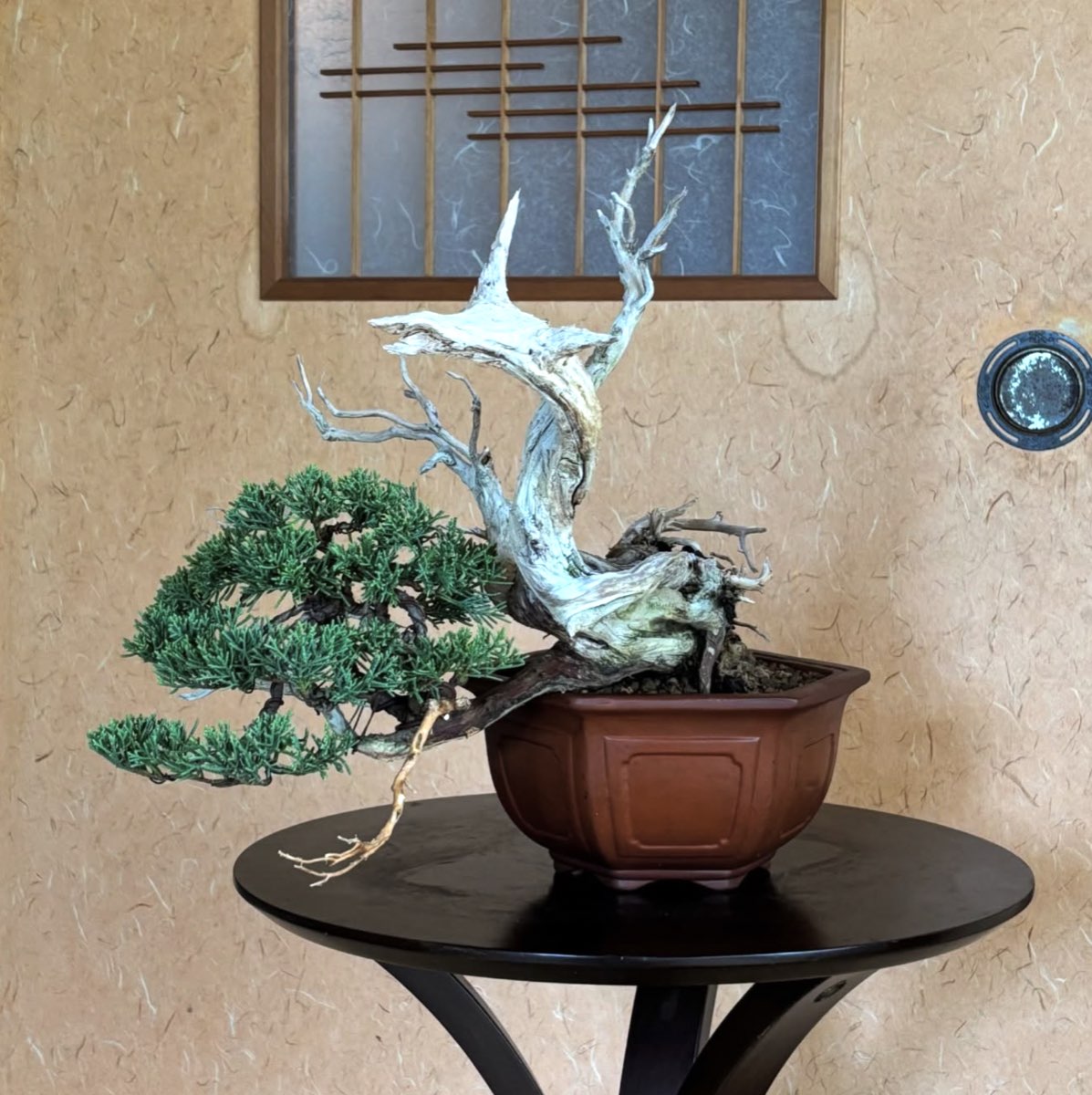
The four bonsai currently on offer from Saeki — MKT-001 (a 45-year-old black pine) and MKT-002 to MKT-004 (shimpaku juniper) — all belong to the shohaku lineage.
By Size
Bonsai is also broadly classified by height into three categories.
| Size | Height | Where it lives |
|---|---|---|
| Daihin (large) | Over 60 cm | Presence and dignity. Entrance hall, lobby, tokonoma alcove |
| Chuhin (medium) | 20–60 cm | Portable, easy to care for. The "standard" bonsai |
| Shohin (small) | Under 20 cm | Palm-sized. Fits on a desk or counter |
Smaller still are called mini bonsai, petit bonsai, or mame bonsai (bean-sized).
MKT-001 to MKT-004 are all around 30–50 cm tall — they belong to the chuhin (medium) class.
Shohaku — the evergreen bonsai
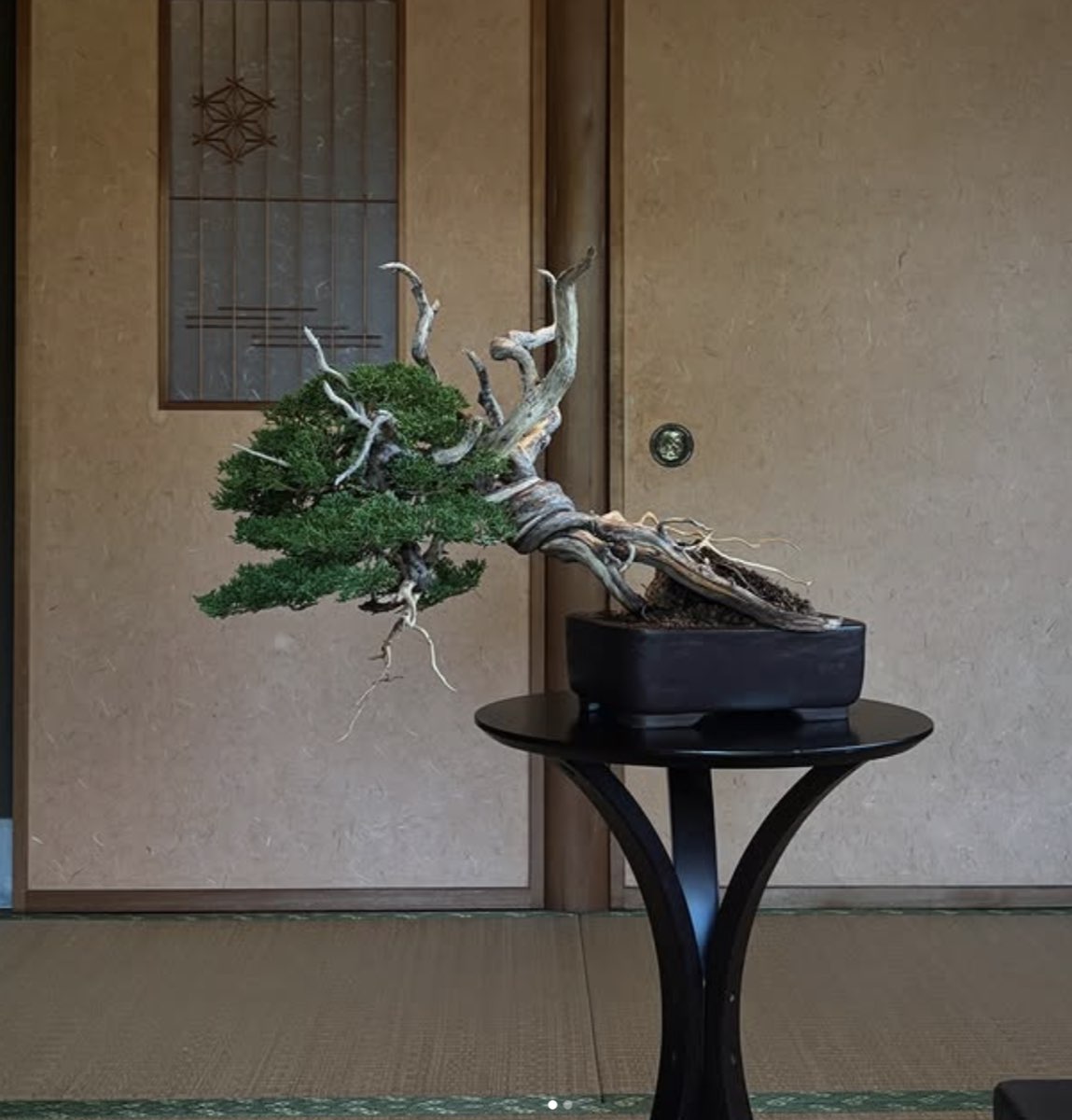
Shohaku is the Japanese term for "pine and cypress" — the collective name for the conifer group. Black pine, red pine, white pine (Japanese five-needle pine), shimpaku juniper, and needle juniper (tosho) are the main species.
Shohaku has been considered the classical core of bonsai for a few reasons.
One. Being evergreen, the color of the leaves does not change through the year. It is the most suited material for a bonsai that keeps "the same form" in a pot for decades.
Two. The leaves are small. The branches are fine. The outline of the tree can be built up with precision.
Three. The trees are vigorous and can live for centuries. As a bonsai meant to be inherited, it is a material that is strong against time.
The "unchanging beauty" we spoke about in Week 1 and Week 2 belongs to this shohaku world.
▸ See more shohaku bonsai: @shunkaen_bonsai_musium (Shunka-en Bonsai Museum, Tokyo)
Zoki — the bonsai that wears four faces in a year
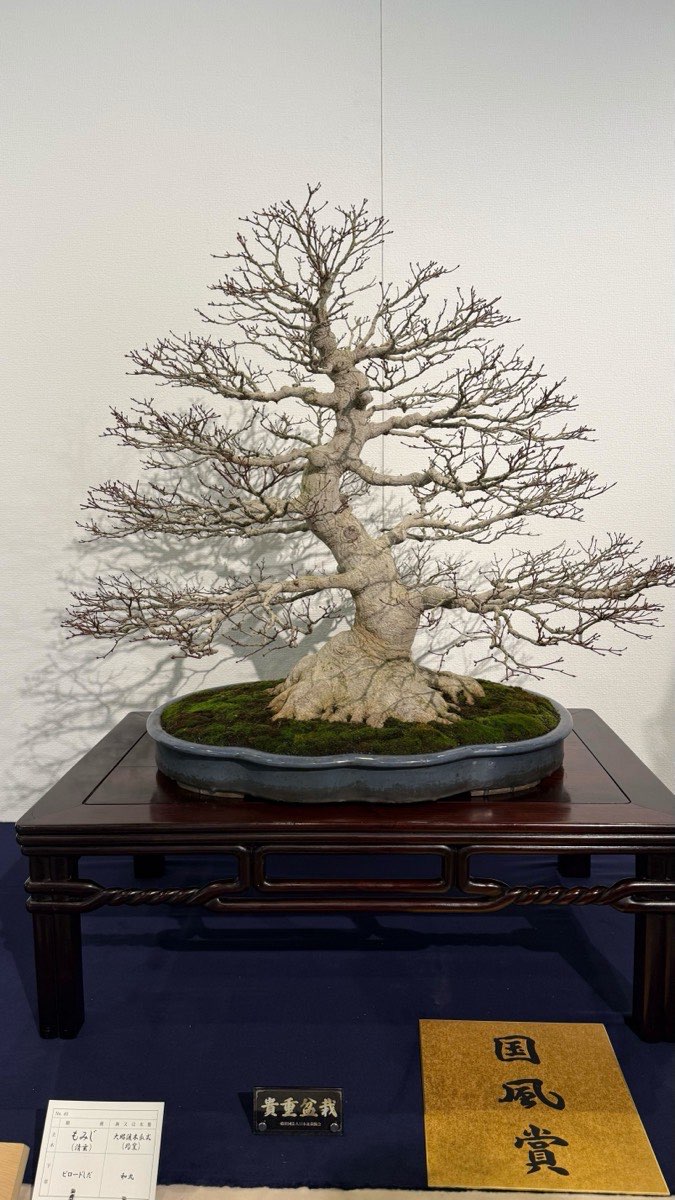
There is a group of deciduous bonsai called zoki bonsai. Maples (momiji), zelkova (keyaki), ginkgo (icho), beech (buna), Japanese hackberry (enoki).
These trees wear four faces in a year.
Spring. From the branch tips that have survived the winter, pale green buds open. With maple, the first leaves are nearly red.
Summer. The leaves deepen to dark green, and the canopy casts shade. A small forest appears above the pot.
Autumn. The leaves change color all at once. The red of maple. The yellow of ginkgo. Inside the pot, a mountain catches fire.
Winter. All leaves fall. Only the branches remain. The texture of the bark, the line of the branches, the curve of the roots — these are most visible in this season.
▸ See the four seasons of zoki bonsai: @bonsai_seikouen (Seiko-en, a historic bonsai garden in Tokyo)
Hanamono — the bonsai for the moment of bloom
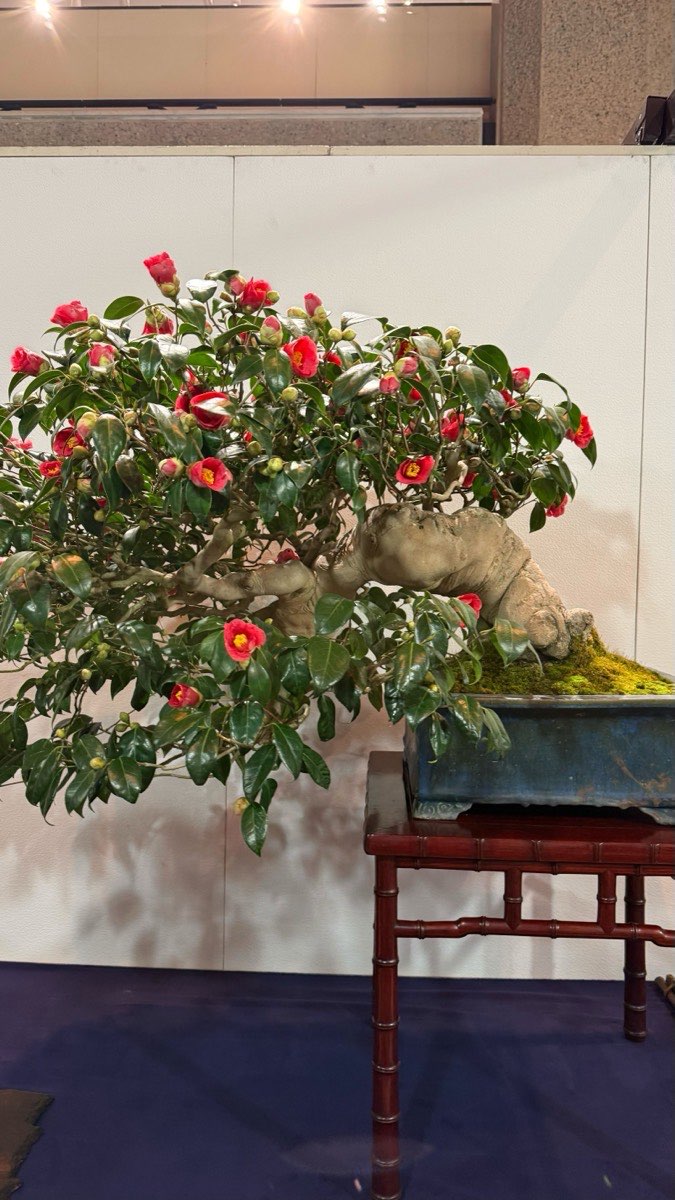
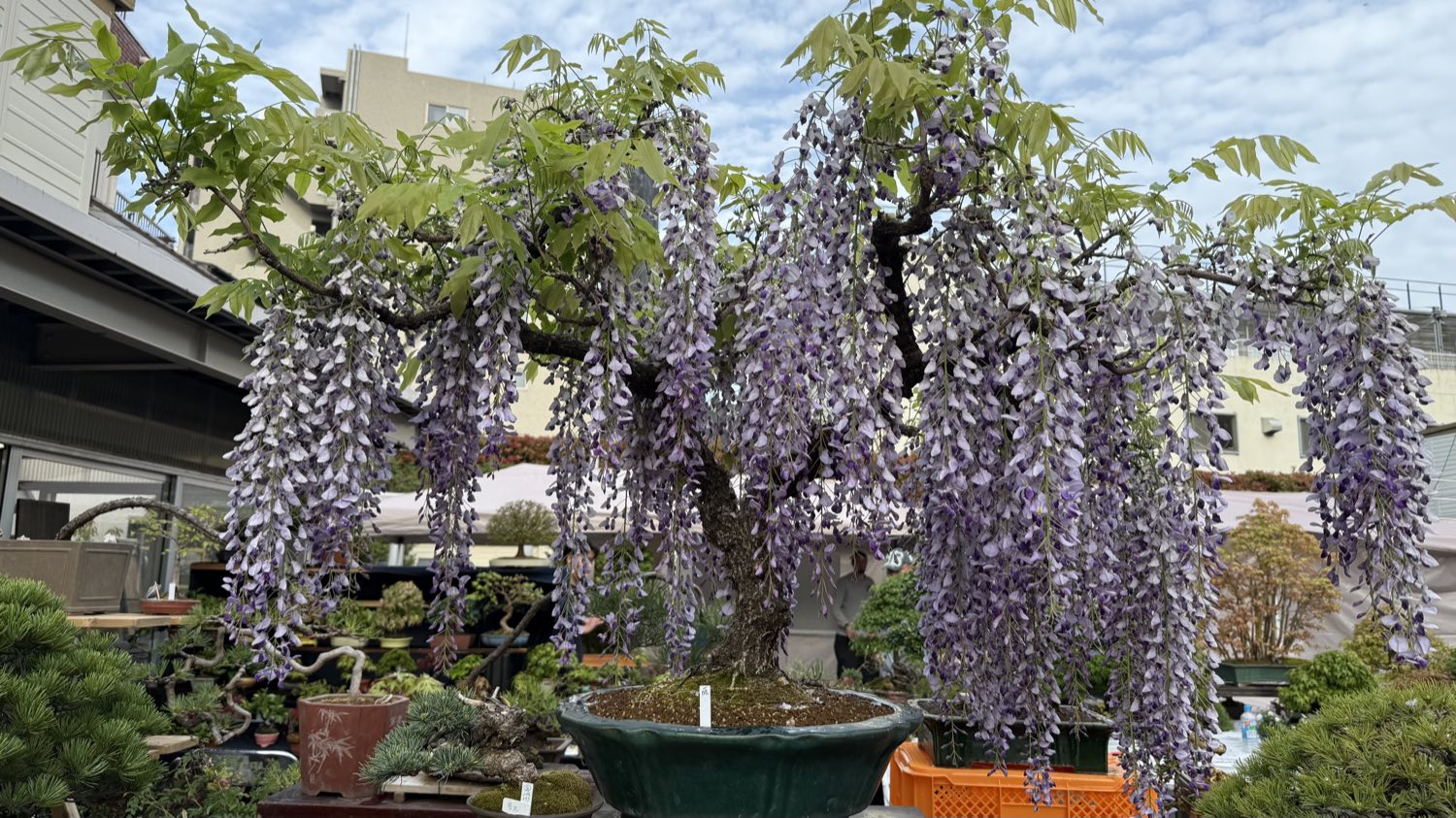
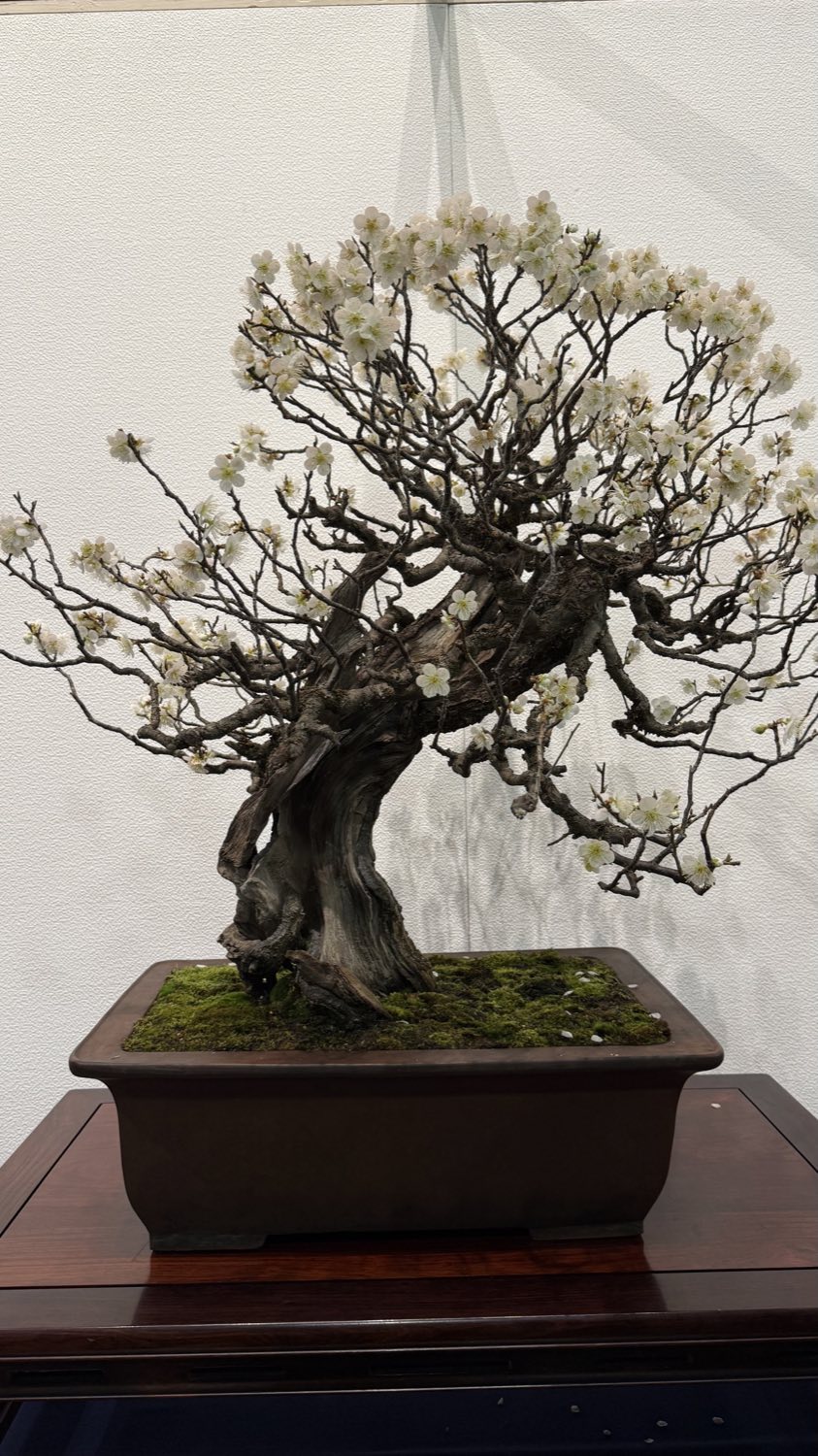
Plum, cherry, camellia, satsuki azalea, Japanese viburnum. A hanamono bonsai is tuned for months toward the moment of bloom.
If pruning is done at the wrong time, the flowers will not open that year. Which buds to keep, when to fertilize, how many buds to leave — every decision is a calculation for a bloom that lasts only days.
When a plum bonsai opens in February, the eleven months from the previous spring exist for that one flower.
▸ See hanamono bonsai: @bonsaimyo (Bonsai Myo, Takamatsu, Kagawa)
Mimono — the bonsai for the moment of fruit
Crabapple, quince, persimmon, firethorn. Bonsai grown to be seen in fruit.
Just as hanamono waits for the moment of blooming, mimono waits for the moment of fruiting. Small flowers open in spring, young fruit sets in summer, the fruit ripens in autumn. At the end of the year, a small harvest appears in the pot.
The fruit of a crabapple bonsai is a real apple, about 3 cm across. The tree stays at 60 cm, but the fruit holds its true size. Mimono is the bonsai with this strange structure — "real fruit inside a miniature."
Kusamono — the bonsai of grass and moss
Rather than trees, grasses and flowers shaped as bonsai. Violet, cockscomb, dandelion, wild mountain plants — and moss.
Where bonsai of trees works on a scale of "decades to centuries," kusamono works on a scale of "one year" or "a few months." A sensibility that cherishes the ephemeral sits at the heart of this field.
There is also a tradition of kusamono as the "accompanying grass" displayed alongside formal shohaku bonsai in the tea room — and it has long been beloved as a gentle entry point into the world of bonsai.
The face of bonsai across a year
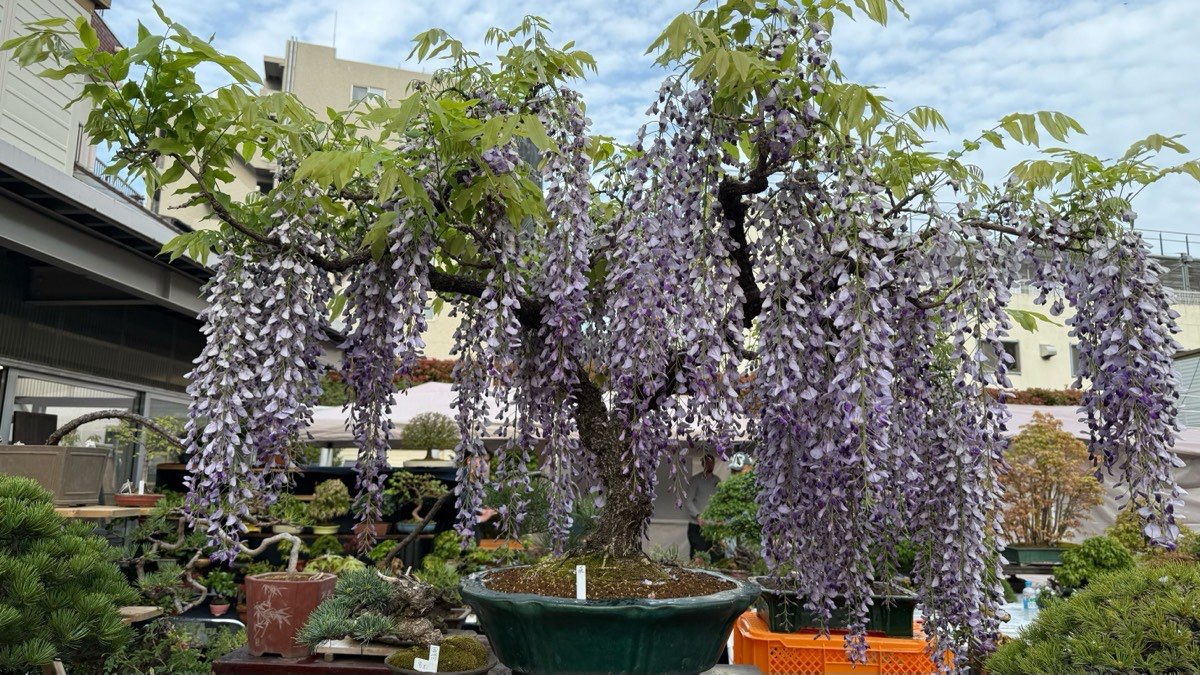
So bonsai, under a single name, holds trees with completely different rhythms.
Shohaku lives in an unchanging time.
Zoki reflects a changing time.
Hanamono waits for the moment of bloom.
Mimono waits for the moment of fruit.
Kusamono cherishes a brief time.
Each bonsai is in a relationship with the cycle of the seasons. And the way that relationship is formed differs by species.
Bonsai is not "the art that does not move." It is "the art that moves slowly, but surely."
Each country has its own bonsai
Bonsai is now made, outside Japan, with the trees of each country. The tree that carries the deepest cultural meaning in a place often becomes that country's bonsai.
- 🇯🇵 Japan — Black Pine (Pinus thunbergii, kuromatsu). The classical core of bonsai, the subject of Weeks 1 and 2 — National Bonsai & Penjing Museum
- 🇰🇷 Korea — Korean Hornbeam (Carpinus turczaninovii, 소사나무). The tree of Korean coastal cliffs and the heart of Korean bunjae — Bonsai Mirai
- 🇻🇳 Vietnam — Cây Sanh (Ficus microcarpa). Large-trunked specimens from Nam Định province trade for $2,000–$4,000 — Sa Dec Bonsai Museum
- 🇪🇸 Spain — Holm Oak / Encina (Quercus ilex). The defining tree of Iberian dehesa landscapes; the source of acorns that feed jamón ibérico de bellota; thousand-year-old specimens (Encina Milenaria) are national monuments — Real Jardín Botánico (CSIC) Madrid
- 🇮🇹 Italy — Italian Cypress / Cipresso (Cupressus sempervirens). The columnar silhouette of Tuscan hillsides and the Renaissance gardens of Boboli and Villa d'Este — Crespi Bonsai Museum
- 🇬🇷 Greece — Wild Olive (Olea europaea var. sylvestris). Sacred to Athena; the wreath of ancient Olympic victors — Olive Tree of Vouves (Crete)
- 🇬🇧 UK — Common Hawthorn (Crataegus monogyna). The tree of British hedgerows and May Day customs — National Bonsai & Penjing Museum
- 🇺🇸 USA — Coast Redwood (Sequoia sempervirens). California's state tree; the tallest living tree on earth (381 ft) — Pacific Bonsai Museum
- 🇦🇺 Australia — Saw Banksia (Banksia serrata). One of the four original Banksias collected by Sir Joseph Banks in 1770 — Australian National Botanic Gardens


There is, in your country too, a tree that has lived inside your culture.
The species does not matter
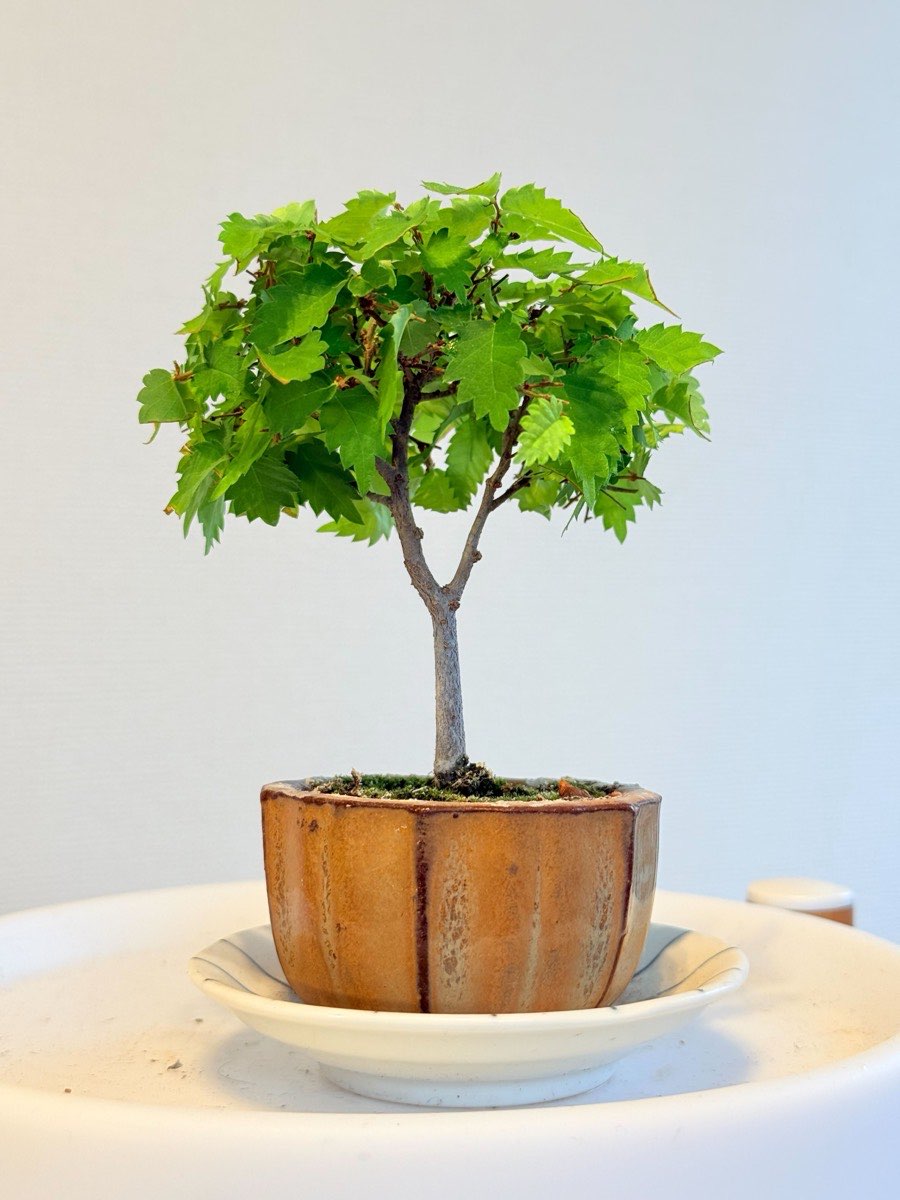
There are many more species that become bonsai. If we count only the species, more than 200 are said to be used.
Yet whatever the species, the conditions for calling a tree "bonsai" do not change. It lives in a pot. There is an intention to evoke a natural landscape. It is grown over a long time, and passed on to someone.
The species does not matter. But depending on the species, the flow of time you see changes.
That is the world of bonsai.
In the next letter (the final of Phase 1), we will speak about how each bonsai carries a name — called mei. The act of giving a tree a name is at the center of Japanese bonsai culture.