Over the past few years, a new kind of movement has been building around Japan's traditional industries. Value that has lain dormant in Japan is on the verge of being rediscovered in a global context. At this confluence, we are launching the Blab Traditional Industries Development (BTID).
Writing this are Hayato Takahashi (who runs the bonsai ownership platform Azukari) and Souta (the maker behind the watering-can brand "Ichijo Hitoma"). Each of us, in our own domain, is already running a business that connects Japan's traditional industries to the world.
Why Now
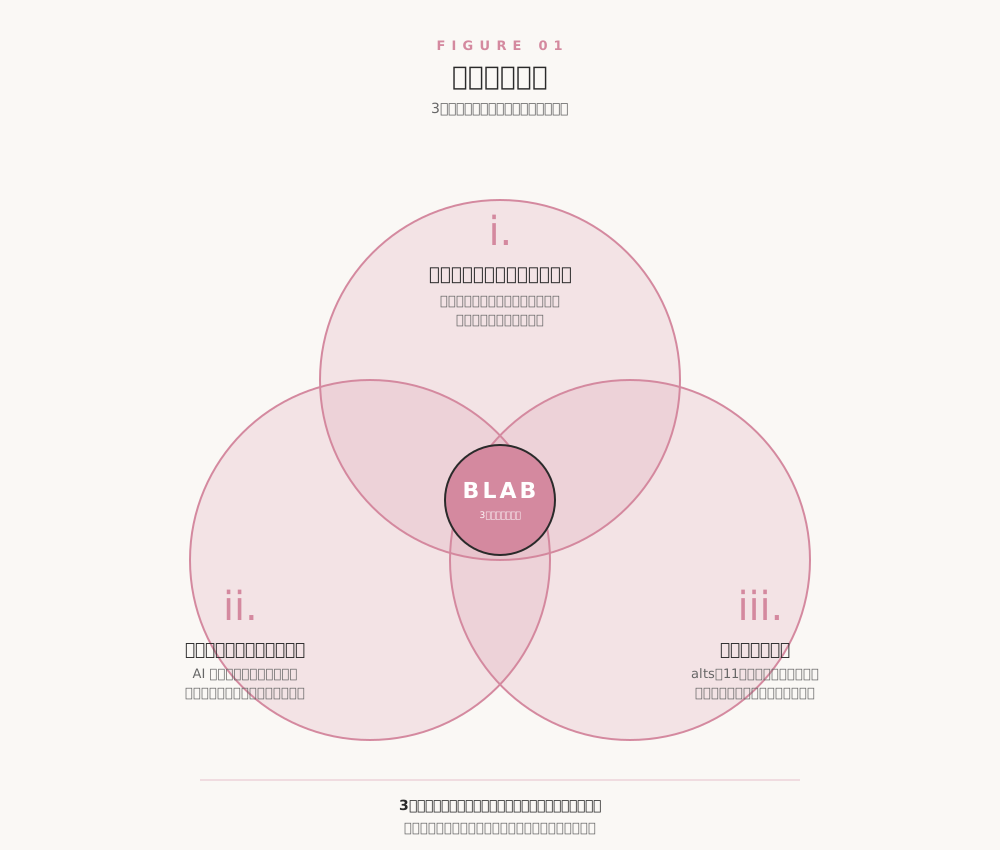
In Japan right now, three movements — of a kind that has never converged before — are unfolding simultaneously.
1. The timing of business and skill succession
Long-established companies — shinise (老舗, "century-plus-old firms") — regional production centers, and traditional craft makers are all facing generational turnover within the next few years. Aging owners, an absence of successors, and rural depopulation are converging at the same moment, so that skills and businesses handed down across generations are, all at once, beginning to search for their next owner.
2. Falling software costs
AI is driving down the cost of nearly every software-dependent function — translation, marketing, distribution, e-commerce design, photo and video production. Fields once dismissed as "too Japan-specific, too small a market, impossible to scale abroad" are, because the cost structure has shifted, opening up to the world for the first time. This is the fundamental difference from every prior moment.
3. Rising overseas demand
Starting with the 110,000 members of alts, the world is now seriously searching for Japan's traditional cultural assets. From their vantage point, the Japanese market looks like this: excellent value, remarkably affordable — yet closed off. So they ask: How do we get access? Which makers, which companies, which products can we trust? The moves of overseas capital partners such as KKR, Carlyle, and Unison sit in the same current.
Three currents, one movement
The supply side (succession timing) has begun its generational shift. The cost structure (software) has changed. The demand side (overseas) is searching. A moment when all three align at once has never existed before. Whoever stands as intermediary now can earn trust from both sides.
Other players across Asia have already noticed and moved. Young Chinese entrepreneurs are taking matcha brands to the global market. Singapore is launching one anime and subculture brand after another. Businesses built on Japanese cultural assets are being started by people who are not Japanese — before the Japanese themselves. We have yet to wake up to this fact.
Lacquerware, washi paper, sake, dyeing, farm tools, furniture, agricultural products, textiles — vast territory remains untouched by Japanese hands. But the window will not stay open forever.
Between the Keepers of Tradition and Global Talent
The problem is structural.
On the side of tradition are the owners of century-old shinise, the heads of regional producer associations, certified traditional craftspeople, and rural makers. They hold the skill and the context, but not the language of global business.
And here is the real problem: there is almost no global business talent among the keepers of Japan's traditions. Young people who have studied abroad, who operate in English, who understand the context of the world's readers, buyers, and partners — they have barely entered the world of traditional succession.
The absence of an intermediary connecting the two is the single biggest reason Japan's traditional industries fail to reach the world. Blab stands in that gap.
Two Proofs Already in Motion
This is not abstract theory. Both founding members are already running businesses that prove the model.
What Azukari proved, through bonsai
Azukari is a mechanism connecting Japanese bonsai artists with owners around the world. The tree stays with the artist; the owner pays an annual custody fee to hold ownership. Owners receive photos and video of daily life with the tree, and travel to Japan to meet it in person at key milestones.
Several things became clear along the way. Cultural assets, carried through a carefully designed system, do reach the world. Irreproducibility is itself the greatest source of value. And the relationship endures — lifetime value grows to an order of magnitude beyond expectation. The premise that "this can't sell abroad" can be overturned, given the right structure.
What Ichijo Hitoma translated, through the watering can
Souta's brand makes watering cans for one-room apartments in Tokyo. The concept: minimal, functional, rooted in tradition. The question it asks: how does an urban resident connect with tradition in daily life?
Working with a designer, Souta redeveloped a niche product that had gone decades without meaningful update in its existing industry. The Ichijo Hitoma watering can connects directly to Azukari's bonsai owners, as the tool they use to care for their tree. A service (bonsai) and a product (the watering can) move together in the hands of the same customer. It is the first example of the pattern Blab intends to scale.
The Structure of BTID
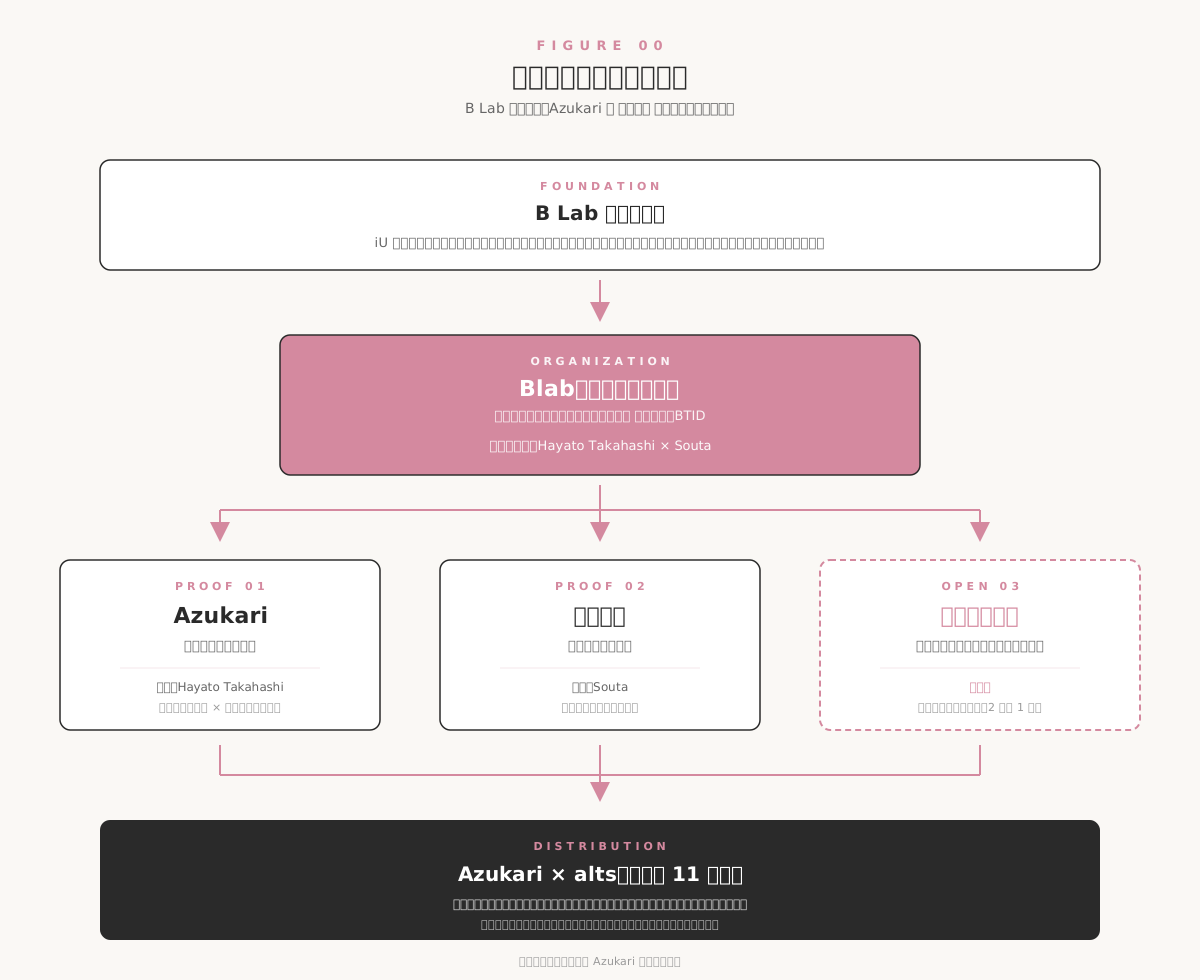
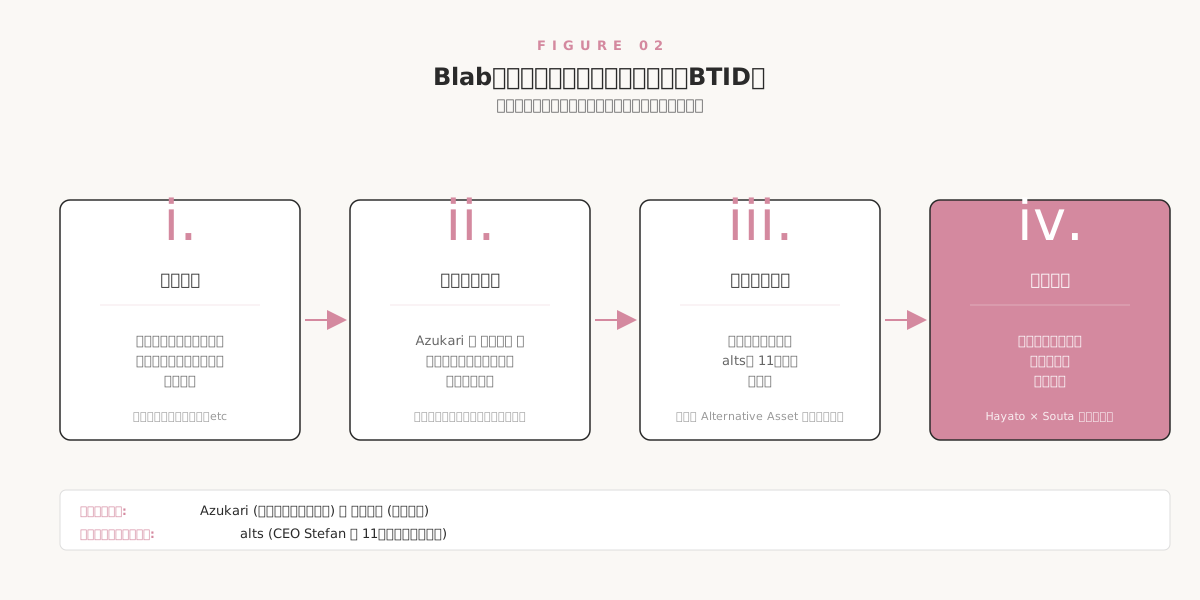
We are launching BTID as a place where Japan's traditional assets are rediscovered in a global context.
- Discover the domains within Japan's traditional industries that deserve rediscovery
- Gather allies to launch businesses there, in the pattern of Azukari and Ichijo Hitoma
- Have those allies write articles, delivered to the 110,000 members of alts
- Walk alongside them end to end, from discovery through implementation
The first two implementations are Azukari and Ichijo Hitoma. The next one is your domain.
B Lab as the foundation
BTID is launched within the context of B Lab. Centered on iU, the Information and Management Innovation Professional University, B Lab is a participatory platform connecting universities, research institutions, companies, government, regions, and individuals to co-create new technologies, services, businesses, and social implementations.
BTID's activity is one implementation within that co-creation platform, covering the intersection of traditional industries, global reach, and innovator products. It does not stand alone — it advances by connecting with the knowledge of the researchers, companies, government bodies, regions, and individuals gathered within B Lab.
Azukari x alts as the Distribution Gateway
alts is a global community centered on design, architecture, and lifestyle, with roughly 110,000 members worldwide. Azukari is the partner connected to alts for global distribution, and BTID's writers share this same gateway through Azukari.
Why these 110,000 people? Among alts' members are international buyers (procurement leads for hotels, boutiques, and galleries), collectors, curators (selectors for museums and trade fairs), overseas capital partners, media, and brand executives. They are a group that has already decided to spend money, time, and effort on Japan's authentic cultural assets. These 110,000 are qualitatively different from 100,000 ordinary social media followers.
Their shared desire is clear: access to the real thing in Japan, through a channel they can trust. Emailing a craftsperson whose business card they picked up at the corner of a trade show gets no reply. The language barrier, the barrier of business customs, the barrier of distribution, the opacity of pricing — these are the frustrations they have lived with for years.
For you, as a writer joining BTID, what does the Azukari x alts connection concretely offer? The first 100 people gather from around the world. Your article's reach is structurally guaranteed. A pathway to overseas media exposure opens up. Your negotiating position with artists and craftspeople strengthens — the line "we're featuring this through alts" becomes a currency of trust in itself. Social media followers are a "browsing" layer; the 110,000 of alts are a "purchasing" layer. For a writer's business, this distinction is decisive.
We Are Recruiting Global Curation Writers
We are recruiting Global Curation Writers to run with Blab.
We call them writers, but we are not looking for people who can simply write articles. We are looking for advocates who are seriously committed to building, with their own hands, a single product for overseas customers within some domain of Japan's traditional industries. Writing is merely the first tool for putting your vision to the world, sharpening it, and moving it toward implementation.
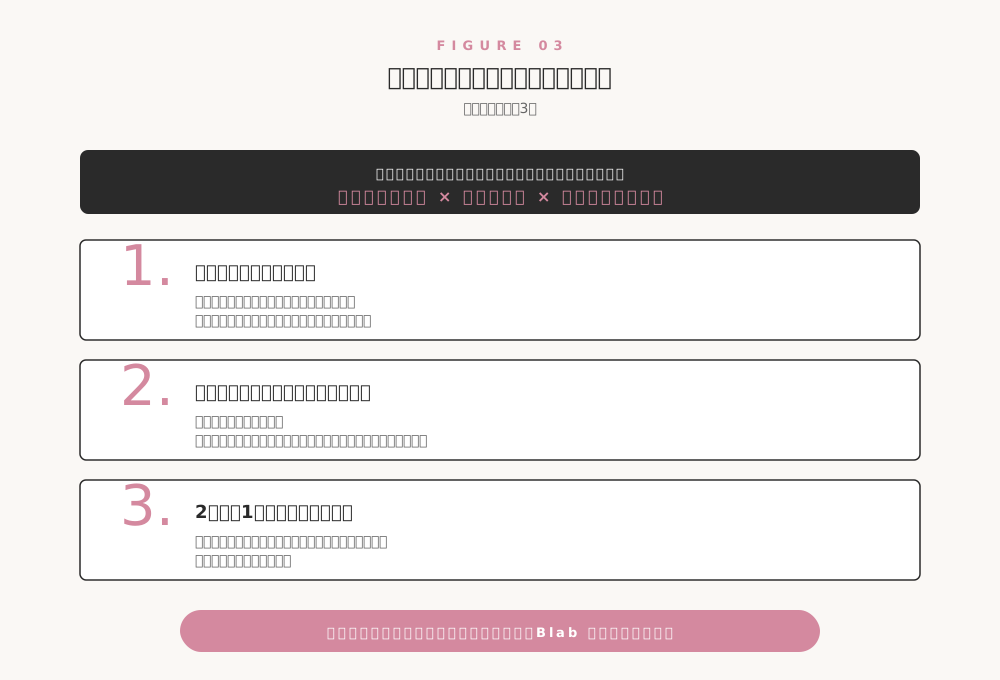
There are three conditions for applying.
- You hold a vision for globalizing a specific industry or product — an innovator product
- You have a plan to commercialize or platform-ize that product
- You can deliver one article every two months
All three are non-negotiable. If even one is missing, Blab is not the right fit.
For those who meet all three, we offer everything: reach to the 110,000 members of alts, hands-on partnership from Hayato and Souta, and the company of the first cohort of members running alongside you.
What goes into one article every two months
What you write about is the domain you have chosen, and the product you are building within it. The domain can be anything — bonsai, watering cans, kimono, hanging scrolls, tea bowls, Japanese spring water, historic ryokan inns, mountains, sake, folding screens — as long as it is an irreproducible cultural asset.
Seen through the eyes of overseas capital partners, collectors, international buyers, and foreign media, the article answers three questions:
- Why is this domain a compelling opportunity right now?
- What can one access, what can one purchase, and what kind of business relationship can one form?
- How does one get there, through someone trustworthy?
Answering these three questions with your own original story — that is what you write.
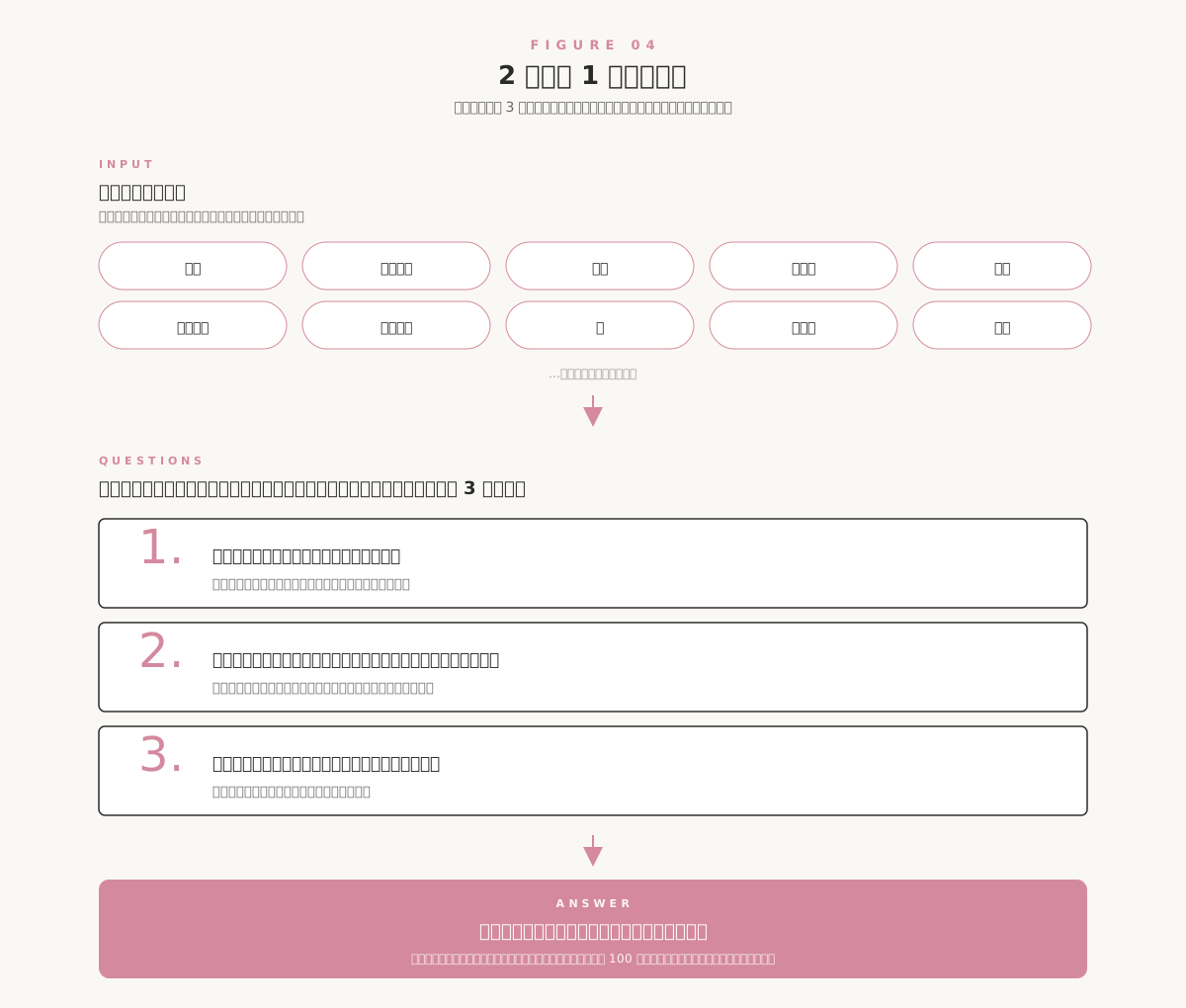
The successors and practitioners in that domain, the field itself, the materials, the land, the overseas partners you are negotiating with, the first 100 people you have reached — only a story that rises out of concrete ground gives the world's readers material to judge by. Put differently: if the business is not moving, there is nothing to write.
This pace is synchronized with the writer's own business progress. If the business doesn't move, you can't write. If you don't write, it doesn't reach the world. The two-month cadence is both a writing pace and a pace for building the business.
Missing one month is not held against you. But if you cannot resume writing after that, you will leave Blab at that point. When the mechanism stops, the whole ecosystem stops with it.
What Comes Next
As we write, we are looking for allies to run with Blab.
If you have your own domain within Japan's traditional industries and are seriously committed to selling it to the world, let us hear from you. This is not a paper screening. Blab begins with a conversation.
Hayato Takahashi and Souta, Blab Traditional Industries Development (BTID), hello@bonsai-azukari.com